
Once a proud name in English football, how the worm has turned for Reading FC. It’s such a shame that the club now finds itself teetering on the edge of the proverbial precipice. Barley keeping it together in League One while facing an existential crisis to the extent of being issued an ultimatum by the English Football League (EFL) spells a harsh tumble from glory.
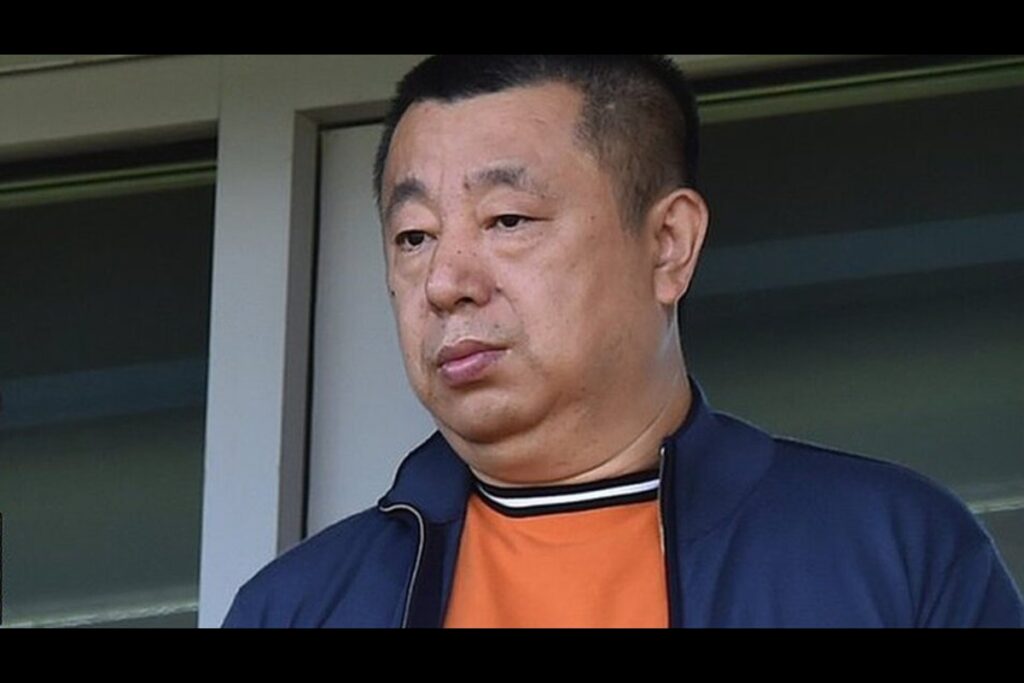
Reading owner Dai Yongge has failed the EFL’s owners’ and directors’ test, no thanks to his business interests in China. Now, he’s been ordered to either sell Reading FC by April 5, 2025, or risk the club’s suspension from the league. Talk about being caught between a rock and a hard place.
Readings FC had it coming. The Royals have boiled and roiled for years under Yongge’s ownership. He took over the club in 2017, following his failed bid to acquire Hull City the previous year. It was a dream come true for Yongge, who, together with his sister, has long pursued opportunities in football ownership, with a litany of Chinese clubs to prove their passion, including Beijing Renhe.
This passion was reportedly an acquired taste during Dai Xiuli’s time in England. Yongge took control of Reading after his group acquired a 75% stake in the club in 2017, with the EFL’s approval. Back then, nearly everyone saw a brighter future for Reading, with promises of significant investment and the club’s status in English soccer elevated.
Despite the new owner reportedly pumping over £200 million into The Royals, Yongge’s ownership of the club soon became a subject of controversy. There were accusations of financial mismanagement and breaching the EFL’s Financial Fair Play regulations. For this, Reading FC suffered multiple points deductions and fines. The biggest blow came in 2023 when the club got relegated from the Championship.
With Yongge’s tenure thoroughly dirtied by complaints about unpaid wages and tax issues, fans grew increasingly disillusioned and even called for his ouster. The EFL’s recent ultimatum for Yongge to either sell or go home merely underscores the controversies that have trailed and defined his time at the helm of Reading FC.
As the world is more than five (the five world powers), Reading’s misfortune affects more than just the stakeholders. For passionate fans and supporters, the EFL’s ultimatum couldn’t have come at a more critical time. For them, The Royals are a source of community pride, a cornerstone of identity. Reading FC is more than just a team for these passionate fans who stood by the club through thick and thin.
The thought of it declining further or getting suspended into oblivion is akin to a devastating blow. Looking at the big picture, what’s happening to Reading right now underscores the challenges of governance in professional English football. While it shows the EFL is committed to holding club owners accountable, it doesn’t directly or sufficiently address important questions about the effectiveness of current regulations in preventing such crises.
It’s a lesson for other clubs and their owners, a lesson on the importance of prioritizing long-term health over short-term financial gains. Now, Reading’s future hangs in the balance, as the deadline is only weeks away. Yongge must do right by the club so that it can find a path back to its former glory. Until then, Reading FC remains a cautionary tale on how quickly the worm can turn in the volatile world of football.
Founded in 1871, Reading FC is one of England’s oldest professional football clubs, christened The Royals thanks to its citing on the Royal County of Berkshire. The club had its finest moment in the 2006–07 Premier League season when it finished eighth place. It also boasts the most points in a professional league season, with 106 points during the 2005–06 Championship campaign. Unfortunately, Reading has suffered needless challenges despite these impressive records.
The slide to oblivion began with its relegation from the Premier League in 2013. Our ears ached from recurring reports of financial instability, mismanagement, and mounting debts. When Chinese businessman Dai Yongge stepped in as the club’s owner in 2017, everyone thought Reading FC had met its messiah, except his tenure turned out the exact opposite. The resultant point deductions include a six-point penalty in the 2022–23 season, ultimately leading to the club’s demotion to League One.
It was so bad that frustrated fans organized protests, some under banners that read “Sell Before We Dai.” They wanted a fresh start for Reading FC, and Yongge gone. As Reading FC’s owner, Yongee invested heavily, particularly in infrastructure, including a state-of-the-art training facility five miles from the club’s Madejski Stadium. However, these accusations of financial mismanagement, unpaid wages, lack of transparency, tax issues, and poor decision-making overshadowed his positive strides.
That’s the natural outcome when a once-promising English club struggles to fulfill basic financial obligations, owes players and staff wages, and, on top of everything, is burdened by transfer embargoes. This means that Reading can’t recruit the quality and depth needed to compete effectively. This put the club in a very bad situation, as it had to make do with academy players and free agents. The situation is serious enough for the EFL to make the weighty decision to order Yongge to sell Reading or get binned.
What then does Reading FC’s current turmoil mean for English football? It shines the spotlight on broader, systemic issues common within the corridors of club ownership and governance. More such disastrous consequences will happen as long as the line straddling the very delicate balance between ambition and financial responsibility continues to be crossed by those who should know better. Reading’s plight is far from an isolated case.
History is littered with similar stories, such as Derby County and Bury FC. The consequences of financial mismanagement ultimately led to Derby being relegated from the Premier League, while a similar disregard for financial sustainability ultimately buried Bury FC in 2019. Is the EFL’s decision on The Royals too harsh for a lower-league club? Perhaps.
What’s for sure is that disqualifying and setting a definitive deadline for the club’s sale shows a willingness to intervene decisively, unlike in the past when the league was often criticized for oversight and delayed or inadequate actions. At the end of the day, fans and the football community prefer systemic reforms that address these recurring issues across the football pyramid than seeing beloved clubs destroyed.
