
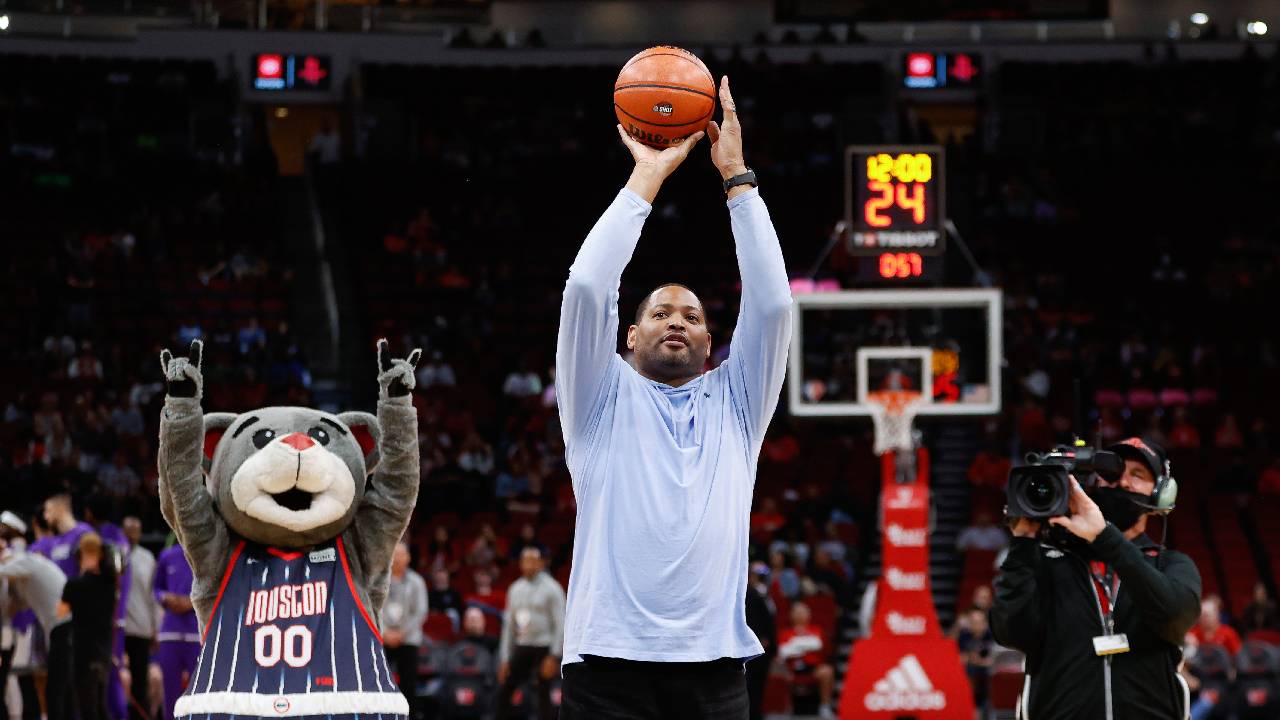
The Robert Horry vs James Harden debate compares two drastically different versions of NBA success. Robert Horry won seven NBA championships with three franchises. James Harden became an MVP, an 11-time All-Star, an eight-time All-NBA selection, and one of the most productive offensive guards of his era.
Who was better? James Harden was the better overall NBA player. Who had the better championship career? Robert Horry. Harden’s scoring, playmaking, efficiency, peak performance, and individual awards provide the clearest edge in a player-to-player comparison. Horry’s seven rings, 244 playoff games, seven NBA Finals appearances, defensive versatility, and iconic clutch moments give him the stronger winning résumé.
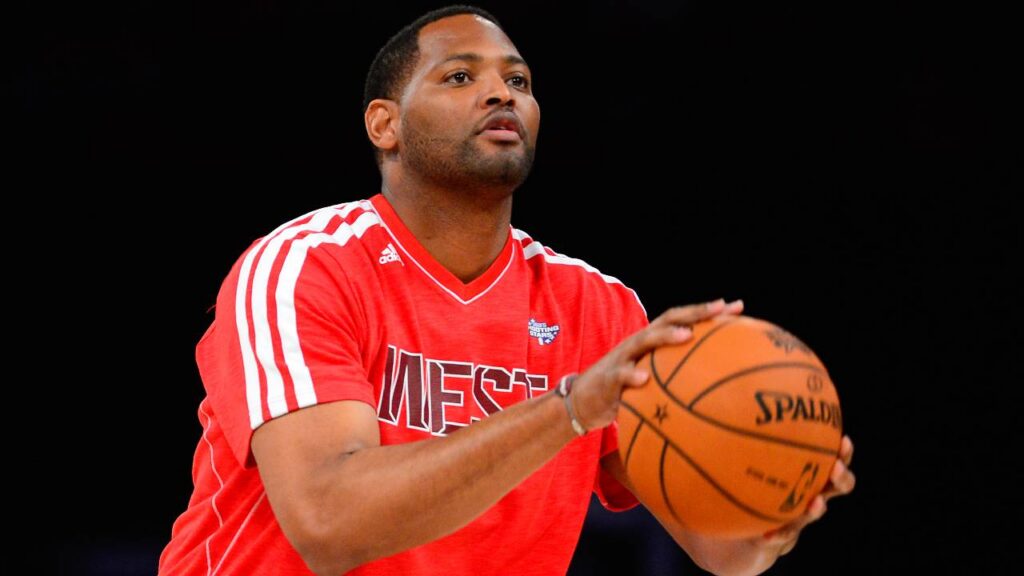
Who has more NBA rings? Robert Horry, 7-0.
Who has better career statistics? James Harden. Harden owns a decisive lead in scoring, assists, individual honors, advanced production, and offensive responsibility.
Who had the better NBA career? Harden had the greater individual career. Horry had the greater championship career. The two paths are different enough that both conclusions can coexist.
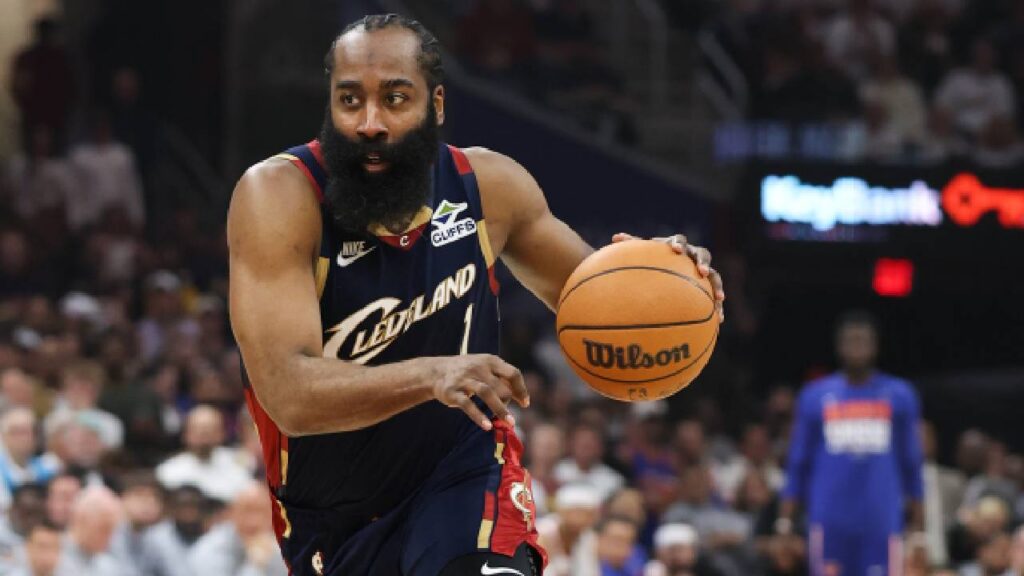
| Category | Robert Horry | James Harden |
| NBA seasons | 16 | 17 through 2025-26 |
| Regular-season games | 1,107 | 1,221 |
| NBA championships | 7 | 0 |
| Championship franchises | Houston Rockets, Los Angeles Lakers, San Antonio Spurs | None |
| NBA Finals appearances | 7 | 1 |
| MVP awards | 0 | 1 |
| All-Star selections | 0 | 11 |
| All-NBA selections | 0 | 8 |
| Scoring titles | 0 | 3 |
| Assists titles | 0 | 2 |
| Career points | 7,715 | 29,690* |
| Career rebounds | 5,423 | 6,855* |
| Career assists | 2,343 | 9,041* |
| Career regular-season averages | 7.0 PPG, 4.8 RPG, 2.1 APG | 24.0 PPG, 5.6 RPG, 7.3 APG |
| Career true-shooting percentage | 52.6% | 61.0% |
| Career PER | 13.4 | 23.5 |
| Career win shares | 66.3 | 174.7* |
| Career playoff games | 244 | 191 |
| Career playoff averages | 7.9 PPG, 5.6 RPG, 2.4 APG | 22.3 PPG, 5.5 RPG, 6.5 APG |
| Career playoff points | 1,939 | 4,262 |
| Career playoff rebounds | 1,376 | 1,052 |
| Career playoff assists | 587 | 1,224 |
| Career playoff 3-point percentage | 35.9% | 33.0% |
| Career playoff BPM | 3.74 | 6.18 |
James Harden is still active, and active-player totals can change. Harden agreed to a reported three-year, $97 million deal to return to the Cleveland Cavaliers in August 2026, with a player option for 2028-29 and a trade kicker. ESPN reported the agreement, while TSN’s contract report detailed its reported terms.
Horry’s seven championships are tied for the seventh-most in NBA history. He won two titles with Houston in 1994 and 1995, three with Los Angeles from 2000 through 2002, and two with San Antonio in 2005 and 2007. Basketball-Reference’s championship leaderboard lists Horry among the most decorated players in league history.
| Category | Winner | Why |
| Scoring | James Harden | Three scoring titles, elite volume, and a massive career points advantage |
| Playmaking | James Harden | Two assists titles and a career as a primary ball-handler |
| Efficiency | James Harden | Superior true-shooting numbers despite much higher usage and tougher shot creation |
| Individual Awards | James Harden | One MVP, 11 All-Star selections, and eight All-NBA selections |
| Regular-Season Peak | James Harden | MVP-level production while leading a 65-win team |
| Star Longevity | James Harden | Sustained elite production as a franchise centerpiece |
| Defensive Versatility | Robert Horry | Frontcourt size, rebounding, matchup flexibility, and low-mistake playoff defense |
| Playoff Statistical Impact | James Harden | Major advantages in scoring, assists, and career playoff BPM |
| Playoff Longevity | Robert Horry | 244 playoff games and seven NBA Finals appearances |
| Championship Success | Robert Horry | Seven titles with three franchises |
| Clutch Championship Moments | Robert Horry | Series-changing and Finals-defining late-game shots |
| Overall Player | James Harden | Higher peak, greater production, and stronger individual résumé |
The category table is not meant to make the careers appear equal. Harden wins the categories most associated with individual player value. Horry wins the categories tied to team success, frontcourt versatility, postseason longevity, and championship performance.
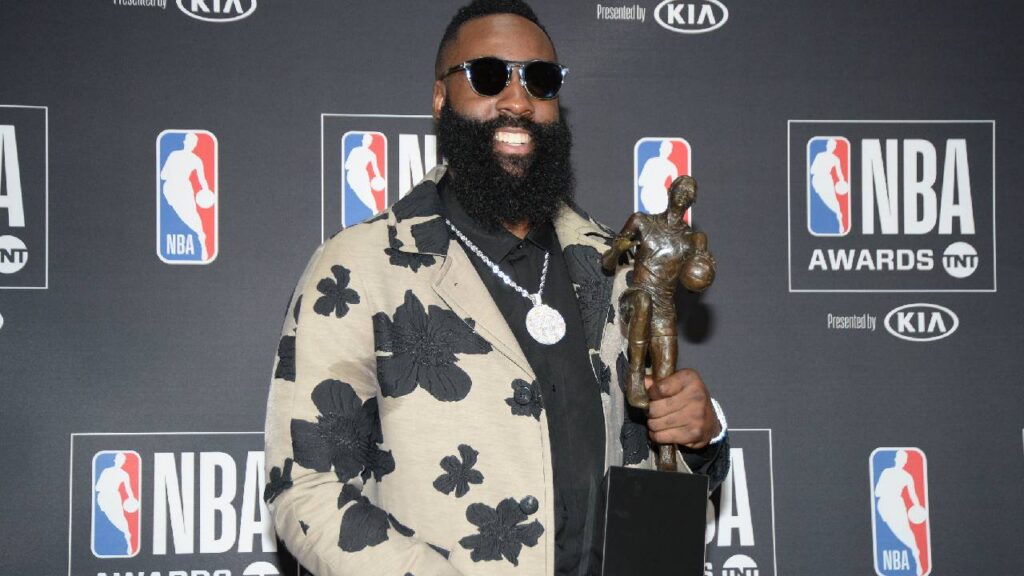
James Harden’s 2017-18 MVP season establishes his edge in peak performance.
Harden averaged 30.4 points, 8.8 assists, and 5.4 rebounds while leading the Houston Rockets to an NBA-best 65-17 record. The former MVP also posted a .619 true-shooting percentage, 15.4 win shares, an 8.1 box plus-minus, and 9.9 value over replacement player. Basketball-Reference’s 2017-18 advanced statistics document an all-time offensive season.
Harden’s full résumé includes 11 All-Star appearances, eight All-NBA selections, three scoring titles, two assists titles, and an MVP. His 2018-19 season was even more explosive as a scorer, when he averaged a career-high 36.1 points per game and won his second straight scoring title.
Horry’s best regular season came in 1995-96 with Houston, when he averaged 12.0 points, 5.8 rebounds, and 4.0 assists. Horry was a reliable two-way forward, but he was never responsible for creating a franchise’s offense. Harden was.
That difference is not an insult to Horry. It is the context required for a fair comparison.
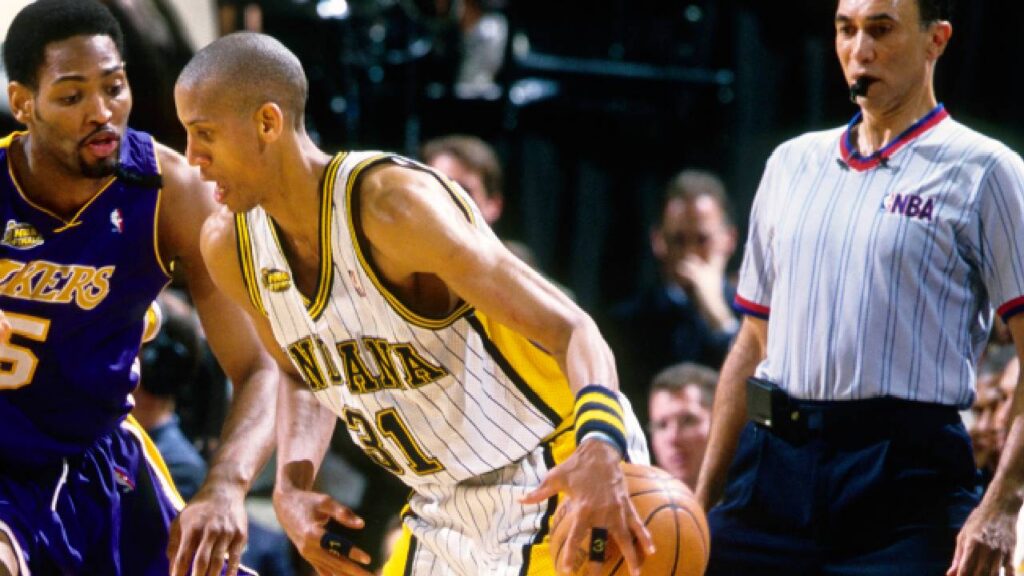
Robert Horry’s seven championships deserve more analysis than a simple ring count.
Horry won at least two titles with each of three separate franchises: the Rockets, Lakers, and Spurs. That required him to fit beside three different championship cores and adapt to three different systems. Horry played alongside Hakeem Olajuwon in Houston’s post-centered offenses, Shaquille O’Neal and Kobe Bryant during the Lakers’ three-peat, and Tim Duncan with San Antonio’s disciplined, defense-oriented dynasty.
Horry was never the primary star of those teams. His role was to make them better.
At 6-foot-10, Horry offered frontcourt size, capable rebounding, help defense, floor spacing, and quick decision-making. Horry could guard bigger forwards, rotate toward the paint, move the ball without forcing plays, and punish defenses that overloaded against the stars.
Horry never made an All-Defensive Team, so he should not be presented as a generational lockdown defender. His defensive value came from portability. He could fill different assignments without disrupting the team’s structure, a major reason championship coaches trusted him in matchup-dependent playoff lineups.
Horry also averaged 5.6 rebounds per game in the playoffs, compared with 4.8 during the regular season. His 1,376 career postseason rebounds and 261 made playoff 3-pointers demonstrate a role that extended beyond simply waiting for a big shot. The NBA’s retrospective on Horry’s career noted his 244 playoff games, while Basketball-Reference’s postseason 3-point leaderboard places him among the NBA’s most prolific playoff shooters.
Horry’s biggest shots help explain why his championship résumé stands apart from a normal role player’s.
In Game 4 of the 2002 Western Conference finals, the Los Angeles Lakers trailed the Sacramento Kings late in a series that threatened their hopes of a third consecutive title. Shaquille O’Neal missed near the rim, the loose ball bounced to the perimeter, and Horry hit the game-winning 3-pointer to tie the series at 2-2. The Lakers eventually won the series and completed the three-peat.
His defining Finals moment came in Game 5 of the 2005 NBA Finals. The Spurs and Detroit Pistons entered overtime tied 2-2 in the series. Horry scored 21 points off the bench, made five of six 3-pointers, and buried the go-ahead 3-pointer with 5.8 seconds remaining in overtime. San Antonio won 96-95, took a 3-2 series lead, and won the championship in Game 7. NBA.com’s look back at the shot and the Game 5 box score confirm the performance.
Those shots do not prove Horry was better than Harden. They show that Horry supplied more than championship jewelry. He repeatedly contributed when a possession could change a title race.
James Harden has never won an NBA championship, but he has reached deep playoff rounds and has not simply disappeared from title contention.
Harden reached the 2012 NBA Finals with the Oklahoma City Thunder. He averaged 12.4 points, 4.8 rebounds, and 3.6 assists in a five-game loss to the Miami Heat, shooting 37.5% from the field and 31.8% from 3-point range. Basketball-Reference’s 2012 NBA Finals page documents his only Finals series.
His closest path to a championship came in 2017-18 with Houston. The Rockets won 65 games and took a 3-2 lead over the Golden State Warriors in the Western Conference finals. Chris Paul’s hamstring injury at the end of Game 5 removed Houston’s second-best player for Games 6 and 7, and Golden State recovered to win the series.
Harden’s history also includes difficult playoff endings. He played through a hamstring injury for the Brooklyn Nets during their 2021 conference-semifinal loss to the Milwaukee Bucks. The Philadelphia 76ers lost in the 2022 and 2023 conference semifinals, despite Harden scoring 45 points in Game 1 against Boston in 2023. The Los Angeles Clippers lost in the first round in 2024.
Those exits are fair parts of Harden’s legacy. They do not erase his 4,262 playoff points, 1,224 playoff assists, and 6.18 career playoff box plus-minus. Basketball-Reference’s career playoff BPM rankings rank Harden 18th in NBA history.
Harden had the better individual playoff career. Horry had the better team-success playoff career.
Harden averaged 22.3 points and 6.5 assists over 191 postseason games. Teams designed their defenses around stopping him, yet he compiled 4,262 playoff points and 1,224 assists.
Horry played 244 playoff games, appeared in seven Finals, and won all seven. His responsibility was different. Horry was expected to defend, rebound, make quick passes, space the floor, and hit shots created by defensive attention toward his teammates.
Harden was the stronger individual postseason producer. Horry had the deeper and more successful postseason team experience.
James Harden was the better NBA player. His MVP award, eight All-NBA selections, 11 All-Star selections, scoring titles, assist titles, advanced statistics, and superstar offensive workload give him the decisive edge.
Robert Horry had the stronger championship résumé. Seven titles with three franchises, 244 playoff games, seven Finals appearances, adaptable frontcourt defense, and title-defining late-game moments made him one of the most successful complementary players in NBA history.
James Harden was better. Robert Horry won more.
Harden reached individual heights Horry never approached. Horry reached team success Harden is still seeking.
