
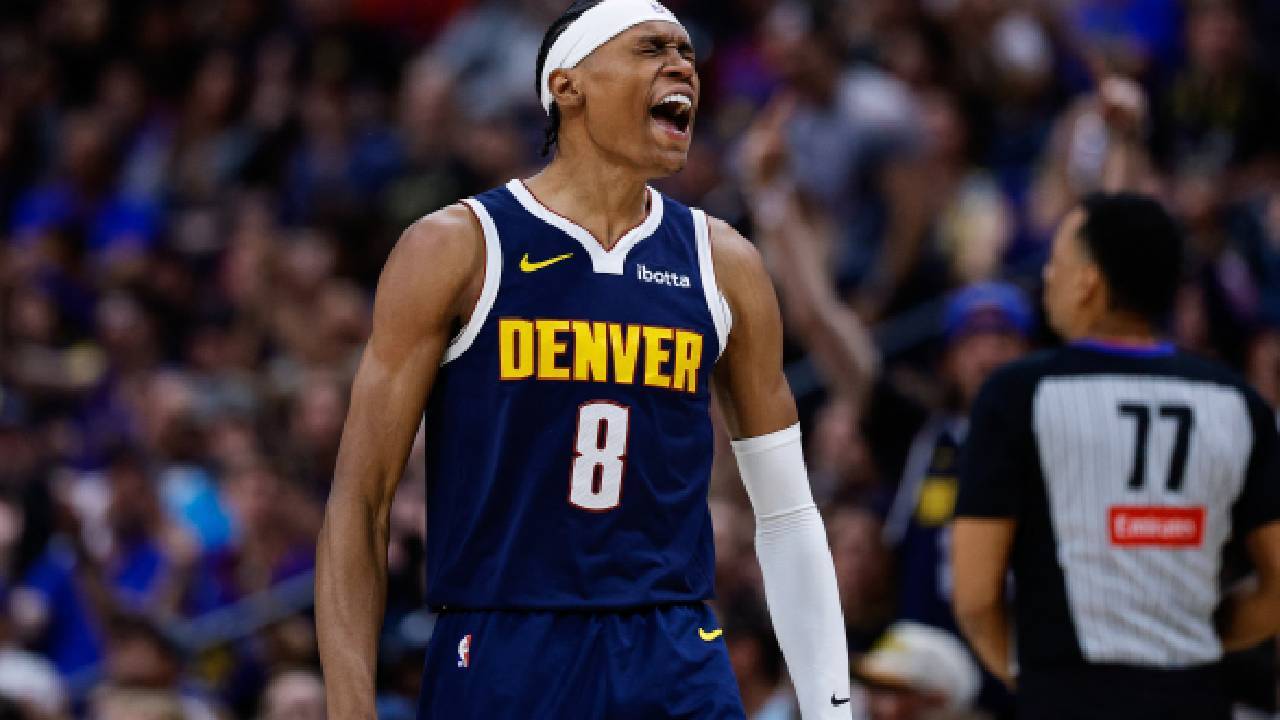
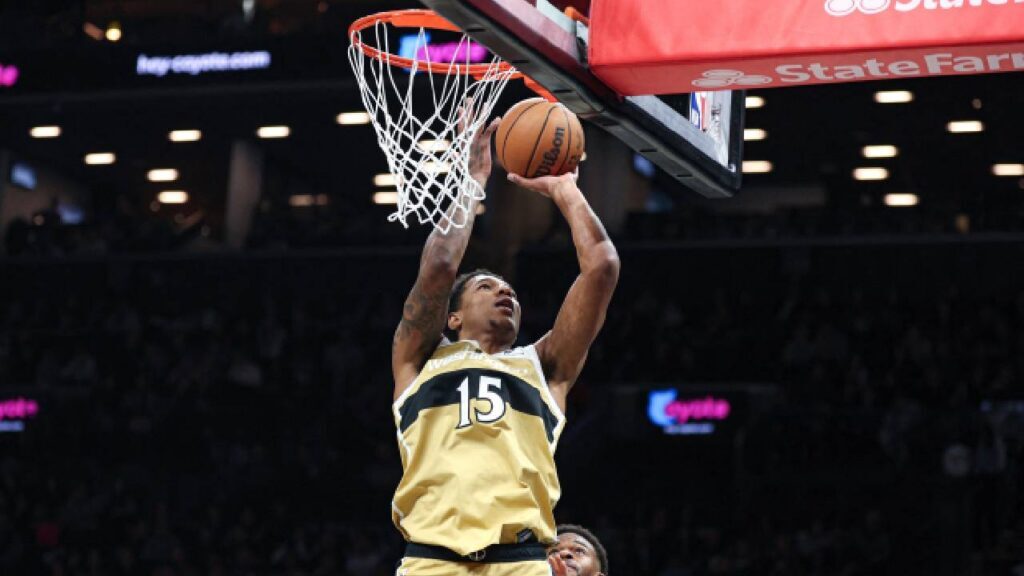
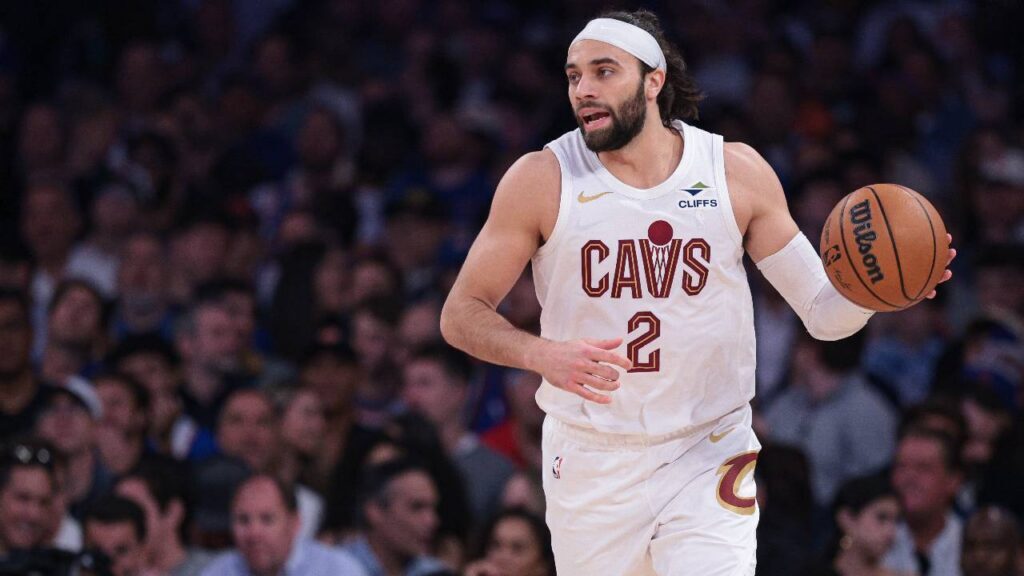
Cleveland traded Max Strus, Tre Mann, an unprotected 2031 first-round pick, a 2032 Kings second-rounder, a 2027 Clippers second-rounder, and cash in a five-team transaction. The Cavaliers received Peyton Watson, Cam Whitmore, and the draft rights to Ismael Kamagate. Watson then signed a reported four-year, $88 million contract with Cleveland that includes a player option and a 7.5% trade kicker. Hoops Rumors’ transaction report compiled the terms from ESPN’s Shams Charania and HoopsHype’s Michael Scotto.
Who won? Cleveland wins the immediate basketball fit. Watson replaces Strus with a bigger, more defensive-minded wing. Denver wins the long-term asset calculation. It turned a restricted free agent into an unprotected 2031 first-round pick rather than committing $88 million to a still-unproven starter.
| Team | Received | Sent |
| Cavaliers | Peyton Watson, Cam Whitmore, Ismael Kamagate’s draft rights | Max Strus, Tre Mann, 2031 unprotected first, 2032 Kings second, 2027 Clippers second, cash |
| Nuggets | Julian Reese, 2031 Cavaliers first, 2032 Kings second | Peyton Watson |
| Clippers | Max Strus | Tre Mann, 2027 Clippers second |
| Wizards | Tre Mann, 2027 Clippers second, cash | Cam Whitmore |
| Hornets | Dennis Schröder | Transaction/salary facilitation |
Julian Reese was reported to be waived by Denver, and the Hornets’ acquisition of Schröder was incorporated into the five-team filing. Those are confirmed transaction components, not projections. NBA.com’s official transaction overview and Hoops Rumors’ final report provide the deal structure.
The five-team deal produced different outcomes for each player and franchise, with Cleveland prioritizing immediate fit while Denver focused on future draft value.
| Party | Result | Why |
| Cavaliers | Win on fit | Watson adds a 23-year-old, 6-foot-8 wing who can take tougher defensive matchups than Strus |
| Nuggets | Win on asset value | A 2031 unprotected first is a tradeable asset with potential lottery upside |
| Peyton Watson | Major win | Receives $88 million, plus a player option and trade protection |
| Max Strus | Solid outcome | Joins the Clippers as a proven shooter around high-usage stars |
| Cam Whitmore | Opportunity, uncertain role | Moves to Cleveland on a low-cost rookie contract but may face a crowded wing rotation |

Max Strus is the more established high-volume spacer. Peyton Watson is the more complete defensive projection.
| 2025-26 comparison | Peyton Watson | Max Strus |
| Age | 23 | 30 |
| Points per game | 14.6 | 11.8 |
| Rebounds per game | 4.9 | 3.6 |
| Assists per game | 2.1 | 2.4 |
| FG / 3P / FT | 49.1% / 41.1% / 73.0% | 43.6% / 37.8% / 83.5% |
| Three-point volume | Low-volume career shooter | Proven high-volume shooter |
| Blocks per game | 1.1 | 0.2 |
| Contract | Four years, $88 million | Existing veteran contract |
Cleveland was not simply chasing Watson’s age. It wanted a player who can credibly defend wings and offer secondary rim protection without taking the ball from Mitchell or Harden. Watson averaged 1.1 blocks per game, a useful mark for a wing, and shot 49.1% overall on his way to a 14.6-point breakout. Hoops Rumors’ report lists those 2025-26 numbers.
The shooting should be treated cautiously. Watson’s 41.1% three-point season came after career 36.1% shooting from deep and at relatively low volume; the same report makes that distinction. Full public catch-and-shoot tracking splits are not available for a reliable apples-to-apples comparison, so it would be overstating the evidence to claim Watson can replace Strus’ movement shooting. Cleveland is betting Watson can hit enough open threes to preserve spacing while adding length, shot-blocking, and matchup flexibility that Strus could not provide.
Watson’s reported contract is four years, $88 million, with a player option and a 7.5% trade kicker. The player option gives Watson control over the contract’s final season. The player option gives Watson control over the contract’s final season. His 7.5% trade kicker can add up to 7.5% of his remaining salary if Cleveland trades him, subject to NBA limits and any waiver or reduction he agrees to.
The first-year salary is projected at about $20.5 million, with annual raises moving the later-year figures higher. Sports Illustrated’s Cleveland cap analysis reported that first-year estimate.
Because Cleveland received Watson in a sign-and-trade, it is hard-capped at the $209.015 million first apron for 2026-27. Sports Illustrated’s Harden cap update reported that limitation. The exact remaining room cannot be stated as a finalized fact until Harden’s filed first-year salary, incentives, and the complete roster accounting are public. That is a confirmed cap restriction with a still-variable final payroll—not a prediction.
Denver held Watson’s restricted-free-agent rights but chose not to match the reported $88 million offer. The decision reflects price and opportunity cost, not proof that Denver viewed him as expendable.
The Nuggets preferred a 2031 unprotected first because it can be traded immediately or retained as a high-variance future asset. Unlike a protected pick, it conveys regardless of Cleveland’s standing. If the Cavaliers’ current core declines or breaks apart before 2031, the selection could become a lottery pick; if Cleveland remains strong, it becomes a much smaller return. That uncertainty is precisely why Denver accepted it.
On the court, Denver loses a young 3-and-D projection and needs another wing. Current reporting links the Nuggets to DeMar DeRozan after the deal, although that remains a reported possibility rather than a completed transaction. Denver’s existing wing options include Cam Johnson and Spencer Jones, while the projected DeRozan pursuit would offer scoring but not a like-for-like defensive replacement. Yahoo Sports’ roster analysis describes the wing-depth issue, and Hoops Rumors reports the DeRozan link.
If James Harden’s reported three-year agreement is completed as expected, Cleveland’s likely closing template is Harden, Mitchell, Watson, Mobley, and Allen. That is a projection, not existing lineup data: Watson has not yet played a Cavaliers minute.
The basketball logic is specific. Watson can take Cleveland’s most difficult perimeter assignment, allowing Donovan Mitchell to conserve more energy for scoring. Evan Mobley and Jarrett Allen can stay closer to the basket while James Harden organizes the half-court offense. The compromise is shooting volume. Strus took more threes and has a longer track record as a movement shooter; Watson has to prove his 41.1% season carries over at playoff volume.
Cam Whitmore could provide a different wing element if Cleveland keeps him. At 22 and on a low-cost rookie-scale deal, he has physical scoring upside. However, his role is unconfirmed, and reporting has suggested the Cavaliers may not retain him long term. That makes his inclusion a potential supplementary benefit, not the foundation of Cleveland’s evaluation.
A grade here separates immediate basketball value from long-term asset and contract value:
| Team | Basketball value | Asset/contract value | Overall grade |
| Cavaliers | B+ | C+ | B |
| Nuggets | B- | A | A- |
| Clippers | B | B+ | B+ |
| Wizards | B | B | B |
| Hornets | Incomplete | Incomplete | Incomplete |
Cleveland’s B means the move has a sensible contender-level rationale, but the team paid more than a neutral-market price through the 2031 unprotected first and Watson’s player-friendly contract terms.
Denver’s A- means it maximized asset value without proving it improved its 2026-27 rotation. Denver exchanged a valuable player for a future first that could become premium, while also creating the need to replace Watson’s wing defense.
Cleveland made the right kind of basketball bet and the risky kind of asset bet.
Watson can solve a specific Cavaliers problem: defend bigger wings, provide secondary rim protection, and contribute without displacing Harden, Mitchell, Mobley, or Allen offensively. But the deal requires him to turn one 41.1% low-volume shooting season into reliable spacing, because Cleveland gave up Strus’ more proven shooting and a completely unprotected 2031 first.
The final answer remains consistent: Cleveland wins fit; Denver wins value.
