
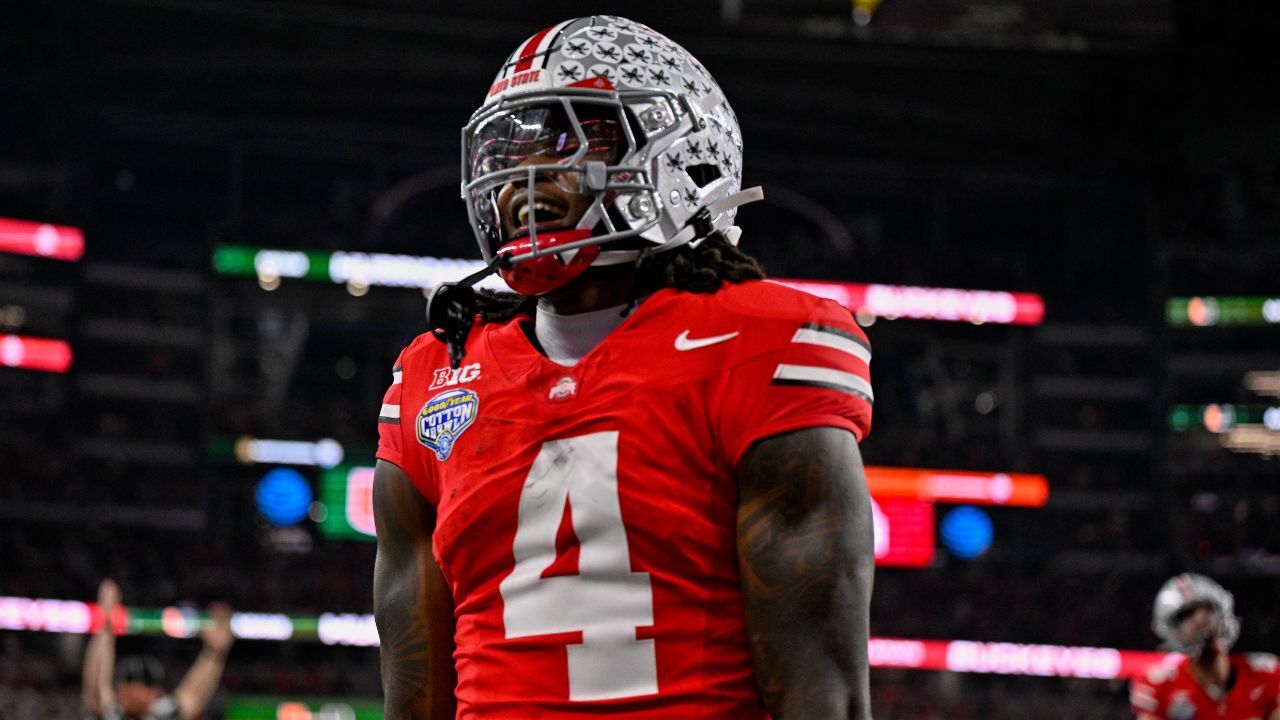
Ohio State wide receiver Jeremiah Smith is making a compelling case to be considered a generational wide receiver prospect. Despite entering the 2026 season as a junior, Smith has already established himself as one of the most productive and physically gifted receivers in college football.
At 6-foot-4 and 223 pounds, Smith has the size to overpower defensive backs while possessing the route-running ability to create separation. He recorded more than 1,200 receiving yards in each of his first two college seasons, establishing himself as one of the most dominant young receivers in the country. His combination of size, hands, and athleticism makes him a difficult matchup for opposing defenses.
Smith’s production has continued into his junior season. Through Ohio State’s first five games of 2026, he has recorded 44 receptions for 823 yards and nine touchdowns. His performance against Illinois was particularly impressive, as he finished with a career-high 12 receptions for 217 yards and four touchdowns.
Pro Football Focus identified Smith as a potential top-five selection in its October 2026 draft profile. His appeal extends beyond his physical tools, as he can win through precise route running, reliable hands, and an exceptional ability to track the football. Although he has areas to improve, Smith has the potential to become an immediate impact player in the NFL.
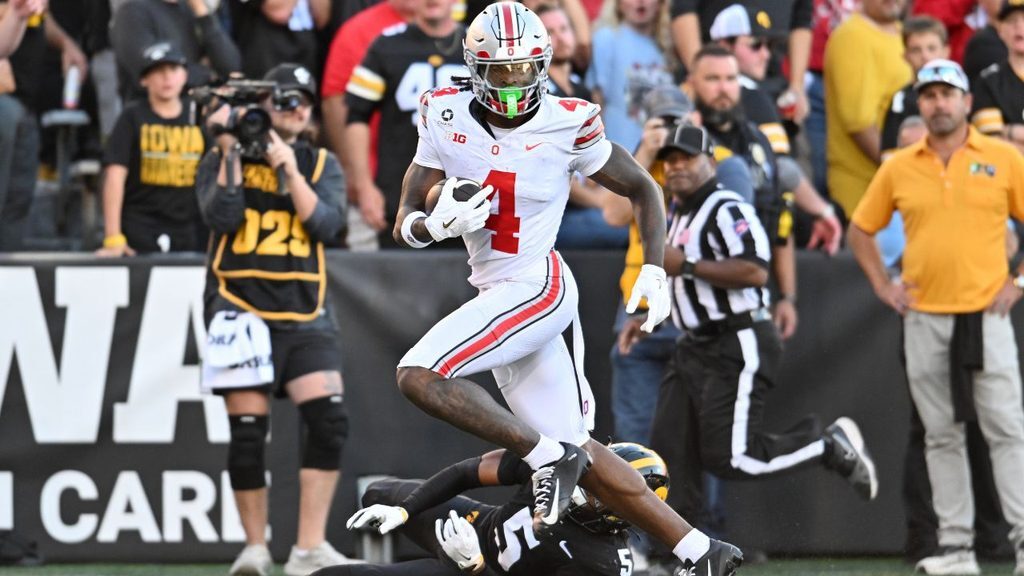
Smith’s physical profile immediately stands out when evaluating his NFL potential. At 6-foot-4 and 223 pounds, he has the size to compete against physical cornerbacks and make difficult catches in traffic.
His frame is particularly valuable in the red zone, where receivers often have limited space to create separation. Smith can use his body to shield defenders from the football and give his quarterback a larger target near the goal line.
His effectiveness in contested situations also comes from his body control and ball-tracking ability. Smith adjusts to passes that are not perfectly placed, extends away from his frame, and maintains his balance through contact.
His development in contested situations has been especially impressive. According to PFF, Smith caught 17 of 23 contested targets across the 10 games preceding its October 2026 evaluation. That marked a significant improvement over the 14 contested catches he made on 34 opportunities during his first season and a half.
Smith’s combination of size, strength, and catch-point ability gives him an advantage against a wide range of defensive backs. He can win through contact rather than needing several yards of separation on every route.
Smith’s route-running ability separates him from receivers who primarily depend on size and athleticism.
Despite his larger frame, he shows impressive footwork and an understanding of how to manipulate defensive backs. He can change speeds, attack a defender’s leverage, and adjust his route to create space at the right moment.
His ability to separate against both man and zone coverage is particularly encouraging for his NFL projection. Smith understands how to influence a defender’s positioning before changing direction or accelerating into an open passing window.
That versatility should help him translate to professional football. NFL defenses can limit receivers who depend on one specific route or matchup, but Smith has demonstrated the ability to win in several different situations.
PFF’s October 2026 evaluation highlighted his separation ability as one of the strongest parts of his profile. His combination of refined route running and physical advantages gives him the potential to become a true No. 1 receiver rather than a specialist used primarily on deep passes or in the red zone.
Smith has also established himself as a dependable target. PFF credited him with just four career drops at Ohio State entering its October 2026 scouting report, an impressive figure considering his substantial workload.
His hands and concentration allow him to finish difficult receptions, including passes that require him to adjust in midair or secure the ball through contact. Although Smith regularly makes spectacular catches, his consistency extends beyond highlight-reel plays.
His college production reflects that reliability. Smith recorded 76 receptions for 1,315 yards and 15 touchdowns as a freshman in 2024. He followed that performance with 87 catches for 1,243 yards and 12 touchdowns in 2025.
Those back-to-back seasons demonstrate that Smith can produce against defenses that have time to study his tendencies. His ability to consistently finish catches should also make him a valuable option on third downs and in high-pressure situations.
Combined with his size and separation ability, his dependable hands make Smith an unusually complete receiving prospect. Few young receivers enter the draft conversation with such a strong combination of production, physical tools, and consistency.
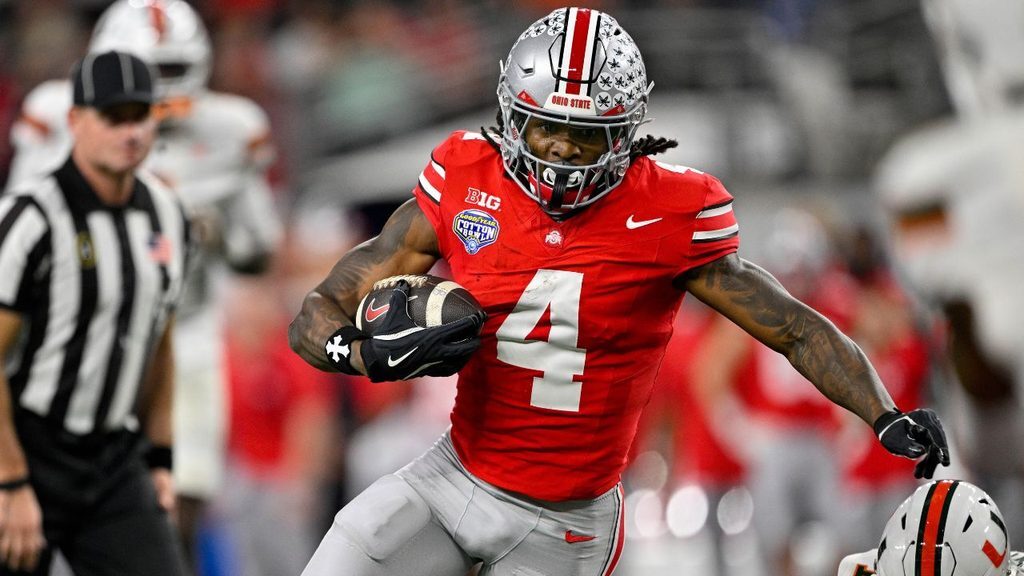
Run blocking is an area where Smith can continue to improve. His size and strength give him the physical tools to contribute, but he can become more consistent with his technique and positioning.
Blocking requires more than overpowering an opponent. Receivers must maintain proper leverage, sustain their assignments, and recognize how defensive players react to the developing play. Smith has the physical profile to perform those tasks, but refinement would make him more effective in different offensive situations.
PFF noted that Smith’s run-blocking grade had improved each season, reaching 78.5 early in his junior year. Its evaluation also described his blocking as above average for a first-round wide receiver prospect.
This is a developmental opportunity rather than a major concern in Smith’s overall draft evaluation. Becoming more consistent as a blocker would help him contribute when he is not the primary target in the passing game.
Smith’s ability to create additional yardage after securing a pass is another area where he can continue developing.
He has the strength to break through contact and the athleticism to turn receptions into significant gains. However, his open-field movement is not always as sharp as that of smaller receivers who rely on quick changes of direction to avoid defenders.
PFF reported that Smith averaged 5.2 yards after the catch per reception entering its October 2026 evaluation. That was two yards below Jaxon Smith-Njigba’s average at Ohio State, although Smith remained ahead of the typical big-bodied receiver.
His size can make sharp directional changes more difficult, but that does not mean he struggles to generate additional yardage. Smith has shown the ability to break tackles and force missed tackles after securing the football.
Becoming more elusive in open space could add another dimension to his game. His improvement in this area would make an already dangerous receiver even more difficult to contain, particularly when he has room to accelerate after the catch.
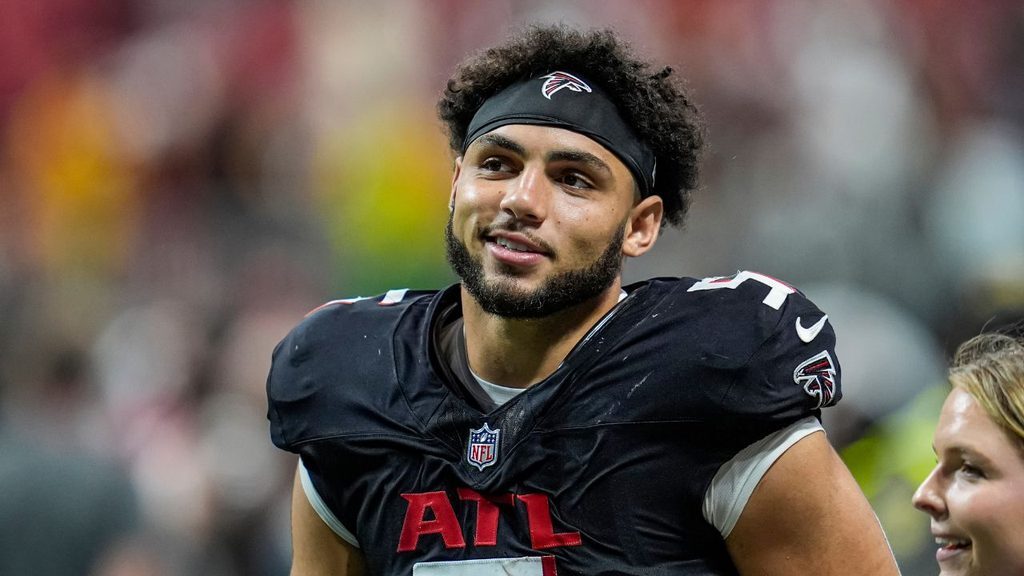
Drake London provides a useful stylistic comparison for Smith because both receivers combine a large frame with the ability to win through physicality and reliable hands.
Like London, Smith can use his size to shield defenders from the football and create opportunities in contested situations. Both players offer quarterbacks a substantial target who can contribute in the red zone and on difficult third-down receptions.
However, Smith’s game extends beyond those physical similarities. His route-running ability and separation skills give him additional ways to create opportunities against coverage. He does not need to rely exclusively on jump balls or use his size to compensate for a lack of separation.
The comparison reflects aspects of their playing styles rather than a prediction that Smith will follow London’s professional career. Smith has his own strengths, and his development will determine the type of role he ultimately establishes in the NFL.
London illustrates the value of a big-bodied receiver who can consistently win contested catches. Smith has the potential to offer that same physical advantage while providing greater versatility as a route runner.
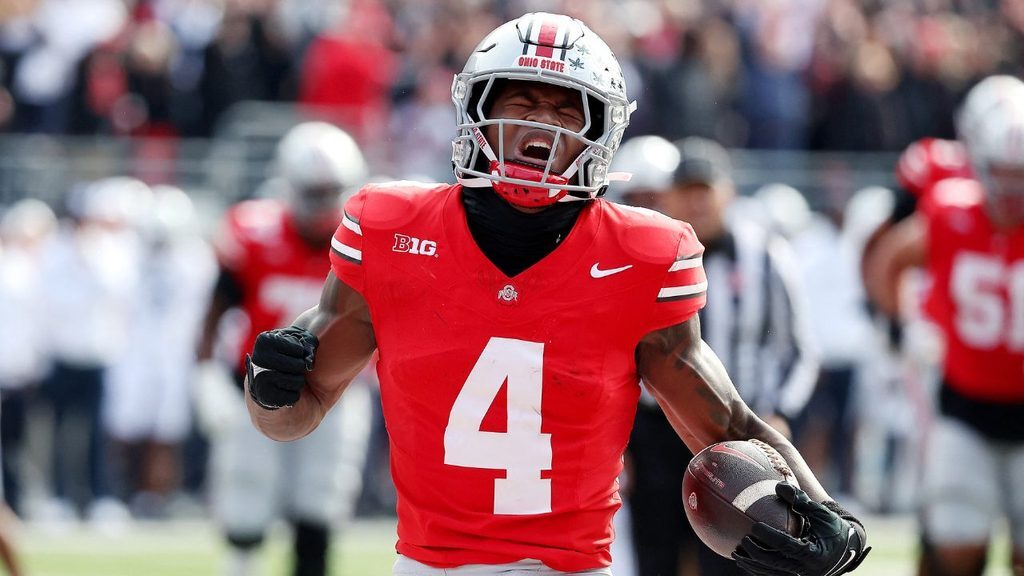
Jeremiah Smith has the production, physical ability, and receiving skills to become one of the most coveted prospects in the 2027 NFL Draft. His combination of size, route running, dependable hands, and contested-catch production gives him one of the most complete profiles in the class.
His first two seasons at Ohio State established an impressive foundation. Smith surpassed 1,200 receiving yards in both campaigns, and his early 2026 production has reinforced his status as one of the country’s most dominant offensive players.
What separates Smith from many highly regarded receiver prospects is his ability to win in multiple ways. His size makes him difficult to defend in traffic, while his route running allows him to create separation without relying exclusively on contested catches. His reliable hands and extensive production provide further evidence of his readiness for the next level.
Smith’s primary areas for improvement involve run blocking and maximizing his production after the catch. Neither concern currently outweighs the strengths that make him such an appealing prospect. Both areas also offer opportunities for continued development before he reaches the NFL.
PFF projected Smith as a top-five selection in its October 2026 scouting report. That projection reflects his historic production, separation ability, and rare combination of physical and technical skills.
Smith has a legitimate case to be viewed as a generational wide receiver prospect. His production through two college seasons, combined with his continued development as a junior, puts him in a conversation reserved for the most exceptional talents at his position.
He still has more college football to play before his draft position is finalized. However, Smith has already built a strong case to be the first wide receiver selected in 2027. If he continues developing and stays healthy, he could enter the NFL as one of the most highly regarded wide receiver prospects of his generation.
