
The 2026 World Cup is now in full swing. Game after game, the fans are becoming overcome by the football fever, counting down minutes to the first whistle and, in many cases, staying up until the early hours of the morning to see their team play. Not everything, however, is as beautiful as the news of matches won would have people believe. Since before it has officialy began, the tournament has been riddled with deep-rooted problems that put into question whether the hosting countries were chosen accordingly.
As of this moment, only four official games have been played. Mexico opened the tournament on Thursday with a match against South Africa, which they won 2-0. It featured three red flags, a record for the first game of the World Cup, and was followed by a meeting between South Korea and Czechia. Their match was not as intense and ended with Korea winning 2-1.

On Friday, the two remaining hosts, Canada and the USA, played their respective opening games. The former drew 1-1 against Bosnia and Herzegovina. The latter managed an impressive 4-1 victory over Paraguay. Interesting as the matches were, they also perfectly exemplified at least some of the main problems of the American World Cup.
Long before the World Cup began, people had begun complaining about the outrageous ticket prices. Of course, going to the tournament has never been something that the average fan could afford, but in 2026, the problem was amplified to a scale never seen before.
The ticket-buying process has been confusing and messy since the seats first became available. Fans who bought tickets in a given price category were sometimes allegedly issued tickets of lower value, in places not listed as possibilities for the money they had paid. The cost of tickets for all games skyrocketed, with seat prices at the final match sometimes up to seven times higher than they were for the ultimate game of the 2022 World Cup in Qatar. What’s more, tickets for group stage matches are not priced at the same rate, but instead their cost is determined by the perceived popularity of the teams playing. This means that fans from nations such as Spain or France have to pay significantly more if they want to see their team in action.
These are only some of the ticket-related problems, as the general lack of clarity from FIFA and the organisers has led to a situation in which it is hard to even wrap one’s head around the systems in place. What is certain is that they are all meant to force the fans to pay even more than they already would have, should they want to watch the World Cup live. It is, therefore, no surprise that thousands of tickets remain unsold even now that the tournament has officially kicked off.

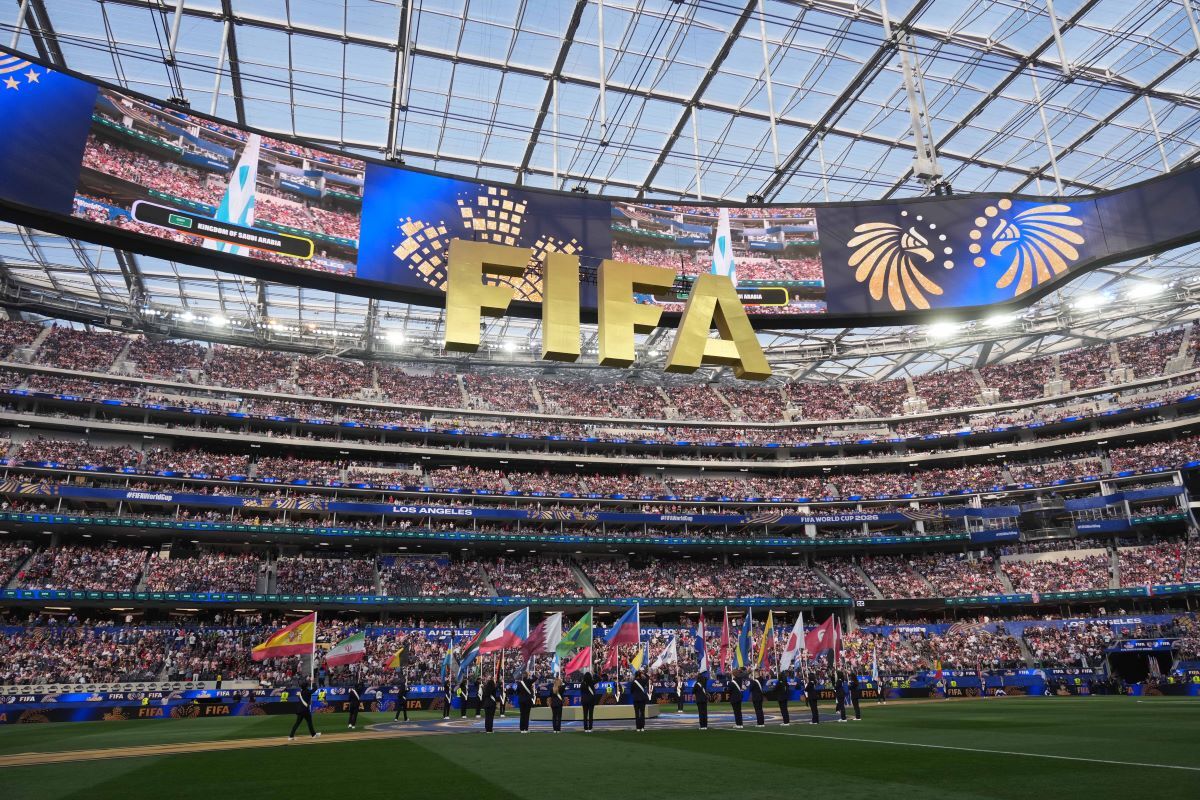
While this, of course, provides issues for the organisers, it also ruins the watching experience for the fans. Yesterday, as I sat down to watch Canada play Bosnia and Herzegovina, I couldn’t help but pay attention to just how many seats remained empty throughout the duration of the game. It made me feel like I was watching a league game between two mediocre teams, rather than a match in one of the most anticipated tournaments.
With the clear lack of fans, the atmosphere at the stadium was also not up to par with what I have come to expect from World Cup games. That particular problem might become amplified as the tournament progresses and the group stage turns into the statistically more interesting knockout phase. A few years ago, after playing at Super Bowl LVI, Joe Burrow commented on the environment during the game:
“It felt like a dinner party and we were the entertainment,”
In his comment, Burrow referred to the ticket prices. The cost meant it did not feel like he was playing to a room full of fans. Instead, it felt rather like a stadium filled with people who might not have cared about the game, but who were rich enough to afford to watch it. With the ticket pricing issues, the 2026 World Cup is on track towards games that will leave the fans with a similar feeling.
Disagree? Join the Stadium Rant iPhone App open sports community and tell us.
The money, while a big topic of discussion in the American World Cup, is not the only issue worth mentioning. Due to the tightened immigration rules in the US, multiple officials and supporters have been denied entry to the country and could therefore not participate in the tournament. Various visa restrictions put multiple fans, especially those from Africa, in a situation in which they might not make it to the country altogether, missing an event they had already paid for. Their situation is complex and filled with political tension that sees everyday people pay the highest prices for the matters of their government officials.
Perhaps the most well-known example of the problems related to entering the US has been the case of Omar Artan, a highly regarded Somalian referee. He was included in the list of the match officials for the 2026 World Cup, but was denied entry to the country and thus could do nothing but watch as the biggest opportunity of his career dissipated into thin air. UEFA has recognised the unfairness of his position and has appointed him to officiate the 2026 UEFA Super Cup, but the situation left a bad taste in the mouths of all those who witnessed it.

The atmosphere of the World Cup is said to be that of a tournament that unites the world through football. How can that be upheld in a situation in which people are not allowed to either support their teams or work the jobs they had been assigned to? Many people scream that sports should not be politicized, but the harsh truth is that politics are at the very core of every single sporting event, let alone one as big and influential as the World Cup. They have always impacted the tournaments, but this year, that impact is severe enough to spill onto the way in which the general public views the event.
The two main threads, money and denied entry, are only some of the issues that fans have directed their attention towards, although they are the ones generating the most outrage. Football doesn’t exist in a vacuum; it needs to have an audience, and right now, that audience is not happy with the product they have been provided with. The general public seems to be disappointed with the organisation of the World Cup and is loudly expressing their concern regarding the choice of the host, especially in relation to the US. Of course, there is still a lot of the tournament left, and the situation might change drastically, but the relatively rough start does not bode well for the weeks to follow.
