
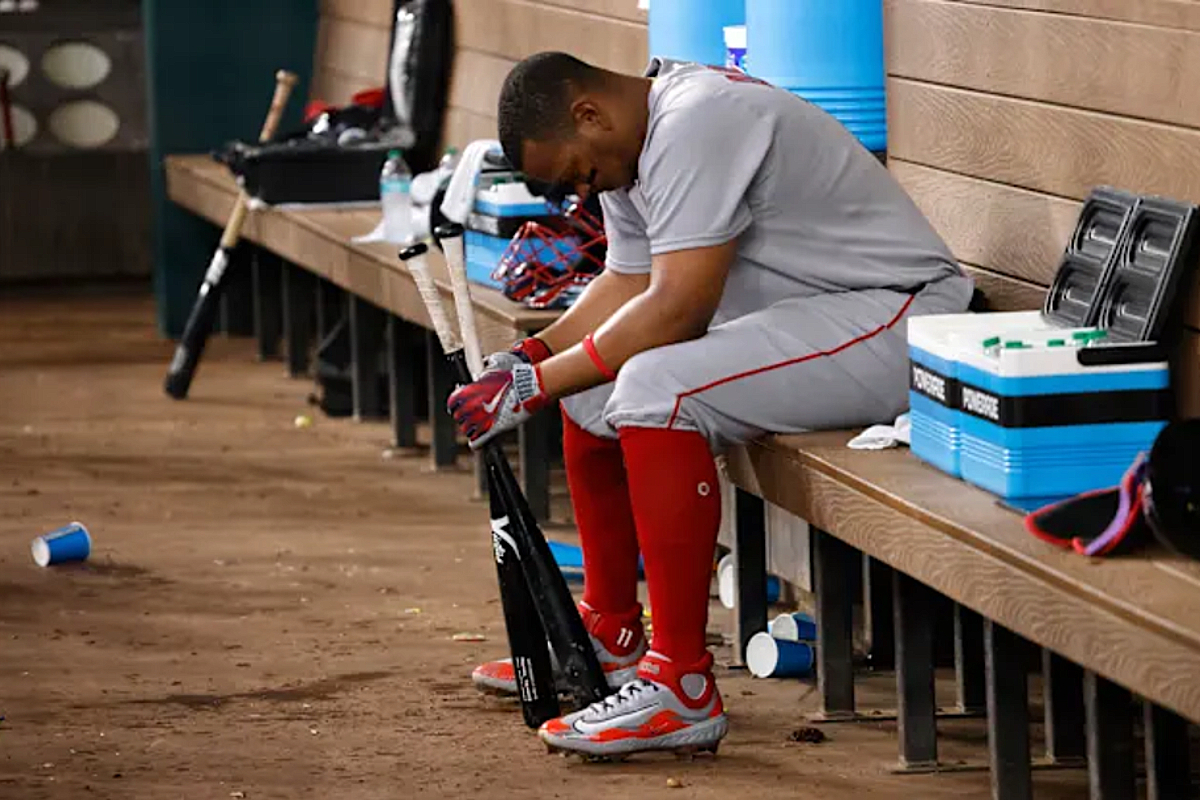
The Boston Red Sox are off to a slow start in 2025. The team has struggled in multiple areas, and only star pitcher Garrett Crochet has shown any success, winning both of his starts thus far. Although the bullpen has done its job, it has not had the opportunity to thrive yet, with the Red Sox behind so often. The offense has been the biggest worry, and the concern starts with their superstar designated hitter, Rafael Devers.
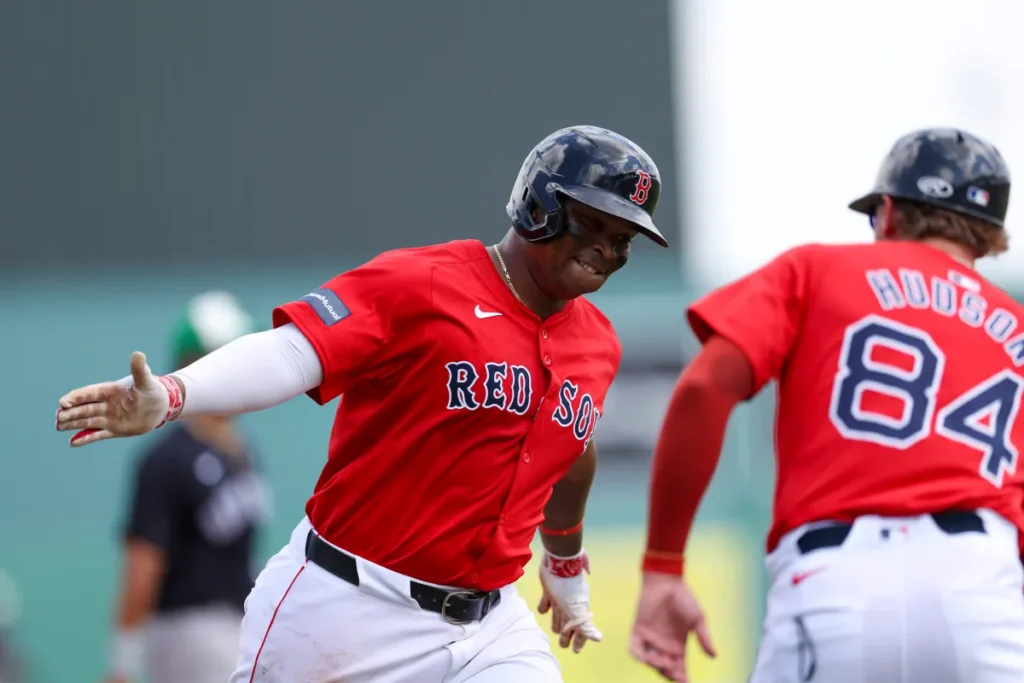
Devers has had a historically bad start to the season. Through his first 19 official at-bats, the Red Sox star designated hitter had 15 strikeouts and no hits. That set the record for most strikeouts in the first five games in baseball history. It is also good for an absurdly high k% rate, 75%, and still sits at over 60% after the next games.
As a DH, Devers’ role is to hit the baseball, and hit it hard. This offseason, with the signing of Alex Bregman, Devers was moved off his third base position. He had a lot to say about the decision at first, but seems to have ultimately come around and wants to support his teammates and the organization any way he can. When healthy, the top of the order for the Red Sox is as good as any team in baseball. Devers is a key part of that, and cold hitting negatively affects everyone around him.
Devers has come up in multiple big spots for the Red Sox and has not come through for the team. The highest-paid player on the team, with arguably the best bat, needs to come through in the clutch. Until the game on April 2nd, Devers provided negative win probability added. In just five games, he totaled -0.471 WPA. The best player on a playoff-caliber team cannot be subtracting that much value in such a short period.
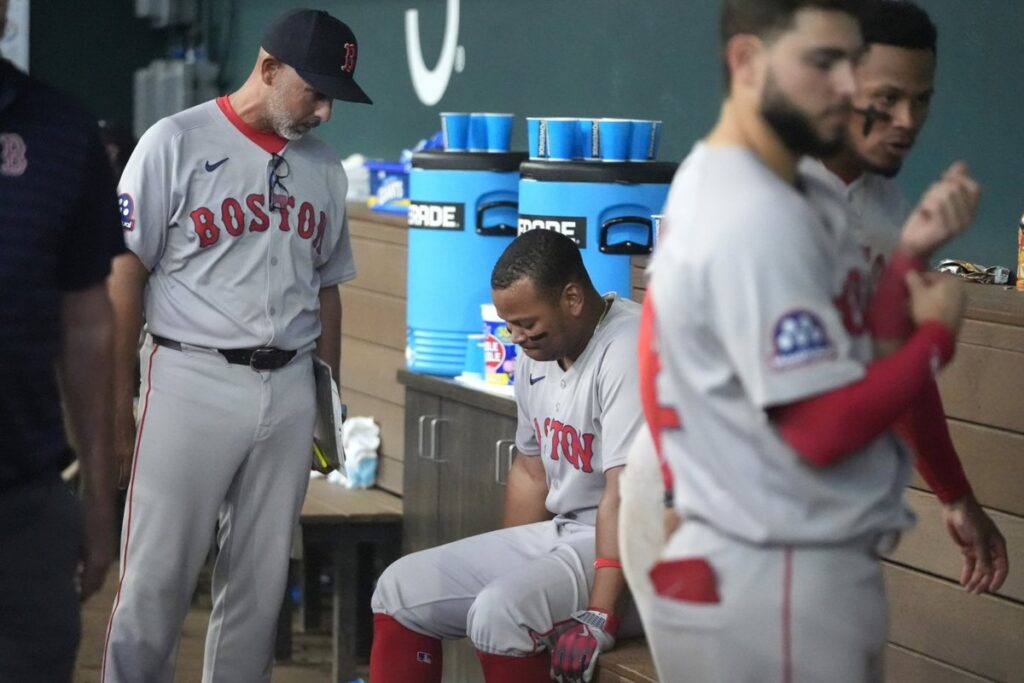
To the naked eye, Devers seems broken, even leading to theories that he is hurt or that he is rebelling against the move to DH. Any change of position takes time, and focusing purely on hitting is an adjustment. To Devers’ credit, however, he is already reaching out to David Ortiz and JD Martinez for advice, two of the team’s most prolific former DH’s. This is an indicator that he wants to perform well in the role.
Delving deeper into the numbers, Devers has some positive data points. He is still hitting the ball hard when he does make contact, at a 50% clip. His opposite field percentage rate is also around the norm, although he is pulling the ball far more than he has in the past and not hitting up the middle at all. His barrel percentage (12.5%) and average exit velocity(93 MPH) are also both at the higher end of his career norms.
The problem is making contact in the first place. Devers is swinging late at almost every fastball, even those in the strike zone. Teams are throwing him a fastball at a higher rate than nearly any other season, until the Red Sox star can prove he can hit it. This could be a timing issue, or it may be from a lingering shoulder injury, as many have noticed an adjusted stance as well.
Equally concerning, though, is that Devers also is not hitting other pitches. He is dramatically lower than career norms in runs above average for every single pitch he has seen, including an obscene -3.93 against the cutter, -5.05 against the splitter, and a staggering -7.00 against the change-up. It appears he is sitting on a fastball attempting to time it correctly, and in the process is completely fooled by other movement.
Even more concerning is that Devers is not even being fooled much outside the zone. His 19.7 O-Swing percentage is 10% lower than his career average, and his in-zone Z-swing percentage of 77.6 is a tick higher than his career average. Pitchers are throwing the ball in the zone and challenging Devers to hit it, and he can’t, with just a 50% contact rate, nearly 25% lower than his career. The Red Sox star simply looks overmatched.
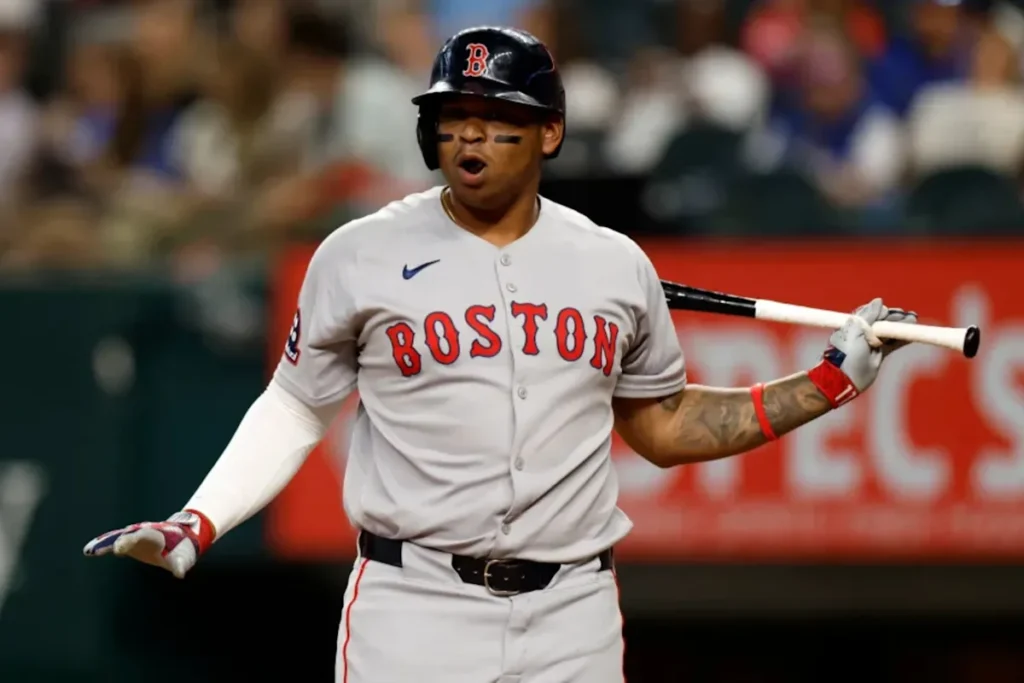
The short answer is yes, they can. The metrics above show a concerning pattern, but not an unfixable one for the Red Sox. Devers still hits the ball hard when he does make contact, meaning his swing is still powerful. While he is pulling the ball more, this could be due to pressing to get better timing on the pitch.
The pattern outlined is one of timing, point blank. If the Red Sox can fix Devers’ timing on his swing, especially on the fastball, his numbers will immediately improve. Work in the cages and batting practice should help the Red Sox improve his timing.
Fans have already seen some small samples of that against Baltimore on April 2nd and 3rd, where Devers has gone 3 for 8 with two runs scored and just one strikeout. It seems he is starting to get his swing back after almost no spring training. If that continues, the results should follow.
The short and the long of it is, yes, Devers has looked bad to start the season. The sample size is incredibly small, though, and without a Spring Training, it makes sense that he would have some rust. Red Sox fans may be inclined to get concerned, especially given his comments in the offseason, and want to place blame on the DH. The reality is, the answer to his problems may be much simpler: time. Give him time, and he will come around. He has already started to, and hopefully that trend continues and he steps up as the star we all know him to be.
For more of Stadium Rant’s daily coverage of the MLB, follow the link here.
