
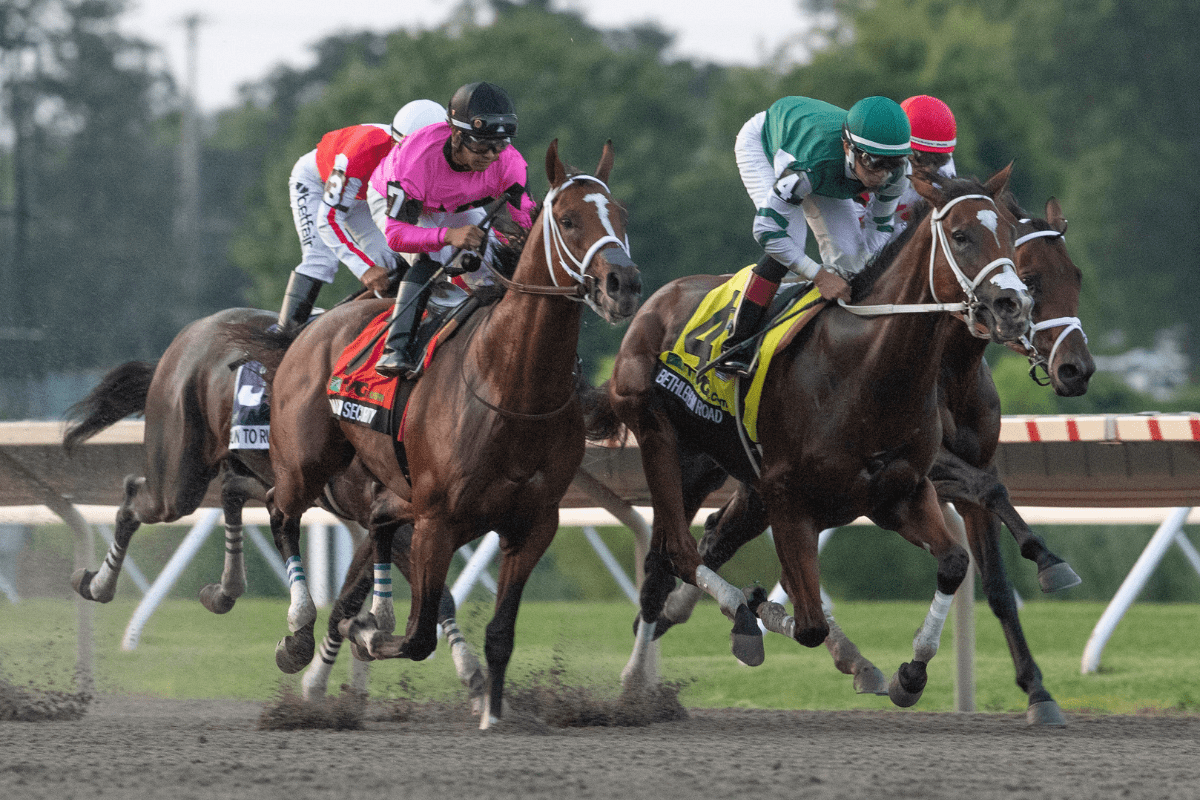
Few sports are thriving as much as the NFL and horse racing. With the NFL’s marketing machine and racing’s technological advances improving animal welfare, each is growing internationally, allowing newcomers to their respective sports to gain a better understanding.
Is there something that the NFL can take away from seemingly unrelated sports like horse racing?
Horse racing has been one of the most popular betting options at TwinSpires, with the upcoming prestigious Kentucky Derby ranking among one of the most followed events on the schedule.
This has been reflected in the record-breaking editions of the opening leg of the Triple Crown in Louisville, with a staggering 17.7 million people tuning in for the race at Churchill Downs last year.
The NFL, likewise, has tremendous betting options, especially since the legalization of online betting. What commonalities do the two share, if any? What can the NFL takeaway from the betting markets in horse racing?
Artificial intelligence has played an important role in animal welfare in horse racing, with AI being used readily to track metrics surrounding a horses heart rate, stride pattern and blood pressure.
All of these factors have a direct impact on connections being able to assess whether an equine is carrying an issue, which could be damaging their ability to perform. AI also has the ability to assess whether a horse is on the verge of picking up an injury.
This approach could be adapted to NFL teams, as physiological sensors could be used on players to identify potential fatigue patterns, which could see coaches stay ahead of the curve when it comes to soft-tissue injuries. And not just physical injuries—staving off mental health concerns is critical. Looking at the Rams after Puka Nakua has entered rehab has put the spotlight on the increasing awareness concerning players’ mental health.
NFL teams can track the metrics and assess where biomechanics have shifted, suggesting that an injury may be likely. This can help coaches to make informed decisions surrounding players that should be rested, or whether a modified training program should be followed.
Horse racing is a sport that heavily relies on data, meaning that tracking tools such as RFID and GPS are now readily used to track a horse’s performance in-running. This helps trainers keep tabs on stride patterns and positioning, which can be incredibly helpful when it comes to reviewing a performance.
NFL teams already use trackers to monitor movements, but horse racing highlights the importance of analysing the movement, which could be important when reviewing NFL games.
Coaches can pinpoint potential movements made by players, and assess whether a different run could have resulted in a touchdown being scored.
The metrics can also help NFL teams to identify how players perform in different conditions, whether there is a difference in efficiency in hot weather compared to a colder climate. A change could have a profound impact on team performance.
Technology is being used readily in horse racing to aid with the training process. Data can be used to show the areas of concern when it comes to a horse’s performance, identifying periods in races where an equine may underperform.
Metrics can be pinpointed to show weak parts of a horse’s performance, which can then be improved by using modified training plans. Each horse will require something different to reach their peak, with some preferring to train below their best, while other may need to train just as they would perform on the track. This can be transferred to the NFL, as some players will prefer training at a higher intensity compared to others, as we will see in the 2026 NFL Draft.
Using performance genetics could be important for coaches to get the best understanding of their players, which can then help to create a highly personalised program that gets the very best out of a star without risking the pressure of picking up an injury.
Simulators are incredibly common in horse racing, with jockeys typically going through a race visually before doing it for real. They are also hugely important in teaching inexperienced jockeys about in-race tactics, learning more about how they should race before being put in a real-world situation.
Simulators are able to predict outcomes of events, taking into account the decisions that the user is making. Therefore, it gives riders an opportunity to test out tactics, and assess whether certain conditions such as heavy ground or rainfall could damage their chances. The Baltimore Ravens are one of the few NFL teams that use simulators in order to improve their performance levels.
They use the tech to assess potential plays in the final stages of a match, assessing, which tactics could work to best effect when the pressure is on. Across the board simulator could be used in the NFL, as they could give coaches a better understanding of how to set up defensively to stop offensively strong teams, while also taking into account external factors that could impact the performance levels.
Overall, a simulator will give coaches a greater understanding surrounding their team’s chances, and what steps could be taken to enhance their chances of getting a win on the board.
If you enjoyed this article, subscribe to our newsletter here. Check out Stadium Rant Original shows on our Youtube channel and subscribe! Give our socials Facebook, Twitter, Instagram, TikTok a follow for more great content!
