

The debate around Virat Kohli 100 centuries has reignited in full force, yet reaching the mark before the 2027 World Cup concludes remains an improbable task. A realistic projection puts Kohli at around 90-92 international hundreds by then. Kohli needs 14 more centuries after reaching 86, meaning he would need an extraordinary conversion rate across his remaining ODI opportunities. The chase remains mathematically possible, but the numbers suggest 100 before the World Cup ends would require the most prolific stretch of his career.
Kohli’s unbeaten 139 off 88 balls in Thiruvananthapuram was his 55th ODI hundred, taking his tally to 86 international centuries. The innings also made him only the second batter after Sachin Tendulkar to cross 15,000 ODI runs, with Kohli reaching the landmark in his 303rd innings. His 55 ODI centuries are now six more than Tendulkar’s 49.
The latest milestone therefore creates two separate stories. One is the immediate news around Kohli’s 55th ODI century, while the more valuable long-term search question is whether those 86 international hundreds can become 100. That second question is where the remaining schedule, Kohli’s recent form and his extraordinary record in successful chases become important.
Virat Kohli 100 Centuries: 14 Hundreds Away From History
Kohli now needs 14 more international centuries to reach Tendulkar’s world record of 100. The comparison has already shifted dramatically in ODIs, with Kohli holding a 55-49 advantage in hundreds, although Tendulkar’s 51 Test centuries keep him comfortably ahead in the overall international tally.
| Milestone | Virat Kohli | Sachin Tendulkar |
| International centuries | 86 | 100 |
| ODI centuries | 55 | 49 |
| ODI runs | 15,080 | 18,426 |
| Innings to 15,000 ODI runs | 303 | 377 |
Kohli’s 15,000-run milestone is significant because it highlights how quickly he has accumulated ODI runs. Reaching the mark in 303 innings made him 74 innings faster than Tendulkar, adding another statistical distinction to an already extraordinary comparison.
The century chase, however, is much harder than the run comparison. Kohli can accumulate dozens of runs in every innings, but a century requires him to maintain an elite scoring rate while surviving for a much longer period. Fourteen more hundreds therefore demand far more than simply continuing to score heavily.
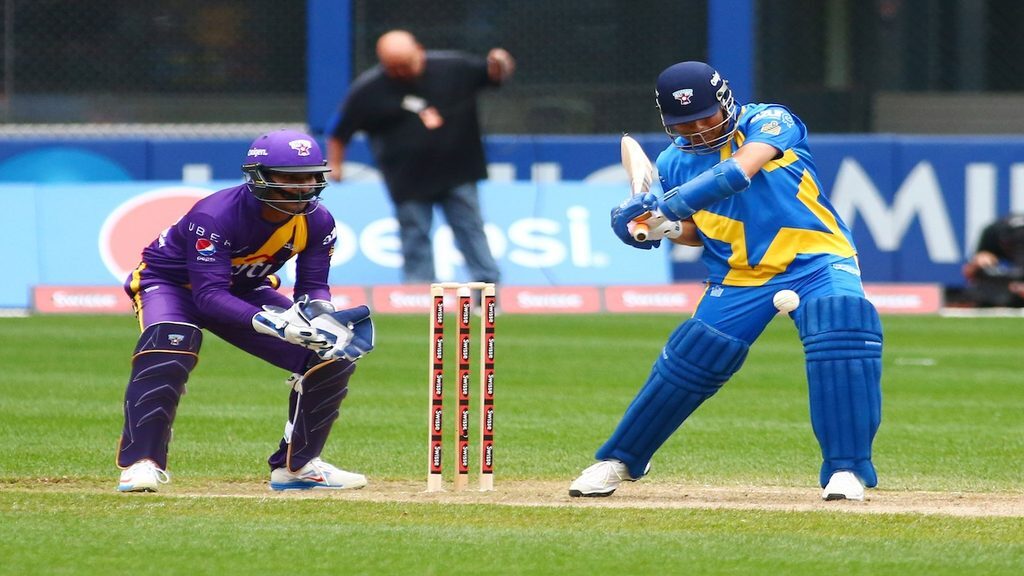
Why 100 By The 2027 World Cup Is So Difficult
India has a substantial ODI calendar between now and the 2027 World Cup, but it’s not unlimited. After the opening West Indies ODI, the remaining bilateral schedule currently includes two more matches against West Indies, five against New Zealand, three against Sri Lanka and three against Zimbabwe, giving Kohli 13 scheduled bilateral ODIs before tournament cricket is added. BCCI has confirmed the West Indies, Sri Lanka and Zimbabwe home series, while New Zealand Cricket has announced the five-match ODI tour in November 2026.
The 2027 Asia Cup provides another ODI window. The tournament is expected to return to the 50-over format in Bangladesh, with six teams and 13 matches reported. However, the final schedule should be treated separately from the already confirmed bilateral fixtures.
The World Cup itself will have a new format. ICC has confirmed that 12 teams will begin the main competition across two groups of six, followed by a Super 7 stage and then the semi-finals and final, meaning a team that reaches the final can play 13 matches in the tournament.
The 25-innings figure used for this projection is deliberately conservative. Kohli will not necessarily bat in every ODI India play, while the Asia Cup and World Cup create additional opportunities depending on India’s progression and individual match situations. The model therefore asks what happens if Kohli gets roughly 25 meaningful batting opportunities rather than pretending the calendar guarantees exactly 25 innings.
The 14-In-25 Problem
Kohli’s career ODI record provides the first benchmark. His 55 centuries have come in 303 innings, meaning approximately 18.2% of his ODI innings have produced hundreds, or roughly one century every 5.5 innings. Reaching 100 from 86 in a 25-innings model would require 14 hundreds, which means a century in 56% of those innings.
Recent form makes the chase much more interesting. Since September 1, 2025, Kohli has scored 899 runs in 13 ODI innings at an average of 89.90, including four centuries and five fifties, while his strike rate has been above 112. That means his recent century rate is about 30.8%, significantly above his career figure but still well below the 56% rate required by the 25-innings model.
| Projection | Century rate | Approx. hundreds in 25 innings | International total |
| Career rate | 18.2% | 4-5 | 90-91 |
| Recent 13-innings rate | 30.8% | 7-8 | 93-94 |
| Required for 100 | 56% | 14 | 100 |
| Working projection | ~20-24% | 5-6 | 90-92 |
The 90–92 projection deliberately sits between Kohli’s career rate and his current purple patch. Maintaining the four-centuries-in-13-innings pace across another 25 innings would be a huge assumption, while simply applying his career rate would ignore how aggressively he has batted since moving to an ODI-only international schedule. Five to six additional centuries therefore provides the most balanced working estimate.
Kohli’s Last World Cup, But Not Necessarily His Last ODI
Kohli has already provided the most important deadline for this discussion. In an interview with Abhinav Mukund for JioStar, he said, “For me, it’s the last World Cup I’m going to play for India,” adding that winning the tournament is his motivation and that he is ready to do whatever it takes.
The wording matters because the last World Cup does not mean the last ODI. Kohli has retired from Tests and T20Is, but he has not announced that he will retire from ODI cricket after the 2027 tournament. After the West Indies match, Kohli said he still had “some time left to play in this format as well,” leaving the possibility of continuing beyond the World Cup.
That distinction keeps 100 within the realm of possibility even if the 2027 deadline is missed. A player reaching 90–92 by the World Cup would still need only eight to 10 more centuries, and an ODI career extending beyond the tournament would create a very different mathematical equation.
Why Kohli’s Current Form Keeps The Math Alive
Kohli’s current form is the biggest reason the 100-century chase cannot simply be dismissed. His 112.51 strike rate since the Champions Trophy 2025 shows a more aggressive ODI approach, while his 25 centuries in successful chases are the most by any batter in ODI history. With 25 of his 55 ODI hundreds coming in successful chases, roughly 45% of his centuries have arrived when India have successfully hunted down a target.
The latest 139* was another example of that pattern. Kohli also spoke about having a challenge at this stage of his career to “up the ante and play a gear or two higher,” while saying that playing with a free mind has worked for him. Shubman Gill’s presence at the top adds another layer because Gill can carry scoring responsibility alongside him, allowing Kohli to attack without having to manufacture the entire innings himself.
His Chase Record Could Be The X-Factor
Kohli’s record in successful ODI chases gives the projection a genuine statistical counterargument. He now has 25 centuries in successful chases, the highest total in ODI history, while his 6,374 runs in those wins have come at an average of 91.05. Those numbers show that Kohli’s best statistical environment has often been one in which the target is known and the innings can be paced around the required rate.
The record becomes even more striking when viewed against his overall century tally. Kohli has scored 30 ODI centuries while batting second, with 25 of those coming in successful chases, meaning more than eight out of every 10 of his chasing hundreds have ended with India winning. The 139* against West Indies added another century to that list and demonstrated why successful chases remain a critical part of any projection for his remaining career.
India’s remaining ODI schedule should provide opportunities for Kohli to exploit exactly that strength. Not every match will become a chase, and not every chase will provide the conditions for a century, but his historical output in those situations gives the 90–92 projection more upside than a simple career-rate calculation might suggest.
Kohli’s World Cup Record Could Shift The Projection
Kohli’s relationship with the World Cup also makes the final tournament especially relevant. Across 37 World Cup matches, he has scored 1,795 runs at an average of 59.83, including five centuries and 12 fifties. The 2027 tournament will therefore give him another major stage on which his career record has historically been exceptionally strong.
The format could give India plenty of matches if the team advances deep into the competition. A maximum of 13 matches is available to a team that reaches the World Cup final under the new structure, although Kohli’s actual innings total would depend on India’s progress and match circumstances.
A three-century World Cup, for example, would materially change the projection. Even then, Kohli would probably need several more hundreds from the bilateral schedule and Asia Cup to reach 100 before the tournament ends. The World Cup can accelerate the chase, but it cannot remove the underlying mathematical difficulty.
FAQs About Virat Kohli 100 Centuries
- How many international centuries does Virat Kohli have?
86. He needs 14 more to tie Sachin Tendulkar’s record of 100. - How many ODI centuries does Kohli have?
55, which is the most in ODI history (six ahead of Tendulkar’s 49). - Will Kohli retire after the 2027 World Cup?
He confirmed 2027 is his final World Cup, but he has not set a definitive ODI retirement date. - Can Kohli reach 100 international centuries?
It is mathematically possible but highly unlikely before the 2027 World Cup. Realistic projections place his total around 90–92 centuries by the tournament’s end.

End Of My Virat Kohli 100 Centuries Rant
Kohli is now 14 international centuries away from Tendulkar’s record, but the math says 90–92 is the realistic range by the end of the 2027 World Cup. His recent 112.51 strike rate and extraordinary successful-chase record keep the dream alive, while the limited number of genuine batting opportunities makes 100 before the tournament a major challenge. The number to watch now is 90, because getting there before the World Cup would make the final push to 100 a very different conversation.
