
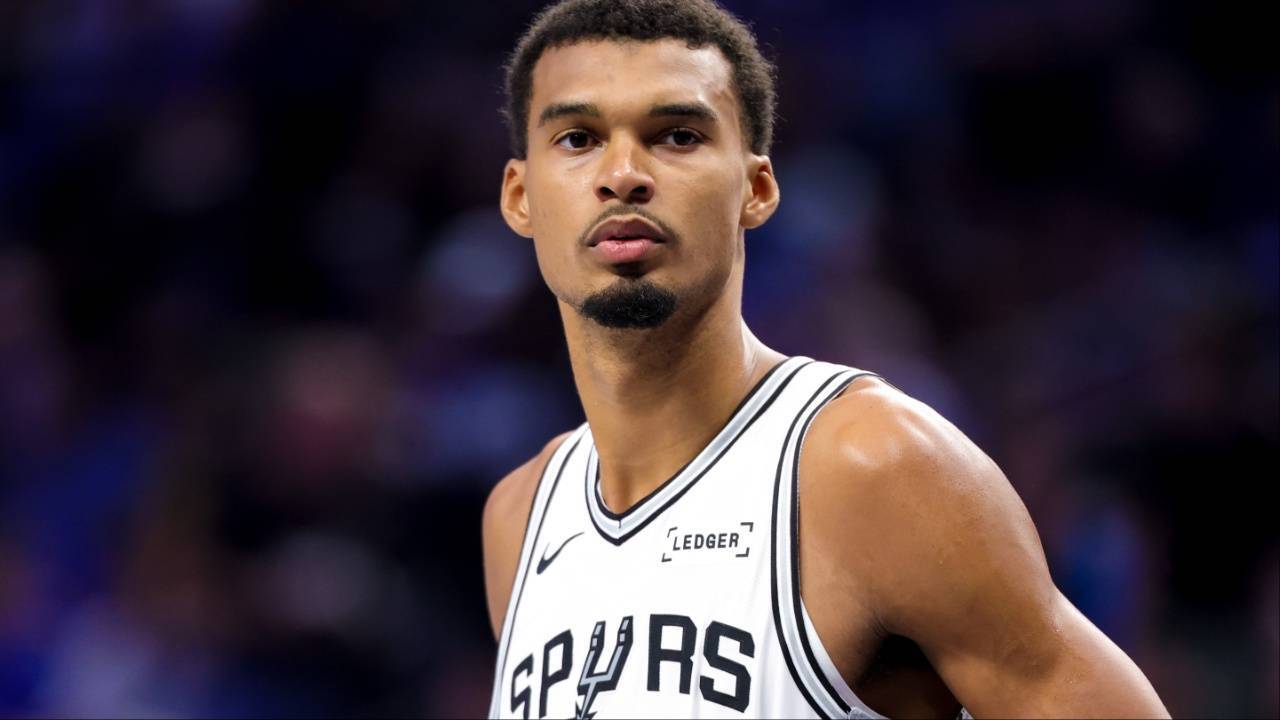
Victor Wembanyama MVP discussions should focus on whether better scoring efficiency can complement his defensive dominance. The San Antonio Spurs center needs to narrow the offensive gap against elite creators while preserving his enormous defensive advantage. More efficient scoring and sharper passing could make that combination the strongest individual case in 2026-27.
Wembanyama received 77% of the preseason MVP vote in the NBA’s GM survey. The clearest offensive opportunity is generating more close-range finishes through better spacing and earlier movement. An October win already provides a concrete example of that approach working, although sustained results must determine its value.
The Victor Wembanyama MVP Case Starts With Defense
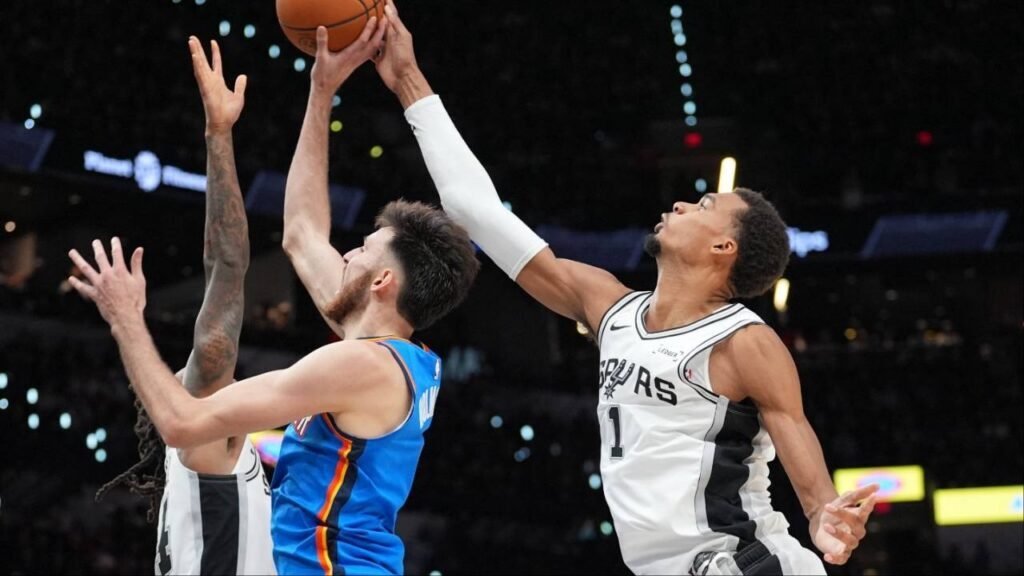
The previous season produced 25.0 points, 11.5 rebounds, and 3.08 blocks per game, according to his team announcement. Last season’s production establishes Wembanyama as a credible contender before accounting for further improvement. The next argument concerns how much additional offensive value the center can provide without sacrificing his defensive responsibilities.
Wembanyama became the first unanimous Defensive Player of the Year winner, as the NBA’s official release confirms. The Spurs allowed 10.1 fewer points per 100 possessions with him playing than sitting during 2025-26. Lineup combinations and opponents influence that differential, so the entire improvement cannot automatically be assigned to one defender.
The number still explains why scoring alone cannot settle his candidacy. A drive abandoned before the shot can help a defense without producing a block in the box score. Wembanyama’s strongest advantage would emerge if opponents face that restriction while also struggling to contain his offense.
Gilgeous-Alexander And Jokić Set Different Standards

The league’s award results placed Wembanyama third behind Shai Gilgeous-Alexander and Nikola Jokić in 2025-26. Gilgeous-Alexander supplied the Oklahoma City Thunder with 31.1 points per game on 55.3% shooting, according to the MVP announcement. Gilgeous-Alexander averaged 33.2 minutes per game, compared with Wembanyama’s 29.2 and Jokić’s 34.8, adding workload context to their scoring totals.
Gilgeous-Alexander posted a true shooting percentage of 66.5%, allowing a direct efficiency comparison with the other finalists. Oklahoma City finished 64-18, while San Antonio’s 62-20 record left only two wins separating the teams. The narrow standings gap makes individual production and workload especially relevant when weighing their respective cases.
Jokić presented another obstacle for the Denver Nuggets: 27.7 points, 12.9 rebounds and 10.7 assists per game. StatMuse’s season comparison records a 67.0% true shooting percentage alongside that production. Denver’s center demonstrated how elite scoring and playmaking can coexist rather than forcing a choice between finishing possessions and creating opportunities.
Wembanyama’s efficiency baseline was 62.6% true shooting, with 3.1 assists against 2.4 turnovers per game in 2025-26. True shooting accounts for two-pointers, three-pointers, and free throws, making it more informative here than field-goal percentage alone. The challenge is to narrow the offensive gap enough for superior defense to become decisive.
Five Games Reveal The Offensive Work Ahead
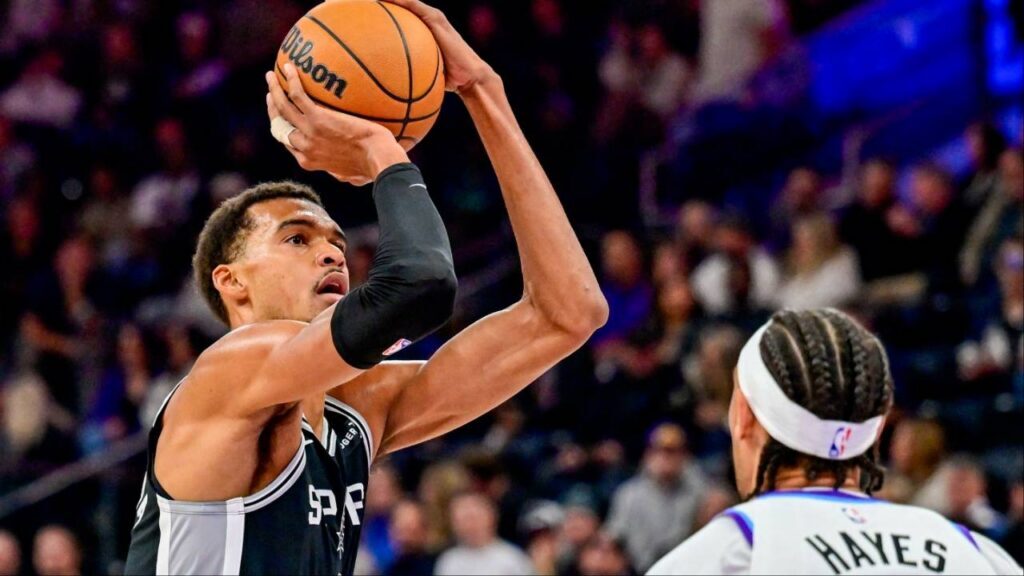
Through October 28, the official game log yields averages of 25.0 points, 11.4 rebounds, 2.8 assists, and 3.8 blocks across five games. Wembanyama made 47 of 98 field-goal attempts and eight of 29 three-point attempts. The resulting 48.0% overall shooting and 27.6% three-point shooting describe an uneven start, not an established regression.
The season opened with 1-for-13 shooting against the Thunder, alongside 12 points, 13 rebounds, six blocks, and four turnovers. The October 28 victory against the Utah Jazz brought 36 points, 14 rebounds, five assists, and no turnovers. The difference demonstrates his range of outcomes without proving that either performance represents his eventual season.
The five-game totals also produce a 56.2% true shooting percentage, calculated from 125 points, 98 field-goal attempts and 30 free-throw attempts. A small sample can move sharply after one strong game, making an October efficiency verdict premature. The early numbers nevertheless identify the area requiring improvement rather than allowing defensive highlights to obscure offensive misses.
Better Shot Selection Offers A Practical Path
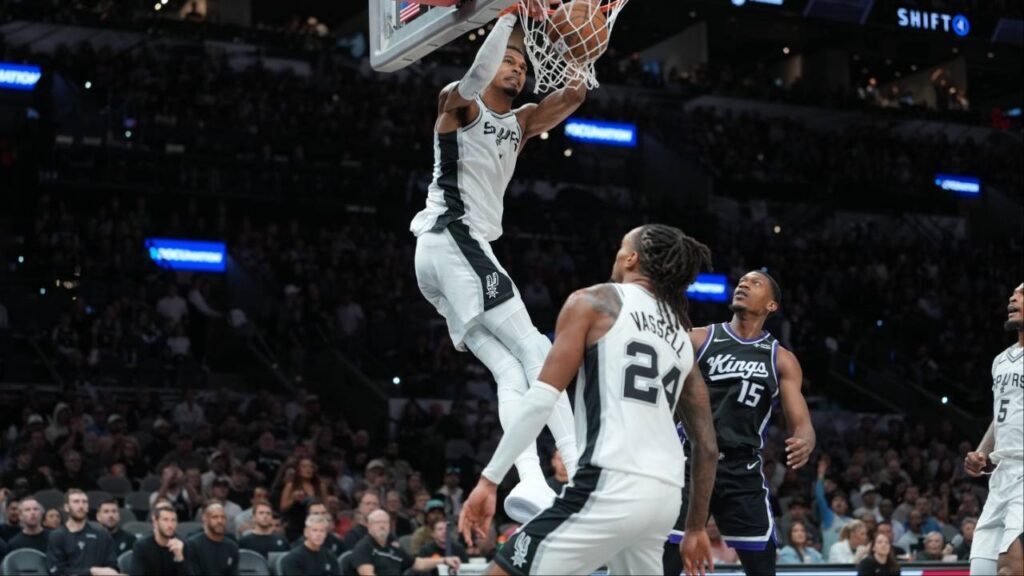
Last season, Wembanyama shot 34.9% from three on 5.5 attempts per game while averaging 29.2 minutes. The perimeter shot belongs in his arsenal, but respectable accuracy does not make every available jumper his best option. A stronger MVP campaign could come from improving the quality of possessions before increasing their difficulty.
The October 27 win against the Sacramento Kings demonstrated the value of creating easier finishes. The Express-News reported that 24 of Wembanyama’s 29 points came at the rim despite 0-for-3 three-point shooting. De’Aaron Fox and Stephon Castle each supplied an early lob, while coach Mitch Johnson credited improved spacing, execution and continued rolls. The performance illustrates how teammates can create efficient finishes without requiring a productive perimeter shooting night.
An earlier seal can punish a switch, while a decisive roll can challenge a center retreating toward the basket. A quick outlet can then punish extra help before the defense recovers. The Sacramento result supports testing those actions more consistently, but one favorable matchup cannot establish how frequently similar opportunities will appear.
The Supporting Cast Must Create Those Opportunities
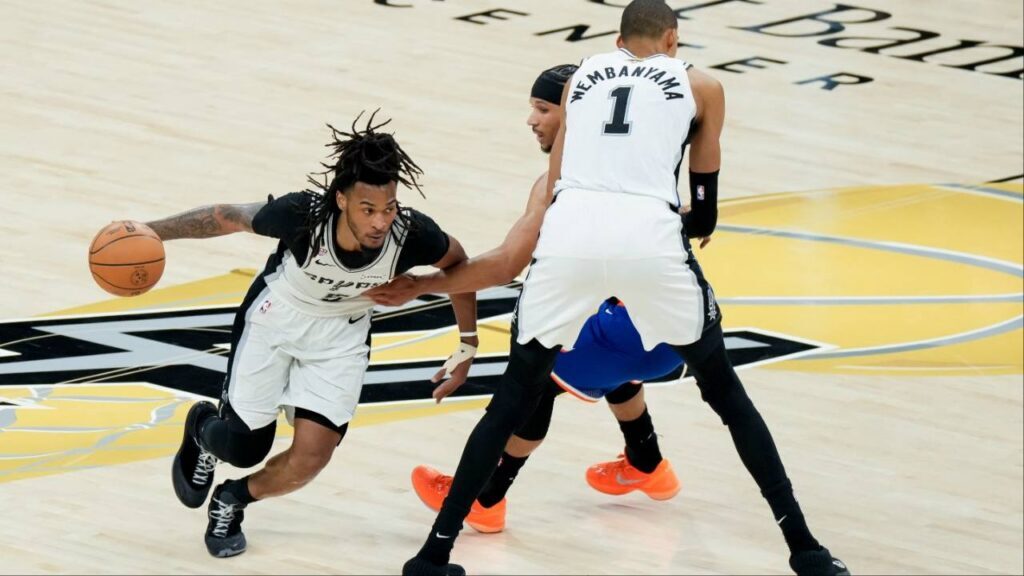
Fox, Castle, Dylan Harper and Devin Vassell form part of the supporting cast identified in NBA.com’s season storylines. The Spurs can use Fox as the initial ball-screen creator while giving Castle and Harper opportunities to attack the resulting rotations. Vassell can occupy a perimeter help defender, with spacing dependent on defenders respecting the shooting threat.
The proposed division of labor gives Wembanyama opportunities to finish advantages rather than manufacture every one from a stationary catch. San Antonio should judge those possessions by catch location, defensive attention and shot quality, alongside points scored. An assist total alone would miss the value of an early pass that creates the next teammate’s scoring opportunity.
Availability Is A Qualification, Not A Footnote
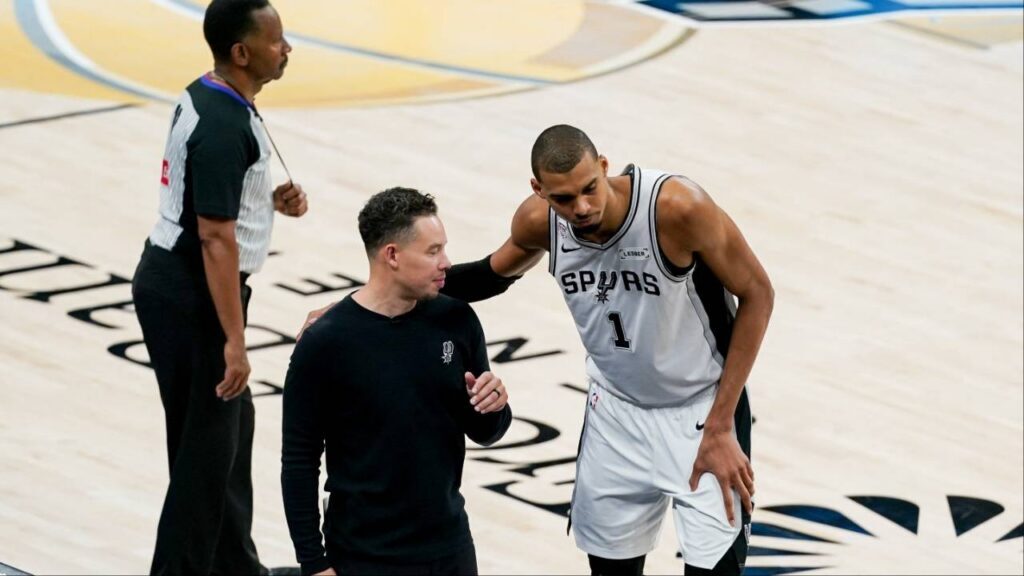
The NBA’s normal award threshold requires 65 qualifying appearances, generally with at least 20 minutes played. NBA.com’s eligibility explanation notes that two appearances lasting 15 to 19:59 can also count. Exceptions and formal eligibility challenges mean a simple games-played column does not resolve every case.
Wembanyama played 64 regular-season games last season, with his NBA Cup final appearance supplying an additional qualifying game. Sporting News explained that Cup distinction, which separates award eligibility from regular-season statistical totals. Availability therefore affects both reaching the ballot and supplying enough sustained value to win the comparison once eligible.
End Of My Victor Wembanyama MVP Rant
The Victor Wembanyama MVP case can become the strongest if offensive progress accompanies elite defense, sufficient minutes and a record matching the leading contenders. Rival performance must remain part of that judgment, since a modest efficiency increase would not automatically surpass another extraordinary season. A full season of efficient finishes and timely passes would provide stronger evidence than occasional explosive scoring nights.
The Spurs have a centerpiece capable of making opponents pay for entering the paint and for sending extra defenders toward him. The decisive leap would make those punishments dependable across strong opponents, difficult shooting nights, and changing coverages. Wembanyama can win this race by making elite two-way execution routine, provided the offensive progress survives beyond a handful of October performances.
