

Football academies are sporting institutions where young players improve in all aspects of the game and hopefully, rise to the first team. From an early age of about six, boys and girls are accepted into football academies and begin to train. Kids are given a place to play, meet others, and grow, like with any after-school sports program.
One of the most attractive aspects of these academies is not for the youngsters but rather their parents, because these programs are free. Academies in England, especially, have a special role in childhood because there are so many to take in young players. Unlike a typical after-school program, however, these academies are given serious money and attention.
In 2012, the English Football Association completely revamped its academy systems to promote higher-quality homegrown talent. The programs have been successful, with the England national team excelling on the international stage. Many European footballing countries have similar academy models to produce consistent talent for the future.
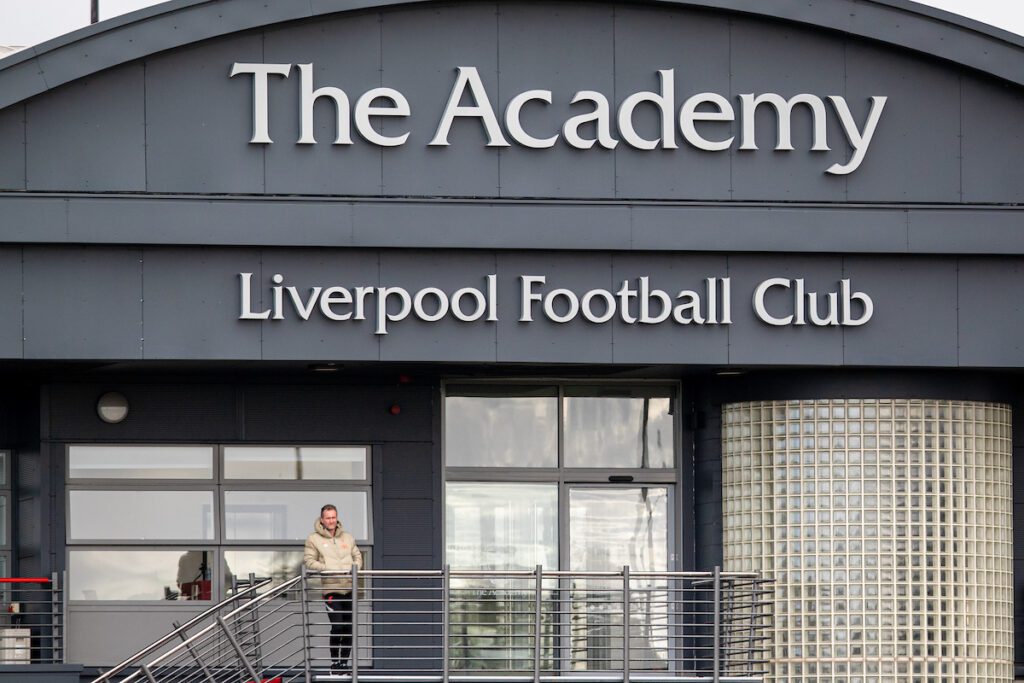
American soccer, on the other hand, is littered with private academies that charge fees for young players to train there. While MLS provides free academies, they are only for players aged U13 to U19. This leaves a lot of talented Americans unable to learn football fundamentals and train in a professional program. While MLS has programs such as MLS Next to showcase young players and their talent, it is still flawed in who has access.
Another difference, even with the free academies, is that European academies tend to extend past the U19 level. This leaves a lot of players in their early 20s sometimes scrambling to continue playing football at a high enough level.
There could be a better system when looking at the MLB’s farm team programs.
When players exceed academy age, they could be assigned to a lower-tier team affiliated with the MLS club instead of being released. Similar to how baseball has teams of various levels below the MLB, MLS can use this system to keep a larger talent pool. An MLS farm system would mitigate the issues that stem from the difference between American academies as opposed to European academies.
Furthermore, the way that young players get to an MLS academy is most often by recruitment and local camps rather than open tryouts. This makes the private system even more closed off from the public. It is seen as a key reason that US Soccer is always playing catch-up.
This is not to say that private academies don’t produce quality players with bright futures in Europe, but more that the sample size is small to begin with. On top of this, of course, is that the interest in football is diluted by the other, much more firmly entrenched sports of American society.
It is a benefit that there are many popular sports for young kids to play, but it also changes the amount of national pride that fans put into any one of them. Olympic basketball is probably the sport most steeped in that pride, and like the England National Team, it comes from a sense of ownership over the game.
Although given the interest that Olympic basketball garners, there is cause to believe that national pride can spur institutional improvements within American soccer.
While there are financial and geographic issues that may play a role in the MLS academy system, it’s evident that the USA still doesn’t produce quality talent consistently. Getting players in at younger ages can alter not only how kids interact with the sport but how far they can go within it.
