
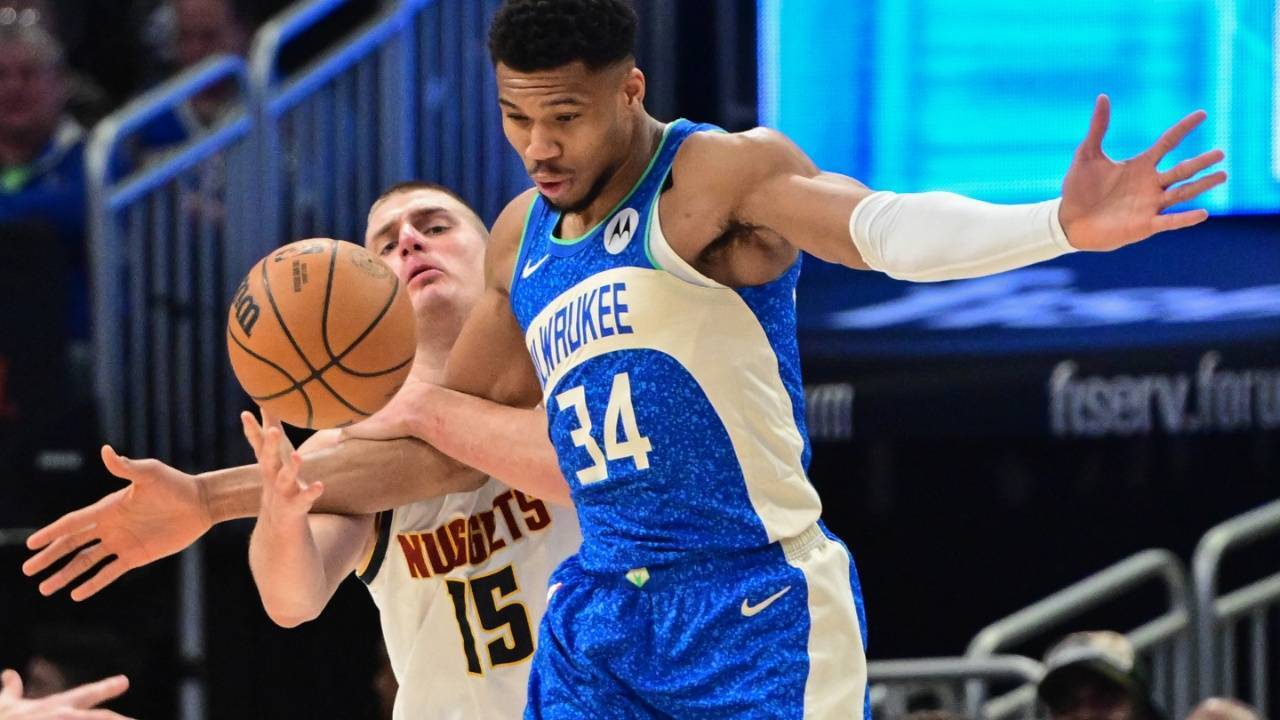
Nikola Jokic vs Giannis Antetokounmpo becomes harder when nearly identical scoring averages hide radically different jobs. At 31, Jokic remains the better starting point for an offense, while Antetokounmpo offers the stronger defensive foundation. The narrow verdict favors Jokic because his combination of scoring efficiency, playmaking, and recent availability outweighs the defensive gap.
The comparison now involves the Denver Nuggets and Miami Heat after Antetokounmpo left the Milwaukee Bucks in a July trade. Evaluating their current value requires separating completed-season evidence, championship peaks, and the opening weeks of 2026–27. Offensive creation receives the greatest weight here because organizing possessions remains the hardest responsibility to replace, with defense and availability shaping the margin.
Nikola Jokic Vs Giannis Antetokounmpo: Similar Scoring, Different Workloads
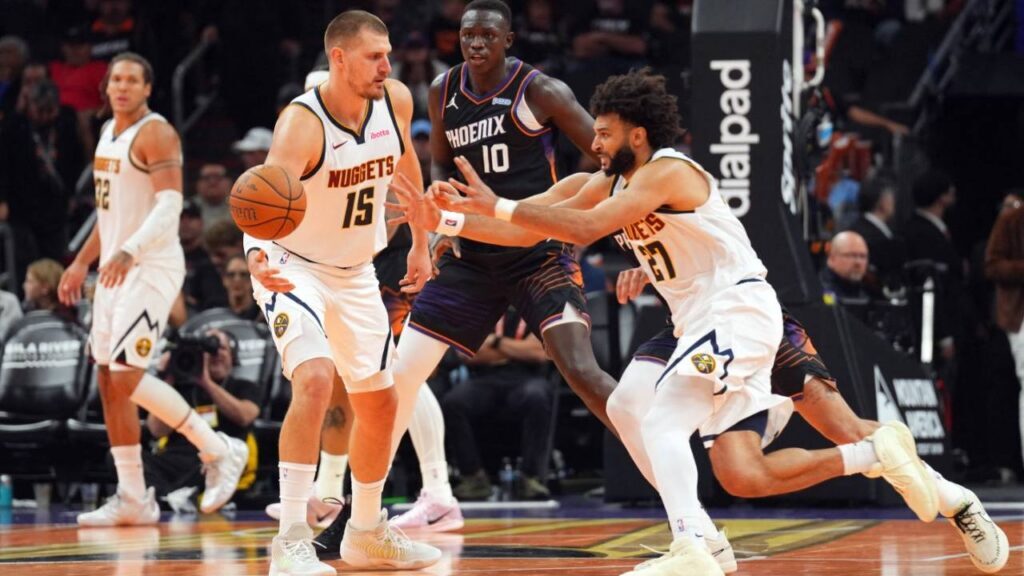
Jokic averaged 27.7 points, 12.9 rebounds, and 10.7 assists across 65 games in 2025–26, according to StatMuse’s 2025–26 comparison. Antetokounmpo averaged 27.6 points, 9.8 rebounds, and 5.4 assists across 36 appearances. Minutes change the interpretation: Jokic played 34.8 per game, compared with 28.9 for Antetokounmpo.
Calculated from season totals, Antetokounmpo scored approximately 34.4 points per 36 minutes, compared with 28.6 for Jokic. Adjusting for minutes therefore strengthens the Miami forward’s scoring argument rather than treating similar nightly averages as equal scoring rates. Per-36 figures normalize playing time, but cannot guarantee that production would survive heavier workloads or different game conditions.
Shooting efficiency and passing productivity pull the comparison back toward the Denver center. True shooting percentage, which accounts for two-pointers, three-pointers, and free throws, favored Jokic 67.0% to 65.8%. Calculated from their totals, his assist-to-turnover ratio was approximately 2.87, compared with 1.70 for Antetokounmpo.
The passing advantage matters because the Nuggets can create openings without requiring a guard to beat a defender off the dribble. From a post touch or handoff, Jokic can score, find a cutter, or release the ball before help fully commits. Antetokounmpo generates more scoring per minute, but his rival combines elite efficiency with substantially more recorded assists per turnover.
Defensive Impact Requires More Than A Blocks Column
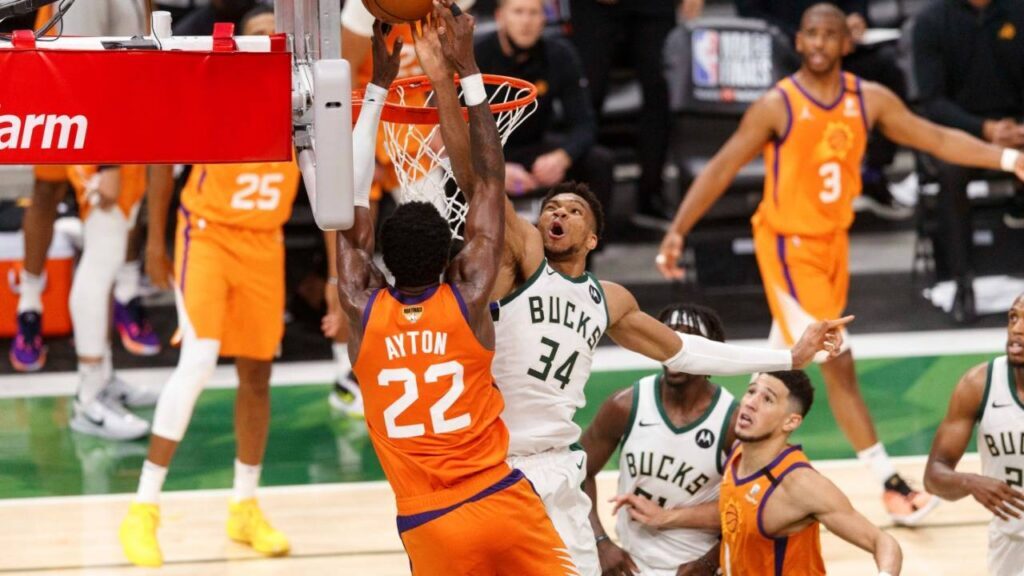
Antetokounmpo’s 2020 defensive award establishes a championship-level defensive pedigree, although an old trophy cannot measure his present impact. The defining skill is covering two threats within one possession: disrupting the initial action, then recovering toward the basket. Against an offense trying to expose a weak defender, that range gives teammates more room to survive mistakes. The current defensive preference for Antetokounmpo is a scouting judgment based on his coverage range, rather than matched 2026–27 tracking data.
During the 2021 Finals against the Phoenix Suns, Antetokounmpo’s Game 4 recovery turned a dangerous advantage into a blocked dunk. After helping toward Devin Booker, he recovered to reject Deandre Ayton’s alley-oop attempt with Milwaukee protecting a two-point lead. The sequence explains the defensive edge more clearly than comparing steals or blocks without considering assignments.
Jokic’s limitations should not become a claim that strong playoff defense is impossible around him. During Game 3 of the 2023 Finals, the Heat shot 15-for-42 in the paint with him playing, according to NBA film analysis. Team shooting results cannot isolate individual responsibility, but that example challenges the idea that his presence automatically makes a defense unworkable.
Compare Both Championship Runs Before Choosing A Winner

Antetokounmpo’s 2021 postseason numbers included 30.2 points, 12.8 rebounds, and 5.1 assists over 21 appearances, with 59.9% true shooting. Across 20 games in 2023, Jokić averaged 30.0 points, 13.5 rebounds, and 9.5 assists, with 63.1% true shooting. Comparing complete runs preserves Antetokounmpo’s sustained dominance instead of reducing his championship case to one night.
The Bucks received 50 points, 14 rebounds, and five blocks from their centerpiece in the 2021 clincher. Against Phoenix, his 17-for-19 free-throw performance complemented overwhelming interior scoring and rim protection. Jokic’s 2023 championship run made him the first player to lead an entire postseason in total points, rebounds, and assists.
The Nikola Jokic vs Giannis Antetokounmpo playoff comparison therefore favors different forms of control rather than a winner-versus-loser narrative. Antetokounmpo demonstrated that scoring pressure and defensive recovery can coexist at championship intensity. Denver demonstrated how a center’s passing can sustain an offense across four rounds, with Jokic supplying greater playmaking volume and shooting efficiency.
Actual Teammates Change The Team-Fit Argument
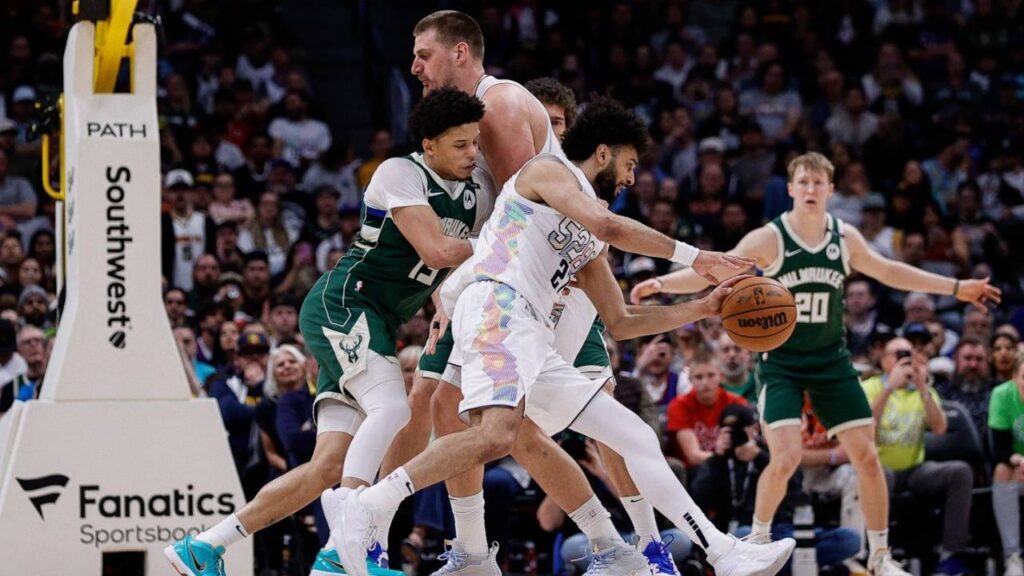
Jamal Murray gives the Nuggets a perimeter creator who can exchange responsibilities with Jokić instead of simply waiting for passes. In their 2023 Finals partnership, both players recorded 30-point triple-doubles during Game 3. Murray’s independent production matters because selecting Jokić does not eliminate the need for another player capable of creating against pressure.
Aaron Gordon provides another useful example of how that offense changes assignments. NBA analysis identified him screening for Jokić during Game 3, reversing the familiar arrangement of a center screening for a ball handler. The tactical benefit is flexibility: an opponent must prepare for the same centerpiece as a passer, screener, scorer, and ball-screen recipient.
Miami pairs Antetokounmpo with Bam Adebayo, creating considerable defensive potential alongside a half-court spacing question. According to NBA.com’s 2026–27 preview, newcomer Klay Thompson made 202 three-pointers at 38.3% last season. Reliable perimeter shooting can give that frontcourt room to operate, but defensive versatility alone cannot prevent opponents from crowding the lane.
Availability Matters More Than An Early Scoring Lead
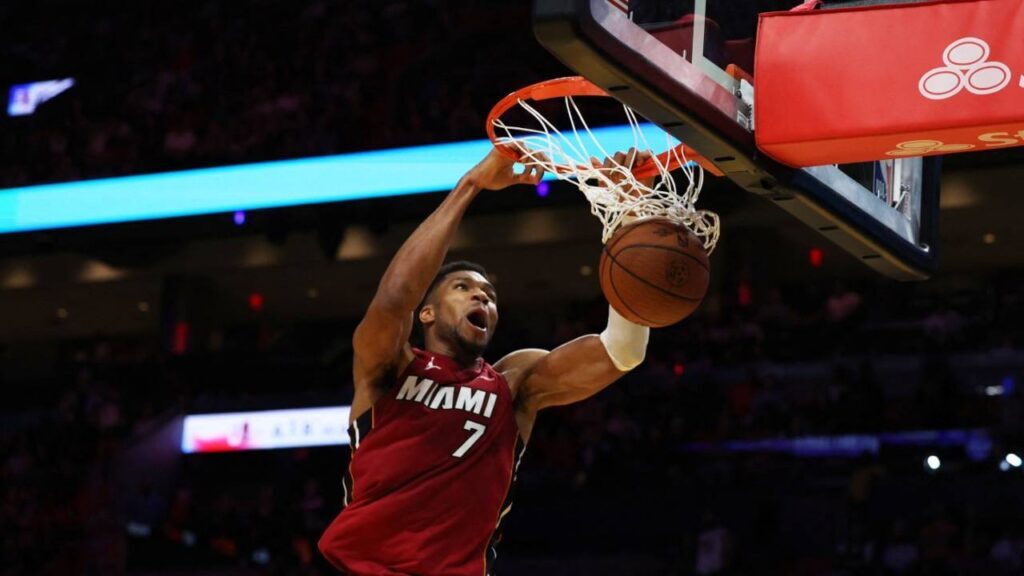
At 31, recent workload and health offer better evidence than assuming both players will age identically. The 65-to-36 appearance gap last season favors Jokic, while Antetokounmpo’s calf trouble included a 15-game absence. Past availability cannot guarantee future health, but fewer missed games provide a firmer foundation for a season-long projection.
Through October 30, 2026, Antetokounmpo’s first six games produced 28.2 points, 12.3 rebounds, and 5.5 assists, per his player profile. Jokic’s opening five games yielded 21.2 points, 9.8 rebounds, and 9.2 assists. The early scoring advantage belongs to Antetokounmpo, although unequal samples spanning less than two weeks cannot settle championship value.
Recent postseason failure also belongs on Jokić’s side of the ledger. Denver lost its 2026 first-round series to the Minnesota Timberwolves in six games. A title-winning offensive model still needs current execution, making another strong regular season insufficient proof of postseason superiority.
End Of My Nikola Jokic Vs Giannis Antetokounmpo Rant
Jokic wins the Nikola Jokic vs Giannis Antetokounmpo debate narrowly because elite scoring efficiency, superior playmaking volume, and stronger recent availability support the same choice. Antetokounmpo counters with greater scoring per minute, the defensive edge, and championship proof that extends across an entire postseason. For a roster already rich in creation, the Heat forward could be the better fit; for building an offense, the Nuggets center remains preferable.
