
NFL penalties 2026 have become more than just a weekly annoying part of the game. Sunday’s slate should have gave the people the push they needed to to start questioning the NFL officiating. Not only did we see two games turning into flag-filled marathons, but the league is still dealing with the fallout from a game-changing pass interference call in Week 3.
The issue is not that every flag is bad. Plenty are earned. But when a subjective call wipes out an interception or a touchdown, it is fair to ask whether the NFL’s current review system has enough room to correct an obvious mistake. We are seeing more and more flags become game altering calls, that’s an issue that needs to be fixed right away.

NFL penalties are up in 2026 compared with most recent seasons, but only slightly from 2025. The NFL recorded 692 accepted penalties through Week 3, or 14.42 per game. That is just eight more penalties than the same point in 2025, but 11.1 percent above the 2021-25 Week 3 average.
Here are the five numbers driving this conversation:
According to NFL Penalties, the league recorded 692 accepted penalties through the first 48 games of the season, before Sunday’s Week 4 slate began. That does not make 2026 an extreme outlier from 2025, but it is a noticeable jump from the broader recent baseline.
| Season | Accepted penalties through Week 3 | Per game |
|---|---|---|
| 2021 | 630 | 13.13 |
| 2022 | 568 | 11.83 |
| 2023 | 607 | 12.65 |
| 2024 | 626 | 13.04 |
| 2025 | 684 | 14.25 |
| 2026 | 692 | 14.42 |
The average from 2021-25 was 623 accepted penalties through Week 3. That means 692 accepted penalties is 11.1 percent higher than the average through Week 3 from 2021-25. For more on how the sport itself has changed, read The New NFL: How America’s Favorite Sport Has Changed.

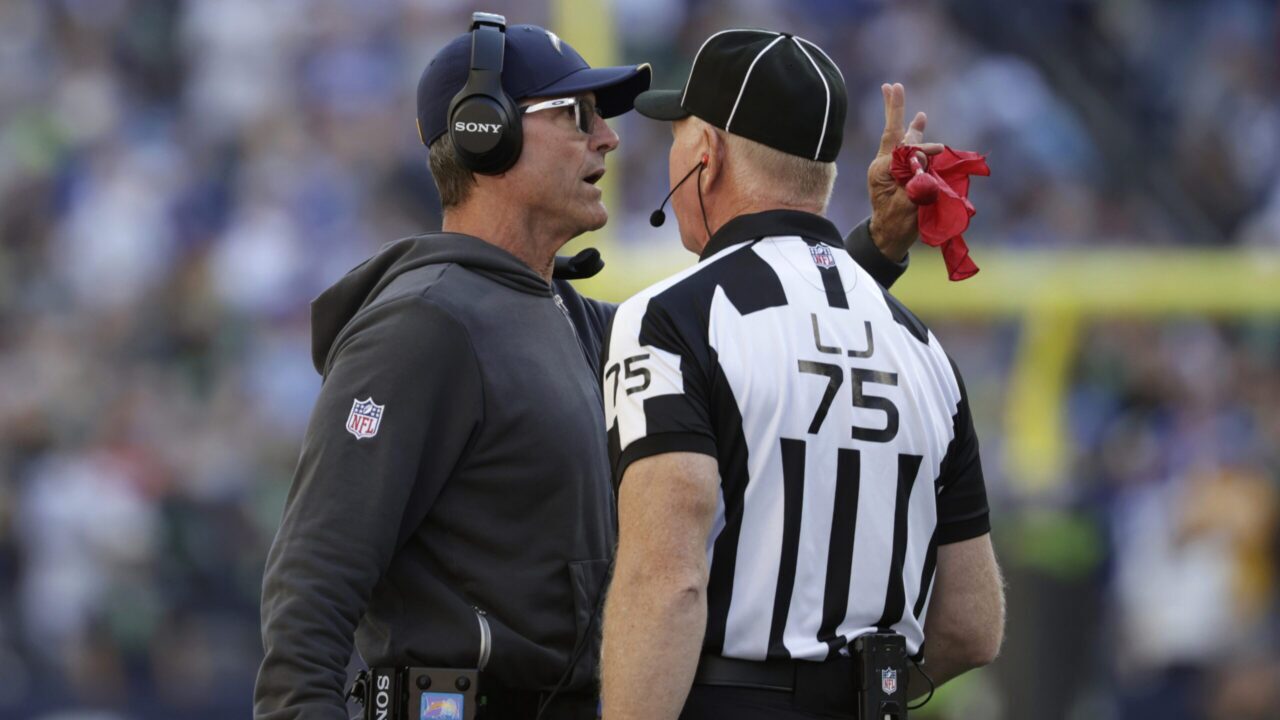
The amount of flags became impossible to ignore on Sunday. Seattle’s 30-23 win over the Chargers produced 30 accepted penalties for 280 yards, with Los Angeles flagged 16 times for 130 yards and Seattle 14 times for 150. It was the highest penalty total in an NFL game this season, according to Reuters game recap.
Jacksonville’s 22-17 win over Cincinnati was not much cleaner. The Jaguars and Bengals combined for 24 accepted penalties, including 16 in the first half, and both teams had touchdown runs erased by holding calls. Reuters Jaguars-Bengals report captured how quickly the game lost its rhythm.
That is where the frustration starts. A flag-heavy game is hard enough to watch. A flag-heavy game filled with calls that directly erase scoring plays or decide possession is something else entirely.
The Josh Wallace play is why this cannot be reduced to a simple penalty-count debate. With the Rams leading Denver 26-23 late in Week 3, Wallace intercepted Bo Nix. Defensive pass interference erased the turnover, Denver got the ball back, scored the go-ahead touchdown and won 30-26.
Afterward, Sean McVay said the NFL acknowledged the game-changing call should not have been made. That is a brutal outcome for Los Angeles: the play that should have ended the game was removed, and there was no mechanism to fix it.
Broncos receiver Pat Bryant did not pretend the contact was overwhelming. He said, “I did sell it just enough” to draw the flag. That kind of honesty only makes the moment harder to swallow.

I’m not here to say that “every penalty points to bad officiating.” Teams deserve plenty of blame themselves, because some of these teams look like a varsity team from Alaska High. False starts, obvious holds and personal fouls are discipline problems, not officiating controversies.
The real debate starts with subjective penalties capable of changing possession, extending a dead drive or wiping out a touchdown. Officials have to make difficult decisions at full speed, and no fan should expect perfection. But the league should be able to separate an ordinary missed judgment from a clear mistake with massive consequences.
That distinction matters. The 2026 numbers show more flags, but the Wallace call explains why fans are angrier than the raw totals alone would suggest.
Dan Campbell has made the reasonable counterargument. He is comfortable with pass interference remaining non-reviewable because officials have to make the call in real time, and the last experiment brought more confusion than clarity. Only 13 of 81 pass-interference challenges were reversed, a failure rate that made the system feel arbitrary rather than useful.
He is right that the NFL should not reopen the door to coaches challenging every bit of contact downfield. That would slow games down and turn every late incompletion into a commercial break.
But the NFL already uses Replay Assist to correct certain clear and obvious elements without forcing coaches to challenge every questionable play. The 2026 NFL rulebook already includes a full instant-replay structure under Rule 15. Expanding Replay Assist to cover a narrow class of game-changing subjective penalties would be a smaller change than bringing back full pass-interference challenges.
The standard should be high. It should apply only when video shows a clear mistake on a turnover, a scoring play or a late-game fourth-down decision. That would not make officiating perfect, but it could prevent another Wallace situation from deciding a game.

The five numbers and all the research I put into this article tell one story: NFL penalties are climbing, and Sunday gave the league two ugly examples of how quickly flags can simply alter the outcome of a game. The Wallace call tells the more important story.
The NFL does not need endless reviews or a challenge flag for every disputed pass. It needs a narrow safeguard for the rare, obvious call that changes everything. Until then, every yellow flag in a big moment will feel bigger than it should. I know not every person watching sports is betting the games, but the fact of the matter is that betting is become apart of sports entertainment and people are taking a lot more notice to just how much the officials are making very questionable calls in the biggest moments of the game.
Review the official 2026 NFL rulebook and decide for yourself: should Replay Assist have been able to step in on Wallace’s interception?
