
With the Milwaukee Brewers parading through the streets holding the Commissioner’s Trophy on a sunny Friday afternoon, fans can’t help but notice the dark skies on the horizon for the sport. The end of the World Series usually signals the start of the offseason and speculation about which free agents or trade candidates go where; But this time, it could mean a season of politicking and stalemate that lasts for months.
An impending MLB Lockout is expected to begin on Dec. 2 at 12:00 a.m. Eastern Standard Time as the old Collective Bargaining Agreement is set to expire. Unfortunately for fans, it appears there won’t be a miracle last-minute deal to prevent it, and it’s unclear when an agreement might be reached. Some have argued the sport won’t be played next year, while others suggest they might end up in court to force a deal. Rather than panicking, the path to ending a lockout might not be as convoluted as last time.
Why Is The MLB Lockout Happening?
Benny Sieu-Imagn Images
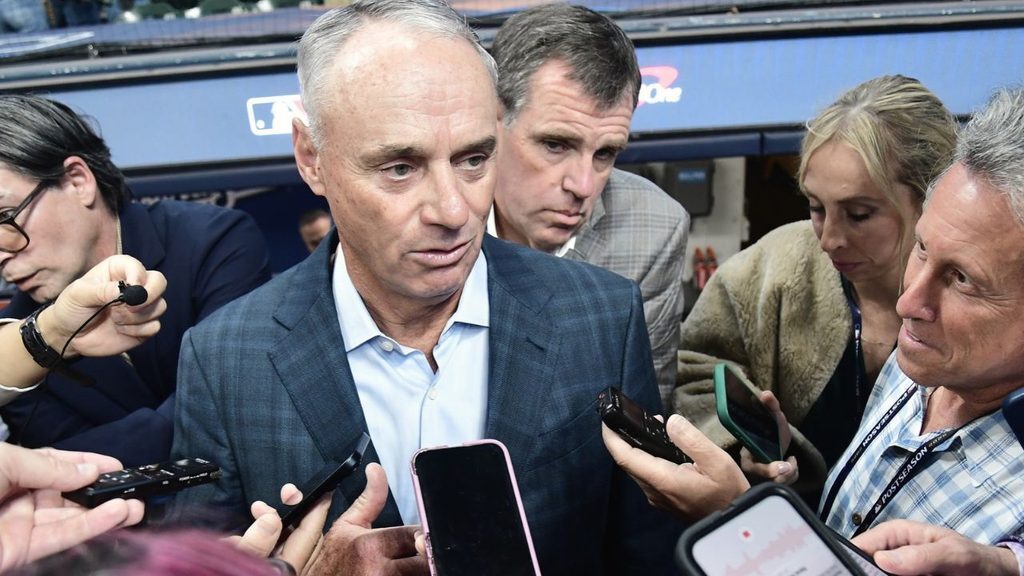
For the first time since 1994, the owners are seeking to implement a hard salary cap in the next CBA to control player spending and level the playing field, which they describe as an attempt to give smaller markets a chance to compete. The league is proposing a $171.2 million floor and $245.3 million cap.
The MLB Players Association is unequivocally rebuffing any attempts at a salary cap, calling them a “non-starter” and describing the current economic environment and the Luxury Tax as fair, seeking to increase the thresholds and modify penalties. There are also issues with blocking high school and junior college players from the draft starting in 2028 and the MLBPA’s new argument that the Brewers are an example of why the cap isn’t necessary. The two sides remain deadlocked.
The good news is that both sides have met regularly since May to try to build a framework for a deal and avoid prolonged work stoppages. The bad news is that talks have moved very little, if at all, on that issue, while most meetings focus on smaller issues like an international free agent draft and revenue sharing. Once again, a stalemate of core economic issues is causing the game to come to a complete stop and the hot stove to be unplugged through the cold winter months.
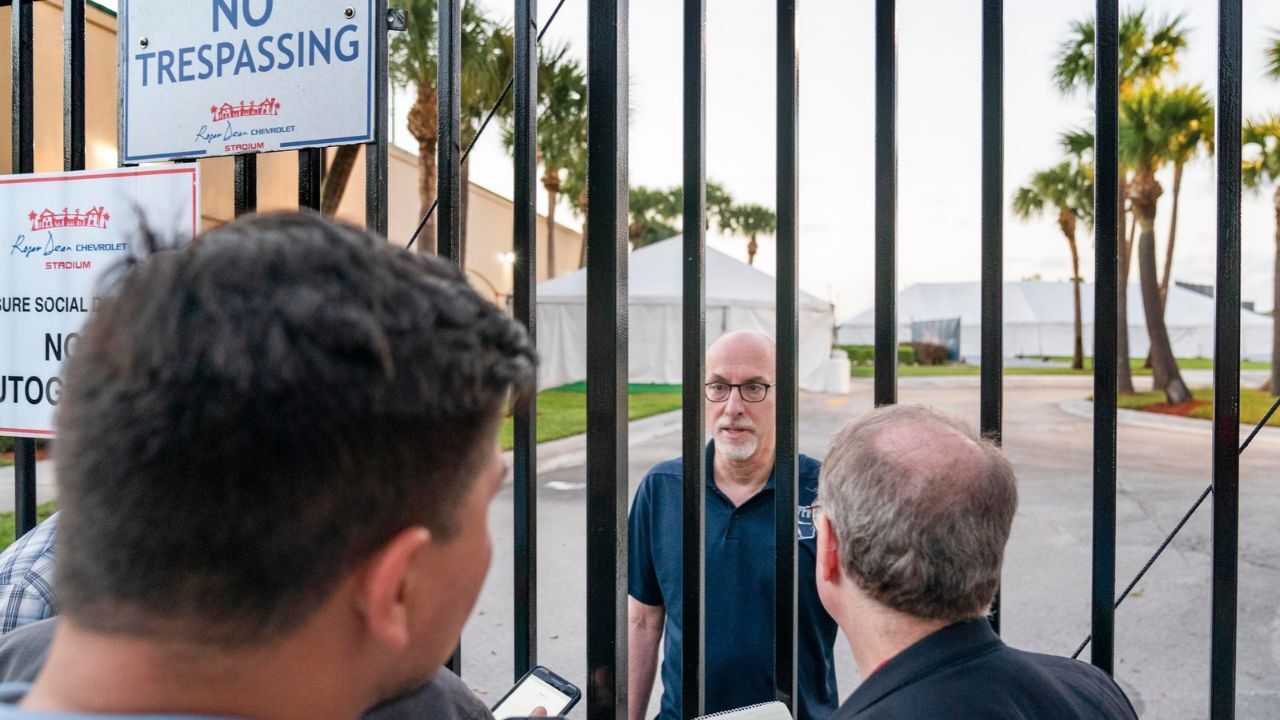
A lockout, for new fans, is different from a strike. Owners can vote on a lockout at the end of the CBA as leverage to pressure players into accepting a deal and avoid missing paychecks. Players will also be barred from accessing team facilities and communicating with staff, including trainers, if they are recovering from injury. It’s a similar setup to the 2021-2022 MLB lockout, but the circumstances are different.
What’s the Difference Between Then And Now?
Patrick Breen-USA TODAY NETWORK
In 2021 and 2022, MLB had its first work stoppage since the 1994 strike, when the owners voted to lock out the players. The core issues at the time were a variety of smaller but still core economic issues ranging from minimum salary raises to service time and pre-arbitration player compensation. That lockout lasted 99 days before an agreement was reached, right after MLB Commissioner Rob Manfred announced the cancellation of the first two regular-season series for each team. All of those games were reinstated following the deal.
Obviously, the big-time issue is the Salary Cap among other things, but a few of the other issues are a bit more straightforward and, perhaps, workable. Some of the more recent proposals discuss a 154-game schedule in 2029 as part of economic concessions and making the Division Series a best-of-seven contest, up from five. Other proposals discuss contract deferrals and limits after the Los Angeles Dodgers deferred almost all of Shohei Ohtani’s contract. Perhaps we could see an international free agent draft instead of a first-come, first-served frenzy in January.
Perhaps the biggest, and most overlooked, factor in the MLB labor negotiations this time around is that talks seem less fiery and bombastic than they were in 2021 leading up to December, and perhaps a bit more cordial. Leading up to the 2021 MLB lockout, both the league and MLBPA filed grievances against one another, abruptly ended talks, and traded jabs through the media, which nearly culminated in a complete walkout of the meetings from the MLBPA in February 2022.
That hasn’t happened this time around, at least not on this scale or from what is known. Sure, it could be theater to make the league look good in front of the cameras, but nothing gets done if there’s no one talking at the table. It’s entirely possible also that, once the Salary cap debate is done, everything else will fall into place automatically.
Let’s also not forget there is no Tony Clark this time around, which could be a wild card in the talks. Clark was ousted last winter after claims surfaced that he had engaged in an inappropriate relationship with his sister-in-law. Bruce Meyer, considered a stronger hardliner at first and the lead negotiator for the MLBPA in 2021, remains adamant about having no salary cap but appears to be taking a diplomatic approach for now.
“We have professionals on both sides. We haven’t missed a game in baseball in 30 years, unlike the cap-based sports where they’ve missed thousands of games. So I remain hopeful. We’re there in good faith. I hope they are, too, and we’ll see what happens,” Meyer told Front Office Sports on Oct. 24.
Expect Baseball in 2027 After MLB Lockout Concludes
Geoff Burke-Imagn Images
When Jeff Passan was asked whether baseball could return in 2027, he replied with a simple answer: “Yes.” He acknowledged on Jake Marsh’s podcast that there is “a lot left to be done…boxes left to check” on whether games would be missed.
Those who said baseball wouldn’t return in 2027 because of the impending lockout might be wrong, given that both sides are still at the table and most analysts are saying the lockout would be “long,” but none have said that the season is definitely at risk. There also doesn’t seem to be a real reason the owners would stick to their push past March or April once television contracts start getting threatened with delays. The better question is what the game looks like post-CBA negotiations and ratification: Is there a salary cap? A salary floor? Both? None at all?
Regardless, the season itself is unlikely to be wiped out entirely. No one really wants to miss games and no one really wants to lose money, especially Manfred or the owners, or the players for that matter. It could likely just end up as pointless posturing in what has been a rather uneventful buildup (so far) to December. Yes, there will be a labor battle; yes, Meyer has already called a salary cap proposal a “nuclear bomb,” but there’s reason to believe it won’t go off during the MLB lockout.
End Of My MLB Lockout Rant
There’s no reason to panic yet over whether games will be lost. They still could be, but some indicators point to a less hostile and volatile working climate than predicted, with both sides meeting and using rather tame, lame social media messaging to try to rally their sides. Of course, anything can change in a heartbeat and the critical negotiating window hasn’t really hit yet. However, does anyone really want to lose games? Does anyone really want to do this posturing and politicking?
Plus, if the owners get what they want, does it offset the cost of what they could lose in revenue from TV deals and reputational damage? While there’s no real common ground as of yet, it might not be long before there’s a breakthrough.
