
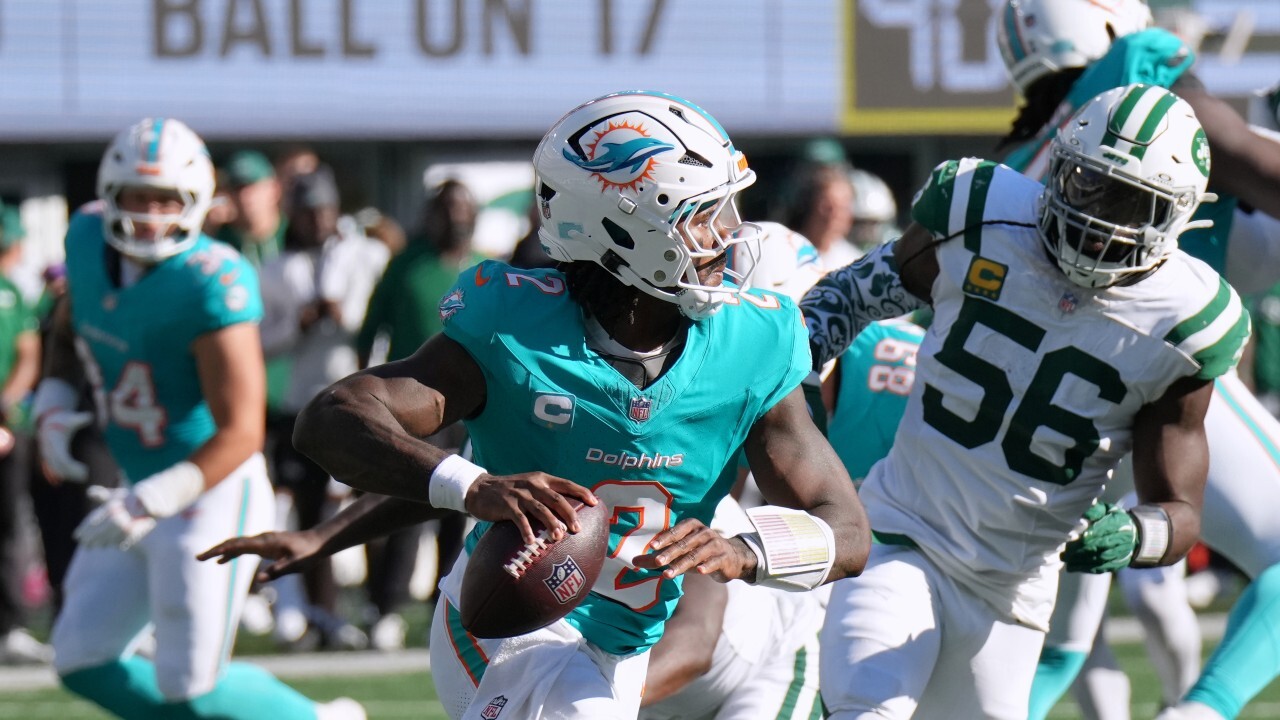
The Miami Dolphins vs. New York Jets recap starts with a simple truth: the Dolphins didn’t save their season in New Jersey, but they proved it still has a pulse. A 28-25 win over the Jets doesn’t erase five straight losses or the criticism that came with them. It does give the Dolphins something they haven’t had in a long time: hope backed by results.
Sunday felt distinctly different from the performances that defined the season’s first five weeks. Miami looked prepared, physical, and confident throughout much of the afternoon, while the Dolphins consistently responded when momentum threatened to shift. Most importantly, this was a team capable of closing a football game, which is something that had been missing since Week 1.
For most of the contest, Miami dictated the terms rather than reacting to them. The Dolphins built leads, answered challenges, and controlled the pace of play, making the victory far more important than any discussion about style points. After spending more than a month searching for a breakthrough, Miami finally secured its first win of the season.
Malik Willis Leads Dolphins Past Jets
The Dolphins did not need a miracle Sunday as much as they needed stability from the quarterback position. After five frustrating losses, the Dolphins weren’t asking their quarterback to carry the team. They needed someone who could value possession, avoid costly mistakes, and keep the offense operating efficiently.
Willis delivered exactly that, completing 14 of 21 passes for 208 yards and two touchdowns while adding a rushing score. The numbers looked good on paper, but Willis’ calm demeanor stood out even more, as he guided the offense with confidence and rarely put Miami in difficult situations.
Even when New York mounted a late push, Willis remained firmly in control of the situation. That confidence showed up on the game’s biggest play when the Dolphins faced fourth-and-one with a three-point lead late in the fourth quarter. The Jets were one stop away from getting the ball back with a chance to break Miami’s heart, but Willis had other plans, grinding out the yard that slammed the door on New York’s rally.
Quarterbacks earn credibility when games become uncomfortable, and Sunday certainly provided that challenge. Rather than shrinking in a pressure-packed moment, Willis delivered the play Miami needed most. The performance may not have been flashy, but it was exactly the type of efficient football the Dolphins desperately needed.
Ollie Gordon II Helps Miami Control The Game
Big plays sell highlights, but controlling the line of scrimmage and running the football still wins plenty of games on Sundays. Miami finally embraced that reality against New York as Ollie Gordon II carried the ball 25 times for 103 yards and a touchdown while consistently creating productive gains. Gordon didn’t need to rip off highlight-reel runs to make his impact felt, as his steady gains kept Miami on schedule and New York’s defense on the field. Gordon’s 25 carries were just as significant as his yardage total, signaling Miami’s determination to establish a physical identity and dictate the tempo.
Rather than relying entirely on the passing game, Miami committed to controlling the game, wearing down defenders, and establishing a physical identity at the line of scrimmage. Gordon became the centerpiece of that strategy throughout the afternoon.
New York never found a consistent answer for the ground attack. Every successful run wore down the Jets’ defense, shortened the game, and placed increasing pressure on an offense that never seemed comfortable or in sync. By the fourth quarter, the cumulative effect of those carries had become impossible to ignore.
The Dolphins held possession for more than 34 minutes while the Jets managed roughly 25. That disparity explains much of Sunday’s outcome because New York spent most of the game reacting while Miami controlled the tempo. For one afternoon, the Dolphins showed exactly what winning football looks like for this roster.
Caleb Douglas Delivers The Biggest Play

Good players often become memorable players when they deliver at exactly the right moment. Caleb Douglas chose the perfect time for a breakout performance, catching both touchdown passes from Willis and providing the explosive plays Miami has lacked throughout much of the season. His first touchdown gave the Dolphins an early 7-0 lead and established momentum from the start.
As New York clawed its way back into the game and Miami’s lead started to shrink, every Dolphins fan could feel the same uneasy script beginning to unfold again. Momentum appeared to be shifting toward the Jets before Douglas changed the conversation with one play. The rookie raced downfield for a 63-yard touchdown reception that instantly restored Miami’s cushion.
The touchdown did more than light up the scoreboard; it halted New York’s momentum and restored control to the Dolphins. Douglas’ touchdown reignited the Miami sideline, swung momentum back in the Dolphins’ favor, and served as a reminder that this offense is still capable of producing game-changing plays. At a moment when the game felt like it could slip away, Douglas delivered a response.
Game-changing plays have been difficult to find during Miami’s disappointing start, making Douglas’ emergence particularly encouraging. Miami has spent much of the season searching for another difference-maker, and Sunday’s performance suggested Douglas may be ready to enter that conversation. After this outing, Douglas suddenly looks capable of becoming one.
Michael Taaffe Shifts Momentum
Miami’s defense deserves recognition even if the unit did not completely dominate the afternoon. Although the Dolphins surrendered points and never completely put the Jets away, the defense delivered the game’s defining turnover at a critical moment. Michael Taaffe’s interception arrived at a critical moment and immediately altered the game’s momentum.
Just as the Jets appeared ready to swing the game in their favor, Taaffe stepped in with the interception that slammed the door on the threat. Momentum swings often determine close games, and that interception prevented New York from gaining the upper hand. Although it represented only one play on the stat sheet, its impact stretched across the rest of the contest.
The defense still surrendered 25 points and allowed quarterback Geno Smith to throw three touchdown passes. New York also made things uncomfortable during the fourth quarter, creating more drama than Miami would have preferred. Nobody should pretend the performance was perfect, but perfection was unnecessary because timely plays proved sufficient.
Why The Jets Should Be Embarrassed
This loss should concern New York far more than it does Miami. The Jets entered Sunday facing a winless division rival burdened by criticism, frustration, and a five-game losing streak. Instead of taking advantage of that opportunity, New York spent most of the afternoon chasing the game.
The Jets struggled to contain Miami’s rushing attack, control possession, and consistently get off the field on critical downs. The Jets failed in every area while Miami controlled the line of scrimmage, dictated the tempo, and ultimately controlled the outcome. Losing is one thing, but being physically controlled by a 0-5 opponent raises much larger questions.
Adding to the frustration, the defeat marked New York’s eighth consecutive AFC East loss under Aaron Glenn. That statistic becomes increasingly difficult to defend as the streak continues because division games often define a team’s season. Contenders don’t spend four quarters getting dragged into a struggling opponent’s game plan, which is exactly what happened to the Jets on Sunday.
Jeff Hafley Earns Some Breathing Room

Head coach Jeff Hafley desperately needed a positive result because a 0-5 start creates noise throughout an organization. Fans grow restless, criticism intensifies, and patience begins to disappear; victories become the fastest way to quiet uncomfortable conversations. After five consecutive losses, Hafley finally got one.
Miami looked significantly more prepared coming out of their bye week than it had during previous games. The game plan featured the balance Miami had been missing; the running game never disappeared, and Willis delivered exactly what was asked of him without trying to do too much. Those details may appear subtle, but they often reflect the quality of coaching behind the scenes.
The Dolphins also maintained their composure when adversity arrived late in the fourth quarter. Rather than unraveling after New York’s push, Miami responded with execution and discipline. One victory won’t erase the doubts surrounding this team, but it gives Hafley concrete evidence that the foundation for improvement is finally taking shape.
What the Dolphins Must Repeat Next Week
Sunday’s victory felt satisfying, though the next several weeks will determine its true significance. Bad teams occasionally win games, but improving teams use victories as building blocks and create momentum from them. Miami now has an opportunity to prove this performance was more than a one-week exception.
The formula for success seemed straightforward throughout the afternoon. Run the football, control possession, avoid self-inflicted mistakes, and force opponents to play from behind. Those ingredients produced results against New York, and the challenge now becomes consistency.
Nobody should suddenly begin discussing playoff scenarios, nor should anyone completely forget how disappointing the first month of the season was. Those conversations remain premature because the Dolphins have not solved every problem on the roster. What Miami has done, however, is remind everyone the season still has life, and for now, that is enough.
End Of My Miami Dolphins vs. New York Jets Recap Rant
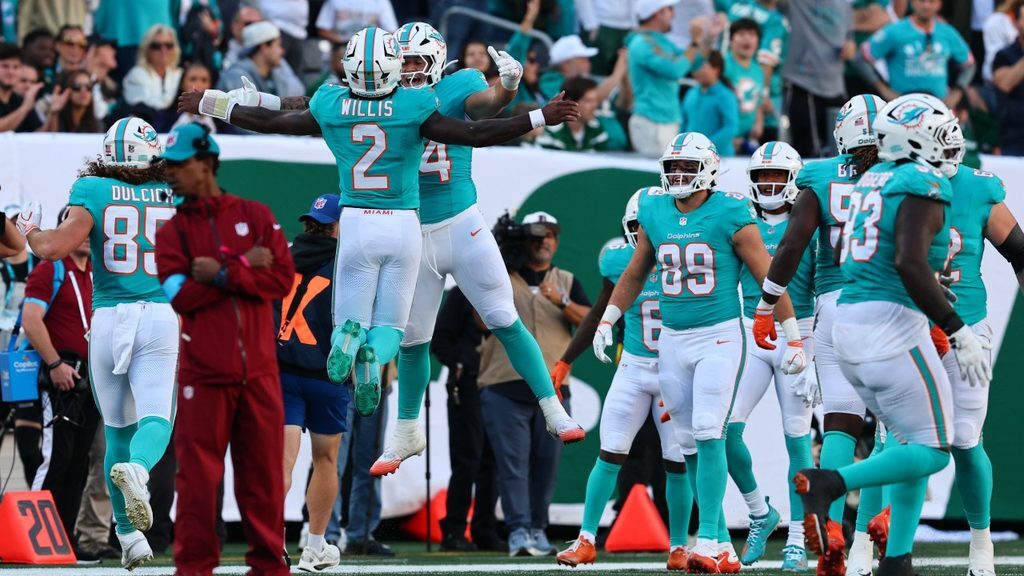
Dolphins fans spent weeks waiting for something positive, and Sunday finally delivered. Miami walked into MetLife Stadium carrying a 0-5 record and left with something far more valuable than a single victory: proof that the season still has life. After weeks of watching losses pile up and confidence disappear, the Dolphins finally gave their fan base a glimpse of what this team might still become.
Willis played efficient, winning football while Gordon punished New York’s defense all afternoon. Douglas delivered the game’s biggest offensive play, Taaffe produced a momentum-changing takeaway, and multiple contributors stepped up when Miami needed them most. Most importantly, the Dolphins finally secured their first victory of the season.
When the Jets made their final push, Miami answered with execution, not mistakes. When the pressure increased, the Dolphins responded with composure, and when the game reached its defining moment, Willis converted the quarterback sneak that ended New York’s comeback hopes. Close games often reveal a team’s character, and Miami finally passed that test.
For one week, the Dolphins did not resemble a 0-5 team searching for answers. Instead, Miami looked like a capable, competitive group that understood how to finish a game and protect a lead. After five straight losses, that was exactly what the Dolphins needed to show.
