
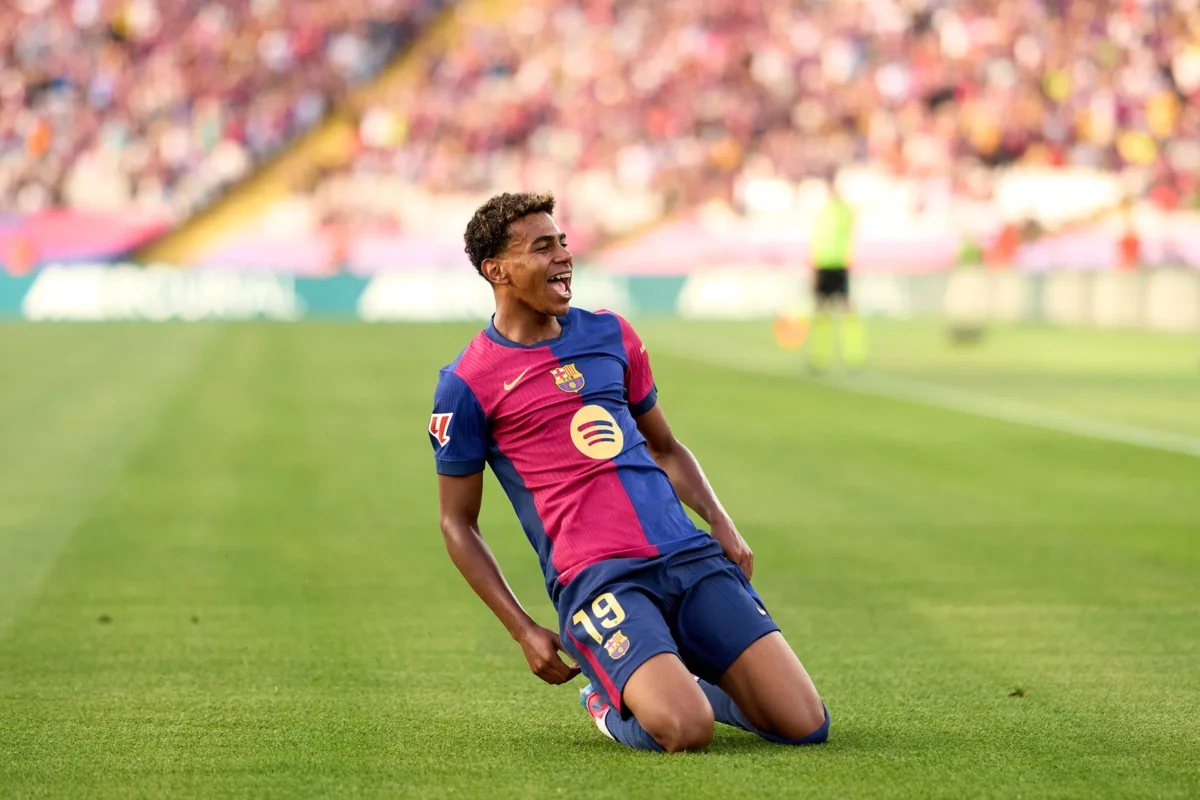
Young footballers have always been of special interest to fans and teams alike, and it seems more young players are gaining recognition. Lamine Yamal is a prime example of age not determining quality or negating respect. He put on such a dazzling display in the Champions League Semifinals, which Barcelona lost, that the consensus is he’s already one of the world’s best.
He also represents something big coming to football: the new crop of young players all over the world might be better than ever before. While the past has undoubtedly produced star-studded youth, consider how many young players are getting their big moves so early in today’s market.
Endrick, Arda Güler, Estevao, Kendry Paez, Cavan Sullivan, and Claudio Echevarri all made moves to massive clubs before, or when, they turned 18. European Academy products such as Arsenal’s Myles Lewis-Skelly and Ethan Nwaneri are already making waves.
Increased scouting and data on players worldwide, along with an insanely inflated and reactionary transfer market, have contributed to this rise in buying young players. Some players above also go mainly to play games for the academy, but train with the first team. Others skip that step and play in pro matches, although most likely on the bench.
There are many reasons why the new wave of young ballers is so much larger than before. On a physical and educational level, academies across Europe have improved significantly in the past fifteen years. Hyper-focused attention to fitness, mental toughness, and tactical awareness has produced more mature and physically capable players at younger ages.
While each country has its philosophies, South American academies typically produce players with superb technique, creativity, and a winning mentality. European academies are thought to be more advanced because of better infrastructure and resources, but players from other regions moving at such a young age is somewhat bittersweet.
While the players get a chance to develop under the best possible conditions, those non-European leagues are robbed of imposing their unique brand of play to influence the player.
Beyond that, some players can move to Europe and seldom see game time or even the league in which they were bought to play. Much has been made of the limited minutes that Arda Güler and Endrick got in their first seasons at Real Madrid. Chelsea, which bought Paez and Estevao, has also purchased seemingly every other prospect they typically send to play for their co-owned club Strasbourg in France.

European clubs picking off talent from the rest of the world is not new. Buying youth and then passing them around, often internally with co-owned clubs, could be a fatal level of greed. No doubt Echevarri and Sullivan, who Man City bought to train at the academy, will be spending some time at Troyes or Girona, two clubs owned by the City Group.
The potential consequence of this system is the debilitation young players experience with instability, especially in key developmental years. In addition to the typical factors that topple exciting prospects, such as pressure or injuries, they now must contend with the uncertainty they thought they had transferred out of.
It is ultimately positive that there are so many talented young players waiting in the wings because it speaks to the health of the game. The clubs still have a responsibility to develop these kids to their full potential, and if they don’t, it could ruin a great generation of footballers.
