
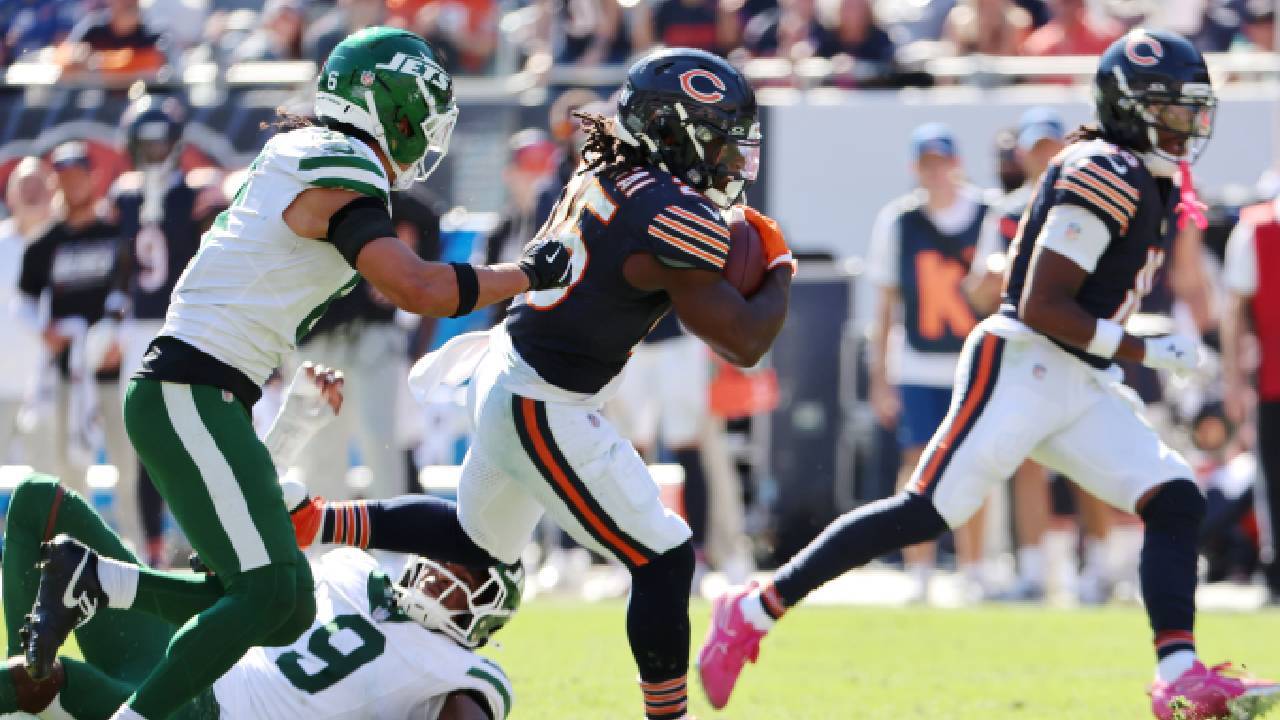
The Chicago Bears ground game sent a powerful message in Sunday’s 23-12 victory over the New York Jets. Chicago can build an offensive identity around the run even when quarterback uncertainty dominates the conversation. Kyle Monangai erupted for 146 yards and two touchdowns on 30 carries, while the Bears produced 232 rushing yards on 54 attempts and improved to 3-1. The performance gave Tyson Bagent the structure needed to operate efficiently without forcing the backup quarterback to carry the offense.
Chicago entered Week 4 averaging 184.3 rushing yards per game and 5.3 yards per carry, ranking first in the NFL in rushing. The 232-yard performance represented 47.7 more rushing yards than that previous average, although the Bears’ 4.3 YPC was a full yard below its season mark entering the game. The distinction matters because Chicago did not become more explosive against New York; volume, consistency, and possession control made the rushing attack more valuable.
Sunday’s victory added important context to the earlier Week 3 breakdown. The Bears have already shown a commitment to running the football, but Week 4 demonstrated how that strength could stabilize an offense without Caleb Williams. The formula gave Chicago a repeatable path to winning while Bagent handled the passing responsibilities.
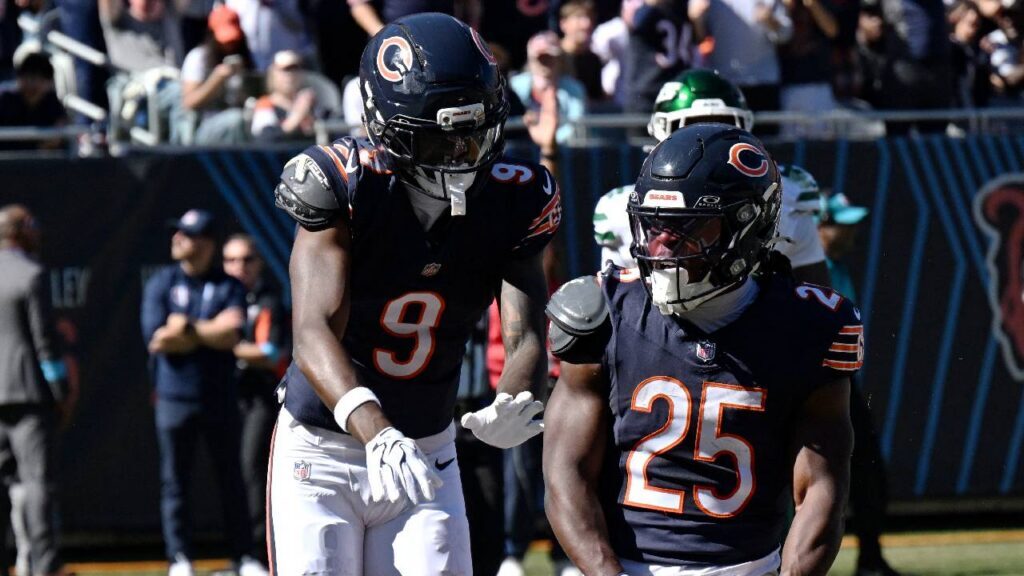
Monangai became the Bears’ featured runner after D’Andre Swift’s third-quarter fumble, but the offensive line established the foundation first. Jets linebacker Demario Davis described Chicago’s offensive line as “connected” before the game. The unit backed up that assessment by helping produce 232 rushing yards while allowing only one sack. The Sun-Times evaluation gave the offensive line an A-minus while noting that Swift missed the blitz assignment on Bagent’s lone sack.
Monangai averaged 4.9 yards per carry and delivered a 26-yard gain. Swift, Roschon Johnson and Luther Burden III added enough variety to prevent New York from focusing exclusively on one runner. Four different Bears players recorded runs of at least 10 yards, demonstrating that the rushing production extended beyond Monangai’s headline performance. The Chicago highlights show the combination of downhill runs, cutbacks and second-effort plays that repeatedly moved the chains.
The Jets’ defensive structure also helped explain why the Chicago Bears ground game could sustain the attack. New York frequently played two-high coverage early, effectively daring Ben Johnson to remain patient with the running game instead of committing extra defenders to the box. Chicago answered by running 112 yards on 26 carries in the first half, forcing the Jets to accept the tradeoff between limiting explosive passes and stopping the ground game.
Monangai’s first touchdown came on fourth-and-goal from the half-yard line, while the second came on a five-yard run during the third quarter. Swift’s fumble gave New York possession at Chicago’s 28-yard line, but the Jets managed only a field goal before the Bears responded with Monangai’s second score. The sequence showed that Chicago could absorb a mistake without allowing the mistake to change the offensive identity.
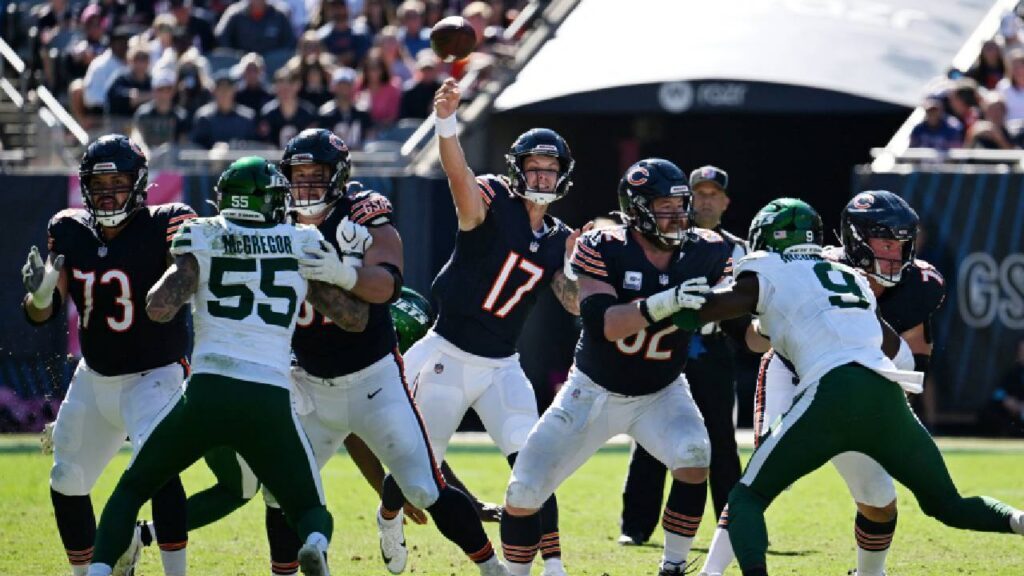
Bagent completed 25 of 34 passes for 268 yards with one interception and no touchdowns, producing enough passing offense without requiring a spectacular quarterback performance. Rome Odunze led the receiving corps with six catches for 94 yards, including a 37-yard gain that helped set up a second-quarter field goal. The passing production remained sufficient to prevent New York from treating every snap as a run-defense situation.
Ben Johnson has emphasized that his quarterbacks must “run the operation,” and Sunday provided a clear example of that philosophy. Bagent distributed the football while the rushing attack handled a larger share of the workload, allowing the Bears to avoid turning every possession into a quarterback-driven contest. The result was a balanced offense capable of sustaining drives even without Williams.
Chicago ran 89 offensive plays compared with 32 for the Jets and held the ball for 42:45 against only 17:15 for New York. The game statistics show that the Bears converted 7-of-15 third downs and never punted, turning rushing volume into repeated opportunities to extend possessions. An 18-play closing drive after Isaiah Williams’ 58-yard touchdown consumed the final 9:16 and eliminated any realistic chance of a Jets comeback.
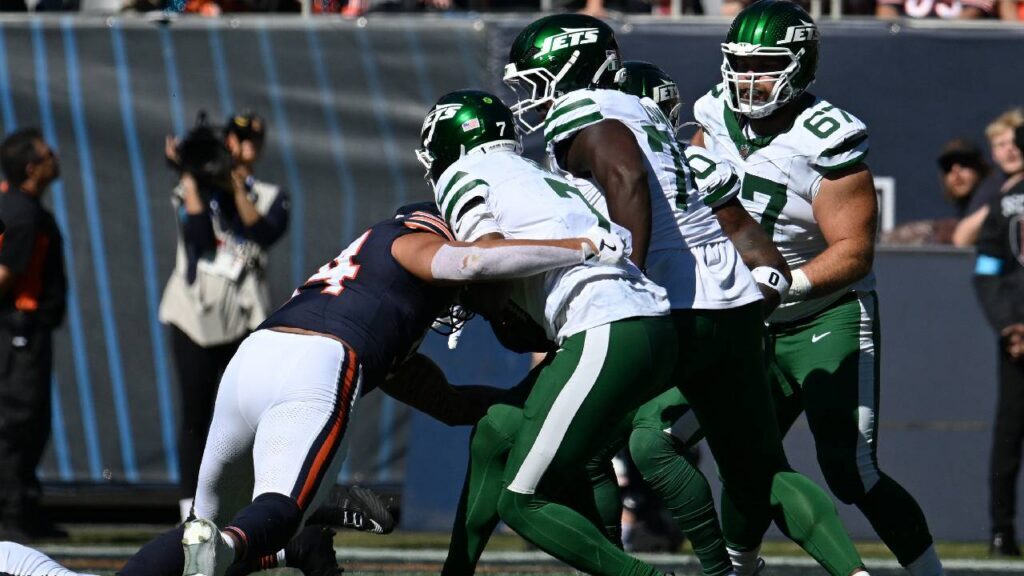
Chicago’s defense provided the necessary complement by limiting New York to 157 total yards and seven first downs. The Jets went 0-for-7 on third down, while Devin Bush, Austin Booker and Dayo Odeyingbo each recorded a sack against Geno Smith. Such defensive efficiency gave the Bears room to continue using the run rather than chasing points after every possession.
New York did receive two favorable opportunities from Chicago turnovers, including Fitzpatrick’s interception of Bagent and Swift’s fumble. Neither takeaway became a touchdown, leaving the Bears with enough margin to maintain their preferred offensive approach. The final defensive test came after Williams’ 58-yard touchdown, but Chicago immediately answered with its 18-play finishing possession.
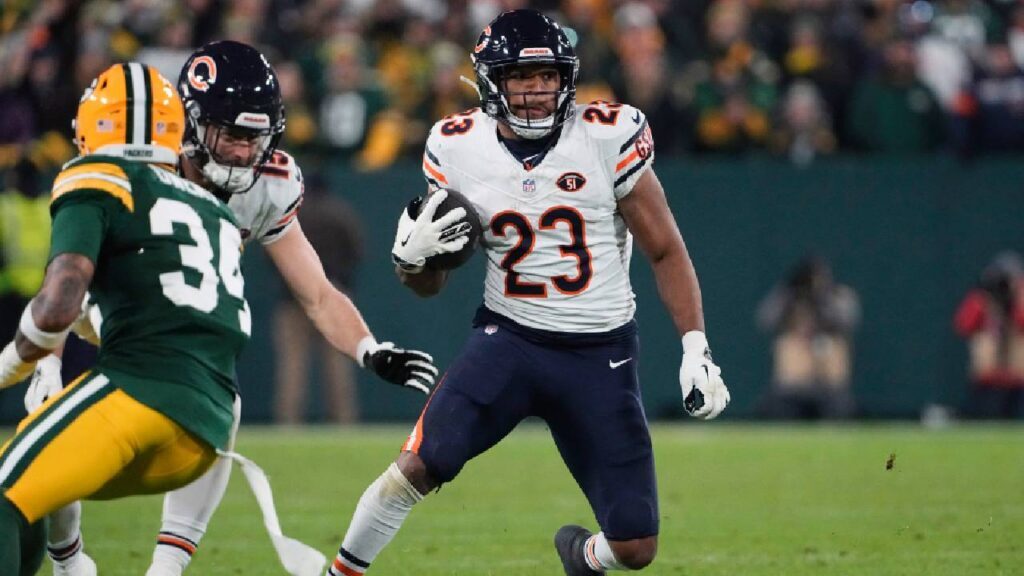
Can the Bears maintain its rushing volume against the Green Bay Packers’ front? The Packers have allowed 416 rushing yards on 102 attempts through three games. Green Bay is averaging 138.7 rushing yards allowed per game and 4.1 yards per carry, with six rushing touchdowns surrendered. NFL statistics show Green Bay has been more vulnerable by rushing volume than the Jets. The matchup will test whether Chicago can continue generating enough carries to control games.
Chicago cannot assume 54 rushing attempts will be available at Lambeau Field. Bagent’s ability to connect with Odunze, Burden, and the tight ends will determine whether the Packers can dedicate additional defenders to Monangai and Swift. The offensive line must also continue creating movement without relying on one explosive run. A successful performance would show that the Bears’ ground game can remain productive when opponents have a stronger reason to challenge it directly.
The Green Bay matchup will ultimately answer a more important question than whether Monangai can repeat 146 yards. Chicago needs to prove that its offensive line, rushing depth, and play design can consistently create manageable situations against a defense allowing 4.1 yards per carry. The Jets win established the formula; the Packers can determine whether the formula travels.
The Chicago Bears ground game did not become more efficient against New York; it became more valuable through volume and control. Chicago produced 232 rushing yards despite averaging 5.3 yards per carry entering Week 4. That workload helped the Bears control 42:45 of possession, record 34 first downs and execute an 18-play closing drive. Monangai’s emergence gave the offense a decisive centerpiece without requiring Bagent to manufacture every scoring opportunity.
Green Bay now provides the more revealing test because the Packers have allowed 138.7 rushing yards per game and 4.1 yards per carry through three games. The Bears’ next step is proving that the same combination of rushing volume, offensive-line consistency, and complementary passing can hold up against a divisional opponent. Green Bay has a stronger reason to challenge the run directly. The Jets win established Chicago’s identity; the Green Bay game can determine whether that identity is sustainable.
