
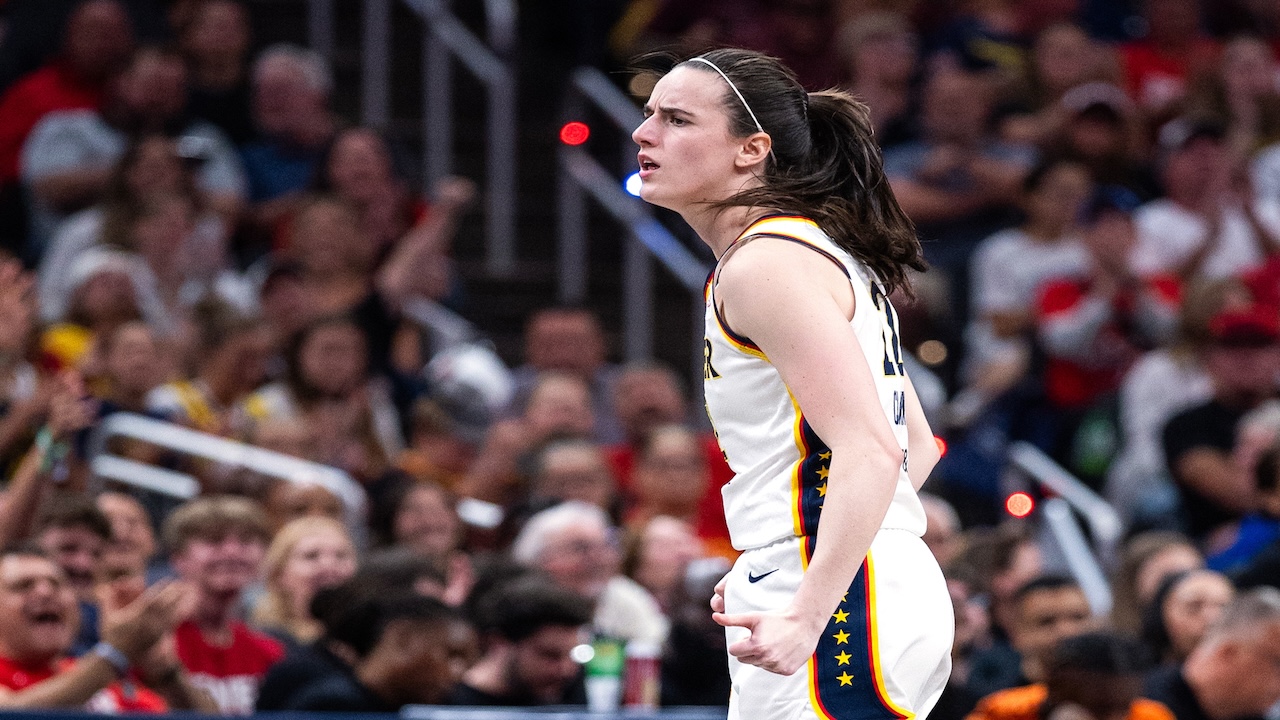
Caitlin Clark picked up her seventh technical foul of the WNBA season after getting into an argument with Connecticut Sun guard Saniya Rivers. After Rivers claimed she had “locked her up,” Clark fired back with a simple “Scoreboard.” Before Rivers could respond, the referee handed technical fouls to both players.
The exchange came shortly after Clark was fouled by center Olivia Nelson-Ododa, which likely fueled her response. The clip immediately made the rounds on social media, once again raising the question of whether Clark’s emotions are getting the better of her or if she’s simply the victim of inconsistent officiating.
According to Fox Sports, Caitlin Clark draws 6.1 fouls per game. At first glance that number sounds incredibly high, but it becomes much less shocking when you compare it to the rest of the league.
A’ja Wilson averages roughly 7.5 fouls drawn per game, meaning she absorbs even more contact than Clark. Yet far fewer clips of Wilson arguing with officials make the rounds on instagram compared to Clark.
That doesn’t mean Clark isn’t getting hit. It simply shows that taking contact comes with being one of the biggest stars in the league. Defenses naturally become more physical when they’re trying to slow down elite players.
Let’s go back to a game just one week earlier against the Golden State Valkyries. Clark exploded in frustration after being fouled five times. On one drive she bumped into a defender, took contact to the leg, and immediately began hobbling with what appeared to be a dead leg. She also appeared to be favoring her elbow, visibly grimacing every time she extended her arm.
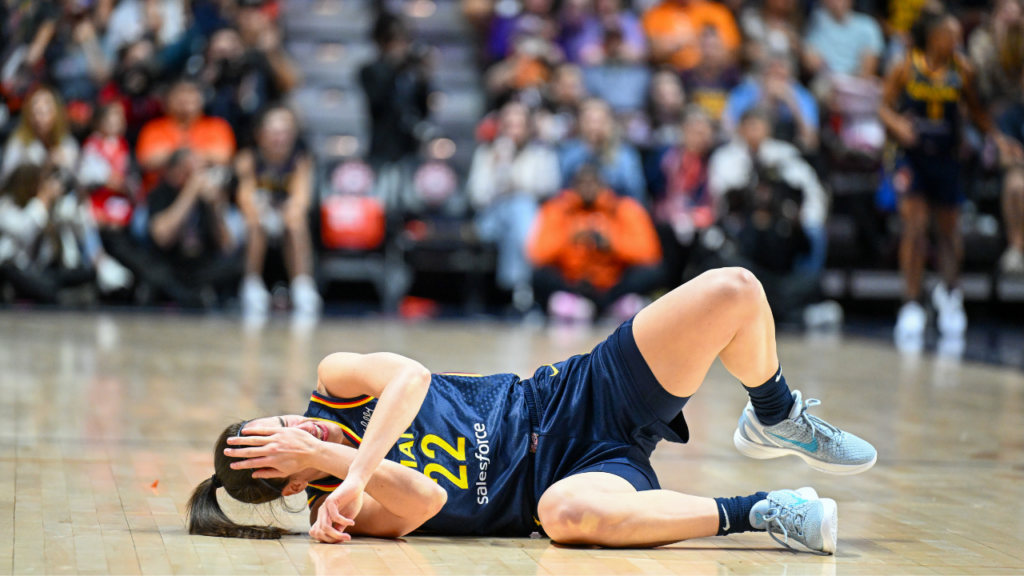
With just over five minutes remaining in the second quarter, Clark had finally had enough. According to Jomboy Media’s lip-reading breakdown of the exchange, she threw her arms up and yelled, “Call it!”. Moments later she shouted, “You’re getting people to get f—ing hurt. F—, I’ve been hurt five times.” One referee responded, “Talk to me. I’m trying to say something.”
Clark replied, “It’s ridiculous.” She then added, “I’m telling you my leg is f—ing dead.” The referee answered, “You’re initiating contact.” Anyone who has played basketball, whether it’s professionally or just at the local gym, understands that level of frustration. There are few things more irritating than constantly taking contact while feeling like the whistle never comes.
Clark was angry, and in many ways she had every right to be. She had been bumped throughout the game, was clearly limping, and was visibly frustrated after taking repeated contact. Most basketball fans have experienced that same feeling of believing the officials are letting too much go. What stands out, however, isn’t necessarily the frustration itself. It’s how that frustration is expressed.
Clark has developed a habit of arguing with referees, collecting technical fouls, and making some of the biggest scenes during games. While her complaints are often understandable, they also become the story instead of the basketball. Great players get fouled. It comes with the territory. Michael Jordan has countless highlight reels where he’s hacked on drives, knocked to the floor, and left lying underneath the basket. Many of those plays were simply ruled common fouls.
Lionel Messi has spent years being kicked, dragged, and even rugby tackled by defenders trying to stop him. When you’re the player everyone is trying to beat, physical play becomes part of the job description.
The same thing happens everywhere. If you’re playing pickup basketball and someone already has 19 points in a game of 21, everyone suddenly starts playing football instead of basketball. That’s simply what happens when great players force defenders into desperation.
Ultimately, Clark’s treatment has once again become one of the biggest talking points surrounding the Fever. While there is little doubt that she absorbs plenty of contact from opposing defenses, it is also a reality that many of the game’s biggest stars have faced throughout their careers.
The attention Clark receives from defenders is unlikely to disappear as her profile continues to grow, making it something she will have to adjust to rather than expect to change. The Fever will continue to rely on their franchise guard to play through that physicality. How she responds in those moments could become just as important as the numbers she puts up on the stat sheet.
Clark may be taking more contact than most players, but that’s part of being a superstar. If she wants to reach all-time great status, she’ll need to adjust to the physical treatment rather than let it affect her game.
