
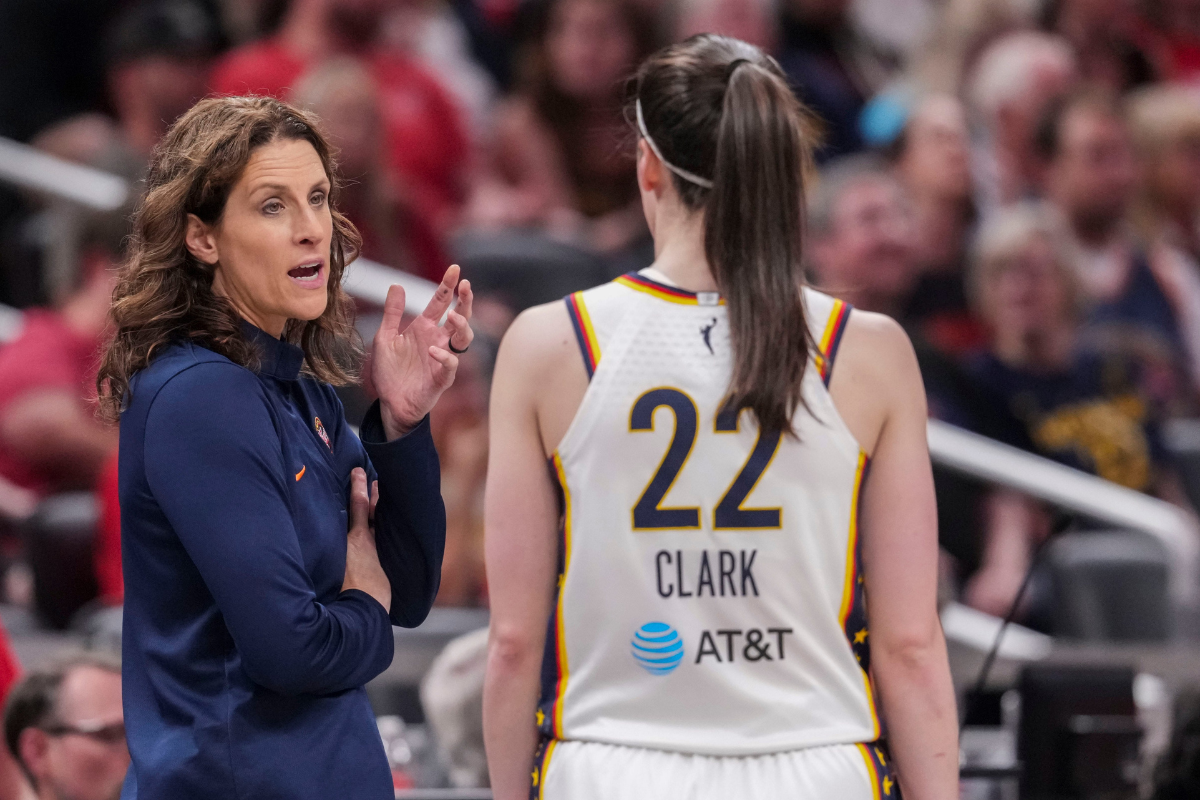
It is the question that will not go away. Every few weeks another clip goes viral, another coach lets the refs have it, and the same debate roars back to life. Is Caitlin Clark officiating being handled fairly, or are WNBA referees treating the league’s biggest star differently than everyone else? The Caitlin Clark officiating conversation has become one of the loudest storylines in basketball, and it deserves a clear-eyed look rather than a hot take.
So let’s actually break it down. What has happened, what each side believes, and whether the evidence points anywhere useful.
The latest firestorm came when Phoenix Mercury forward Alyssa Thomas pressed her fist into Clark’s throat during a recent game, a play that drew no whistle in the moment. The WNBA later reviewed it, upgraded the call to a Flagrant 2, and handed Thomas a one-game suspension for recklessly making contact with Clark’s throat, as confirmed by CBS News.
That was not an isolated flashpoint, and the pattern stretches back across her career. In a heated game against the Connecticut Sun, Jacy Sheldon poked Clark in the eye and Marina Mabrey then shoved her to the floor. In real time, Mabrey drew only a technical foul and stayed in the game. The WNBA later upgraded it to a Flagrant 2 and tacked on a $400 fine, yet stopped short of any suspension. Go back to her rookie year and you find the Chennedy Carter hip-check, a blindside shot that knocked Clark down and was not called on the floor before the league upgraded it to a Flagrant 1 after the fact. Different opponents, different seasons, same script: hard contact, no whistle, then a quiet upgrade once the clip goes viral.
She has also been on the other end of the whistle in ways that baffled her. Officials hit her with a technical foul for clapping in an opponent’s direction, a call she flatly described as ridiculous. That was her fifth technical in just 17 games, leaving her within a handful of techs of an automatic suspension, which only raises the stakes on every borderline call.
When you stack these moments together, you start to understand why so many fans feel something is off.
The argument here is straightforward, and it has real voices behind it. Indiana Fever head coach Stephanie White did not mince words after watching her star absorb contact without protection. White pointed out that the Fever have a generational talent and a WNBA superstar who took two cheap shots that were not called, and she hammered the same theme over and over: consistency. In her words, Clark is not called the same way everybody else is called.
That is the crux of the complaint. It is not that physical play exists in the WNBA, because it always has. It is that the standard appears to bend depending on who is involved. Supporters of this view point to the pattern of fouls against Clark needing to be upgraded after the fact, which suggests the on-court crew is missing or swallowing whistles in the moment. They note that this is not new either. A season earlier, a foul on Clark was upgraded to a Flagrant 2 only after league review.
The scrutiny has even reached Washington, with longtime Iowa Senator Chuck Grassley publicly calling out the league’s officiating of the Fever guard. When a sitting senator is weighing in on missed whistles, the story has clearly outgrown the box score.
Now the other side, which is just as important to hear out. A growing chorus of analysts argues that the issue is not an anti-Clark conspiracy at all. It is a league-wide officiating problem that Clark simply happens to magnify.
The Ringer framed it well, suggesting the WNBA’s real problem is trust rather than Clark specifically. The reasoning goes like this. Officiating complaints have existed in the league for years. Veterans have griped about inconsistent whistles long before Clark arrived. What changed is the size of the audience. Millions of new fans are watching for the first time, and they are discovering issues that longtime players already knew about. Clark is the magnifying glass, not the target.
There is also a fairness point cutting the other way. If you only watch Clark, you see every hard foul she takes. You do not see the hard fouls other stars absorb in games you are not tuned into. Physical defense, grabbing, and bumping are part of how the WNBA has always been played, and rookies and stars across the league get tested. From this angle, the league actually did its job when it suspended Thomas and upgraded the call, which is the opposite of ignoring fouls against Clark.
Finally, this camp warns that framing every no-call as a vendetta hands ammunition to bad-faith trolls and turns a genuine quality-of-officiating issue into a culture war. The fix they propose is simple to say and hard to do: raise refereeing standards across the board and call the game with consistency for everyone, Clark included.
Here is the honest answer. The publicly available record does not cleanly prove either narrative, and anyone claiming certainty is selling something.
What we can say is that the WNBA has repeatedly reviewed and upgraded fouls involving Clark, which proves the league is paying close attention even if the on-court calls lag behind. We can also say that the volume of contact she absorbs is real and well documented. What is much harder to establish is whether Clark is genuinely officiated to a different standard than comparable stars, because that requires consistent, transparent foul data that the league does not exactly broadcast. For more on how Clark and the Fever have navigated this spotlight, our look at the Indiana Fever’s season adds helpful context.
Both things can be true at once. The officiating can be inconsistent league-wide, and Clark can still be a unique lightning rod whose every possession is dissected frame by frame. Those explanations are not mutually exclusive, and the smartest take probably lives somewhere in the middle.
The Caitlin Clark officiating debate is not going to be settled by one suspension or one viral clip. The league has a credibility problem with its whistles, and Clark’s massive new audience has shoved that problem into the spotlight. Whether you believe she is singled out or simply the most-watched example of a broader issue, the solution is the same. The WNBA needs cleaner, more consistent, more transparent officiating, full stop.
Get that right, and most of this noise fades. Get it wrong, and the questions about how the league protects its brightest star will keep coming. What do you think? Is Clark being treated differently, or is this a league-wide issue finally getting the attention it deserves?
If you love sports, download Stadium Rant from the Apple App Store and join one of the fastest-growing social sports communities. Be sure to follow us on socials too — you can find all our profiles on our Linktree.
