
The Rookie of the Year Award (Jackie Robinson Award) has been bestowed to the most outstanding neophyte Major League Baseball players every year since Robinson courageously broke the color barrier in 1947. From 1947-48, it was given to the Majors’ best overall rookie, but has been given to one player per league since 1949. On the 40th anniversary of the first award in 1987, the honor was named for Robinson, its first winner.
21 recipients of baseball’s most coveted hardware among first-year players have been immortalized in Cooperstown, so it bodes well for those who earn it. This year’s Rookie of the Year candidate class is teeming with franchise stalwarts who are viewed as franchise messiahs and have been entrusted with rewriting the history books for their teams.
From the inaugural season of the award until 1957, voters used their own judgment to determine who should be considered a rookie. From that year onward, players were considered rookies if they had fewer than 75 at-bats or 45 innings pitched prior to the season. This was later amended to 90 at-bats, 45 innings pitched, or 45 days of MLB service time.

In 1971, the standard was adjusted to 130 at-bats, 50 innings pitched, or 45 days of non-September service time. Since 2020, days on the roster in September count towards service time. The Baseball Writers’ Association of America (BBWAA) votes on the Rookie of the Year award at the conclusion of each season before the postseason starts.
Which players have separated themselves from the pack so far? While it’s only May, there are plenty of cherubic overachievers already in this nascent MLB campaign.
Japanese sensation Munetaka Murakami of the Chicago White Sox joins a long line of distinguished Nippon Professional Baseball alumni. His predecessors include contemporaries such as Shohei Ohtani and Seiya Suzuki and former greats like Hall of Famer Ichiro Suzuki and 2009 World Series MVP Hideki Matsui, nicknamed “Godzilla”.
That is just the tip of the iceberg for the incredible contributions and extraordinary accomplishments of Japanese players who made the jump to The Show. It’s important to remember that the first pro ball player to take his talents from The Land of the Rising Sun to the United States is, fittingly, Masanori Murakami. Murakami made his Major League Baseball debut on September 1, 1964, though he has no relation to Munetaka Murakami.
While the southpaw pitcher Murakami only threw 89 1/3 total innings in his brief MLB career with the San Francisco Giants and didn’t receive Rookie of the Year consideration, he broke barriers for his successors. While World War II had ended 19 years prior, there was still abhorrent anti-Japanese sentiment in the United States at the time. Murakami headed back to the Nankai Hawks due to contractual obligations, where his success continued for another 17 years.

That history lesson aligns nicely with Munetaka Murakami’s blistering productivity to this point in the season. Murakami signed a two-year, $34 million contract with the White Sox right before Christmas last year, and he’s been worth every penny so far. Murakami is the first player in White Sox history and fourth player in MLB history to homer in each of the first 3 games of their career. His 13 home runs are the most in the big leagues; the last rookie to finish the season as the home run king was Pete Alonso in 2019.
Six rookies overall have lead their league in home runs in a season. That short list includes three-time MVP Aaron Judge and the aforementioned Alonso. Also in that echelon are Mark McGwire, Ralph Kiner, Tim Jordan, and Harry Lumley.
Murakami’s most sublime moment thus far is a grand slam that soared over the batter’s eye at Sutter Health Park on April 17. His .939 OPS leads all Junior Circuit rookies and ranks 15th-best overall. He’s also walked an absurd 18.4 percent of the time and is slugging .564.
Despite the White Sox still being below .500 – they’re 15-17 and in third place in the American League Central – their current standing is akin to a dramatic reversal of fortunes. Murakami gives the South Siders an international brand name that the franchise has never had, and he is putting up numbers that are easily worthy of R0okie of the Year consideration.
For all of the aforementioned Munetaka Murakami’s remarkable attainments, he is being outdone by another rookie stalwart in his own division.
The Detroit Tigers’ Kevin McGonigle, a 2023 first-round pick out of Monsignor Bonner and Archbishop Prendergast High School, has catapulted himself into both the MVP and Rookie of the Year conversation.
During his senior year, McGonigle was named the Philadelphia Catholic League Player of the Year and the Pennsylvania Gatorade Player of the Year after batting .474. It didn’t take long for McGonigle’s hitting skills and Bryce Haper-like swing to correlate to success in the Major Leagues. He’s the 21st player overall since 1900 with at least four hits in his MLB debut, and only the sixth to do so on Opening Day.

Why is McGonigle worthy of MVP consideration, one may ask? That is because his 1.9 bWAR is fifth in MLB right now, and his 163 wRC+ is 11th-best overall. Those same figures lead all American League rookies, too. He’s also hitting .328, good for sixth-best in baseball and tops among all AL rookies.
Should McGonigle maintain his already asinine performance, then he won’t exactly have to be the late, great Larry Joltin to sell his Rookie of the Year case.
How appropriate is it that a member of the Cincinnati Reds is a leading contender for Rookie of the Year? For the uninitiated, Cincinnati is the birthplace of professional baseball. The Cincinnati Base Ball Club, also known as the Cincinnati Red Stockings, fielded the first known openly professional team in 1869 and played its first game on May 4.
The Reds have a storied history that begins from their infancy and influence as the spark that ignited the $13 billion behemoth that is Major League Baseball. Joe Morgan, Pete Rose, Tony Pérez, and Johnny Bench comprised the Big Red Machine teams of the 1970s that produced four pennants and two World Series championships.
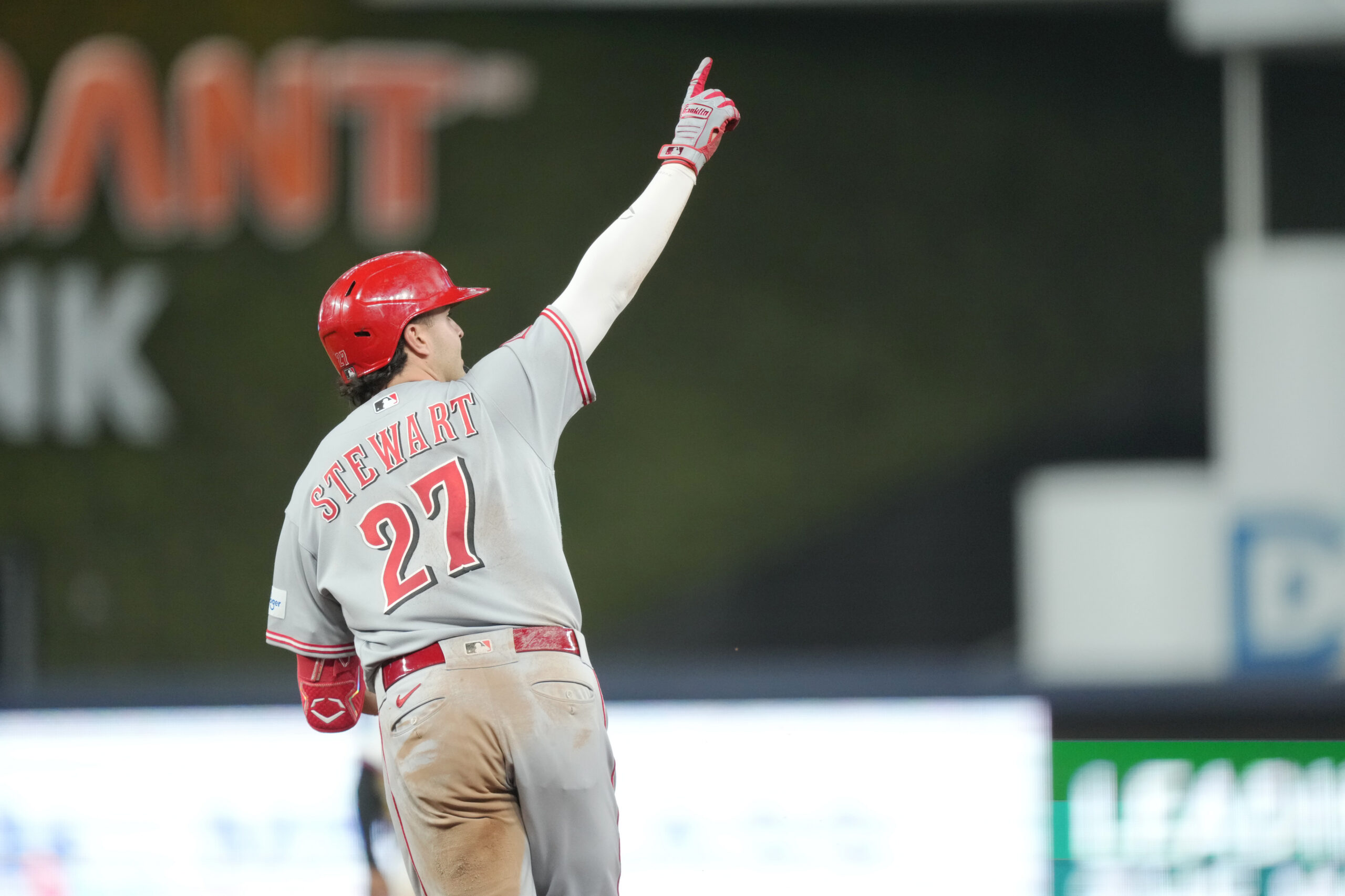
Recent history may be kind to Reds first baseman Sal Stewart, because Jonathan India won NL Rookie of the Year in 2021. Stewart is another first-round pick who has exploded onto the scene in the historically competitive NL Central division. The NL Central is the first division in National League history to have every team at .500 or better entering the month of May.
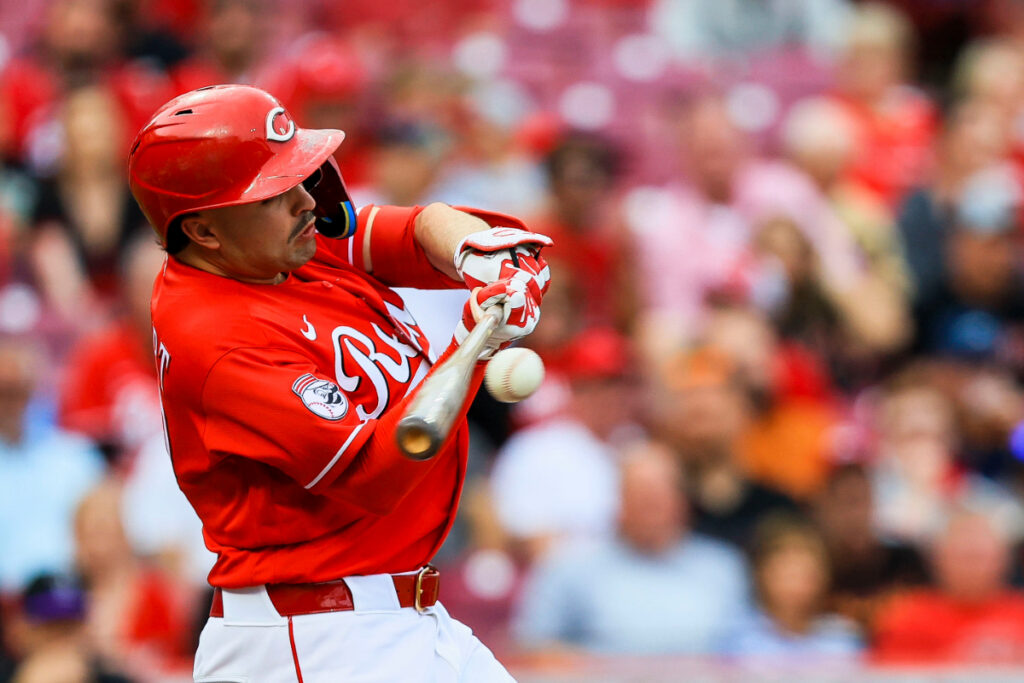
Stewart’s offensive output and prowess on the base paths have been astounding. A .943 OPS, 152 wRC+, nine home runs, and seven stolen bases (for a first baseman!) are all under his belt already.
While this sportswriter doesn’t put much stock into team success and accolade consideration, Sal Stewart and his ball club are off to the best start in franchise history, which certainly can’t hinder Stewart’s Rookie of the Year candidacy. He has formed a terrific tandem with electrifying shortstop Elly De La Cruz, and they should be a formidable pairing for years to come.
Like all international players, the Chicago Cubs’ Moisés Ballesteros has had a grueling journey to the big leagues. Ballesteros signed with the Cubs as an international free agent on January 15, 2021. He made his Major League debut just under a year ago – May 13, 2025.
Ballesteros’ physical tools are, at first glance, uninspiring. He doesn’t have much of an imposing presence, either; he stands at five feet, eight inches tall and 195 pounds. The results are all that matter, though, and the 22-year-old Ballesteros has quickly emerged as one of the most polished hitters in the sport already.
A .338 average ties Ballesteros with the astonishingly resurgent Dom Smith for the fifth-highest mark in the majors, and it leads all rookies. A 179 wRC+ and 1.012 OPS also lap the field among freshman Major Leaguers. His efforts have propelled the Cubs to first place in the NL Central, as they’ve won 13 of 16 and had a 10-game winning streak.

The best part about all of this, aside from his sentimental background, is the fact that Moisés Ballesteros is doing all of this while playing the game’s most demanding position – catcher.
What adds to the intrigue is the Cubs’ rich history of Venezuelan players. From Carlos Zambrano and Willson Contreras to Starlin Castro and Carlos Marmol, few teams have scouted Tierra de Gracia better than the North Siders.
As as the case is in most years, the Rookie of the Year race is highly captivating and awe-inspiring. It is the beginning of May, of course, so new contenders could emerge just as easily as established candidates for the award could fall off a cliff.
The 2026 MLB season itself is an extrapolation of this award race right now, as five of the six divisions have the first and second-place teams separated by 1.5 games or less. May the best man win.
