

As the MLB offseason rolls on, most of the talk has fallen into two categories. First, can anyone compete with the deep-pocketed Los Angeles Dodgers? Second, which team will snatch up young talents like Paul Skenes (pictured above) and Tarik Skubal from small-market teams that soon will not be able to afford to keep them? These questions raise the issue that has become the greatest bone of contention between owners and players in MLB: a hard salary cap. Perhaps more important than a salary cap, though, is a salary floor. Here’s why.
Every year in MLB, there are teams that are seemingly eliminated from the playoffs on opening day. For instance, in 2025, did anyone truly believe that the Pittsburgh Pirates, Chicago White Sox, Miami Marlins, and Colorado Rockies had a chance of making the playoffs? Does anyone think that the Minnesota Twins, along with the aforementioned teams, will compete for a playoff spot in 2026? How many years in recent memory could the same be said about the (formerly Oakland) Athletics?
Fans and owners alike claim that that is a perfect example of why a salary cap is needed. While that may be true, it is even more true that it is a better argument for a salary floor. Those teams all have tiny payrolls. It is hard to compete with the Dodgers, Mets, Yankees, Phillies, and Blue Jays when your team’s payroll is a fraction of theirs. So, while a hard cap could be helpful, a hard floor is a necessity. How can anyone expect the Marlins, with a 2025 payroll of just under $87 million, to consistently compete with the Dodgers, whose payroll topped $417 million?
Many of these small market owners just flat out refuse to spend money on players. They choose not to be competitive. That was the Athletics’ situation for years, and it is the Pirates’ problem now. You tie your GMs’ hands when they aren’t allowed to make big trades or go after big free agents…or even mid-level free agents. It is not impossible to compete with less money. The Milwaukee Brewers, Cleveland Guardians, and Tampa Bay Rays have made a science out of it in recent years. It is just much more difficult. It makes drafting well and having a farm system that is excellent at developing players a must.

Teams that have drafted well and developed homegrown stars, like Tampa Bay and Oakland, are not guaranteed anything. Once their homegrown stars reach the end of their rookie deals, they are hard-pressed to retain those players. That is where Pittsburgh finds itself with Skenes and Detroit finds itself with Skubal. These Cy Young winners will command way more in their next contracts than their teams will be able to afford. If the Mets, for instance, offer $500 million to Skenes, what are the chances that Pittsburgh matches it?
Again, a cap and a floor both address these types of issues. A cap makes it harder for a team with a seemingly unlimited checking account to write that check for a star free agent. A floor mandates that a team spend to put a better product on the field. Say a team has to spend $160 million a year on salaries. That makes it a lot easier to offer players like Skenes and Skubal an extension before they reach free agency. If you want to avoid having to compete with that $500 million offer, offer the player half that when you first see that star potential. It worked with Bobby Witt Jr. and Elly De La Cruz.

If a team is forced into a salary floor and can extend their stars before they get to free agency, the cap becomes less necessary. I didn’t say unnecessary; I said less necessary. Think about how much would have changed over the last several years if Washington had re-signed Bryce Harper, Juan Soto, or even Trea Turner? What if the Guardians could have afforded to keep Francisco Lindor? Imagine if the Rays could have afforded to keep Blake Snell or Willy Adames. Would we have a different view of the Athletics over the past decade if they had not lost Sonny Gray, Matt Chapman, and Matt Olson? How different are the White Sox with Crochet and Sale?
All those players ended up on teams with much higher payrolls. Don’t just picture how much better the small-market teams are with those players; picture how much worse the large-market teams are without them. Think how much the balance of power shifted with just the movement of a player like Soto. Wherever he went, his new team was considered a World Series contender. Now figure in all those other players, and hundreds more not mentioned here. It is a whole different landscape.
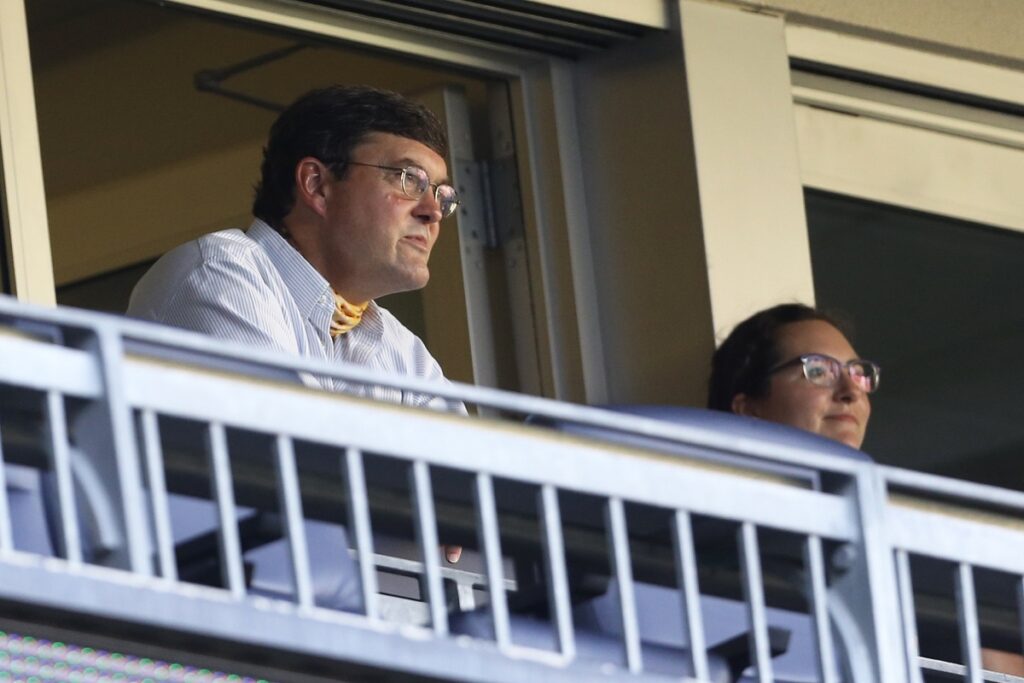
I am not saying that a salary cap should not be considered in MLB. I am just saying that a salary floor might be a better place to start. You will most likely never get the owners and the players to agree to both. MLB owners are all multi-millionaires. Most are billionaires. I refuse to feel sorry for them when they cry about player salaries being too high. I also don’t want to hear the players complaining about restricting their salaries with a cap. It is time for a change, though. The Dodgers have bought and paid for back-to-back World Championships, and they may not be done spending yet.
A salary floor potentially takes some of these big-name stars off the market. When the Dodgers, Mets, Phillies, Giants, Padres, and Yankees go shopping, and there is less talent available, both ends get closer to the middle. If true parity is the goal, both a floor and a cap need to happen. If MLB can only agree on one of the two, they need to choose a salary floor. This becomes even clearer when you factor in that the luxury tax for teams like the Dodgers and Mets goes back to the teams that are not paying the tax. Again, both ends get closer to the middle.
Teams like the Rays and Brewers have been consistent contenders with small payrolls. Just think how much further they could have gone with another $40 million. If this means that cheapskate owners like the Pirates’ Robert Nutting and the White Sox’s Jerry Reinsdorf need to sell to other millionaires/billionaires, I can live with that.
