
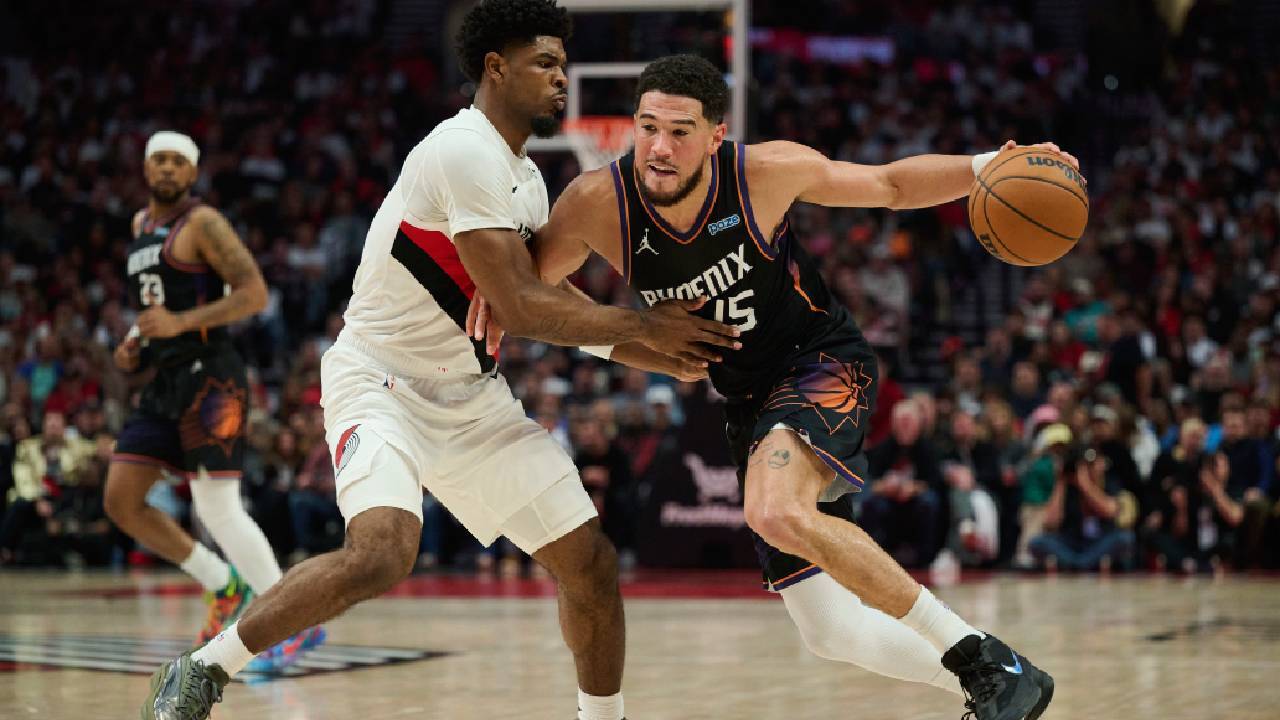
The Suns opening night loss exposed weak perimeter production, limited scoring support, and a significant rebounding deficit. The Phoenix Suns fell 124-83 to the Portland Trail Blazers on October 21, 2026, at Portland’s Moda Center. Phoenix never led.
The Trail Blazers opened with 21 unanswered points. The Suns trailed 43-12 after one quarter. Phoenix faced a reckoning before opening-night excitement could survive its first commercial break.
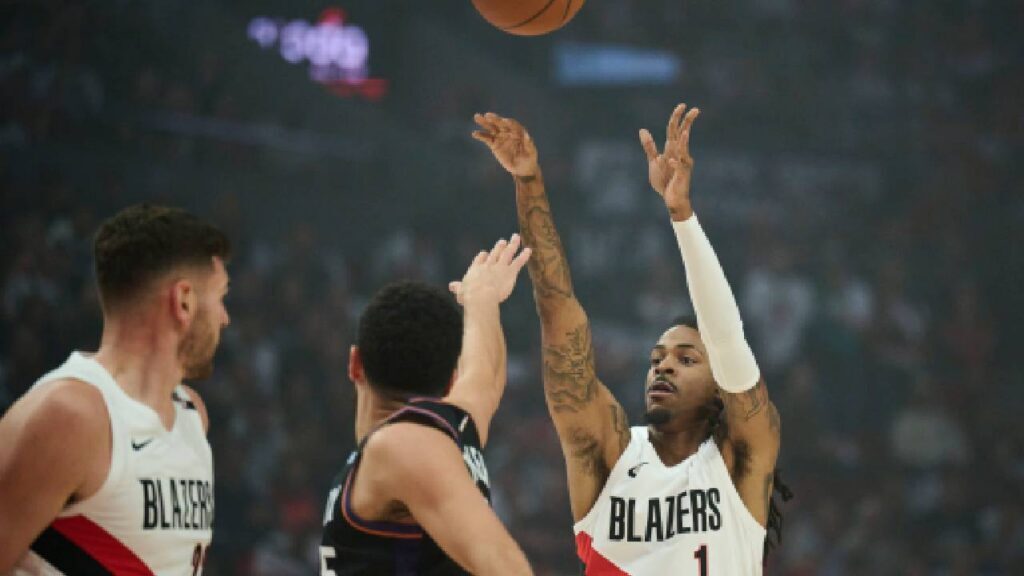
Portland established control before the visitors scored. The Suns’ first points finally arrived through free throws with 5:54 remaining. Competitive basketball had already become damage control.
The Trail Blazers carried a 72-39 advantage into halftime. Phoenix then surrendered another 35 third-quarter points. The Suns never produced a meaningful response across three decisive quarters.
Coach Jordan Ott faces an execution problem that extends beyond missed shots. Portland collected six offensive rebounds and scored 10 second-chance points during the opening quarter, according to the quarter breakdown. Phoenix gave up extra opportunities while struggling to score on their own possessions.
The ESPN box score lists Portland with 19 made three-pointers and the Suns with six. Phoenix finished 6-for-31 from deep. The Suns surrendered a 39-point disadvantage beyond the arc.
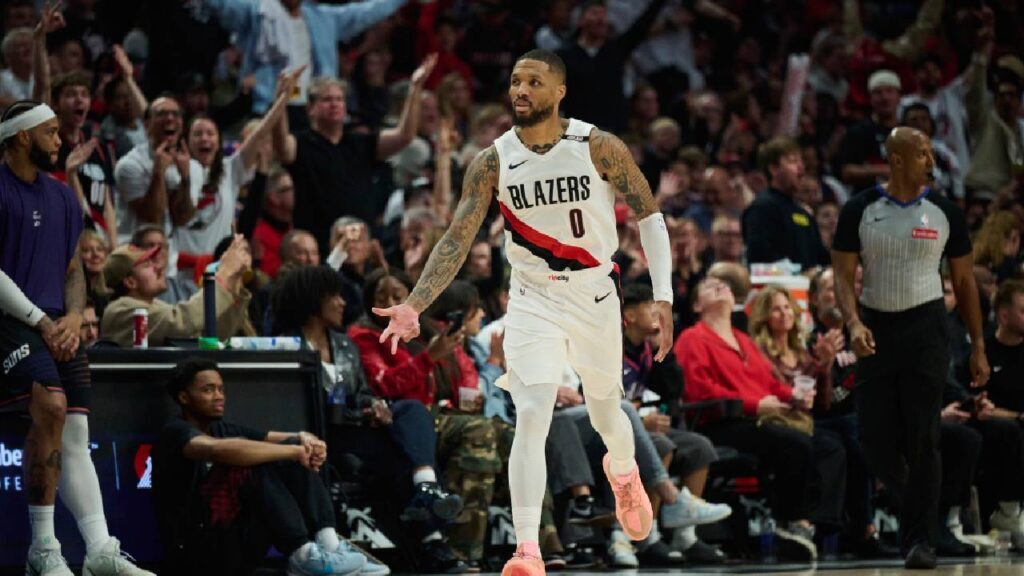
Damian Lillard scored 25 points and made six three-pointers in 24 minutes, according to Reuters’ reporting. The returning guard matched the visitors’ entire perimeter output. Phoenix needed contributions across their rotation to offset one opponent’s shooting production.
Collin Gillespie missed all eight field-goal attempts, each from deep. Gillespie also committed four turnovers against two assists. The combination left the Suns without either perimeter production or dependable ball security from a key guard.
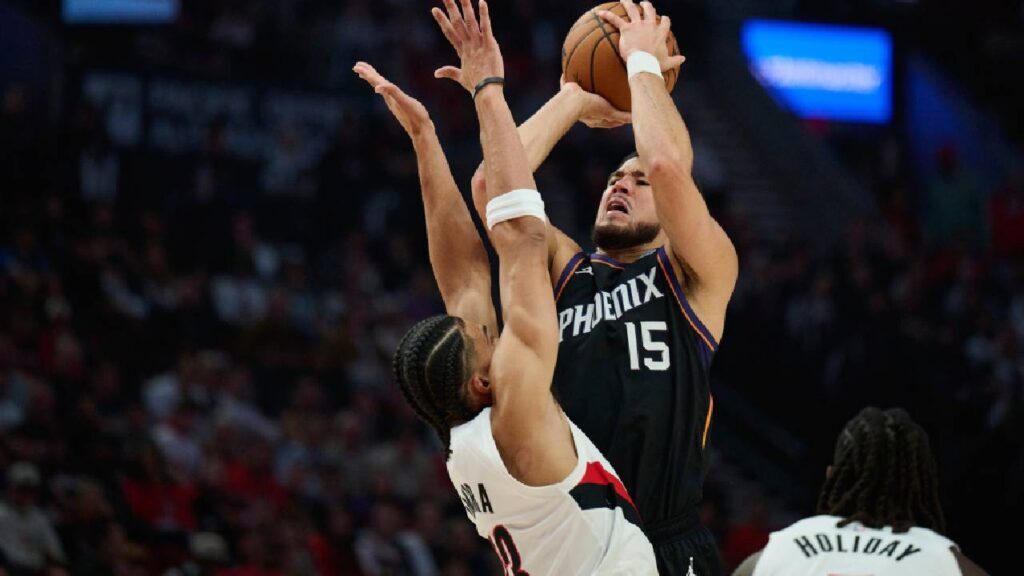
Devin Booker scored 23 points on 7-for-13 shooting. The veteran converted all nine free throws. Individual efficiency offered little protection against the collective collapse.
Jalen Green added 10 points on 4-for-12 shooting. Miles Bridges contributed eight while missing five three-pointers. Phoenix received insufficient scoring support around their leading option.
The Suns finished with 14 assists, compared with the Trail Blazers’ 32. Missed shots also suppress assist totals, so the gap cannot independently establish poor creation. Phoenix’s evaluation must distinguish missed opportunities from possessions that never generated quality looks.
Ott needs secondary creators who can generate advantages when Booker draws defensive attention. Evaluating those options requires more than identifying the next player willing to shoot. The Suns must find combinations that produce scoring opportunities without depending on Booker to finish every difficult possession.
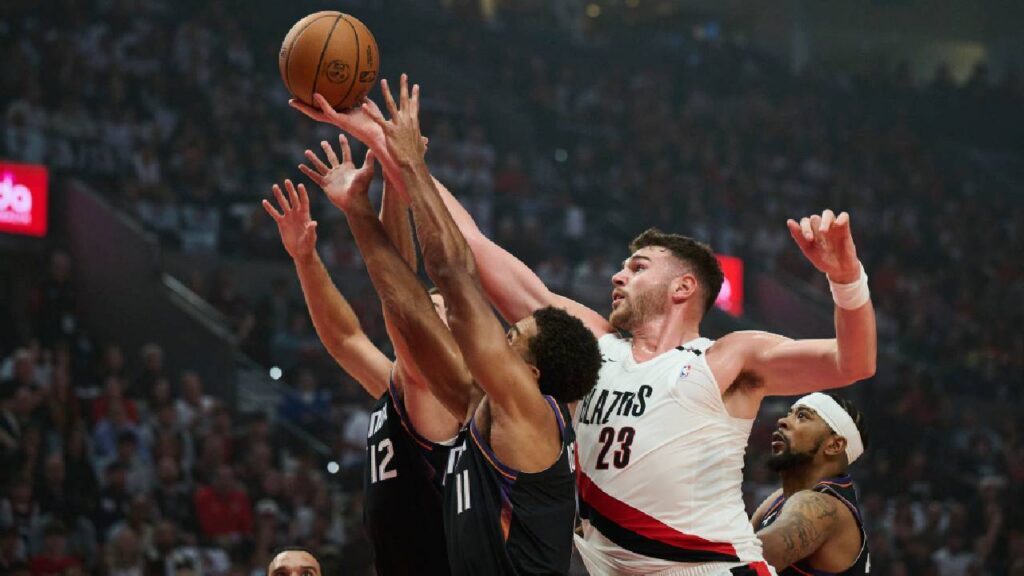
The earlier roster update identified frontcourt depth concerns during Mark Williams’ recovery. The Suns opening night loss reinforced those frontcourt concerns. Portland finished with a 56-39 rebounding advantage.
The Trail Blazers collected 16 offensive rebounds and generated 26 second-chance points. Phoenix managed 12 second-chance points. Portland’s advantage therefore involved converting additional possessions into scoring, rather than simply collecting more rebounds.
Khaman Maluach started and collected six rebounds in 17 minutes. The center scored two points. The Suns received little scoring from their starting center while already struggling to support Booker.
Oso Ighodaro provided eight points, three rebounds, and three assists. The extension analysis emphasized screening and connective passing. Phoenix received useful contributions without solving their broader interior problems.
Ighodaro’s 15 minutes cannot explain the entire rebounding gap. Guards and wings share responsibility for securing missed shots. Frontcourt evaluation should not become convenient scapegoating.
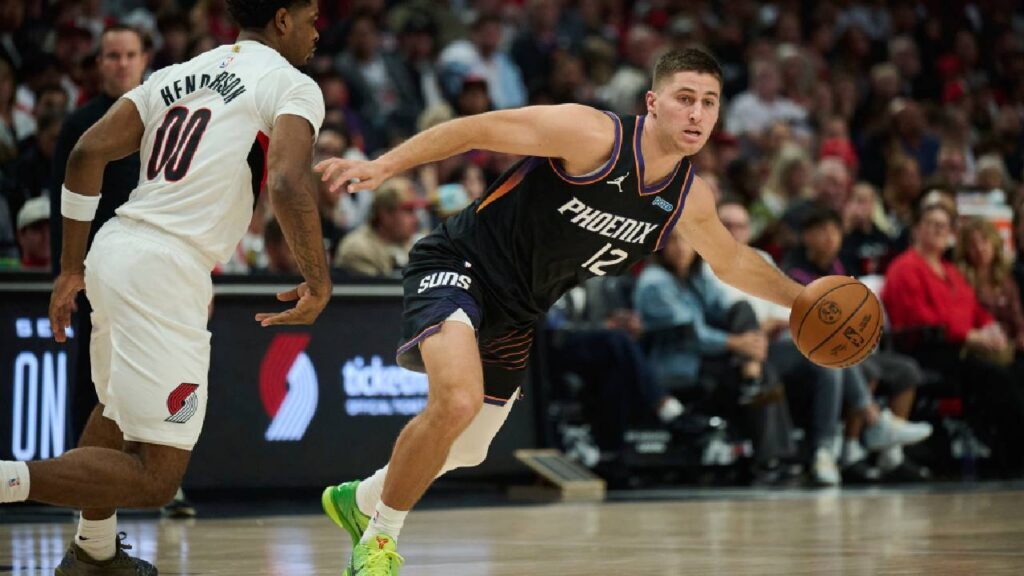
The Suns committed three first-quarter turnovers, compared with Portland’s two. Phoenix also recorded three assists while the Trail Blazers produced 13. A one-turnover difference accompanied a 31-point deficit, making ball security an incomplete explanation for the collapse.
The Suns host the Golden State Warriors on Saturday, according to the Associated Press recap. The next opening quarter offers specific comparisons: three turnovers, three assists, and six offensive rebounds allowed. Improvement requires more productive possessions alongside fewer opportunities for the opponent.
Ott should evaluate whether Phoenix can generate quality shots before judging the offense by its assist total. Better spacing and timely decisions should guide the review of each possession. The next test is whether the Suns can create good opportunities consistently, regardless of whether the first few shots fall.
A single game does not settle an entire season. A 41-point defeat still deserves scrutiny. Opening-night optimism cannot substitute for competent execution.
The Suns opening night loss demands a response built on decisions, not declarations. Phoenix must create support around Booker and compete collectively. Another opening quarter cannot become an evacuation.
