
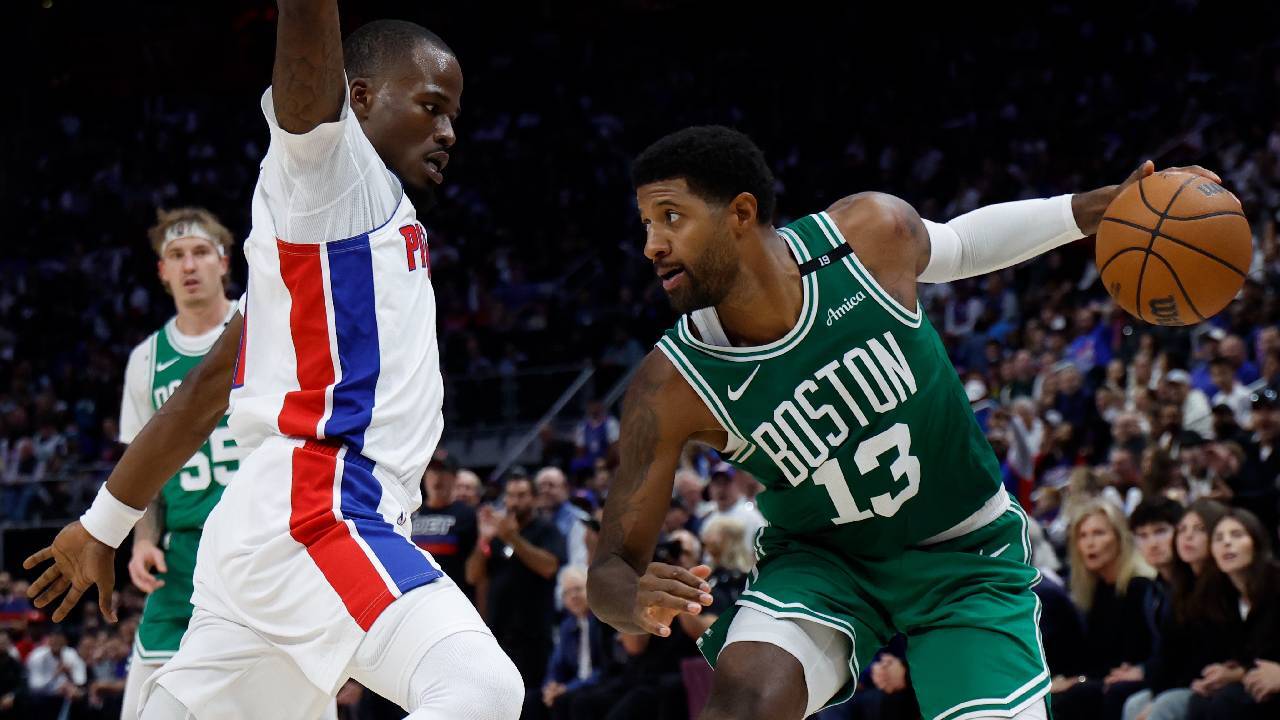
The Paul George Celtics debut delivered an immediate spectacle for the Boston Celtics after a summer that reshaped the franchise. George scored 38 points against the Detroit Pistons, establishing a franchise record for a player’s first regular-season appearance. Boston still lost 121-113 in Detroit on Tuesday, October 20, 2026, pairing an impressive individual achievement with an alarming opening-night collapse.
The Celtics acquired George after trading Jaylen Brown to the Philadelphia 76ers in July. Draft compensation accompanied the veteran forward, making the transaction considerably bigger than a straightforward exchange of established scorers. Boston received an encouraging first performance, but opening night could not settle the deal’s long-term value.
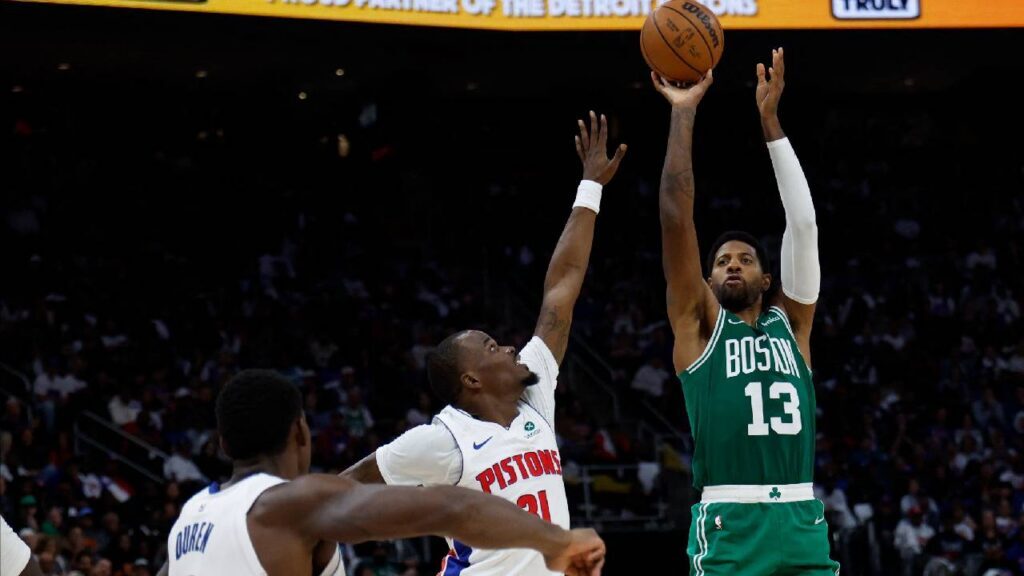
George’s record-setting debut included 12 makes on 21 attempts, with seven three-pointers falling on 12 tries. The veteran also contributed five rebounds, three assists, and five steals across 31 minutes. George surpassed the previous franchise record of 30 points, set during Kristaps Porzingis’ first regular-season appearance for the Celtics in 2023.
The third quarter briefly suggested that the celebration would include a comfortable victory. George buried three three-pointers in less than a minute, helping Boston establish a 72-50 advantage. A 22-point lead provided ample opportunity to turn an exceptional debut into a convincing opening statement.
The Pistons instead erased the cushion and eventually produced a 23-0 run. Jayson Tatum finished with 13 points and 11 assists while missing 17 of his 23 attempts. The Celtics therefore left opening night with two legitimate conclusions: George excelled, and the team failed to finish.
Tatum’s shooting struggles were compounded by a costly defensive lapse late in the game. The Associated Press reported that Tatum’s lack of defensive urgency allowed Javonte Green time to make his fifth three-pointer. Green’s basket capped Detroit’s decisive run and extended the lead to 13 with 3:33 remaining.
George’s own assessment left little room for celebrating the scoring record independently of the result. “I’m not a moral victory guy,” George told the Associated Press. George demonstrated his value as a perimeter scorer, while Boston’s late execution raised questions about the team around him.

The July agreement sent Brown to the 76ers for George, two first-round picks, and two second-round selections. The return included an unprotected 2031 Philadelphia first-rounder and a conditional 2028 first-round asset. The Celtics’ evaluation must account for those future assets alongside the veteran’s present production.
The 2028 conditions award Boston the Los Angeles Clippers’ pick when the Sixers select ninth through 30th, and Los Angeles selects 17th through 30th. A top-16 Clippers selection instead creates swap rights, subject to the San Antonio Spurs’ existing rights involving the Celtics’ first. Philadelphia’s pick enters the swap possibilities when landing in the top eight, while Boston’s own selection retains top-one protection.
Availability remains a major consideration after the Paul George Celtics debut. The forward made just 37 appearances in 2024–25 and 41 in 2025–26, according to his recent availability record. Injuries and a 25-game suspension contributed to those limited totals, making sustained participation a fairer test than one exceptional night.
The contract structure adds another consideration beyond scoring and availability. George earns approximately $54.1 million in 2026–27 and holds a $56.6 million player option for 2027–28, while Brown’s contract runs through 2028–29. The Celtics therefore reduced the duration of their commitment to that roster spot, although flexibility alone cannot establish that the return justified surrendering Brown.
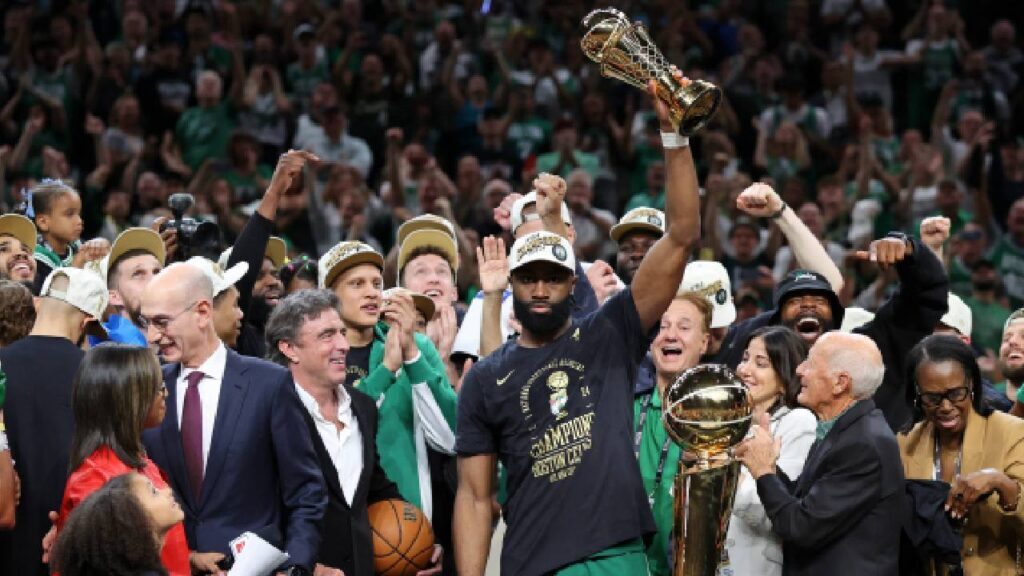
Brown’s 2025–26 season produced averages of 28.7 points, 6.9 rebounds, and 5.1 assists. The campaign earned All-NBA Second Team recognition and a sixth-place finish in MVP voting. George’s arrival should not obscure the caliber of player Boston surrendered.
The earlier franchise ranking placed Brown ninth rather than among the organization’s five greatest players. The argument considered championships, individual recognition, longevity, peak performance, and overall franchise impact. Brown’s championship and 2024 Finals MVP justified serious consideration without automatically placing him above more accomplished franchise legends.
The Celtics’ decision to trade Brown does not validate that ranking by itself. Front offices make transactions to address competitive priorities, while historical rankings evaluate accomplishments already earned. Further success elsewhere could strengthen Brown’s broader reputation, but his Boston standing still rests on contributions made with the Celtics.
The Paul George Celtics debut deserves recognition as a franchise-record introduction, not confirmation that a controversial trade has already succeeded. Boston received a vivid demonstration of the veteran’s scoring ability while losing a game it had controlled. Praise for George and criticism of the collapse belong in the same conversation.
The Celtics should evaluate the transaction through sustained production, availability, postseason results, and the eventual value of the acquired picks. Brown’s historical standing should remain grounded in his completed body of work rather than reactions to his replacement. A brilliant first impression can launch a new story without diminishing an established legacy.
