
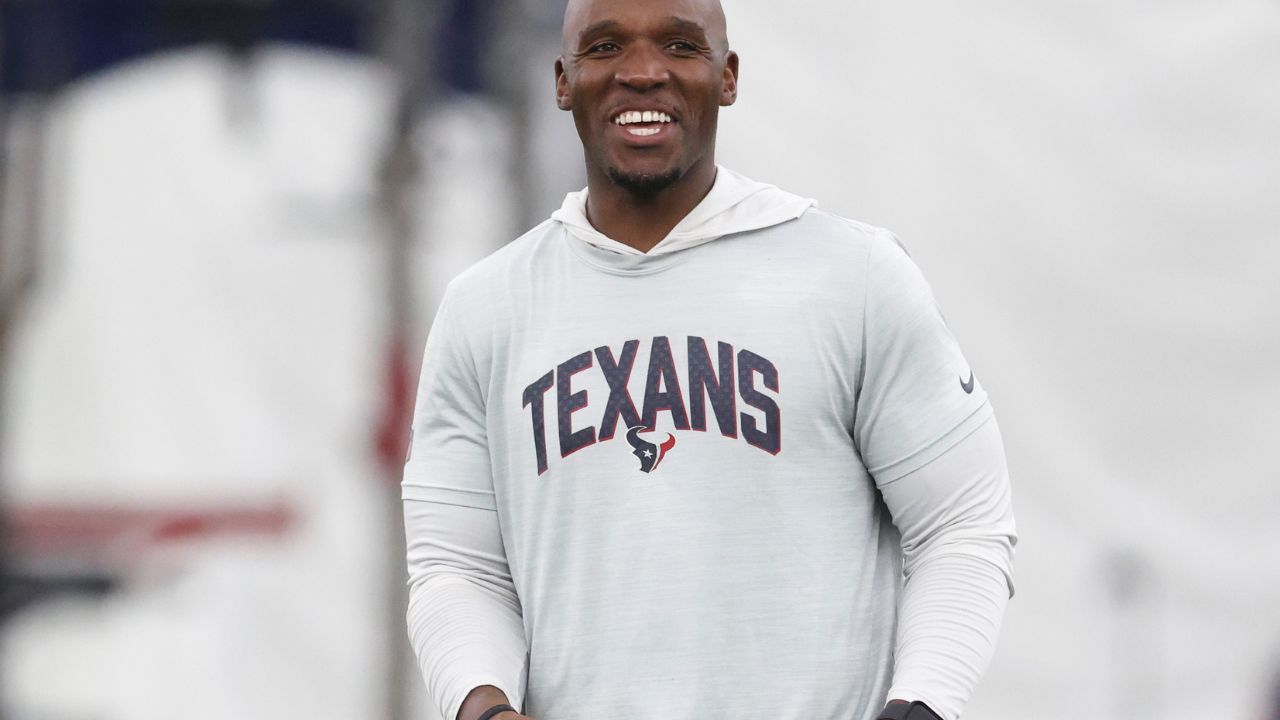
The Houston Texans’ 2026 outlook seems favorable, as they have recently beefed up their defensive depth by reuniting with their former first overall pick, Jadeveon Clowney. While the addition will help their defense throughout the season, that unit isn’t the one that needed much attention.
The Texans’ front office has poorly managed the improvement of their offense and will hurt the development of their young core players. This mishandling could lead to them continuing their three-year streak of Divisional Round exits since DeMeco Ryans became head coach.
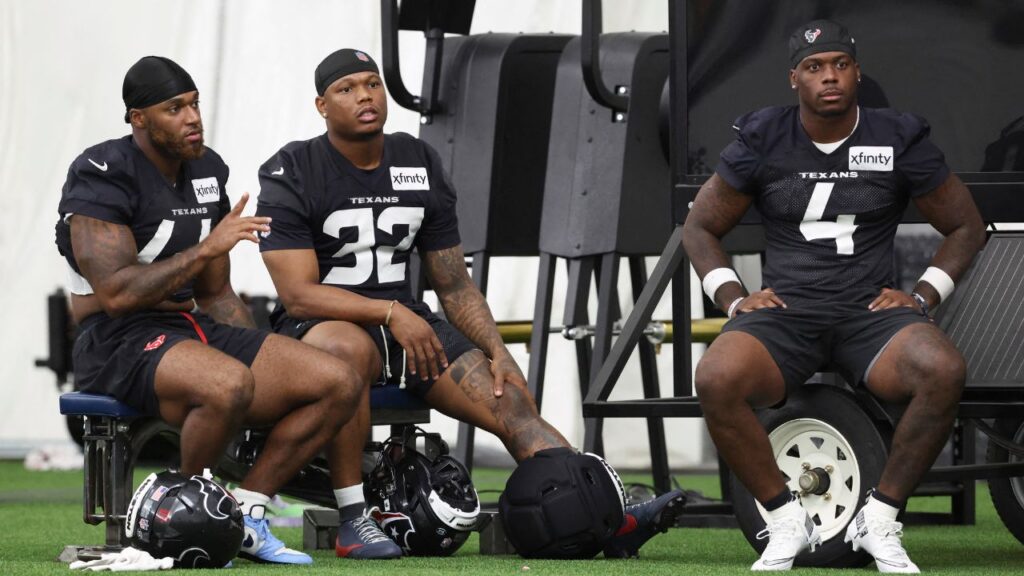
Last season, one of Houston’s biggest issues was their inability to run the ball. The Texans averaged 108.9 yards on the ground, 22nd in the league, with a yards per carry average of 3.9, 4th worst. A poor offensive line and running back production led to the measly production.
Houston had a troubled offensive line that performed solidly in pass protection but struggled mightily in the run game. According to NFL Savant, the Texans’ offensive line ranked #27 in the league in run blocking, as their run attempts were stuffed 20.7% of the time. They also had a below-league-average EPA (Expected Points Added) while running through five of the seven gaps.
Similar struggles were echoed in the backfield, as the Texans’ RBs weren’t explosive, nor could they cap off drives in the end zone. Nick Chubb and Woody Marks only combined for 1,209 yards with five touchdowns. They also combined for 318 rushing attempts but could not create big plays, generating only six rushes longer than 20 yards. For comparison, there were seven RBs last season who had more yards than Marks and Chubb combined.
Houston did add depth in the backfield and on the O-line during free agency, but the additions may have minimal effect on the running game. The Texans traded for David Montgomery, but at this stage of his career, he is more of a rotational contributor than a bell-cow.
Montgomery’s production has been declining behind a more talented Detroit Lions O-line. He had his lowest total rushing yards, yards per game, and success rushing rate as a Lion last year. At 29 years old, he shouldn’t be expected to be a team’s top back going into next season.
In addition to Montgomery, Houston did attempt to improve their O-line, but the players they got aren’t great run blockers. Wyatt Teller, Braden Smith, and Evan Brown all have a PFF (Pro Football Focus) run block grade below 66. Keylan Rutledge was drafted 26th overall and has been taking snaps at center during training camp, but he won’t single-handedly improve the running game.
Due to the lack of clear improvements in the trenches or in the backfield, the Texans’ offense may look the same as it did last season. More importantly, the shortage of a consistent running game will hurt their biggest offensive asset.
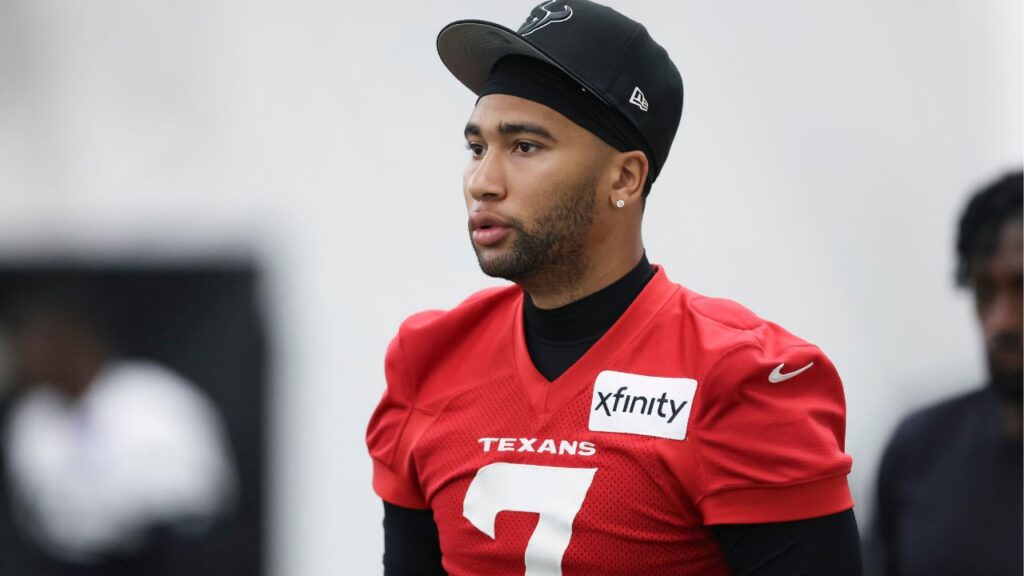
Following a troubled Divisional Round exit against the New England Patriots last season, criticism of C.J. Stroud escalated. While his play did Houston no favors, expecting a year-three quarterback to succeed while throwing the ball 47 times in a playoff game is unreasonable. In fact, Stroud’s playoff performance reflects the organization’s failure to improve the situation around him.
Last season, Stroud looked visibly uncomfortable in the pocket, especially when pressured. His EPA dropped by 0.73 when he was pressured compared to a clean pocket. Along with his EPA, his success rate fell to 27.9% and his completion rate to 41.1%.
It’s standard for a QB to be less productive when pressured, but Stroud seems so paranoid that his efficiency with a clean pocket has dropped. Between his rookie year and last season, his EPA has dropped by 0.11, and his success rate has declined by 2.9%. His paranoia was also on full display in the Wildcard Round game against the Pittsburgh Steelers when he threw this interception with a relatively clean pocket.
The combination of uncertainty in the pocket and a lackluster running game has taken a toll on Stroud. His overall production has been diminishing year after year, as he is recording fewer passing yards and touchdowns after each year.
Going into this upcoming season, Stroud will yet again be tasked with the impossible job of carrying the Texans’ offense. While the return of Tank Dell and Nico Collins will help, this offensive unit will be too dysfunctional to make a long run. If the offense continues to look regressive, public scrutiny will be directed at Stroud, even though roster building has been the key cause.
What’s your take? Post it in our free sports community at stadiumrant.app, or download Stadium Rant on the App Store.
Many believe Houston’s defense, led by Will Anderson Jr. and Danielle Hunter, will be so dominant that their offensive production will not matter. If the last two Super Bowls have showcased anything, though, it’s that all sides of the ball are important and relying on one aspect is a poor strategy.
The Texans’ limited rushing offense and flawed O-line will be too large a hole for their defensive production to fill. Once they get in close games against other talented teams, Stroud will be expected to win them. Obtaining victories will be too tall a task, though. Houston will remain trapped in the seemingly endless cycle of Divisional Round losses.
