
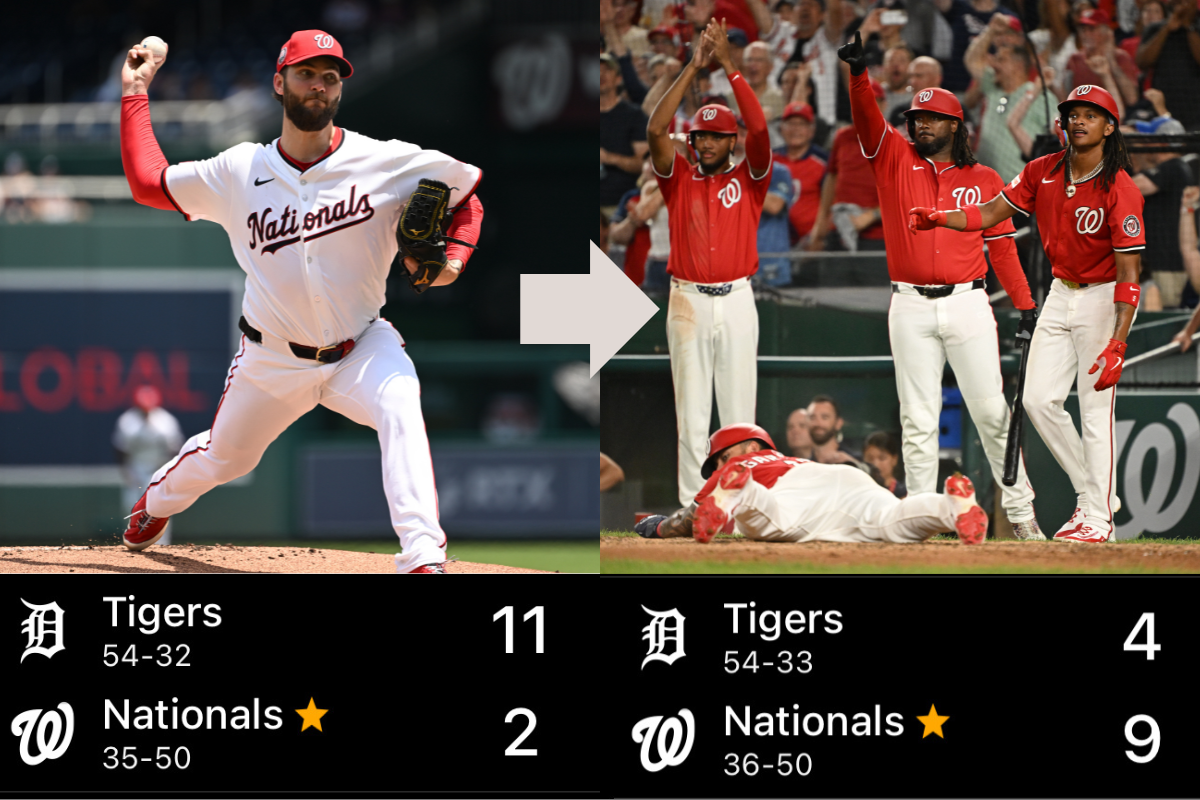
Wednesday afternoon’s game, which kicked off a split doubleheader between the Washington Nationals and Detroit Tigers, was effectively over before the Nats even stepped up in the bottom of the first.
Trevor Williams was at the epicenter of the collapse.
Williams came into Wednesday afternoon having allowed at least six hits in each of his last three starts. His previous outing in San Diego was gutsy, starting strong before unraveling into a blown 3-0 lead, but Wednesday seemed to be a continuation of that unraveling. Facing an elite Tigers lineup, he needed to have his best stuff.
Williams didn’t even come close.
The right-hander labored through an unfathomable 54-pitch first inning, the highest pitch count for a starter in a single inning in over a decade.
The Tigers wasted no time teeing off, torching both Williams’ fastball and sweeper. Riley Greene launched his 20th homer of the season, 380 feet worth of early devastation to break open the scoring.
The fastball was a predictable punching bag. Williams threw 45 of them, with Detroit batters connecting 89% of the time. In the first inning alone, he relied on it nearly 60% of the time, surrendering six hits, one of which was a three-run bomb.
Williams’ sweeper offered little escape: thrown roughly 25% of the time, it generated a swing-and-miss or called strike just 23% of the time. Neither pitch had bite. Neither pitch had deception.
What unfolded wasn’t just a rough inning; it was unraveling in real time. By the time Davey Martinez made the call to the bullpen, the game had shifted since Williams couldn’t contain the damage.
From the first pitch on, Detroit didn’t just take the lead. They seized command and never let go.
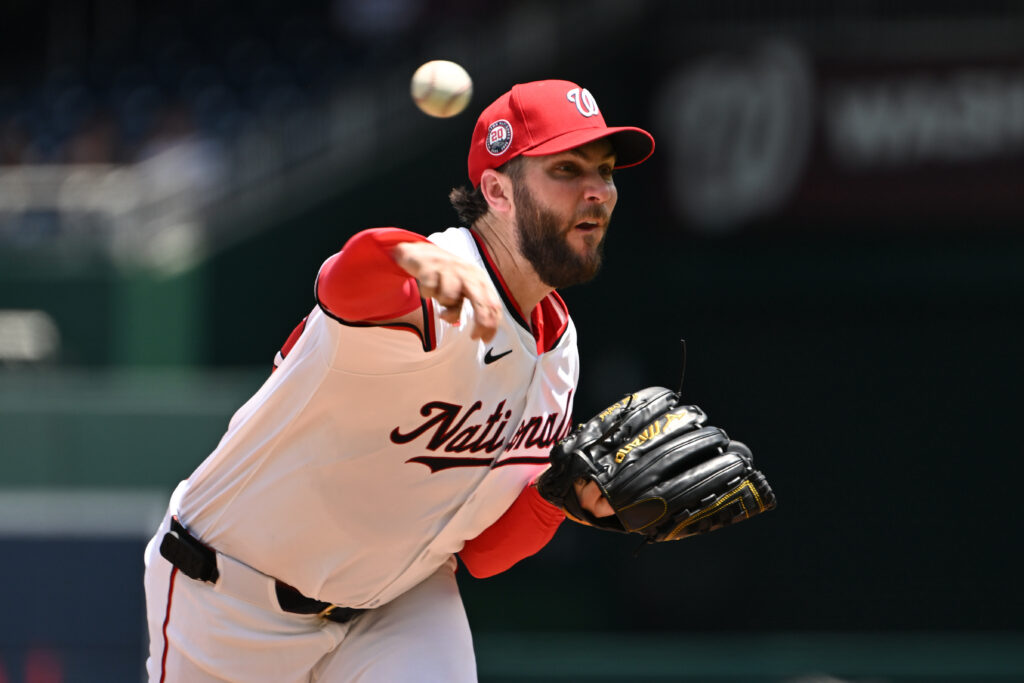
This wasn’t just a bad start; it set the stage for a full-system malfunction.
Williams’ unraveling in the first inning set the tone for what ultimately became an 11–2 rout by the Tigers, and it’s a performance that demands a closer look beyond the box score.
Detroit seemed to have every pitch scouted and every timing window dialed in. When the Tigers connected on Williams’ fastballs, many of which came on counts with two strikes, the ball just came off the bat differently. The Tigers weren’t fooled; they were fed. Relying on the heater nearly 60% of the time in that first inning only amplified the predictability. When Rogers took Williams deep for his first homer of the season, it wasn’t just a blow; it was confirmation that Williams didn’t have a plan B.
Williams’ sweeper wasn’t much better. Despite being a key secondary offering, when both primary pitches are ineffective, especially early in counts, the results tend to snowball, and that’s exactly what happened.
After the first inning, Williams pitched just one more frame. By then, the Nationals were in a hole so deep that it bordered on psychological. Detroit built its scoring methodically across the next few innings. Eventually turning what started as a loud first into a steady beatdown as fans sat in the hot sun in a dormant Nationals Park that looked totally different a few days ago.
By the time the final outs were recorded, the scoreboard read 11–2, an emphatic reminder that good teams like Detroit don’t waste second chances, and struggling pitchers on struggling teams can’t afford slow starts.
For Williams, this outing wasn’t just another tough chapter. It raises bigger questions about his reliability moving forward, whether the Nationals see him as a rotation mainstay or a potential bullpen arm that’s worth another extension. Whatever the path, Wednesday’s game will be remembered not for what Detroit did right, but for what Williams couldn’t do at all.
The split doubleheader didn’t just give fans two outcomes. It gave them two identities.
Game One was a collapse, slow, predictable, and incredibly painful. Williams didn’t have a pitch that worked, and Detroit didn’t miss a beat. When Williams threw 54 pitches in a single inning and got touched up for two three-run bombs before the crowd even settled in, it didn’t matter what happened next. The damage was already done.
Nationals Park responded in kind. Quiet. Still. Sunlit but lifeless. It felt like the weight of the rebuild had returned, and no amount of late-inning optimism could offset how demoralizing that first frame was. Luckily, the Nats had another game in a matter of hours.
Game Two was the inverse. As usual, MacKenzie Gore gave the team a chance, and the offense didn’t just rally, it roared. Bell and DeJong’s hits led to a go-ahead Lowe triple.
Jacob Young took a home run off the scoreboard with an absolute robbery.
The stadium, once dulled by frustration hours earlier, felt primed again. Not for postseason dreams. Just for hope.
What makes these two games worth comparing isn’t the score; it’s the implications.
In Game One, the Nationals felt like a team still searching for its foundation, as the Tigers showed Washington what a contending baseball team looks like. In Game Two, they looked like they remembered what it feels like to stand on solid ground and compete.
From the moment I sat down for Game One and watched Greene’s homer soar, I thought: here we go again.
I’ve seen this version of the Nationals too many times. Flat. Passive. Beaten before they’ve blinked. Williams didn’t just struggle; he unraveled. The crowd didn’t rage. It sagged.
Then came Gore in game two. Then came Bell. DeJong. Lowe. The eighth inning felt like someone cracked a window open. Nationals Park breathed again. Not fully. Not freely. Enough to remind us it’s still capable.
One comeback doesn’t fix this team, but it showed something they need more of: momentum. Belief. That intangible hum fans chase when they show up, knowing the odds but hoping for something better.
No, this season isn’t turning. Not yet. Wednesday offered contrast in full color. The first game drained the soul. The second gave it a flicker. Against a powerhouse Detroit team, the Nats showed they can still punch back when it matters.
Not greatness. Not dominance.
Just resilience.
For now, while it’s rough at times, that’s enough to keep tuning in.
