
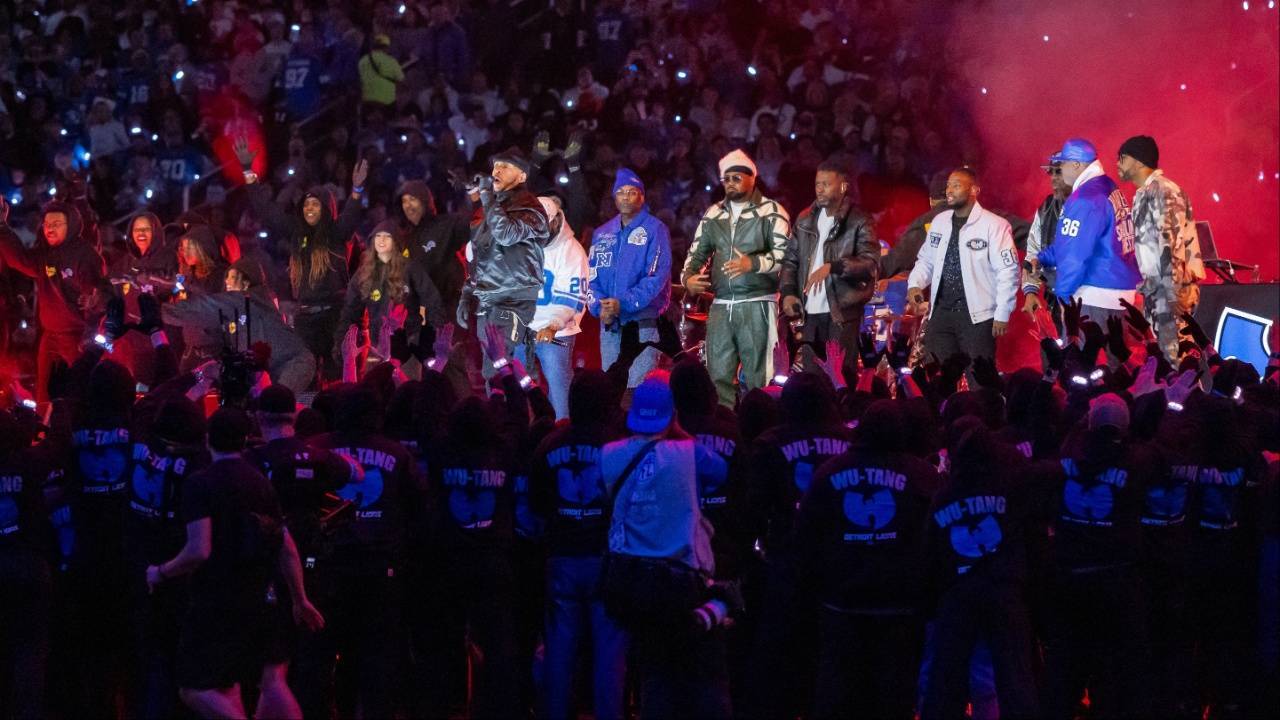
The Wu-Tang Clan halftime show drew Jason Whitlock’s criticism before the group performed on Thanksgiving 2026, with his question centered on fans’ familiarity. Producer Paul Rosenberg had already identified “a whole generation of Detroit football fans” as part of the intended audience. Eminem helped select a group whose music connected with local listeners despite originating in New York. The disagreement deserves an examination of that audience connection and the performance that followed.
The Detroit Lions hosted the Chicago Bears in a divisional showdown at Ford Field, where the entertainment accompanied a game with first place at stake. Chicago brought five straight wins, including the victory detailed in the Saints game recap. Detroit ultimately lost 39–35, leaving the halftime show as one part of an afternoon that generated arguments about football and music.
What Jason Whitlock Said About Wu-Tang
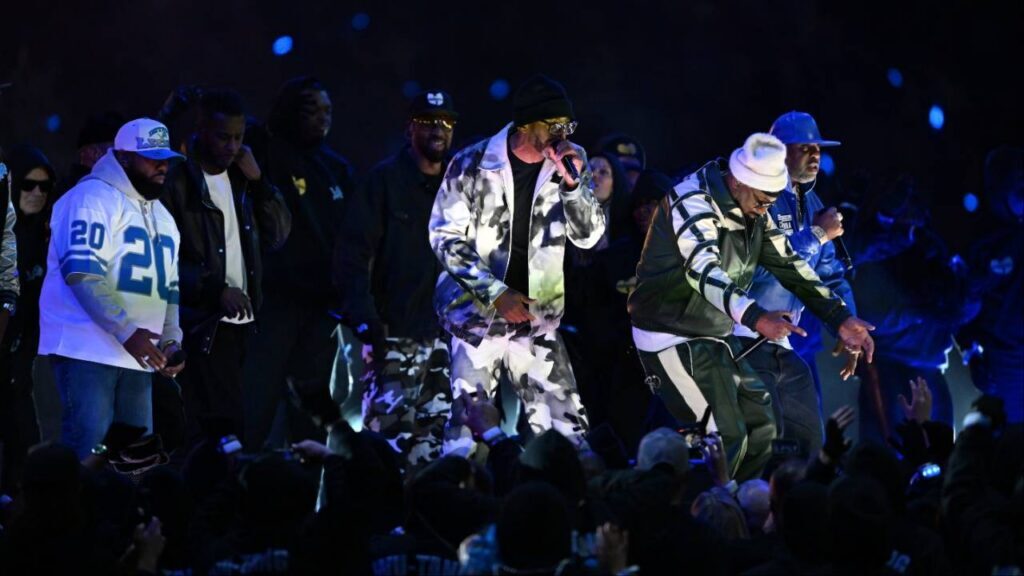
Whitlock’s early criticism asked how many NFL fans could name a Wu-Tang song, making recognition the test of the booking. The commentator also asked whether Wu-Tang represented “the worst holiday halftime choice in the history of the NFL.” A claim that sweeping needs comparable examples and a standard for judging decades of holiday entertainment. The question supplied neither, leaving an assumption about audience familiarity to carry the historical comparison.
As a Wu-Tang fan, I know these songs, and following football gives me another reason to watch a Thanksgiving broadcast. The booking reflected both interests, making the choice easy for me to understand. Audience familiarity deserves consideration, although recognizing voices, beats and choruses also shapes a listener’s connection with music. A song-title quiz captures only part of that relationship and leaves little room for a performance to introduce newcomers.
Whitlock called the performance “absolutely embarrassing” in a second post, while his additional remarks dismissed “old men shouting profane rhymes.” Age and lyrical content are fair subjects for criticism, especially when discussing an act selected for a broad holiday audience. A sharper assessment would connect those objections to particular moments, then examine delivery, arrangement and staging. The quoted remarks instead extended a sweeping dismissal to the performers and their material.
Why Detroit Chose The Wu-Tang Clan Halftime Show
The team announcement named Eminem and Paul Rosenberg as executive producers and talent selectors, with their partnership entering its second year. Rosenberg described a history with Wu-Tang that connected his own fandom to generations of local football listeners. The explanation establishes whom the producers hoped to reach, without measuring how the entire broadcast audience received the choice. Serving viewers outside that fan base remained part of the performance’s challenge.
Jack White headlined in 2025, with Eminem appearing as a guest, before the 2026 selection shifted toward hip-hop. The production agreement covers shows through 2027, giving the organizers successive opportunities to put their musical interests into the event. Eminem stayed offstage this Thanksgiving, allowing the selected headliners to carry the show without another appearance from its producer.
The NFL’s holiday lineup also included U2, Miranda Lambert and the Goo Goo Dolls, giving different venues distinct musical identities. Wu-Tang fit a slate already built around performers whose audiences would overlap without sharing every preference. A holiday broadcast can accommodate that range, especially when local organizers explain why a particular act belongs on their stage.
What The Performance Offered Beyond Nostalgia
Wu-Tang opened with “Triumph,” from 1997’s “Wu-Tang Forever,” while the Pitchfork recap also identified “C.R.E.A.M.” among the selections. The Rock & Roll Hall of Fame’s artist profile describes RZA’s sampled production, giving context to the sound behind those records. The set added Chad Smith’s drums and solo excerpts, broadening the presentation beyond a sequence of group tracks.
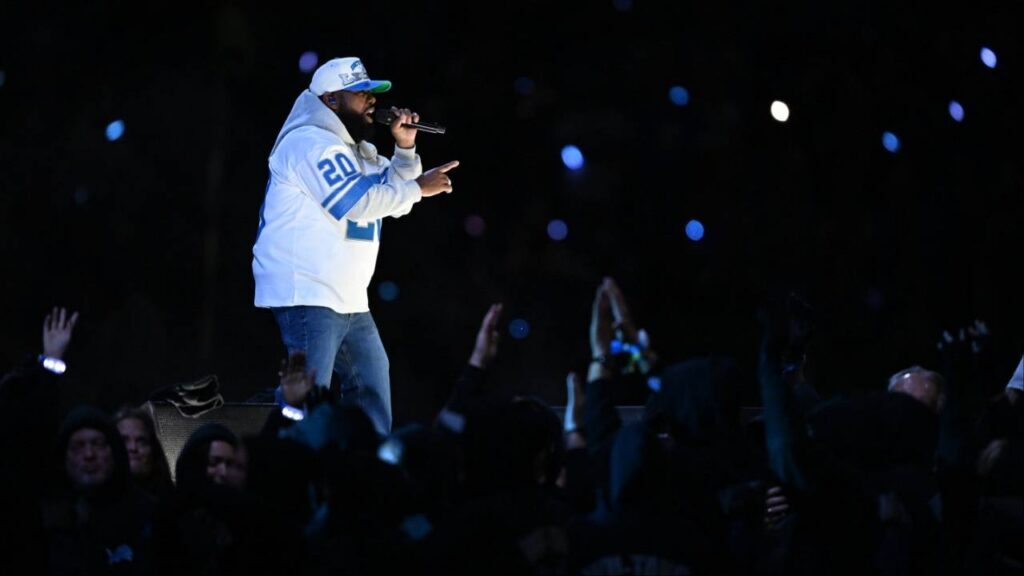
Smith grew up in Bloomfield Hills, according to The Detroit News, supplying another local connection for the visiting collective. The Red Hot Chili Peppers drummer wore Jahmyr Gibbs’ jersey, while Raekwon chose Barry Sanders’ number. Smith also played on the 2025 remix of “Wu-Tang Clan Ain’t Nuthing ta F’ Wit,” a collaboration documented by Billboard. The finale returned him to familiar material, making his guest appearance musically relevant alongside its regional appeal.
Ghostface Killah delivered his verse from Raekwon’s “Ice Cream,” and Young Dirty Bastard performed part of “Shimmy Shimmy Ya.” Young Dirty Bastard is the son of the late Ol’ Dirty Bastard, giving the tribute a direct family connection. The selections brought solo careers into the presentation and showed how individual identities remained part of the collective’s story.
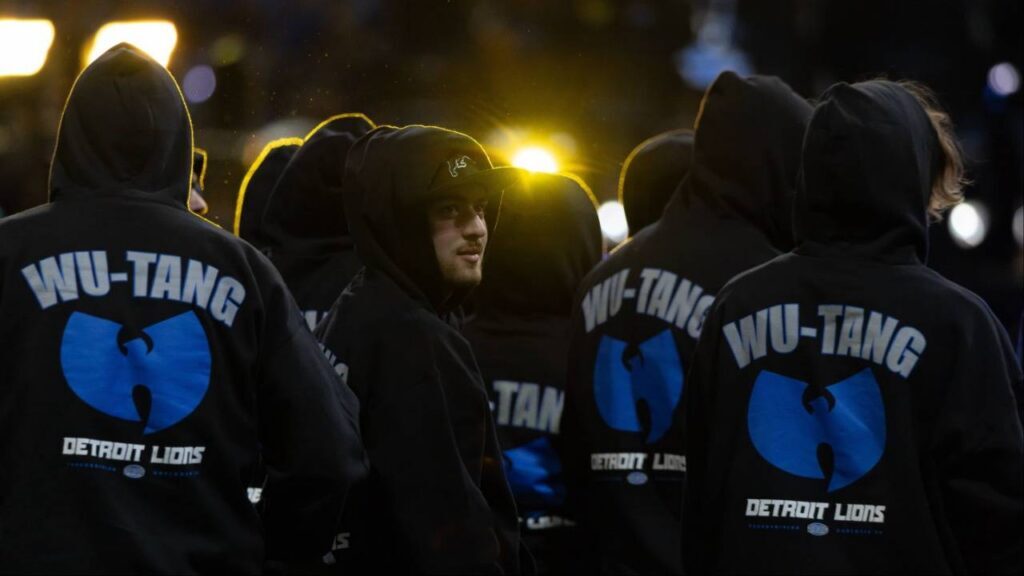
Billboard’s performance report counted 500 fan volunteers, with RZA leading “Wu-Tang Clan Ain’t Nuthing ta F’ Wit” among fans as smoke jets punctuated the finale. The merchandise collaboration paired “Shaolin vs. Everybody” with team branding, and dancers wore pieces from the collection. The move into the crowd and the shared visual identity connected a New York act with the host city.
Billboard clocked the medley at nearly seven minutes, leaving group records, solo hits and a family tribute competing for space. “Shimmy Shimmy Ya” received only a brief excerpt, according to The Detroit News, limiting the time available for that particular moment. One fewer selection could have given the tribute room to develop and made the storytelling easier for newcomers to follow. The compressed arrangement supplies a specific criticism of the performance while leaving the reasoning behind the booking intact.
What Ryan Clark And Caleb Williams Actually Added
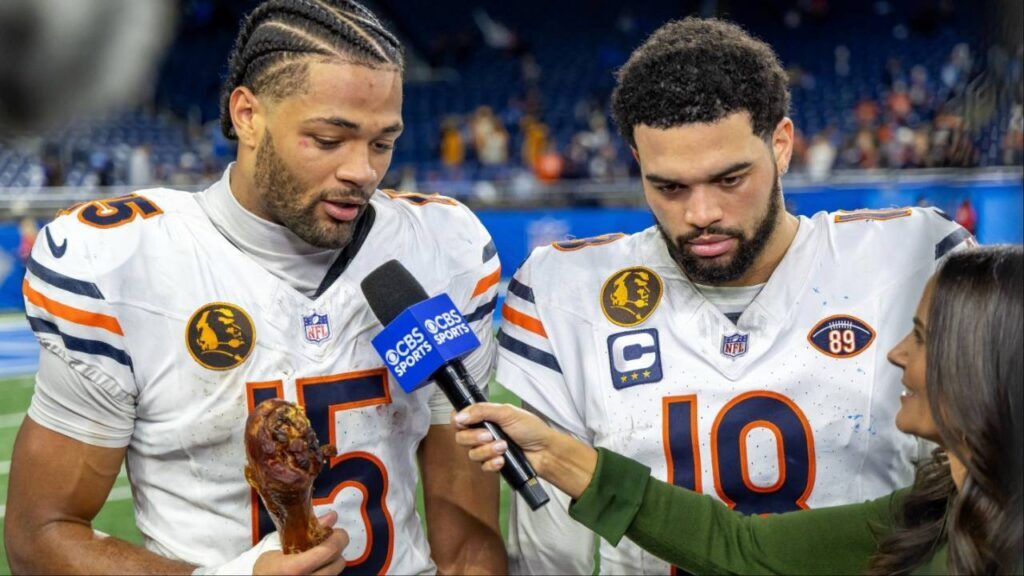
Former NFL safety Ryan Clark welcomed the performance, with Pro Football Network quoting his reaction to Wu-Tang appearing on Thanksgiving. Clark wrote, “That’s so live!” and supplied a recognizable football voice supporting the choice. The reaction still represents one viewer, and online praise or criticism cannot establish how the broadcast audience divided.
Quarterback Caleb Williams showed appreciation after the Bears’ comeback, adding “Shoutout to Wu-Tang” while discussing halftime adjustments. The postgame explanation referenced 19 minutes to regroup during the comeback covered in the Thanksgiving breakdown. Williams referred to the halftime interval, while Billboard measured nearly seven minutes of music. The distinction keeps a joke about adjustment time in its football context and leaves the musical judgment to listeners.
End Of My Wu-Tang Clan Halftime Show Rant
The Wu-Tang Clan halftime show recognized listeners like me as part of the football audience, and the producers took that connection seriously. Enjoying football gives fans common ground without giving everyone the same record collection. Different bookings will reach different households, and a holiday slate has room for those preferences. The opportunity to hear familiar music in a football setting was part of the booking’s appeal for me.
Defending Wu-Tang leaves room for criticism of the performance, particularly when a short medley rushes material that could benefit from longer verses. Fans can appreciate the choice while asking for an arrangement that gives its strongest moments more space. Whitlock’s question reduced audience fit to naming tracks, leaving the producers’ explanation largely unanswered. A fuller assessment would examine why these producers chose this catalog for this crowd, then judge how well the show delivered.
