
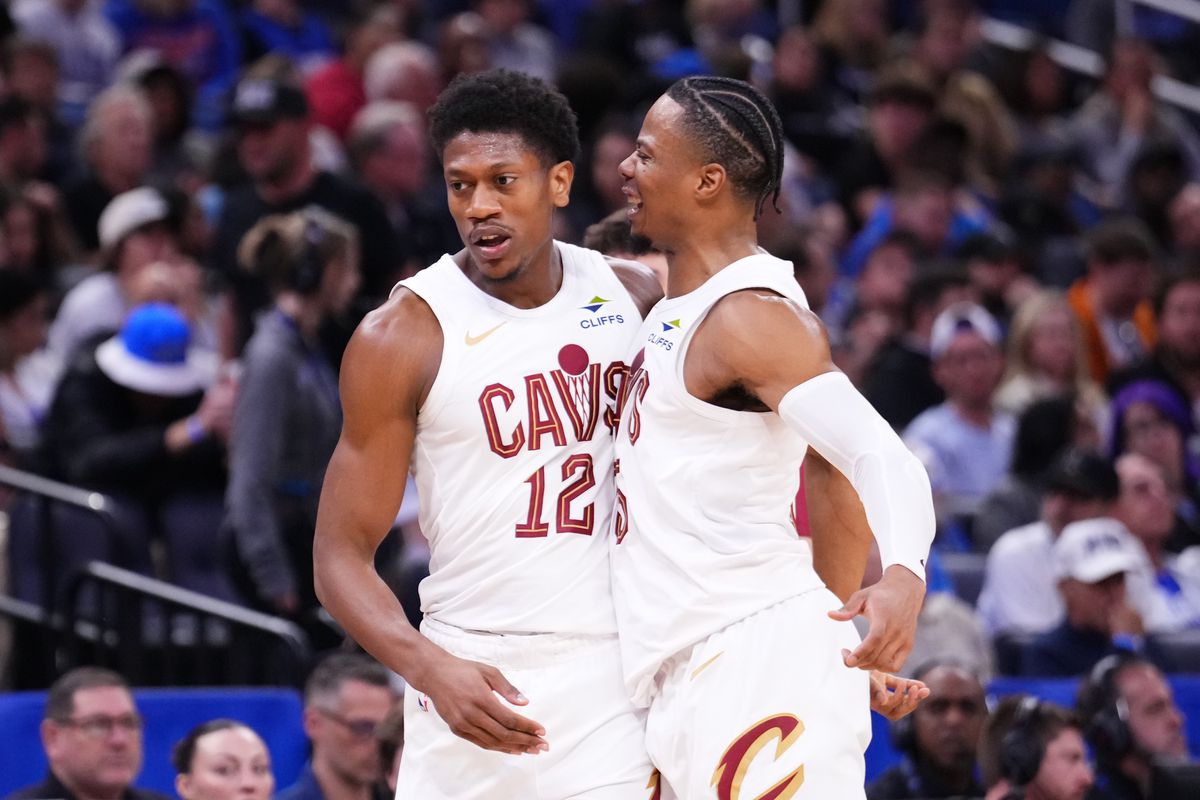
The Cleveland Cavaliers, although having an established core in Darius Garland, Donovan Mitchell, Evan Mobley, and Jarrett Allen, haven’t settled on a consistent starting small forward. The most recent addition to the team, De’Andre Hunter, should be the player to fill this role.
Other than Hunter, the other players who could potentially start at the three-spot include Max Strus, Isaac Okoro, and Dean Wade. Looking at both ends of the court, here’s why Hunter should be the top candidate for Cleveland’s fifth starter.
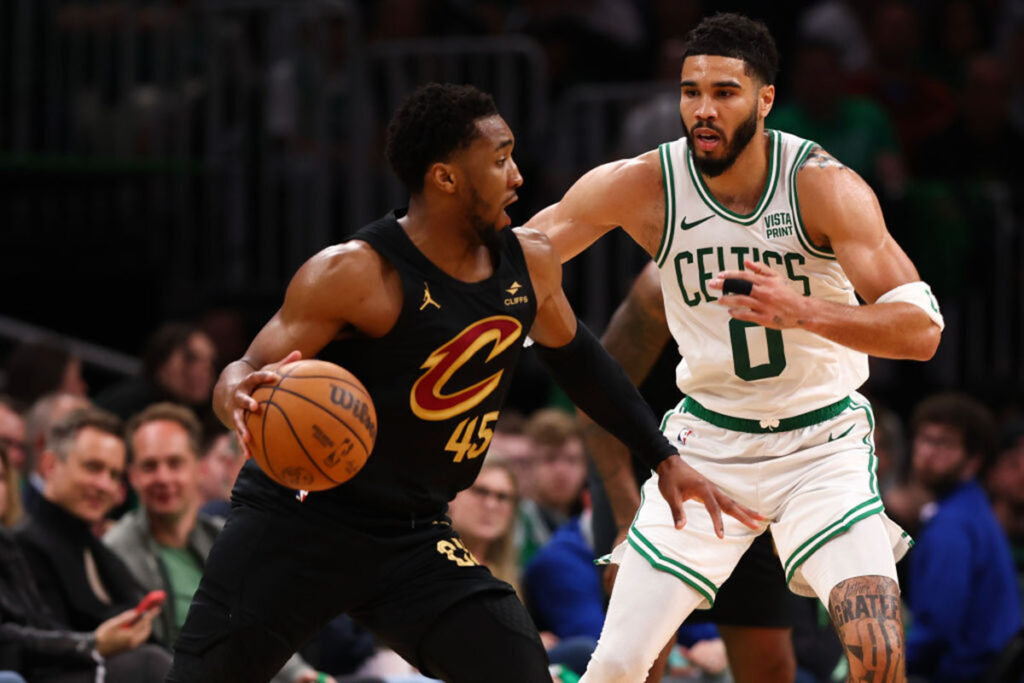
Of the SFs currently rostered, Hunter offers the most offensive upside. With the Cavaliers, he’s averaging 14.3 points, 4.2 rebounds, and 1.3 assists per game, shooting 48.5 percent from the field and 42.6 percent from three.
Not only is Hunter scoring more than the other forwards, he’s doing so more efficiently with the highest field goal and three-point percentages (and fewest turnovers) of the bunch. In 2024-25, Strus averaged 9.4 points per game, shooting 44.2 percent, Okoro averaged 6.1 points, shooting 46.4 percent, and Wade averaged 5.4 points, shooting 41.3 percent.
With Hunter’s scoring as a fixture of the starting five, it could open Cleveland’s offense in ways that haven’t been seen yet, for a couple of reasons. Primarily because he joined the team later in the season, but also because Kenny Atkinson tended to change the starting SF depending on the matchup. Of the 27 games Hunter played for the Cavaliers, he only started in five.
If Hunter is consistently positioned next to the core four, that’s five legitimate offensive threats opposing defenses have to worry about. This would work to both dilute defensive attention on any one player and alleviate the effects of a starter having an off night. If every starter can score in abundance, someone is going to have to take a step back each night anyhow.
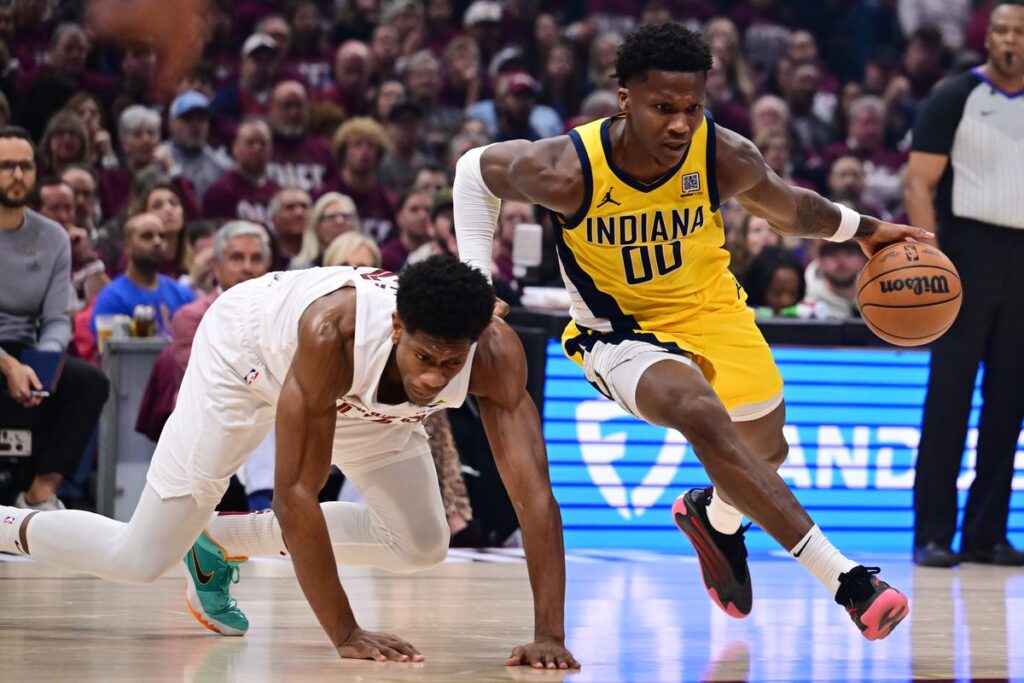
Hunter may not be the best defender of Cleveland’s forwards (or even second), but he is still talented in that regard. He finished with the second-lowest defensive rating of the SFs at 114.2 (in Cleveland) because he’s able to use his length to block lanes and plug gaps.
The biggest concern is Hunter’s ability to guard the perimeter, as 47.9 percent of the shots scored against him are threes. Also, 53.5 percent of the twos scored against him are hit from further than 15 feet out, meaning he struggles guarding around the arc and not just behind it.
Despite these concerns, the Cavaliers are still a team full of two-way players and are more than capable of making up for what Hunter lacks. Keep in mind, he is also only 27 years old, meaning he still has a lot of room to grow as a player (and a full off-season to do so).
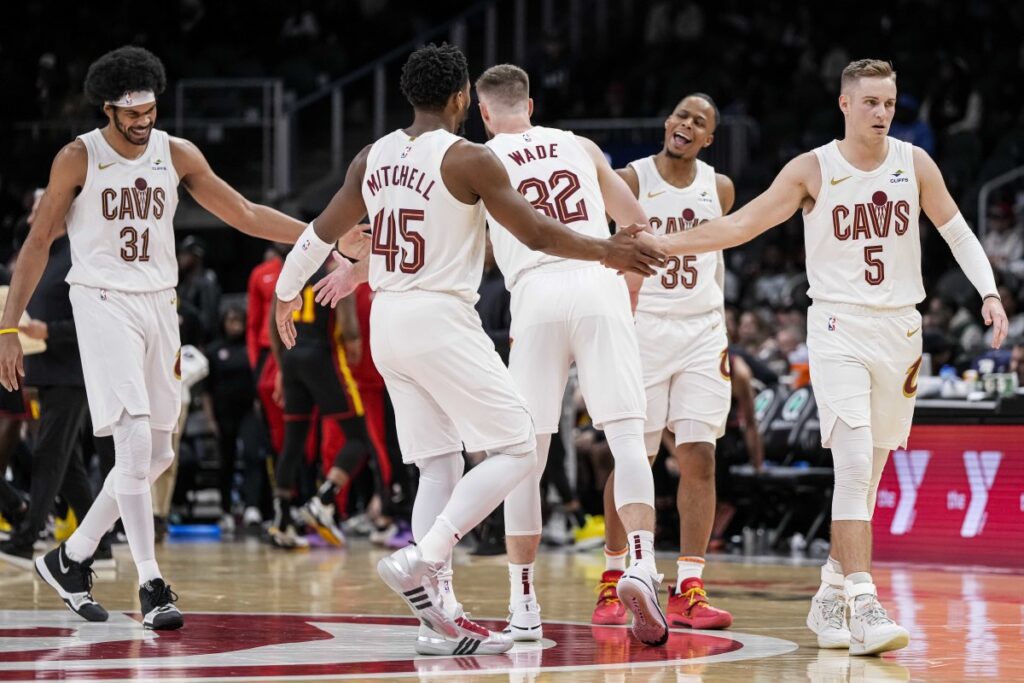
With the offensive production alone, Hunter warrants a chance to start alongside the core four. Although not as defensively talented as the other SFs, Cleveland’s ability to develop players’ defense is rivaled only by units like the Oklahoma City Thunder or Miami Heat. The potential to improve Hunter’s defense is certainly there, but even without it, he still poses more potential positives than negatives as a starter. If Cleveland runs it back with (relatively) the same roster, there doesn’t seem to be a better choice for the starting SF.
