
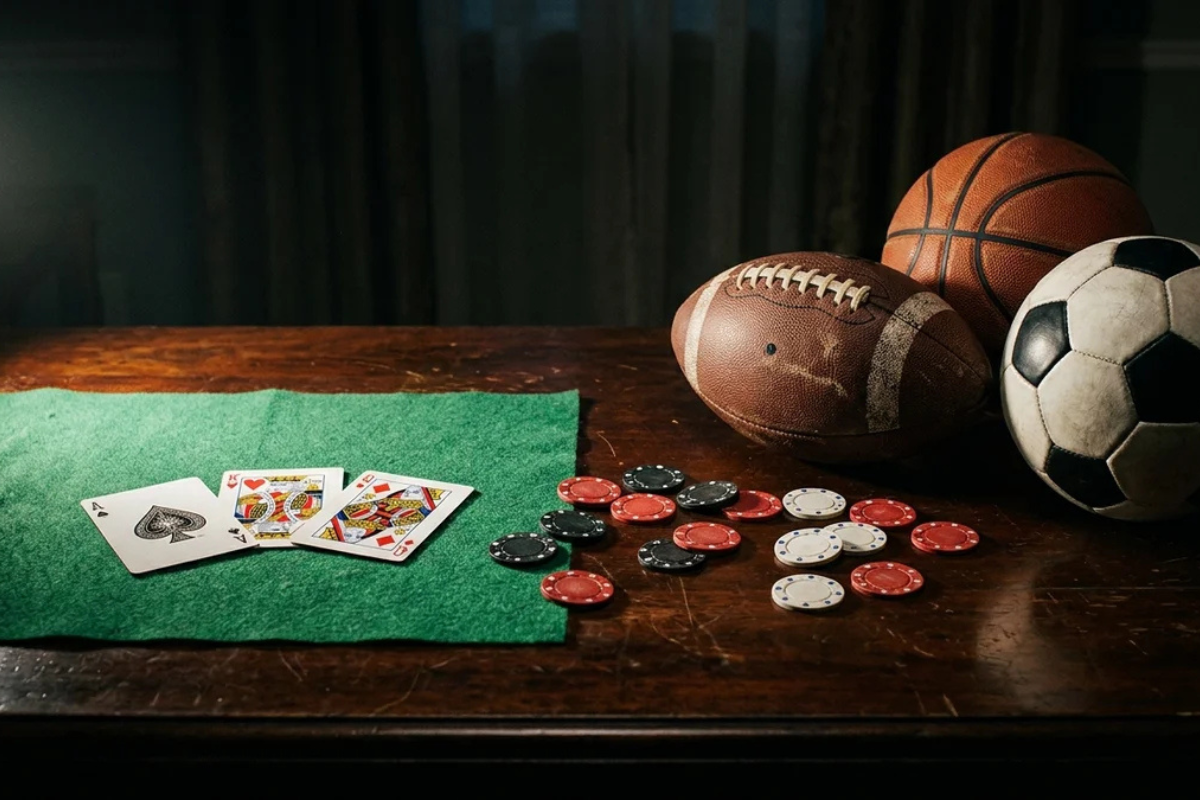
Neymar Jr. has been playing poker for over a decade. Gerard Piqué once finished second in a €25,000 buy-in poker tournament in Barcelona and walked away with €352,950. Richard Seymour, the former New England Patriots defensive lineman, has earned more than $600,000 at the poker table since retiring from the NFL.
These aren’t isolated cases. A CNN investigation into athletes and gambling described professional athletes as “hyper-competitive people with time and money to spend.” Players across football, basketball, tennis, swimming, and MMA have gravitated toward card games with a consistency that goes beyond coincidence or boredom.
The overlap between competitive sport and competitive card play runs deeper than most people assume. Both demand the same psychological toolkit: reading opponents, managing risk under pressure, and staying disciplined when the stakes climb. For athletes trained to perform in high-pressure environments, the card table feels like familiar ground.
The list of sports stars who play poker at a competitive level keeps growing. Some treat it as a hobby during the off-season. Others have turned it into a genuine second career after retirement.
| Athlete | Sport | Card Game Credentials |
| Neymar Jr. | Football (Soccer) | PokerStars ambassador for 10+ years; 6th place at 2018 Brazilian Series of Poker ($21,072); competed in WSOP events |
| Gerard Piqué | Football (Soccer) | 2nd place at EPT Barcelona €25K High Roller (€352,950); total live earnings over $738,000 |
| Richard Seymour | NFL (Patriots, Raiders) | 3rd place at 2018 PokerStars Caribbean Adventure High Roller; career poker earnings exceed $600,000 |
| Paul Pierce | NBA (Celtics) | Regular on “Poker After Dark”; competed in WSOP Main Event; plays Pot-Limit Omaha in Las Vegas |
| Michael Phelps | Swimming (Olympics) | Regular in WSOP cash games; has cashed in multiple events; former PokerStars-affiliated player |
| Boris Becker | Tennis | Won 2009 EPT Celebrity Challenge; cashed in WSOP Main Event; career earnings over $111,000 |
| Rafael Nadal | Tennis | Joined PokerStars during injury recovery in 2012; won €15,200 in first online tournament |
| Tony Cascarino | Football (Soccer) | Won Grosvenor UK Poker Tour event ($283,412); career poker total: $595,809 |
Piqué’s EPT result stands out because he wasn’t playing a celebrity side event. He entered the main High Roller bracket against professional poker players and nearly won it. Tony Cascarino, who played for Chelsea and the Republic of Ireland, built close to $600,000 in career poker earnings after hanging up his boots.
Then there’s the less visible scene. NBA locker rooms have a long history of card games during road trips. NFL teams play during flights to away games. Cricket squads in South Asia pass time between test match sessions with rounds of Teen Patti, a three-card game that’s been part of the region’s sporting culture for generations.
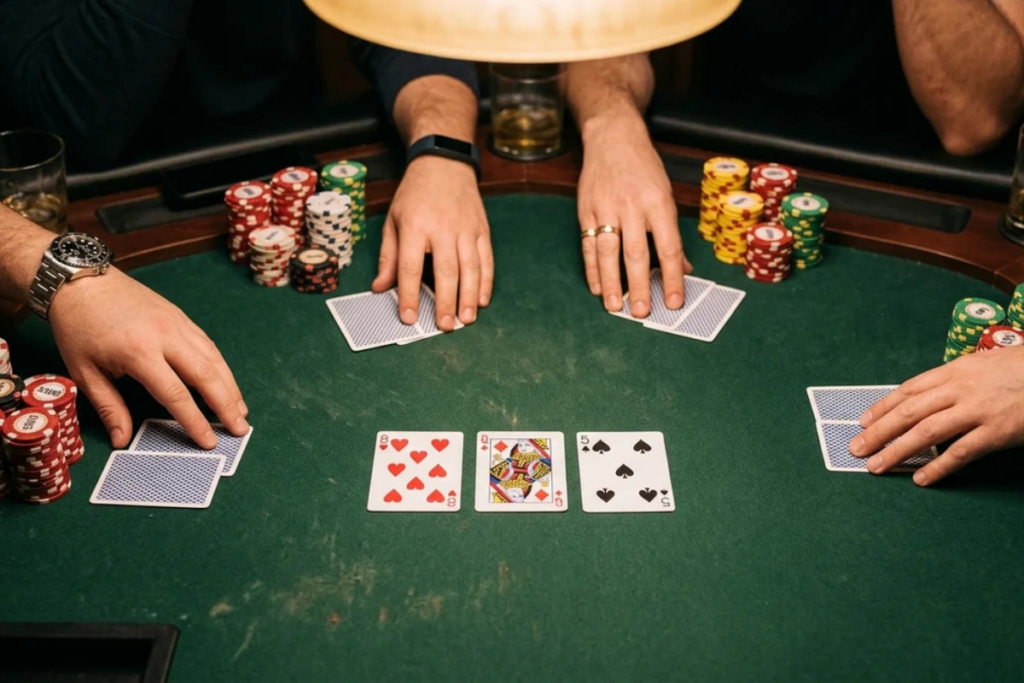
Competitive athletes don’t stop being competitive when they leave the field. That drive to win, to outperform, to find an edge is baked into how they approach everything. Card games scratch that itch in ways that other hobbies don’t.
The mental skills transfer almost directly.
Reading opponents is the most obvious one. A quarterback scanning a defensive formation before the snap and a poker player watching for betting patterns are doing the same thing: processing incomplete information under time pressure and making a decision. Athletes already have thousands of hours of practice at this.
Risk management is another shared muscle. Every play in football involves calculated risk. Every at-bat in baseball requires the hitter to decide whether a pitch is worth swinging at, with milliseconds to commit. Card games compress these decisions into a smaller arena, but the underlying process is identical: evaluate the odds, weigh the downside, act.
Emotional regulation matters in both arenas too. A basketball player who lets a missed free throw affect the next possession loses games. A poker player who chases losses after a bad beat goes broke. Sports psychologists call it “tilt” in poker and “choking” in sports, but the mechanism is the same: emotions overriding discipline.
Poker gets the most attention because it has televised tournaments and sponsorship deals, but it’s not the only card game athletes gravitate toward.
Teen Patti (also called 3 Patti or Indian Poker) has deep roots in South Asian sporting culture. Cricket teams in India, Pakistan, and Bangladesh have played it in dressing rooms and team hotels for decades. The game uses just three cards per hand, with rounds that last two to three minutes, making it easy to fit between training sessions or during travel. It’s built on bluffing and reading the table, which is why athletes with a competitive edge tend to pick it up fast.
Teen Patti’s player base has grown well beyond South Asia. Teen Patti Gold alone has surpassed 150 million downloads, and the game has gained traction in Africa, the Middle East, and parts of Southeast Asia. According to data compiled by TeenPatti.us.com, one of the most visited Teen Patti resources online, first-time players from outside India now account for a growing share of the community. The site’s editorial team reviews platforms for fairness and payout reliability, and players looking for a trusted starting point can find ranked platform reviews on the official site. Reports published on the site note that competitive and sports-minded players tend to progress faster because they already understand probability and bankroll management.
Blackjack and rummy are two other favorites. Blackjack appeals to athletes who enjoy pure odds calculation and fast decisions. Rummy rewards pattern recognition and sequencing, skills that feel natural to anyone who’s studied game film or analyzed play-by-play data.
| Card Game | Why Athletes Like It | Typical Round Length |
| Poker (Texas Hold’em) | Deep strategy, televised competition, high-profile community | 5-10 minutes |
| Teen Patti | Fast rounds, bluffing-heavy, easy to learn, mobile-friendly | 2-3 minutes |
| Blackjack | Pure math, quick decisions, low house edge | 1-2 minutes |
| Rummy | Pattern recognition, sequential thinking, skill-dominant | 10-15 minutes |
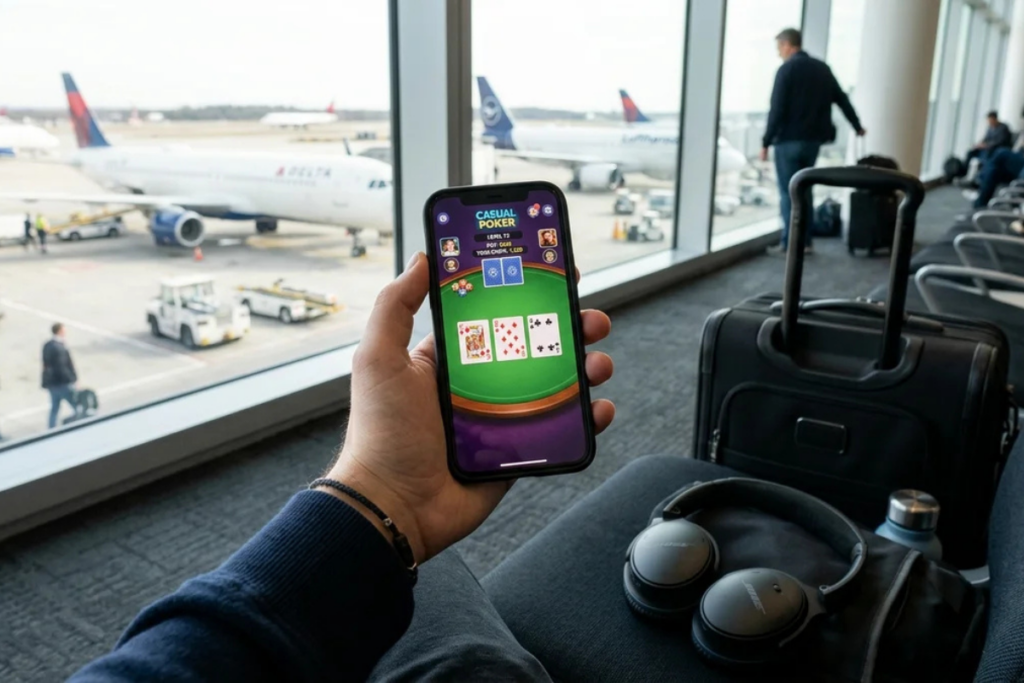
Professional athletes spend a staggering amount of time in transit. Charter flights, hotel rooms, road trips that stretch across weeks. Card games have filled that dead time in locker rooms and team buses for longer than anyone can remember.
Mobile apps changed the equation. A decade ago, playing cards meant having a physical deck and willing opponents in the same room. Now an athlete recovering from surgery can play Teen Patti against someone in Mumbai from a rehab facility in Los Angeles. Nadal picked up poker during a knee injury layoff in 2012 and won his first online tournament within months.
The off-season factor is significant too. NFL players have roughly five months between the Super Bowl and training camp. NBA players get three to four months. For athletes who’ve spent their entire lives competing on a schedule, that stretch of unstructured time creates a void. Card games provide structured competition with clear winners and losers, stakes that matter, and a skill curve that rewards the same kind of focused preparation athletes already know.
It explains why so many retired athletes ramp up their card game involvement. Seymour’s biggest poker results came after he left the NFL. Cascarino built his entire poker bankroll post-retirement. The competitive drive doesn’t retire when the body does.
Many do. Athletes like Gerard Piqué and Richard Seymour have earned hundreds of thousands of dollars in sanctioned poker tournaments. Others play in private cash games or on licensed online platforms. Real-money play is common, though plenty of athletes also play in charity events and free-to-enter celebrity tournaments.
Football (soccer) players dominate the list of athletes with serious poker results, partly because of the global reach of the sport and the long off-seasons European leagues provide. NFL players like Richard Seymour and NBA players like Paul Pierce have also made notable runs. The common thread isn’t the sport itself but the competitive temperament that elite athletes share.
Teen Patti is a three-card game originating from South Asia, similar in structure to three-card poker but with its own hand rankings and betting culture. Athletes favor it because rounds are fast (two to three minutes), the bluffing component is central, and the game translates well to mobile platforms. It’s widely played among cricket teams and has grown into a global game with over 150 million app downloads.
Poker is recognized as a mind sport by the International Mind Sports Association. It shares key attributes with traditional sports: ranked competition, professional circuits, televised events, and a skill curve that separates casual players from professionals. Whether it qualifies as a “sport” depends on how broadly you define the term, but the competitive infrastructure around it is undeniable.
Not directly in a physical sense, but the mental crossover is real. Card games reinforce decision-making under pressure, emotional discipline, and probability assessment. Sports psychologists have noted that athletes who engage in strategic games tend to show stronger situational awareness and composure during high-stakes moments in their primary sport.
