
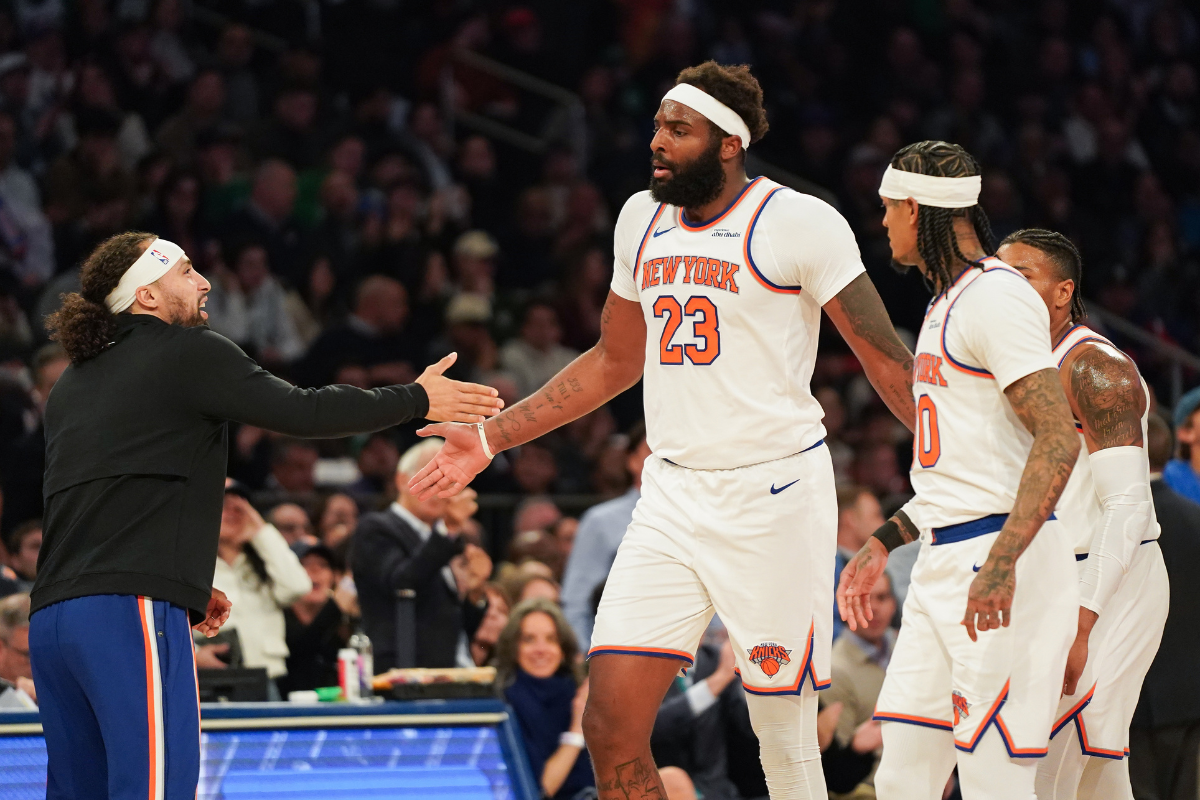
Three weeks after the confetti fell in the Canyon of Heroes, the New York Knicks lost the longest-tenured player on their championship roster. So why did the Knicks let Mitchell Robinson leave? The short answer is one number: $222 million. The long answer is a franchise-defining staredown between a front office that wanted to run it back and an owner who refused to cross the NBA’s most punishing financial line.
Robinson is now a Boston Celtic on a three-year deal worth roughly $47.4 million. The Knicks held his Bird rights and could have matched that money. They chose not to, and understanding that choice tells you everything about how the defending champs plan to operate for the next few seasons.
The second apron sits about $21 million above the luxury tax line, landing at roughly $222 million for 2026-27. New York entered free agency with only about $14 million of room underneath it and four roster spots still to fill. Keeping Robinson at close to $16 million per year would have pushed the champs over the line all by itself.
Crossing that line is not just a tax bill. Teams above the second apron lose the ability to aggregate salaries in trades, cannot send out cash in deals, lose access to the taxpayer midlevel exception, and can even see future first-round picks frozen. We broke down the full penalty structure in our guide to the NBA’s brutal second apron rules for 2026-27, and the takeaway is simple: the apron is designed to break up good teams, and it just took its first bite out of the champs.
Reporting throughout the week made the internal split clear. Leon Rose and the front office were willing to pay the freight to keep the title core intact. James Dolan was not. People inside the organization reportedly pleaded with the owner to go into the apron for Robinson, and Dolan held the line. For a fan base that spent decades begging ownership to spend smarter rather than bigger, there is real irony in Dolan finally saying no to a check.
It is easy to reduce Robinson to a backup center line in a box score, and it badly undersells him. He was the last man standing from the pre-Brunson era, an eight-year Knick who survived every rebuild, coaching change, and roster teardown to finally get his ring in June. Jalen Brunson buried the Spurs with 45 points in the Game 5 closeout, but New York does not get to that stage without Robinson bullying opposing bigs on the offensive glass all spring.
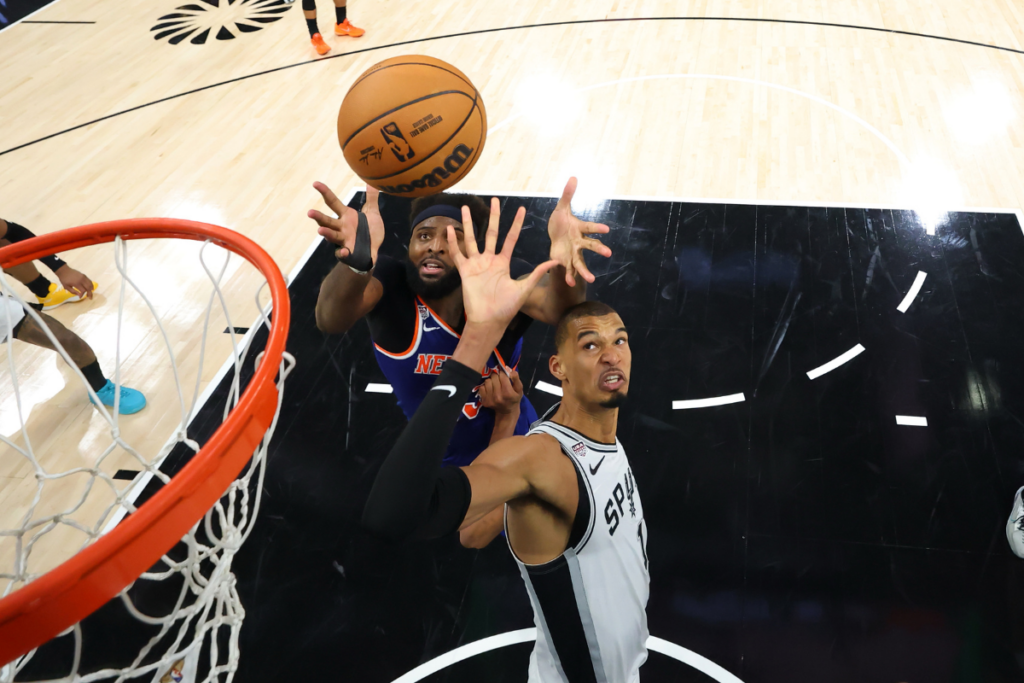
His offensive rebounding warped playoff possessions. His rim protection let the Knicks survive stretches against elite frontcourts. And his price tag, right up until this month, was one of the best bargains on the roster.
Now that skill set belongs to Boston. The champs did not just lose a center. They handed him to the franchise every Knicks fan circles on the calendar, a rival that will happily use Robinson’s putbacks and lob gravity against New York four times a year, with a playoff series feeling close to inevitable.
New York moved fast to patch the hole. Andre Drummond agreed to a one-year, $3.9 million deal to back up Karl-Anthony Towns, per league-wide free agency tracking from ESPN’s NBA free agency intel report. Jordan Clarkson also re-signed on a matching one-year, $3.9 million contract, keeping the bench scoring punch that mattered in the title run.
On paper, Drummond is a sensible archetype swap. He remains one of the best per-minute rebounders of his generation, and he gives Tom Thibodeau’s successor-era Knicks a physical body to throw at bulky centers. But anyone who watched Robinson’s playoff impact knows the difference. Drummond rebounds in traffic; Robinson created extra possessions while also erasing shots at the rim. At 32, Drummond is a stopgap, not a solution.
The real answer probably has to come from within. More minutes for Towns at the five, a bigger defensive leap from Mitchell Robinson’s former frontcourt partners, and a front office hunting for minimum-salary rim protection the rest of the summer. That is life below the apron.
Here is the part Knicks fans will not want to hear: the cold math is defensible. Robinson’s three-year commitment takes him through his age-30 season, and his injury history is long and well documented. Paying nearly $16 million a year for a center who has missed huge chunks of multiple seasons, while triggering trade restrictions that would handcuff the front office, is a genuine risk.
Bleacher Report and other national outlets have argued the Knicks were right to stay under the apron, preserving flexibility to react at the trade deadline if the title defense wobbles. Flexibility is exactly what apron teams like the Suns and Bucks lost in recent years, and both paid dearly for it.
But championships are not won on spreadsheets. The counterargument is just as strong: you finally win it all after 53 years, and your first major move is subtracting a starter-quality big man from a rotation that just proved it works? Repeats are hard enough without donating a core piece to Boston.
The champs are running back Brunson, Towns, OG Anunoby, Mikal Bridges, and Josh Hart, with Clarkson and Drummond rounding out the rotation. That is still arguably the best top six in the East. The question is whether the margin Robinson provided, the extra possessions and rim deterrence, was part of the championship formula or just a bonus.
Vegas will still respect New York. The East is still winnable. But the second apron era has officially arrived at Madison Square Garden, and Mitchell Robinson’s exit is the proof. The Knicks are betting that the core is the engine and the center spot is replaceable. If they are right, nobody remembers this week. If they are wrong, a July decision made in an owner’s office will hang over the entire title defense.
Either way, Knicks fans learned something this week: even a parade does not change the math.
