
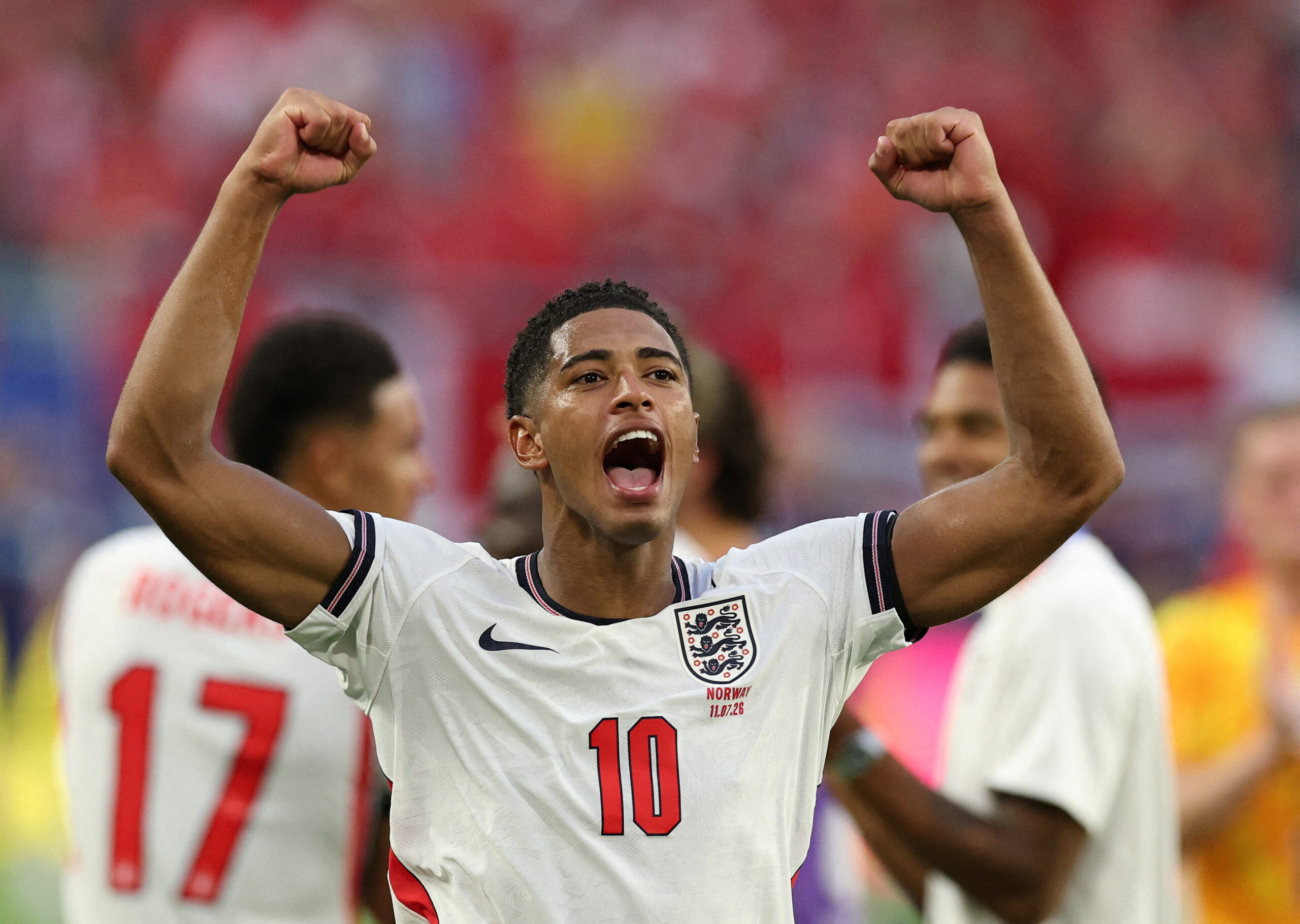
Jude Bellingham‘s six goals at this World Cup aren’t just a hot streak. They’re the direct result of a positional overhaul manager Thomas Tuchel made months before the tournament even started, and the data behind it is stark enough to settle the argument on its own.
England have set up in a 4-2-3-1 throughout the knockout rounds — Declan Rice and Elliot Anderson screening a double pivot, Bukayo Saka and Anthony Gordon either side of Bellingham, and Harry Kane as the fixed point up front. That shape is the anchor for everything below: it’s what frees Bellingham from the No. 8 duties he’d carry in a flatter midfield and hands him the run of the final third instead.
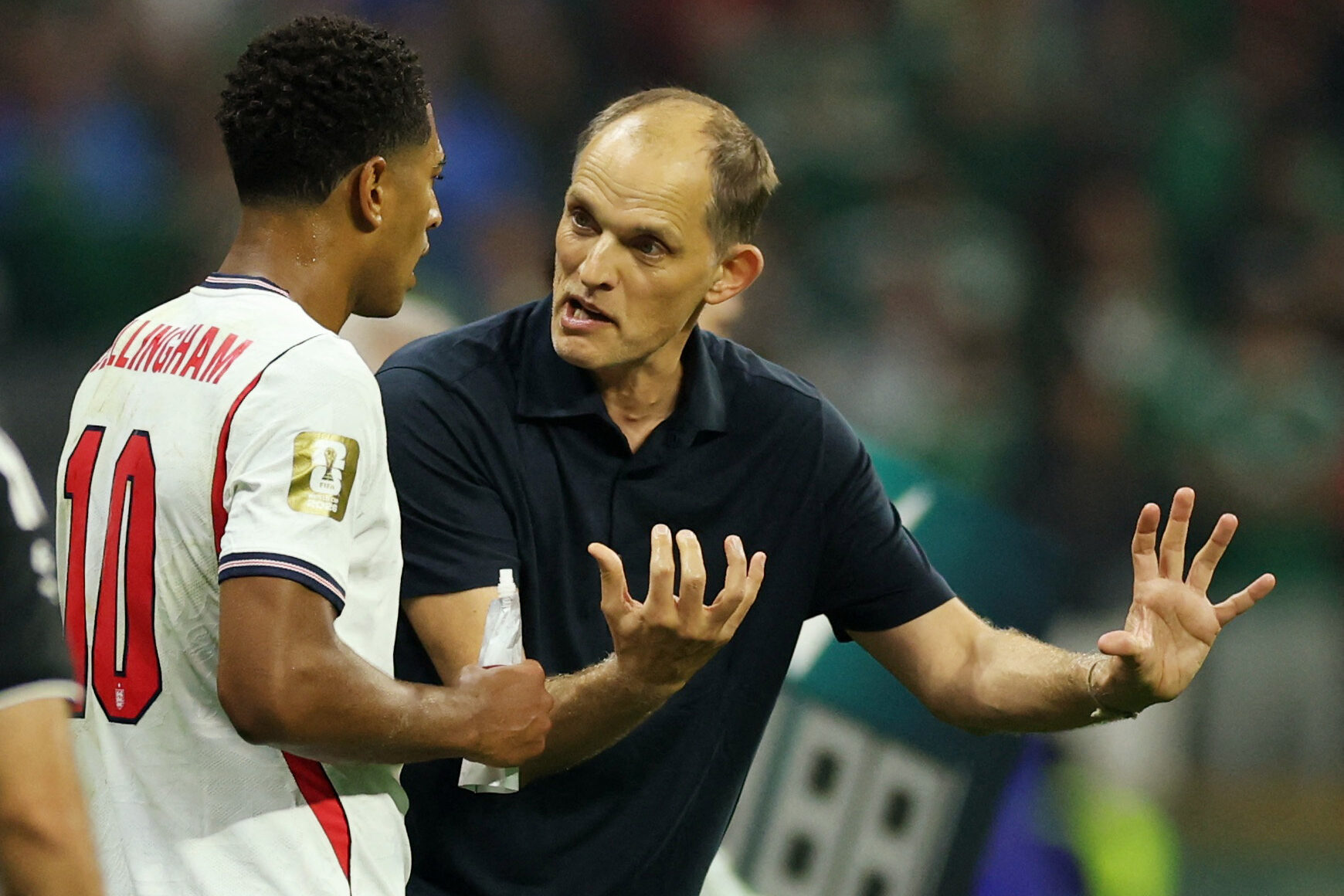
Bellingham is generating 2.67 scoring chances per 90 minutes at this World Cup. At Euro 2024, that figure was 0.8 per 90. At the 2022 World Cup in Qatar, it was 1.08 per 90. That’s not incremental improvement. That’s a different player, operating in a different part of the pitch.
| Tournament | Chances Created (per 90) | Primary Role | Zone of Operation |
|---|---|---|---|
| Qatar 2022 | 1.08 | No. 8 | Either side of halfway line |
| Euro 2024 | 0.8 | Left-sided 8/10 | Advanced, restricted to left |
| World Cup 2026 | 2.67 | No. 10 | Full width of the final third |
The shift shows up clearly across his heat maps from the last three tournaments. In Qatar, most of his involvement came on either side of the halfway line, doing a midfielder’s traditional two-way work. At Euro 2024, he pushed further forward but stayed mostly restricted to the left side. This time, he’s active right across the final third — playing the bulk of his minutes as a number 10 rather than a number 8, with license to roam wherever the game takes him.
The underlying data backs that up beyond the chance-creation number. Sofascore’s tournament tracking has Bellingham at 81% pass accuracy, 8 key passes, and 9 successful dribbles at a 60% completion rate heading into the semifinal — a profile that mixes control with genuine ball-carrying threat, rather than a deep-lying passer simply spraying the ball wide
This isn’t simply Bellingham reverting to his best form. It’s a genuinely different job description than the one he’s had at Real Madrid in recent seasons. Under Carlo Ancelotti, he operated as a 10 behind Vinícius Júnior and Rodrygo and racked up 19 goals and six assists doing it, arriving late into the box and reading space others missed. But Kylian Mbappé’s arrival pushed him into a deeper role, and by the 2025-26 season, Bellingham was often stationed on the left, with the advanced 10 role handed to Arda Güler instead.
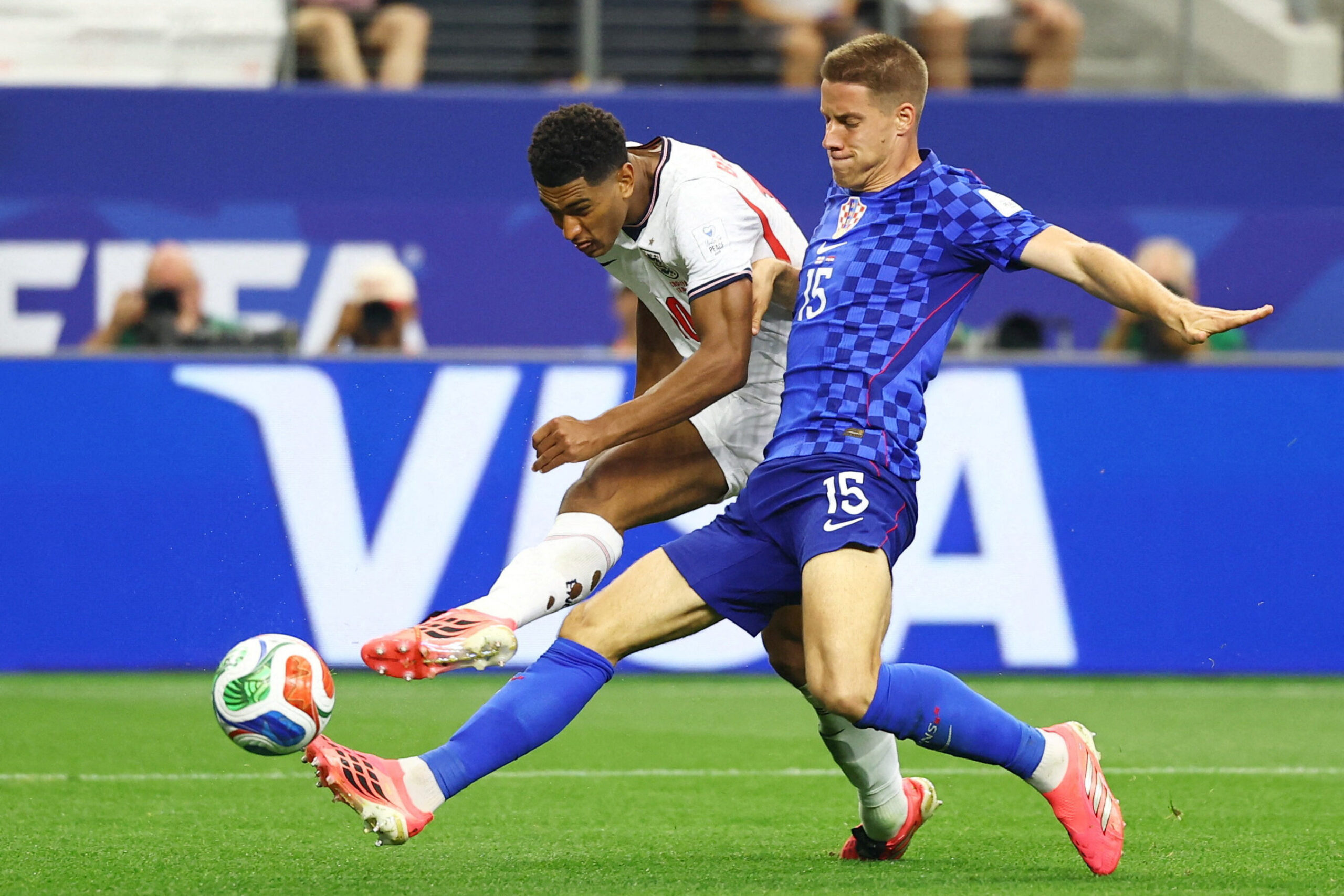
Tuchel has used him differently again. Against Croatia in the opener, Bellingham was tasked with swinging across the midfield line based on which side the ball was on, covering central channels and combining with Bukayo Saka and Reece James down the right half-space rather than sitting in one fixed zone.
Elliot Anderson and Declan Rice covering behind him has freed Bellingham to play closer to forward Harry Kane, and the two have built a genuine understanding as a result. Three of Bellingham’s goals — the opener against Croatia, the deadlock-breaker against Panama, and the first of his brace against Mexico — put England in front in games, and several came directly off Kane combinations.
The mechanism behind it is a fairly simple rotation, repeated match after match: Kane drops into the pocket between the opposition’s midfield and back line to receive the ball, which drags a center-back with him and opens a gap in behind. Bellingham times his run to arrive in that exact gap a beat later — the classic “third-man” pattern, where the ball moves Kane-to-teammate-to-Bellingham rather than straight between the two of them, which makes the run far harder for a marker to track.
On the right, Saka pinning the fullback and James (or, more recently, Djed Spence) overlapping into the space Saka vacates creates a two-on-one down that flank, and it’s often that overload — not a direct pass — that produces the cutback Bellingham arrives to finish.
Against Mexico, Kane’s near-post decoy run dragged defenders away and opened the space for Bellingham to head home Saka’s cross. Minutes later, the pattern reversed: Bellingham fed Kane after a turnover, kept running, and finished off Kane’s low cross himself. Against Panama, it was Bellingham supplying the final ball, reading the space, making the run, and picking out Kane’s header.
The freedom to roam forward hasn’t come at the expense of his defensive output. Against Panama specifically, with Rice’s positioning shifted, Bellingham effectively played a box-to-box eight rather than a fixed 10 — and the numbers back up the label. He won four of four tackles, 11 of 15 ground duels, and made seven ball recoveries in that match alone, on top of scoring the opener and assisting the second goal.
That two-way profile is exactly why Tuchel has been comfortable pushing him higher without leaving England exposed. Bellingham tracks back diligently enough that the extra attacking license doesn’t cost the team defensive stability.
Tuchel has been direct about what he sees in Bellingham under pressure. Speaking after the win over Croatia, he said Bellingham “loves these pressure games — it brings out the best in him.” After the win over Mexico, Tuchel widened the lens to the team as a whole, insisting that if any side at this World Cup has heart and belief, “then it’s this team.”
Pundit Gary Neville has been equally direct about the individual impact. “He has carried England,” Neville said on Sky Sports News this week, rating Bellingham as the standout performer of England’s last five matches. The statistically driven Sky Sports Power Rankings back that assessment, placing Bellingham as the fifth-best performer at the entire World Cup — four places above Kane.
England now know their semifinal opponent: Argentina came through a bruising 3-1 extra-time win over Switzerland in Kansas City, with Julián Álvarez’s 112th-minute strike breaking a stubborn Swiss resistance after Alexis Mac Allister’s early header had been cancelled out by Dan Ndoye. That result sets up England vs. Argentina on Wednesday, July 15 in Atlanta — and it changes the tactical picture for Bellingham in a specific way.
The concern is transition speed. Lionel Messi and Álvarez pull Argentina’s own midfield forward when they attack, which can leave the space in behind their double pivot exposed — precisely the kind of gap Bellingham has been arriving in all tournament. The trade-off is that Argentina’s back line, marshalled by Cristian Romero and Lisandro Martínez, is well-drilled enough in a mid-block to cut off the Kane-to-Bellingham lane if Rice and Anderson aren’t winning the ball back cleanly first.
There’s also a fatigue angle worth flagging. Argentina needed extra time to get past both Cape Verde and now Switzerland, on top of a frantic comeback against Egypt — a heavier physical toll than England have carried, even accounting for England’s own extra-time win over Norway. Whether that shows up as a slower Argentina start or a stronger finish is the open question, and it directly affects how much ground Tuchel can ask Bellingham to cover if the game goes long again.
The tactical story here is simple even if the execution isn’t: Tuchel identified that Bellingham’s best version needed more freedom and more proximity to goal than either Real Madrid’s current setup or England’s previous tournament shapes had given him, and he built the system around that conclusion. The scoring-chances data, the heat maps, and the goal-by-goal breakdown all point the same direction.
Bellingham was always going to arrive in the World Cup as one of England’s most talented players. What Tuchel changed was where he arrives on the pitch — and that difference is the single biggest reason six goals are now sitting next to his name heading into the semifinal.
