
The World Cup has taken the world by storm! Don’t get me wrong the World Cup is a great event that people all around the world get to enjoy. But, it does bring some issues to the NFL that no one seems to talk about! Here at Stadium Rant, we talk about what others won’t. The billionaire NFL owners spent the last two months proving they care way more about European soccer stars than their own franchise quarterbacks.
If you spent any time watching the World Cup matches this summer, you saw something incredible in East Rutherford, Atlanta, and Arlington. You saw actual, living, breathing green grass inside stadiums that usually look like a giant warehouse parking lot covered in green plastic.
We watched FIFA snap their fingers, demanded real sod, and the league’s most notoriously cheap owners instantly found the millions of dollars required to haul in these turf farms on the backs of flatbed trucks.
Well, I’m here to tell you to enjoy it while it lasts.
Come September, those multi-million dollar pristine sod pitches are headed straight to the landfill. The heavy earthmovers will roll back in, scrape the dirt away, and unroll the same old bone-shattering, slit-film synthetic carpets that have been chewing up ligaments for a decade.
For the casual fan, it’s a minor political debate between the player’s union and the front offices. For sports bettors, it is a massive structural bias built right into the stadium architecture. If you aren’t handicapping the chemical compound under a wide receiver’s cleats, you are throwing your bankroll into a woodchipper.
The NFL and owners have gave excuses for years about why real grass turf can’t be done in certain stadiums but the sudden appearance of real grass proved that the “it’s too hard to grow grass in a dome” excuse was a total lie.
Stadium operators can grow grass anywhere if the financial penalty for failing to do so is steep enough. International soccer GOATS flat out refused to run on the NFL’s preferred brand of recycled sneakers and painted sand, so the money men bent the knee and got it done.
This shows that clearly our NFL football players don’t have that kind of leverage, mostly because their contracts aren’t fully guaranteed.
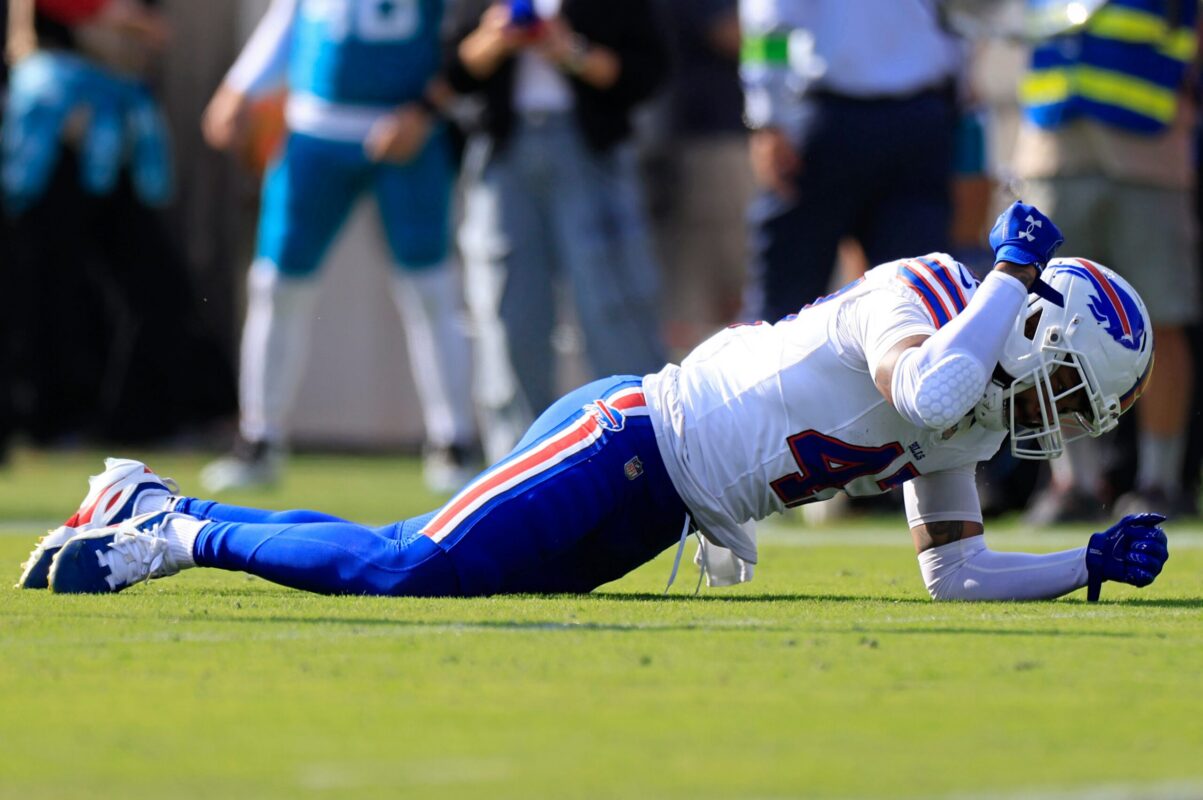
When an elite wide receiver leaves his Achilles tendon sitting on the plastic in New Jersey, the team just clears the cap space, promotes a guy from the practice squad, and expects the offense to keep rolling. The front office covers its track by telling the media that “injuries are a random part of a violent game.”
The data tells a completely different story.
If you been in the betting game for awhile, one thing becomes very clear; High-stakes sports handicapping relies on data over narrative. According to official historical tracking data verified by the NFLPA, players experience a 28% higher rate of non-contact lower body injuries on artificial turf compared to natural grass.
When looking at specific diagnoses, the divergence is stark:
• Non-contact knee injuries occur at a 32% higher rate on synthetic surfaces.
• Non-contact foot and ankle injuries experience a massive 69% spike on artificial fields.
A deep study was published in the American Journal of Sports Medicine analyzed lower-extremity injury data across consecutive NFL seasons. The findings concluded that the odds of a player suffering an injury requiring season-ending surgery are 1.60 times higher (OR = 1.60) on artificial turf than on natural grass. The baseline rate clocked in at 1.42 injuries per game on synthetic turf versus 1.22 injuries per game on real grass.
When a team transitions from a high-stakes road game on natural grass to a division matchup on synthetic carpet, the data basically shows that their team is entering a meat grinder.
| Stadium | Team(s) | Surface Sub-Type | Notable Injury / Betting Implication |
|---|---|---|---|
| MetLife Stadium | NY Giants / NY Jets | Monofilament (FieldTurf Core) | Upgraded from slit-film after Aaron Rodgers’ 2023 Achilles tear; high-friction environment. |
| Ford Field | Detroit Lions | Slit-Film Turf | High-risk style turf; venue of Kirk Cousins’ 2023 Achilles tear; fast track favoring speed props. |
| Lucas Oil Stadium | Indianapolis Colts | Slit-Film Turf | Rigid slit-film blades; historically high traction; targets over-variance in early-season totals. |
| Caesars Superdome | New Orleans Saints | Slit-Film Turf | Closed dome environment with high turf density; watch for late-season under performance. |
| AT&T Stadium | Dallas Cowboys | Monofilament Turf | Extremely fast track; lines often inflated by sportsbooks due to explosive offensive metrics. |
| Mercedes-Benz Stadium | Atlanta Falcons | Monofilament Turf | Heavy multi-use surface compaction; tracks tighter as the winter calendar progresses. |
| Arrowhead Stadium | Kansas City Chiefs | Natural Grass | Highly forgiving surface; lower non-contact baseline; premium value on star player overs. |
| Lambeau Field | Green Bay Packers | Hybrid Grass (SISGrass) | Reinforced natural grass; elite cleat-release capacity even in sub-freezing temperatures. |
“We feel the data has proven our point. We feel the player opinion is consistent. There are, really, only two bodies of people that are disagreeing at this point with us: People who manufacture turf and the NFL. And that’s a frustrating spot to be in.”
— JC Tretter, Former NFLPA President
“It’s pretty simple: The numbers say that grass is healthier for the players. I want to play on the best surface that will keep me healthy.”
— Patrick Mahomes, 3x Super Bowl MVP
I’m a sports bettor, finding edges and taking advantage of situations is how I make a living. The “real grass” and “plastic fields” does provide an edge. Not all plastic fields are engineered equally, and this is where sharp bettors secure their edge.
The league is currently split between two major synthetic styles: monofilament, which mimics individual blades of grass, and slit-film, which uses a web-like structure that behaves more like a net.
Slit-film turf is cheap, it lasts forever, and it handles heavy concert staging without wearing down. It is also an absolute nightmare for a cutting running back.
When a 220-pound athlete plants his cleat into natural grass to execute a hard change-of-direction cut, the earth gives way. The soil releases. The sod rips. That minor displacement is a built-in safety valve for the human leg.
On slit-film turf, the ground never gives up. The plastic fibers and the packed rubber infill trap the cleat studs like a vice.
When that happens, the force of the cut doesn’t dissipate into the ground. It travels straight up the cleat, through the ankle, and explodes right in the middle of the knee joint.
In the risky business of sports betting, ignoring field demographics means leaving closing line value on the table. Surface composition is a key variable in player performance projection and risk mitigation.
When analyzing matchups on artificial turf, particularly aging slit-film installations, handicappers must take an baseline injury risk into player prop modeling serious. When these hardened surfaces meet with cold weather patterns, the physical toll on offensive performance creates clear structural value on the under. Let the public chase casual narratives; the sharp money tracks the field beneath the cleats.
Q: Do artificial turf fields cause more NFL injuries than natural grass?
A: Yes. Statistical data monitored by the NFLPA and other epidemiological studies confirm that synthetic turf surfaces correlate with a 28% higher rate of lower-extremity injuries. The odds of an athlete undergoing a season-ending surgical intervention are 1.60 times higher on artificial surfaces compared to natural grass fields.
Q: What is the difference between slit-film and monofilament turf in the NFL?
A: Slit-film turf is interconnected with webbed plastic fibers that are highly durable but known to catch cleat studs, creating dangerous rotational torque on player joints. Monofilament turf consists of single, isolated synthetic blades designed to look like natural grass, providing a slightly better cleat-release capacity than older slit-films.
Q: How should sports bettors account for turf vs. grass fields?
A: Professional sports handicappers track stadium surface types alongside structural compaction metrics. As the NFL calendar moves into the cold winter months, heavily used artificial turf surfaces compact, leading to physical joint fatigue, altered player cutting mechanics, and trends that favor betting the game total Under.
If you love sports, download Stadium Rant from the Apple App Store and join one of the fastest-growing social sports communities. Be sure to follow us on socials too — you can find all our profiles on our Linktree.
