
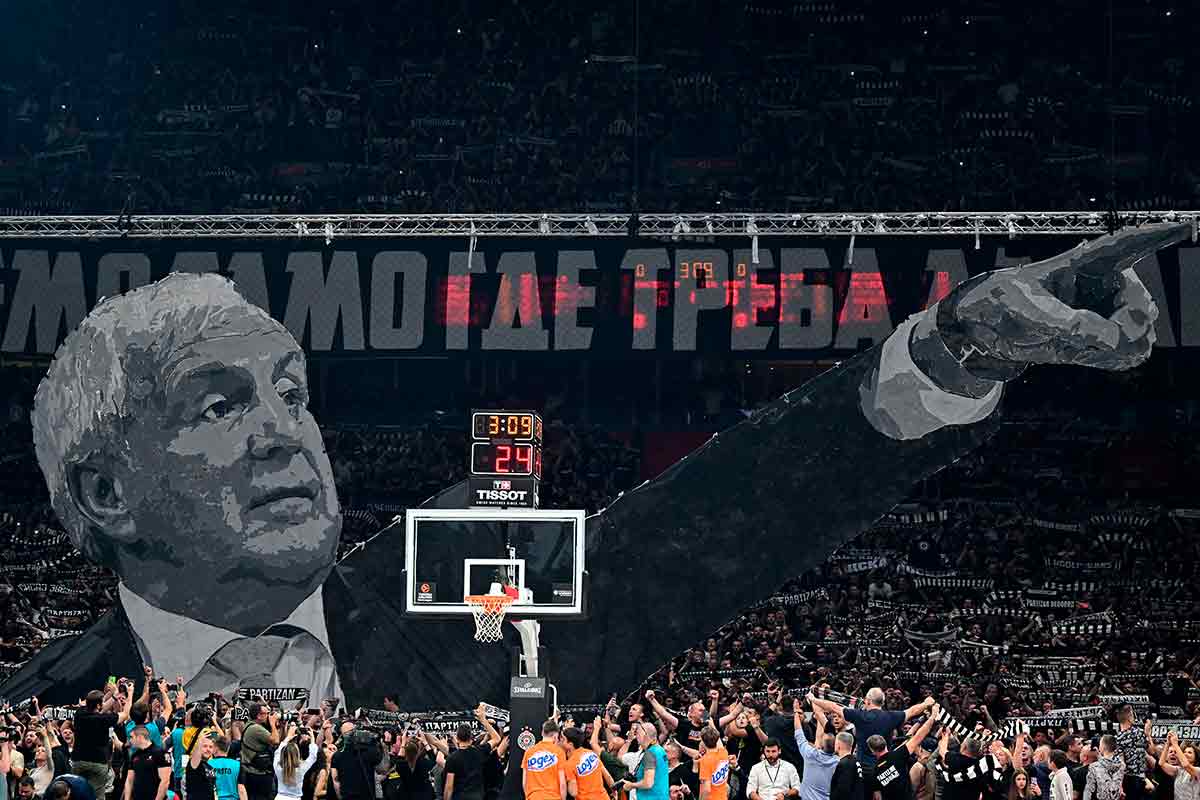
The tifo is a banner displayed during a football match to express the fans’ support or emotions. In many ways, it is the most overt and public form of communication between fans, owners, and players. The tradition of these banners has become integral to the football atmosphere, and they are fixtures of the game.
Specific fan committees carefully consider Tifos before they are painted and unraveled, often across an entire home fan section of a stadium. Much of the time, tifos will display a specific character or icon intended to inspire a team. MLS team Charlotte FC was given positive press for one of “Queen Charlotte,” a matriarchal figure representing the Queen City.
Sometimes, these committees are simply supporters of the club, but trouble arises when the Ultras create the tifo. Ultras are aggressive and problematic football supporters who take an almost militaristic approach to fandom and adhere to the old principles of hooliganism. This is partly why they aren’t prevalent in the UK, due to its crackdown on hooliganism in the 1990s.
When Ultras get involved, the messages displayed can be violent. For example, Legia Warsaw’s Ultras have been banned from away matches and prohibited from making tifos for their home games. This hasn’t stopped Legia Warsaw’s fans. One tifo even tricked UEFA: A banner read, “You Won This Time UEFA,” not long before the real tifo was unveiled on a different side of the stadium, reading “Surprise M **********s.”

UEFA has fined Legia Warsaw multiple times for these violations, to which the Ultras responded with a tifo of a large pig counting cash with the UEFA logo behind them, an obvious dig. Legia Warsaw is not a positive example, but it shows how fan protests against organizations or rules are most explicit through this medium.
They are not always for such serious protests, however, and usually employ a good mix of humor and history. Perhaps a club legend is being honored, so one of their playing days might be revealed. It is truly a barometer of fandom at any point.
The case in American sports is quite different, as fans tend to express their grievances through chanting rather than displaying them on a banner. American fans have carried the chanting tradition like soccer fans carry on the tifo. Since the Luka Doncic trade, the Mavericks’ arena has been consistently emanating chants of “Fire Nico!”
The fans are voicing their displeasure at their star player being traded away seemingly out of nowhere. These types of chants go beyond the scope of boos and cheers because they are giving a direct call-to-action for the ownership.
The chanting tradition is so ingrained in American sports that it seems impossible to think of them switching to banners. The Clippers’ new stadium features a large side of the arena called “The Wall,” which would be perfect for a tifo, but it is very unlikely. Additionally, there is a very corporate reason this won’t happen as well.
Banners are prohibited at sporting events, such as NBA games, due to sponsorship agreements. The giant flags and waving banners seen at soccer matches are specifically prohibited, as they may block a sponsor or convey a negative message.
Tifos hold an important role in connecting fans to the players and the board, representing a simpler time when fans had more influence on a team. With heightened commercialization, fans often feel like they are being priced out of games and frequently express their frustrations through poignant banners or tifos.
