
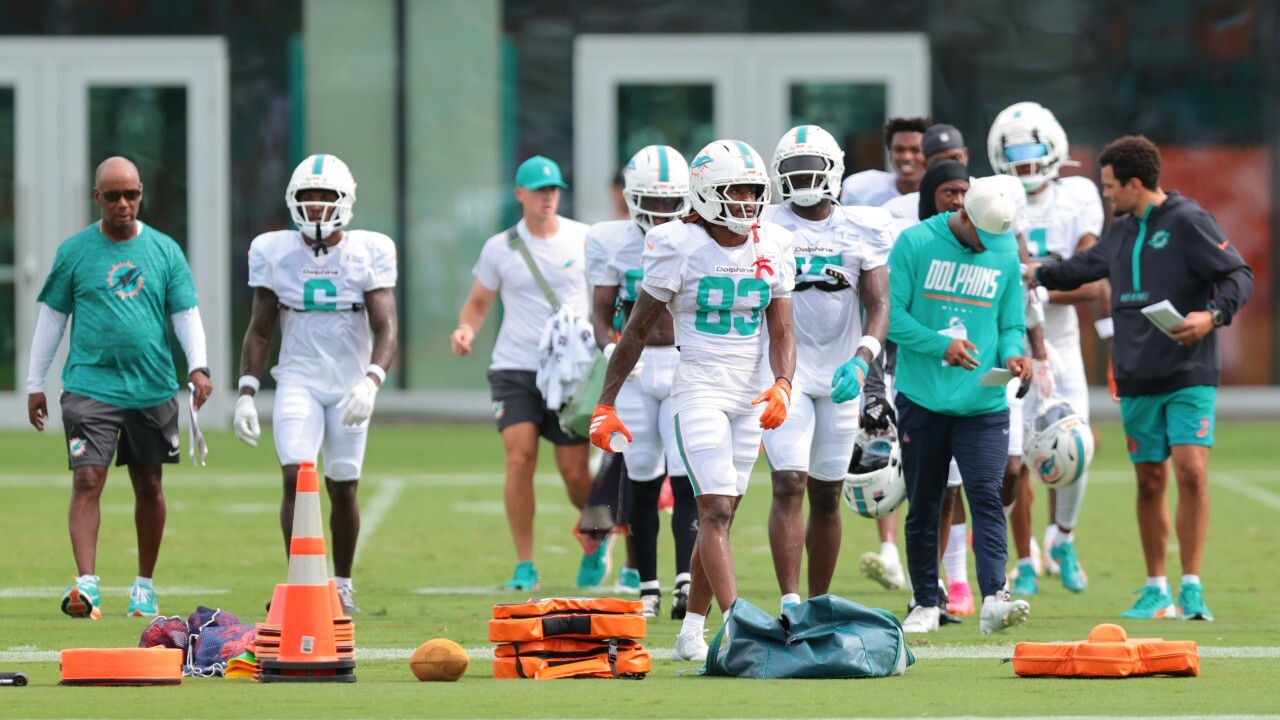
The Miami Dolphins are armed with a new general manager (GM), new head coach (HC), and 54 new faces. They seek to end the NFL’s longest active winless postseason streak of 25 years without a playoff victory. This won’t happen overnight for GM Jon‑Eric Sullivan and HC Jeff Hafley, but they are laying a younger foundation.
The Dolphins started their rebuild with a roster reset, eliminating the glitz and glamor of expensive “star” players who seemed focused on showboating for the media rather than taking their contracts seriously. They did, however, extend the contracts of core players like De’Von Achane, Aaron Brewer, and Jordyn Brooks to help anchor their younger teammates. This move accomplishes two things: it creates the cornerstones for a long-term, unified team while resolving the salary cap issue.
As Miami shifts into the padded portion of camp, the tone around the team changes. The early practices are useful for installation and timing, but they don’t tell the truth—and Hafley has been clear about that from the start. For Hafley, “football doesn’t really begin until the pads come on,” where contact reveals players’ true abilities under pressure. Now, Miami has reached that point. The staff can finally see which techniques are effective, who remains disciplined, and who can translate coaching into real football once the season begins.
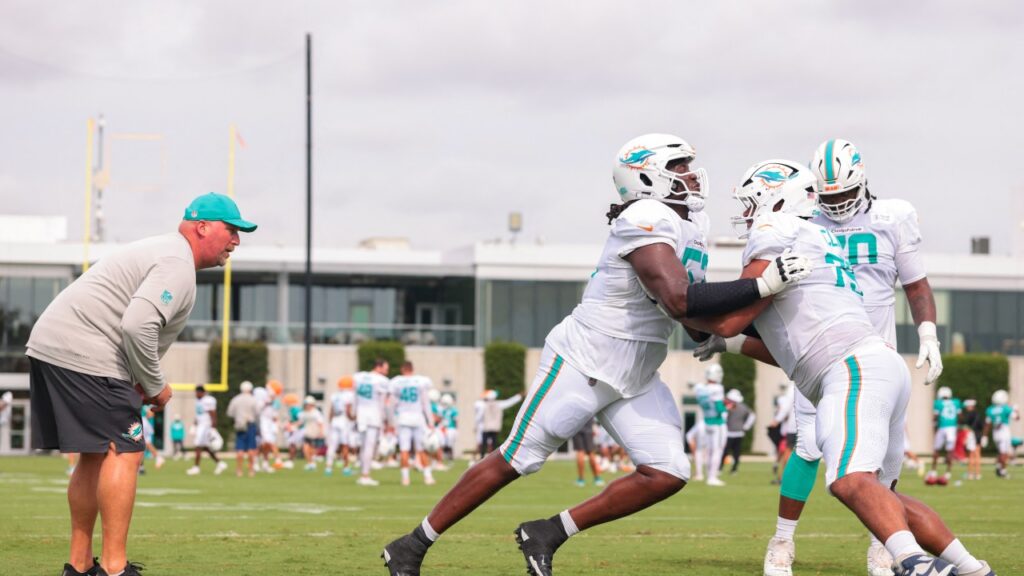
That is why Hafley’s emphasis on process over results matters so much. He isn’t chasing viral training camp highlights or preseason hype. He is building habits that can withstand adversity over a 17-game season. His philosophy centers on repetition, accountability, and execution—doing the little things correctly until they become second nature.
Veterans have already described a more demanding practice environment under Hafley. Offensive lineman Aaron Brewer has praised camp’s competitiveness and physicality. Noting that every player is expected to earn his role regardless of draft status or previous accomplishments. That message has been reinforced throughout camp: no position is guaranteed, and development never stops.
For a young roster filled with short-term contracts and open competitions, that mindset gives Miami its best chance to build something sustainable. Miami isn’t trying to win the offseason. They’re trying to establish an identity that can compete for years.
Kadyn Proctor already appears to embody that philosophy. Despite the expectations that come with being a first-round selection, he has approached training camp with maturity and professionalism. Rather than relying solely on his size and athleticism, Proctor has focused on refining his footwork, improving hand placement, and absorbing coaching after every practice. Now that the pads are on, the coaching staff can evaluate whether those improvements translate against NFL competition.
Proctor isn’t the only rookie fitting Miami’s new identity.
Linebacker Jacob Rodriguez has displayed the instincts and downhill aggression Jeff Hafley wants from his defense. His ability to diagnose plays quickly and attack the football has made him one of the more intriguing young defenders in camp.
Wide receiver Caleb Douglas has also flashed encouraging potential. His size and physicality allow him to compete through contact, giving Miami another developmental option as they rebuild their receiving corps.
Defensive tackle Zeke Biggers has quietly become one of camp’s early surprises. His length and strength have helped him anchor against the run while showing flashes of interior pass rush during padded practices.
None of these rookies are finished products, but they embody Sullivan and Hafley’s vision for the rebuild: young, coachable players who embrace competition and continuous improvement.
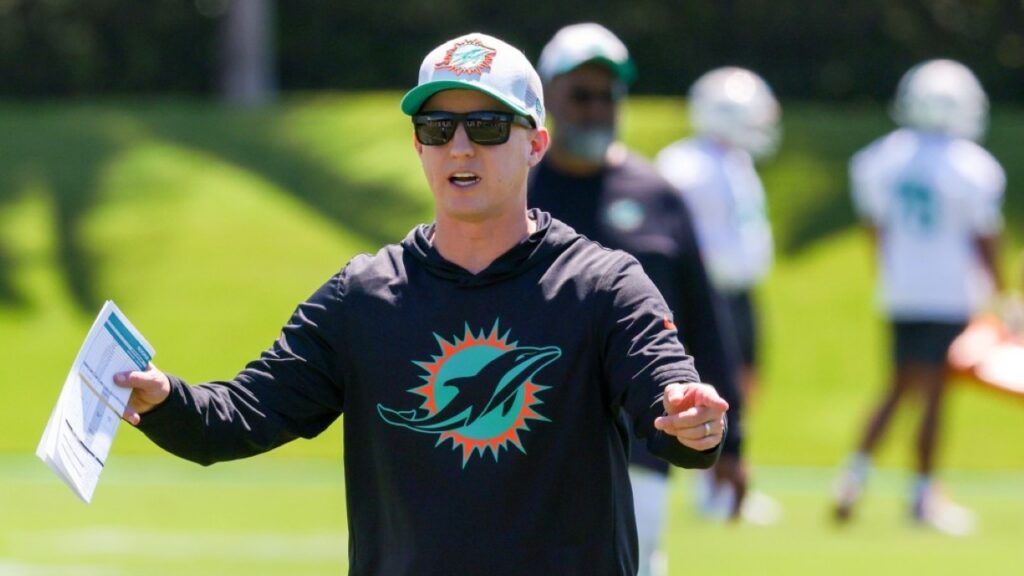
Training camp has created meaningful competition, and several battles could shape Miami’s Week 1 lineup.
The offensive line remains one of the biggest storylines. Kadyn Proctor anchors the line as Aaron Brewer guides a young unit’s growth.
Wide receiver is another position under the microscope. Following the departures of Tyreek Hill and Jaylen Waddle, Miami is searching for new playmakers. Caleb Douglas and Chris Bell chase roles as veterans and youth compete for roster space.
Defensively, linebacker and edge rusher remain highly competitive. Jacob Rodriguez and Trey Moore fight for snaps while coaches determine who fits Hafley’s philosophy.
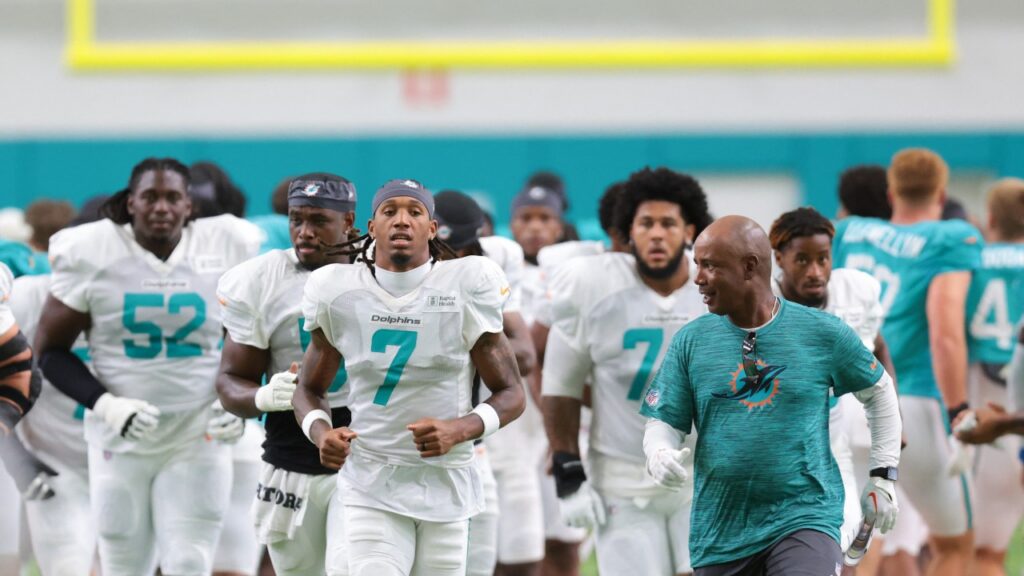
Miami isn’t pretending to be anything other than a roster in transition. Most projections have them finishing somewhere in the middle or lower tier of the league, and that’s the reality of this team. Teams built on process instead of hype often develop in ways outsiders don’t see coming. Padded practices have a way of reshuffling expectations—exposing weaknesses, yes, but also revealing players who were under the radar just a week earlier. Developmental teams don’t rely on stars to carry them; they rely on improvement, cohesion, competition, and opportunity.
We aren’t expecting miracles, especially entering a season where most projections place Miami in the middle-to-lower half of the AFC. Dolphins fans are no strangers to waiting for their day to come—we’ve been waiting 25 years, but football has never cared much for preseason expectations. Hail Marys connect. Flea-flickers break loose. Teams written off in August sometimes become the stories no one saw coming.
That doesn’t mean Miami is destined for a Cinderella season. It does mean this rebuild deserves to be judged by its progress as much as its record. If Miami finds identity and growth in 2026, that’s a win. It builds a foundation strong enough to finally chase January football.
Read More NFL News From Stadium Rant Here: NFL News
