
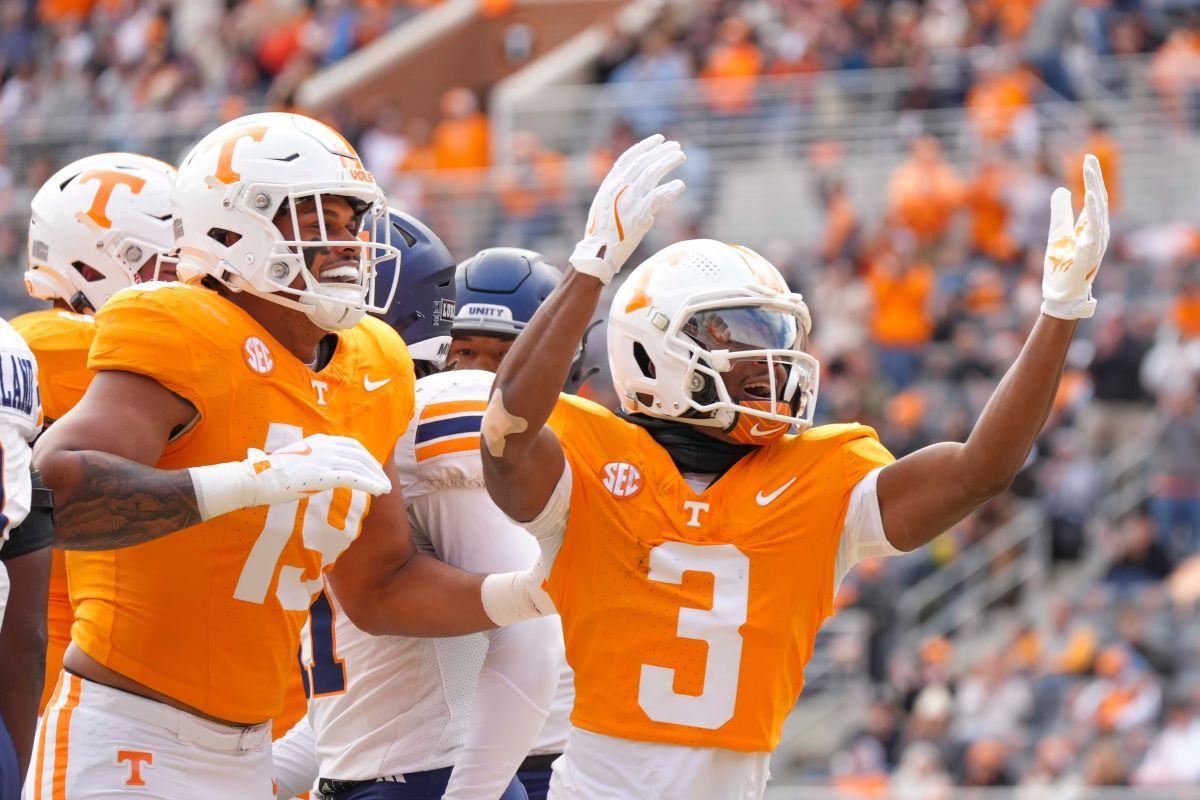
The Tennessee Vols football team has a problem. Josh Heupel’s Vols have seen a mass exodus from the roster, especially at wide receiver, after the 2024 season. Their current roster consists of only two upperclassmen, including a walk-on who has caught a total of three receptions. The other is Chris Brazzell II, a transfer from Tulane who had 29 catches for Tennessee last year.
The latest Vols decommit was three-star recruit Tyran Evans. Evans, a 2026 recruit, announced on June 18th that he was leaving the program and flipping to Miami. “After a lot of prayer and thought, I’ve decided to decommit from the University of Tennessee,” he wrote on X. “Thank you, Coach Heupel, and the entire Vol staff for believing in me.”
Which Tennessee Vols Receivers Entered The Portal?
Just after Christmas, on December 27th, starting wide receiver Squirrel White informed the team that he was entering the transfer portal. He would be the last of five receivers who entered the transfer portal, many of whom did so before their playoff game against Ohio State.
Redshirt sophomore Kaleb Webb was the first to enter the portal on December 6th. As a redshirt freshman, he played in 13 games for Tennessee, hauling in 16 catches and one touchdown. Webb saw his role diminish to just six catches in 2024. He would quickly be followed by Chas Nimrod, Nathan Leacock, and Nate Spillman.
The biggest shock was White, though. The returning senior had his most productive year for the Vols as a sophomore, where he caught 67 passes for a total of 803 yards. He had a down Junior year with only 381 yards, a career low, as he tried to play through multiple injuries.
A sixth receiver, now sophomore Mike Matthews, had originally declared for the transfer portal before later deciding to remain at Tennessee. “I backed away from everything and talked to my family a lot,” he stated during spring practice. “That was the best thing I could do. But it was definitely tough just thinking about doing that. My family and the coaching staff and all my teammates helped me make my decision (to stay at Tennessee).”

Why Are So Many Receivers Avoiding Tennessee?
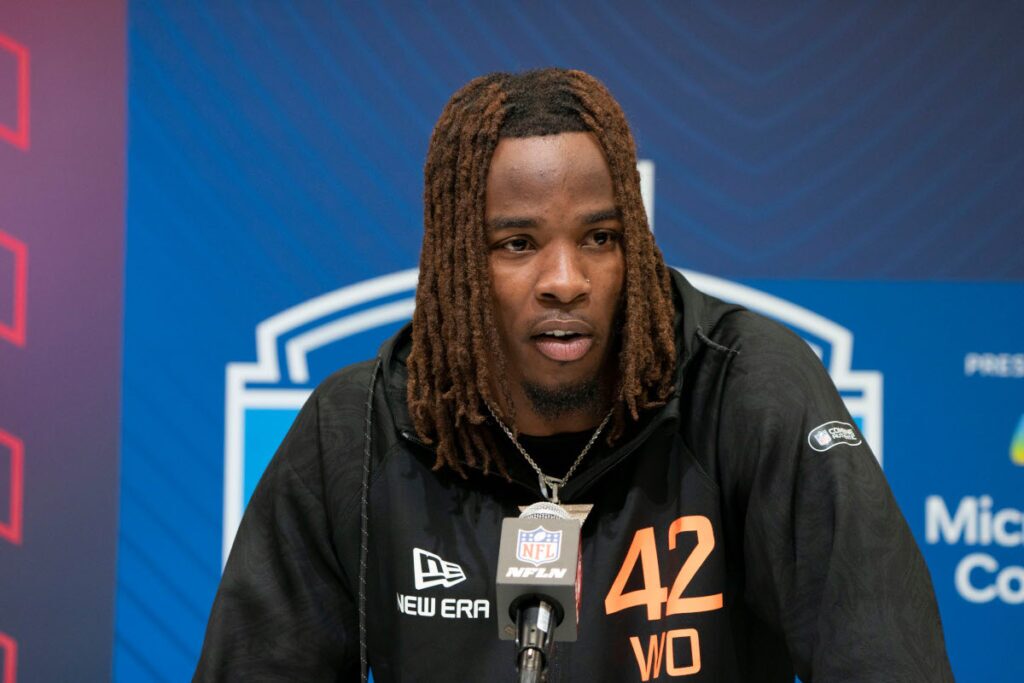
Several insiders have reported that teams are questioning whether Vols receivers are prepared for a quick transition to the NFL due to the route tree they run. Former Tennessee and new Las Vegas Raiders wide receiver Dont’e Thornton has referenced this during interviews he had with teams before he was drafted.
“That was mostly every team’s main talking point was asking with the offense that we run here at Tennessee if I’m able to run those pro-style routes,” Thornton said after his Pro Day. “I had to be very intentional, playing two seasons here at Tennessee, we don’t have the same wide route tree that most pro-style offenses have.”
Heupel’s Vols teams, despite putting up impressive stats and averaging 38.2 points per game, have seen only one offensive player drafted in the first round: offensive lineman Darnell Wright. His offensive scheme relies on the run game to set up screens and short passes, allowing their speedy receivers to get out in space and make defenders miss. When the defense moves up to stop the short passes, that’s when they dial up the go routes.
Some scouts and analysts, like longtime draft analyst Sam Monson, say it’s “impossible” to evaluate offensive skills in this type of offense. Analyst Steve Palazzolo said, “It is always difficult to unpack that offense. And to repeat for the millionth time, good for Tennessee, good for Josh Heupel, good for college football. Difficult for NFL evaluations.”
Heupel has learned to expose space on the field. College hashmarks are 40 feet apart, whereas the NFL hashmarks are only 18 feet and six inches apart. This difference allows for more room on the sidelines for quick-hitting passes, such as screens and swing passes. That makes it difficult for scouts to see standard routes that will be run in the NFL. As Palazzolo states, great for beating college defenses, not so great for producing NFL receivers.
Can The Tennessee Vols Still Recruit Well At Receiver?
This year’s Vols team is not only struggling at wide receiver, but their quarterback position has seen a change. Nico Iamaleava, a five-star recruit, started last year as a redshirt freshman. After the season, he and the Volunteers had a dispute over NIL money, leading to the top-rated QB transferring to UCLA.
UCLA’s senior QB, Joe Aguilar, then transferred to Tennessee. They also have two four-star recruits on their roster, redshirt freshman Jake Merklinger and true freshman George MacIntyre. The 2026 class will see five-star QB Faizon Brandon joining the squad, so having talented wide receivers to throw to will be important. If the receivers stop coming to Tennessee, so will other highly rated players.
The highest-rated receiver currently signed for the 2026 class is a three-star. The Vols were able to poach four-star Amari Jefferson from the Crimson Tide. Jefferson, a Tennessee native, spent his redshirt freshman year in Alabama before entering the transfer portal this spring. Retaining Matthews, a five-star, and adding Jefferson will go a long way toward having some quality receivers for whoever starts at QB this year.
The rest of the receiving corps are young and unproven. Incoming four-star freshmen like Travis Smith and Radarious Jackson provide some upside, but it’s all speculative at this point. How quickly they can take meaningful snaps for the Vols will determine how explosive this offense can be.

End Of My Tennessee Vols Rant
Many analysts aren’t picking Tennessee to return to the college football playoffs this year. Many are picking them to win only six or seven games. Question marks on offense are the main reason predictions are so low. While there is a chance that young players at both quarterback and wide receiver develop quickly, the odds are that the program is looking at a down year.
The Vols have a dilemma. Heupel can continue his quick passing, spreading the field offense, but it might cost him in the recruiting department. The other option is to shift to a slightly more wide receiver-friendly offense that uses many of the same concepts and continues the top recruiting they’ve had since his arrival.
Either way they choose, something has to change for Tennessee to stay competitive in the SEC.
