
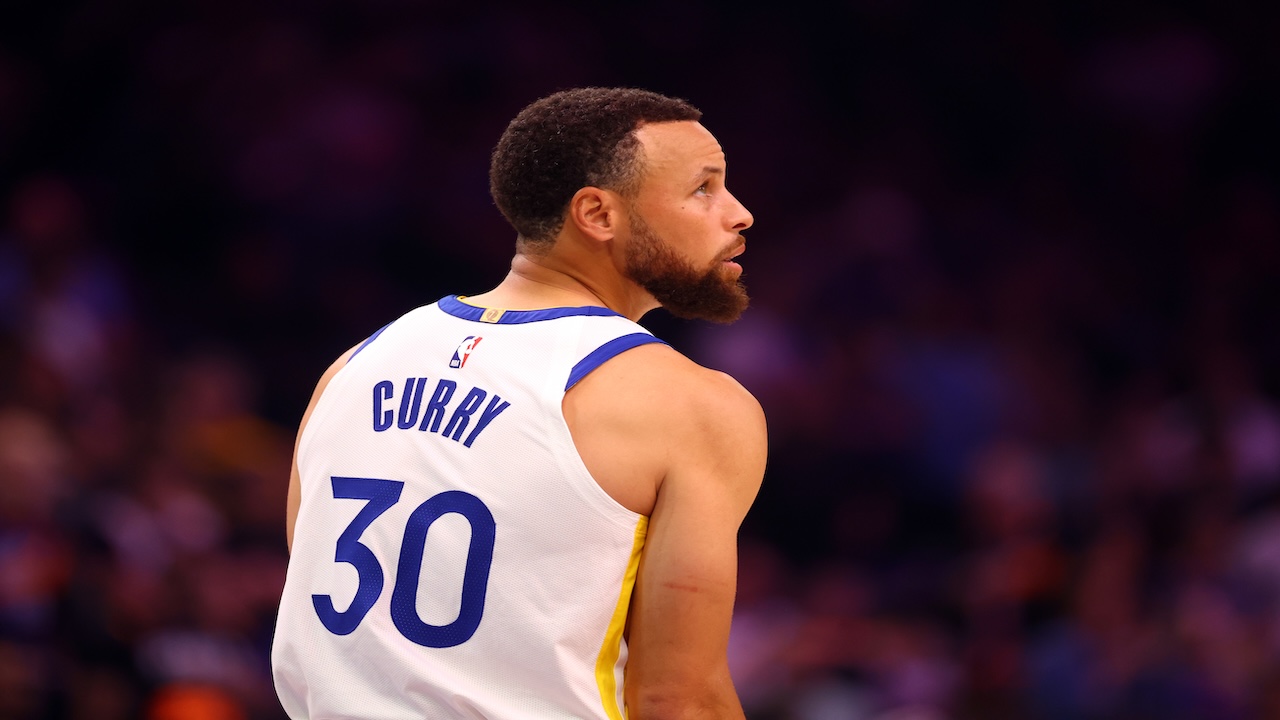
Brad Stevens has reportedly pitched a trade to the Warriors to acquire Stephen Curry, per Fadeaway World. Despite the speculation, there are several issues with this trade. The number one being that the Warriors would not trade the face of their franchise no matter how much older he is getting.
Curry is already under contract for the 2026-27 season, and Golden State has been discussing another maximum extension. They have also been clear about wanting him to remain with the franchise. The major factor is the trade capital the Celtics would have to give up.

No offense, but there is not a universe where Paul George is being traded straight up for Stephen Curry. The Warriors organization would have to pull a Nico Harrison-level blunder to even consider that.
George is still a useful two-way wing who can defend multiple positions, space the floor and create his own shot, but he is not Curry. Curry’s main ability is in his gravity. This allows driving lanes to open up, creates backdoor cuts, and forces teams to trap high pick-and-rolls before the action even starts
Even if we suspended disbelief and figured the Warriors took a page out of Harrison’s book, the level of draft capital Boston would have to give up would be absurd.

The trade package looks something like this:
Paul George + multiple first-round picks + pick swaps + at least one young player or additional asset for Stephen Curry.
This would hurt Boston in the long run. Its front office has spent most of the past decade trying to build a sustainable contender instead of going all-in for one short window.
A Curry trade would change that approach.
Boston would be trading several years of flexibility for maybe one or two real championship runs. If it failed, the Celtics could be left with an aging roster, no assets and Jayson Tatum still in the middle of his prime.
If this were going to work, they would have to win immediately.
If Boston traded George for Curry, the payroll would increase by around $8 million. This initially does not sound that bad until you account for the rest of the assets involved and Boston’s overall salary situation.
The issue is what that salary would do to the rest of the roster.
Boston could end up pushing back into the financially restrictive territory it was trying to escape by trading Jaylen Brown. Once a team gets near the second apron, roster building becomes much harder. You lose flexibility in trades, free agency, and salary matching.
You could end up with an incredible top three of Curry, Tatum and White, but a much weaker bench. That becomes a problem over an 82-game season, especially when Curry is approaching 40 and would need his minutes managed.
Boston would basically be spending everything on the starting lineup and hoping nobody gets hurt.
If Brad Stevens somehow managed to pull off this trade, the city of Boston would probably have to dedicate a statue in his honor.
Curry would fit immensely well in the Celtics’ offense after the team lost an important offensive creator in Brown. He would give Tatum more space, make Boston’s half-court offense less predictable, and force defenses to defend every inch of the floor.
The logistical issues cannot be ignored, along with the fact that no sane Warriors general manager would take this deal unless Curry personally asked out.
Boston would have to give up Paul George, a ridiculous amount of draft capital and likely at least one useful young player. The team would become older, more expensive and much less flexible.
It would also be betting the middle of Tatum’s prime on the final chapter of Curry’s career.
In reality, this will probably remain a pipe dream.
