
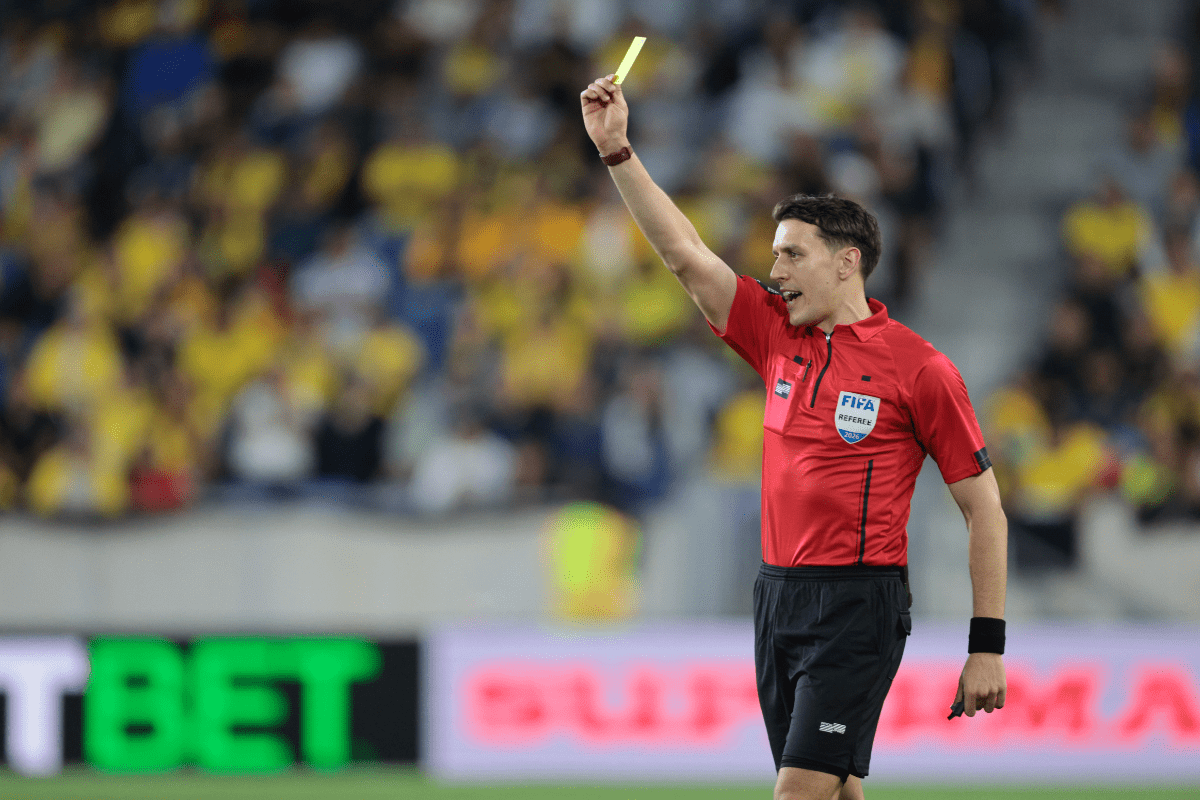
With the 2026 World Cup kicking off on June 11 across the United States, Canada, and Mexico, millions of new fans are tuning into soccer for the first time. And nothing causes more confusion for a casual viewer than the moment a referee blows the whistle, reaches into a pocket, and points to a spot on the field. If you have ever wondered what a yellow card actually means, why a handball is sometimes a foul and sometimes not, or how a penalty kick is awarded, this complete guide to common soccer fouls and penalties has you covered.
Understanding the rules makes every match more enjoyable, whether you are watching your home nation in the group stage or following a knockout-round thriller. Below, we break down the most common fouls in soccer, explain the difference between yellow and red cards, and walk through penalty kicks, offside, handball, and VAR in plain English.
A foul is any unfair act committed by a player against an opponent while the ball is in play. When a referee judges that a foul has occurred, the opposing team is awarded a free kick, as defined in soccer’s official Law 12 -Fouls and Misconduct. Soccer fouls generally fall into two categories based on the restart they produce: direct free kicks and indirect free kicks.
A direct free kick is awarded for more serious physical offenses, and the kicking team can score directly from it. Common examples include:
An indirect free kick is awarded for less severe or technical offenses, and a goal can only count if the ball touches another player first. These include dangerous play (such as a high kick near another player), impeding an opponent without contact, and goalkeeper violations like holding the ball too long or handling a deliberate back-pass from a teammate.
A penalty kick is awarded when a defending player commits a direct-free-kick foul inside their own penalty area, the large box in front of the goal. Because these fouls happen so close to goal, the punishment is severe: the attacking team gets a free shot from the penalty spot, 12 yards (about 11 meters) from the goal, with only the goalkeeper to beat.
Penalty kicks decide an enormous number of important matches. In knockout rounds where games are tied after extra time, the result can come down to a dramatic penalty shootout, where teams alternate spot kicks until a winner emerges. For World Cup fans, few moments are more nerve-wracking.
The most recognizable symbols of discipline in soccer are the colored cards a referee carries.
A yellow card is a caution. It warns a player that their behavior has crossed a line. Players are typically shown yellow for unsporting behavior, persistent fouling, dissent toward the referee, time-wasting, or deliberately delaying a restart.
A red card is far more serious and results in the player being sent off. A red-carded player must leave the field immediately, and crucially, their team cannot replace them, forcing them to play the rest of the match a player short. Red cards are issued for serious foul play, violent conduct, spitting, using offensive language, or denying an obvious goalscoring opportunity (often called a “professional foul”).
Importantly, two yellow cards in the same match equal a red card. A player who picks up a second caution is automatically sent off, which is why you will sometimes see a referee show a yellow and a red card together.
The offside rule is the most misunderstood law in the sport, but the basic idea is simple. An attacking player is in an offside position if they are nearer to the opponent’s goal line than both the ball and the second-to-last defender (usually the last outfield defender, since the goalkeeper is typically the last) at the moment a teammate plays the ball to them.
Being in an offside position is not an offense by itself. A player is only penalized if they become involved in active play, such as receiving the ball or interfering with an opponent. The rule exists to prevent attackers from simply camping near the goal and waiting for a pass.
The handball rule trips up new and longtime fans alike. A handball is called when a player deliberately handles the ball with their hand or arm, or when they make their body “unnaturally bigger” with an outstretched arm and the ball strikes it. A goal scored directly off a hand or arm is always disallowed, even if accidental. If a defender commits a handball inside their own penalty area, the result is a penalty kick.
Not every ball that hits an arm is a foul, however. If the ball strikes a hand that is in a natural position close to the body, referees often let play continue. This judgment call is one of the most debated decisions in the game.
VAR (Video Assistant Referee) is technology that helps officials review key decisions using video replay. VAR is only used for four match-changing situations: goals, penalty decisions, direct red cards, and cases of mistaken identity. If the on-field referee makes a “clear and obvious error,” VAR steps in to help correct it. You will see VAR in heavy use throughout the 2026 World Cup, often leading to a brief pause while the referee reviews a pitch-side monitor.
What is the difference between a yellow and red card? A yellow card is a warning for misconduct, while a red card sends a player off the field for the rest of the match and cannot be replaced. Two yellow cards add up to a red.
Why are some handballs not called? Referees only penalize handballs that are deliberate or that make a player’s body unnaturally larger. A ball striking an arm in a natural position is usually not a foul.
How far is a penalty kick taken from? A penalty kick is taken from the penalty spot, 12 yards (about 11 meters) from the goal line, with only the goalkeeper defending.
Soccer’s rules can feel intimidating at first, but once you understand fouls, cards, penalties, offside, and handball, every match becomes far more rewarding to watch. With the World Cup bringing the world’s best players to North America this summer, there has never been a better time to brush up. Bookmark this guide, share it with a friend who is new to the sport, and keep it handy when the referee’s whistle starts a debate in your living room.
For more soccer breakdowns, match previews, and World Cup coverage, explore the latest at Stadium Rant.
If you love sports, download Stadium Rant from the Apple App Store and join one of the fastest-growing social sports communities. Be sure to follow us on socials too — you can find all our profiles on our Linktree.
