
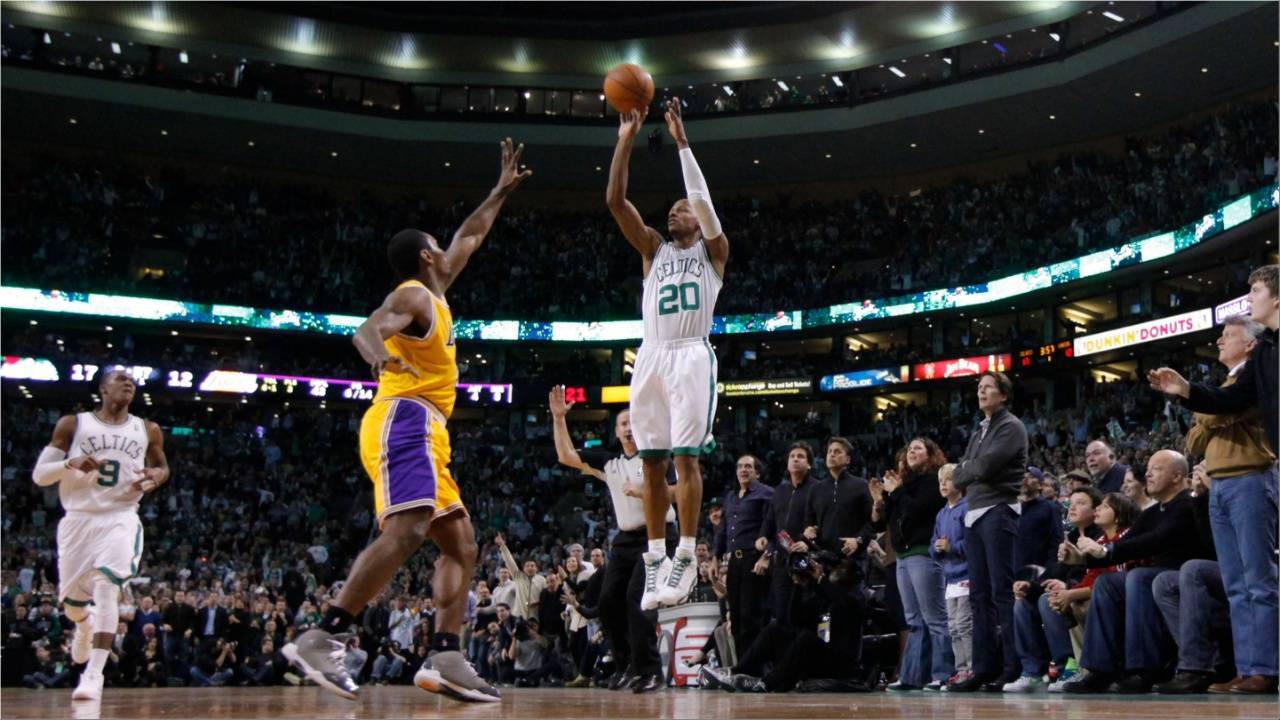
The second best shooter in NBA history is Ray Allen on my ballot because accuracy, volume, and shot creation deserve consideration together. Stephen Curry remains the standard, while Klay Thompson, Reggie Miller, and Damian Lillard supply the strongest challenges in this perimeter-focused comparison. Allen earns the edge by combining elite three-point shooting with a greater demonstrated share of unassisted makes than Thompson.
Thompson wins several important statistical comparisons, including the matched-age sample below. Allen’s selection rests on valuing his combination of self-created and assisted shooting, with free throws providing another point of separation. The verdict is a basketball judgment about competing strengths, and the strongest evidence against Allen belongs in the argument.
Testing The Second Best Shooter In NBA History Across Three Seasons
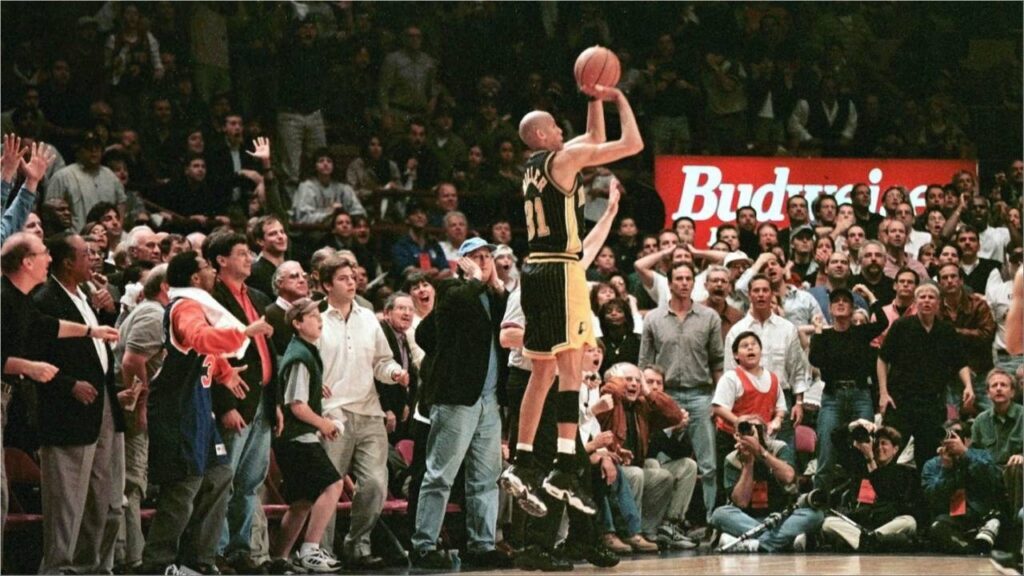
The comparison uses each player’s age-25 through age-27 regular seasons, following Basketball-Reference’s season-age labels. Percentages come from combined makes and attempts, while attempts per game come from total attempts divided by games. Every sample exceeds 220 games, avoiding reliance on one unusually hot season without claiming identical development or offensive circumstances.
| Shooter And Three-Season Window | Three-Point Makes/Attempts | Three-Point Percentage | Three-Point Attempts Per Game | Free-Throw Percentage |
| Allen, 2000-01 Through 2002-03 | 632/1,528 | 41.4% | 6.7 | 89.4% |
| Thompson, 2015-16 Through 2017-18 | 773/1,817 | 42.5% | 7.9 | 85.8% |
| Miller, 1990-91 Through 1992-93 | 408/1,082 | 37.7% | 4.4 | 88.8% |
| Lillard, 2015-16 Through 2017-18 | 670/1,817 | 36.9% | 8.1 | 90.2% |
The calculations use Allen’s career shooting figures, Thompson’s season statistical record, Miller’s career statistical record, and Lillard’s season shooting totals. Thompson leads Allen in accuracy and attempts, while Lillard leads the group in free-throw percentage. Allen’s case cannot depend on pretending either advantage disappears when offensive roles enter the discussion.
League comparisons also help prevent treating identical percentages from different eras as identical achievements. Weighting each season’s league baseline by each player’s attempts produces approximate advantages of 6.1 percentage points for Allen and 6.8 for Thompson. Miller finishes 4.7 points above his corresponding baseline, with Lillard 1.1 points above.
Older baselines come from a historical shooting study, while the NBA’s league scoring survey supplies the modern figures. The calculation subtracts expected league-average makes from actual makes, then divides by attempts and multiplies by 100. The adjustment describes accuracy relative to contemporaries without measuring spacing, defensive pressure, or shot difficulty.
Allen’s Creation Case Survives A Longer Sample
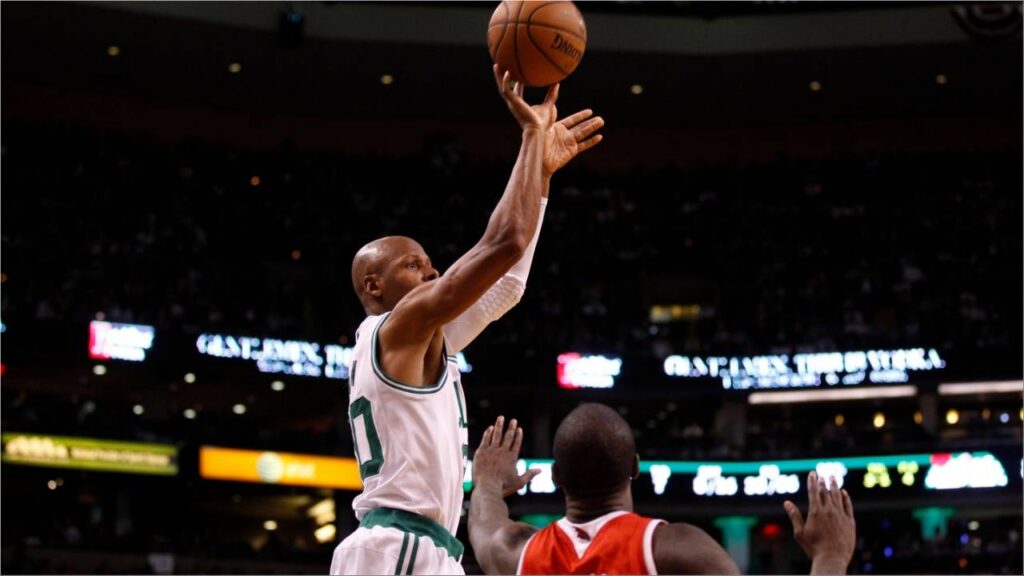
Basketball-Reference’s assisted-shot records show that approximately 19.5% of Allen’s made threes were unassisted across his three-season window. Thompson’s corresponding share was approximately 5.8%, calculated by weighting each season’s assisted percentage by made threes. The difference supports a sustained distinction in how the two shooters produced baskets, rather than a conclusion drawn from one season.
Allen’s annual assisted shares were 85.6%, 76.9%, and 79.6%, drawn from the historical shooting tables. Thompson’s were 92.0%, 95.5%, and 95.2%, with the first year documented in the 2015-16 shooting data. Scorekeeping and offensive systems affect those figures, and assisted shares cannot establish accuracy on unassisted attempts or identify broken possessions.
Allen trails Thompson by roughly 1.2 percentage points from three in this sample, while leading by approximately 3.6 points at the line. Thompson represents an extraordinary version of the specialized perimeter scorer, but Allen demonstrated how elite shooting could survive changing offensive responsibilities. That versatility gives Allen the narrow edge because shooting greatness should account for the ability to create opportunities, not simply convert them.
Allen’s larger unassisted share and successful role changes outweigh that three-point accuracy difference on my ballot. The choice values a broader demonstrated shooting profile without claiming better efficiency on attempts the available data cannot isolate.
Allen’s 2005-06 shooting line also records 44.7% accuracy from 16 feet to the arc. Thompson’s 2015-16 production includes 45.5% from that distance, so the comparison supplies no automatic midrange bonus for Allen. The broader case depends on creation, free throws, and role flexibility, rather than an unsupported claim of superior accuracy everywhere.
Allen’s Jumper Worked With Different Responsibilities
The Seattle SuperSonics received 25.1 points per game from Allen in 2005-06, alongside 41.2% three-point shooting on 8.4 attempts. Seattle’s featured scorer therefore sustained substantial perimeter volume while carrying a much larger scoring workload than his later specialist role required. The season scoring record establishes the earlier half of that transition.
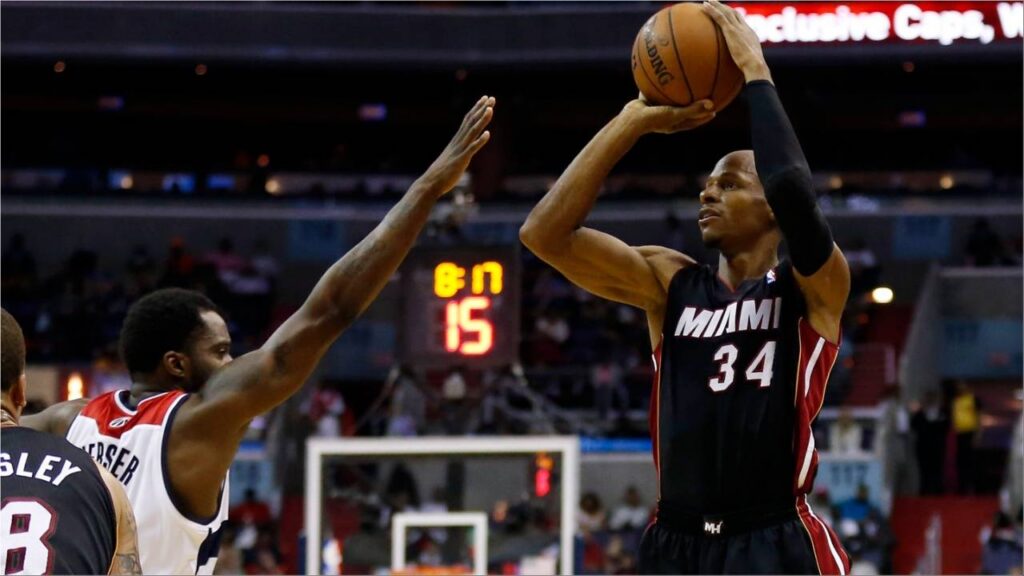
Allen later shot 41.9% on 4.2 three-point attempts per game for the Miami Heat in 2012-13, coming off the bench in all 79 appearances. The team’s season recap records 10.9 points per game, illustrating how sharply his scoring responsibility had declined. Maintaining accuracy above 40% across those different workloads supports role flexibility, although the percentages alone cannot separate aging from teammates or shot quality.
Thompson’s Playoff Advantage Must Count
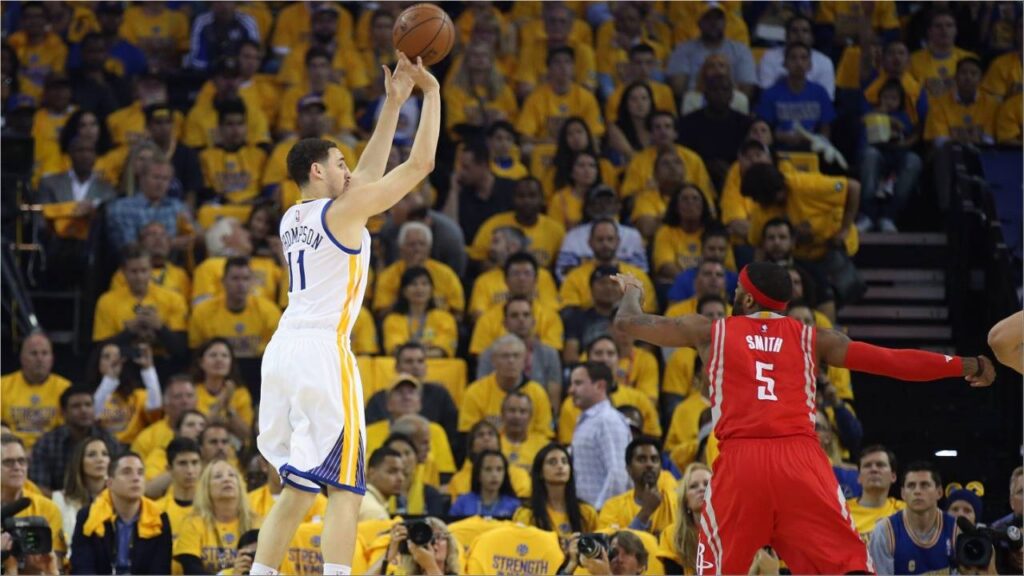
The earlier shooting comparison favored Thompson specifically as a three-point shooter while recognizing Allen’s broader shooting-and-offense case. The Golden State Warriors could build actions around a release that punished extremely brief openings. Golden State benefited from Curry’s attention, but the Warriors still required Thompson’s timing, conditioning, and execution.
The NBA’s postseason shooting totals show 501 threes at 40.5% for Thompson and 385 at 40.1% for Allen. Miller finished at 39.0%, while Lillard stood at 36.8% through the 2025 playoffs. Different roles and postseason samples matter, but Allen’s accuracy held up across a substantial playoff career without overtaking Thompson’s volume.
Thompson’s 14-three game and 37-point quarter, documented in the team media guide, strengthen the argument for choosing his shooting ceiling. Allen’s Game 6 equalizer for Miami in the 2013 Finals demonstrates precise footwork under extraordinary pressure. The play illustrates a skill within Allen’s repertoire, while the career verdict still requires substantially more than one famous basket.
Lillard And Miller Keep The Verdict Close
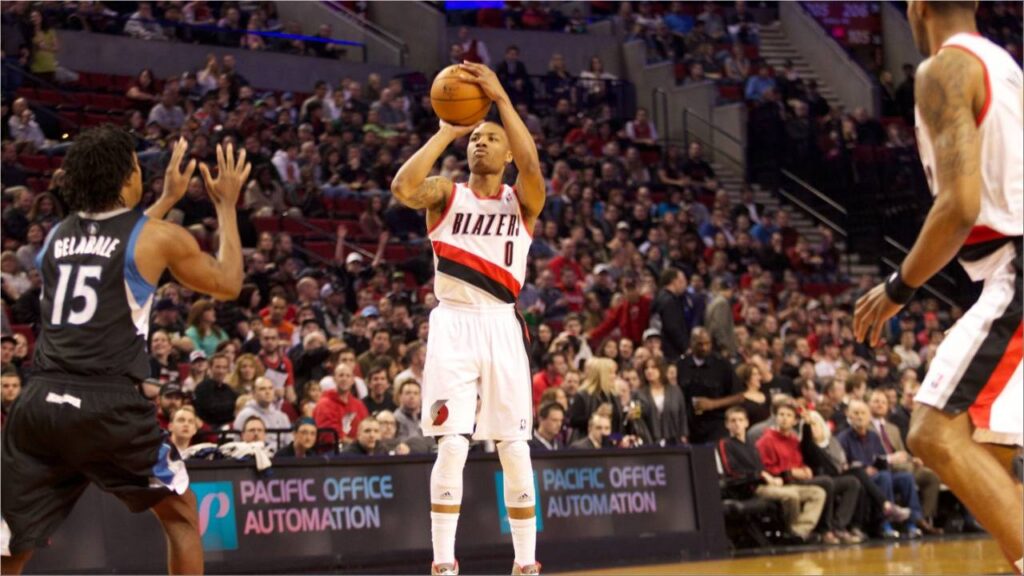
Lillard’s matched-age numbers precede his outstanding 2019-20 season, so the window cannot define his ceiling. The NBA’s season shooting figures show 40.1% accuracy on 10.2 three-point attempts per game for the Portland Trail Blazers. Portland received a sustained demonstration of difficult perimeter creation that deserves more weight than reputation alone.
Lillard’s 71-point performance included 13 threes, but Allen’s stronger career conversion remains the counterweight to that spectacular range. Lillard’s regular-season mark was 37.1% through 2024-25, according to the NBA’s all-time shooting records. The creation argument narrows the gap without requiring every difficult attempt to outweigh a more accurate alternative.
Miller gave the Indiana Pacers another form of creation through screening actions and relentless movement. Indiana could generate a useful shot without asking its star to dribble through the defense. The Pacers’ example prevents equating self-creation exclusively with unassisted baskets, while Allen’s greater demonstrated three-point volume helps explain the preference between them.
The Strongest Candidates Beyond The Four
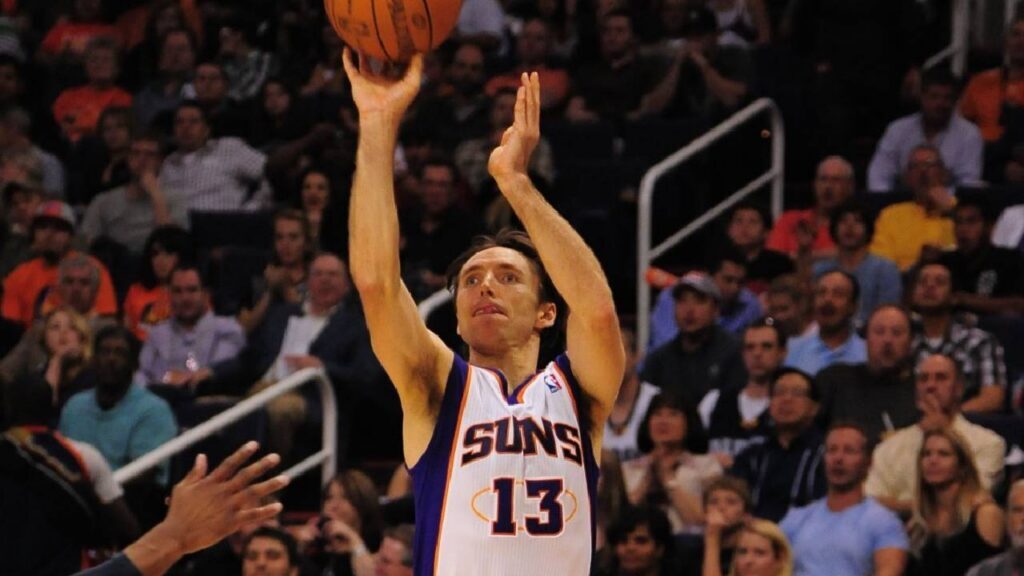
Steve Nash’s career shooting averages include 42.8% from three, 90.4% on free throws, and 3.2 three-point attempts per game. Allen’s corresponding three-point workload was 5.7 attempts, creating a meaningful volume-versus-accuracy tradeoff. Nash deserves a serious second-place argument, but Allen’s combination of substantial perimeter volume and different shooting responsibilities receives greater weight here.
Larry Bird finished with 649 threes at 37.6%, illustrating the different perimeter workload behind another legitimate historical candidate. Kevin Durant deserves greater consideration in a ranking that gives midrange shot-making equal weight to three-point production. Allen’s selection establishes a broader standard for perimeter greatness, rewarding shooters capable of maintaining elite production across different offensive responsibilities.
End Of My Second Best Shooter In NBA History Rant
Allen gets my vote as the second best shooter in NBA history because his shooting combined creation, accuracy, and substantial perimeter volume across changing responsibilities. Thompson’s stronger three-point conversion makes the verdict close, while Miller, Lillard, and Nash expose how different priorities can change the answer. The final preference rewards Allen’s combination without requiring the evidence to crown him in every category.
