

Roger Goodell seems to be consistently pressed regarding the NFL’s position on diversity, equity, and inclusion. Given that Goodell has previously commented on the NFL’s position and that the line of questioning hasn’t changed, it seems like a deeper question is being asked. During the recent conference, one question in particular drew attention to what might be at the root of the repeated inquiries. Directing a question to the lack of inclusion throughout the organization raises concerns about the commissioner’s transparency. If the NFL is truly committed to equity, what is driving the continued inequity in certain areas?
Diversity, Equity, and Inclusion (DEI) is a recurrent centerpiece of conversation, owing primarily to federal executive orders passed down by the current administration, emphasizing the use of DEI initiatives in organizations. Goodell has repeatedly stated that the NFL has benefited from inclusion initiatives throughout its ranks. These statements, however, have not alleviated the pressure for more answers. Each inquiry spurs more in-depth questions, such as: Will there be an aggressive move to demonstrate the stance that has been taken?
A massive elephant is present in the room. Until that elephant is addressed and removed, Goodell will face this question. What exactly is the looming issue? The National Football League (NFL) continues to face a significant lack of diversity among its offensive leadership ranks. In a recent interview, the issue was highlighted with the question:
“In the past season and looking ahead, there will be no Black offensive coordinators in the NFL. We’ve observed progress in diversity in other areas, such as quarterback coaches, with a league-record number last season. Why do you think this progress has not extended to the offensive coordinator role?”
This question highlights an ongoing imbalance. This is perplexing for an organization that publicly acknowledges its long-standing commitment to diversity.
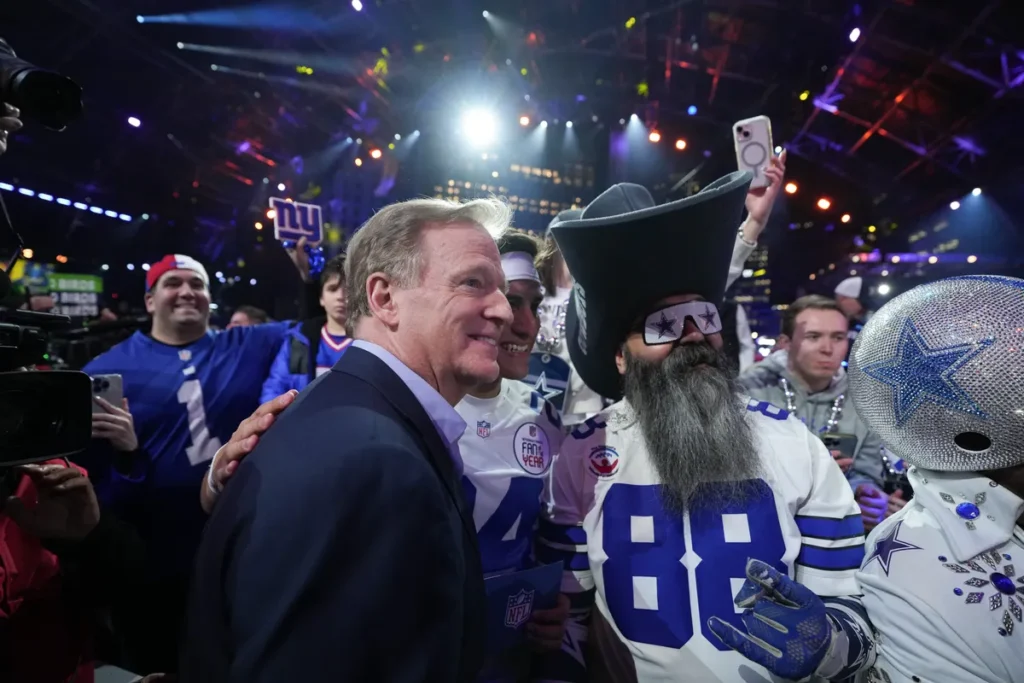
When presented with this question, Goodell pointed out that initiatives to boost inclusivity are in progress and proceeded to highlight the organization’s commitment to these objectives. Is the public to infer that a reservoir of talent exists within the defensive coordinator role yet remains insufficient in the offensive sphere? What accounts for the marked disparity in talent pursuing offensive versus defensive coordinator positions? Are the advancements to make this role more inclusive substantial enough?
There is no reasonable answer to any of those questions. To compound the problem, even Goodell fails to provide a compelling explanation for why this issue persists. There may be something else at play that bears consideration. Lingering perceptions, like ghosts from the past, are likely to highlight deficiencies in this area. The fact is that this discrepancy isn’t just off the field in the upper echelon. As reported by an NFL correspondent, Len Pasquarelli, in a 2024 article,
The Dallas Cowboys were poised to feature five Black starters on their offensive line in 2024, marking a historic first in NFL history.
One cannot deny the shock that comes with this realization. It is remarkable that in over a century since the NFL’s inception, this milestone is only now being realized.
The NFL has been around for over a hundred years, and those hundred years have been filled with growth and retraction. That is a reflection of life; things are cyclical. As for the NFL, it is worth going back to see how that cycle has played out.
The NFL acknowledges the Dayton Triangles, led by Carl Storck, as an essential part of its early history. According to the NFL, on October 3, 1920, the Triangles hosted the first-ever NFL game against the Columbus Panhandles at Triangle Park, achieving a 14-0 win. This marked the birth of the league, and there was great impartiality in those years. Fritz Pollard was one of the few who got the privilege of joining the ranks. He is considered a trailblazer for being the first African American to play in the NFL during the 1920s, yet he remained the only one for over two decades.
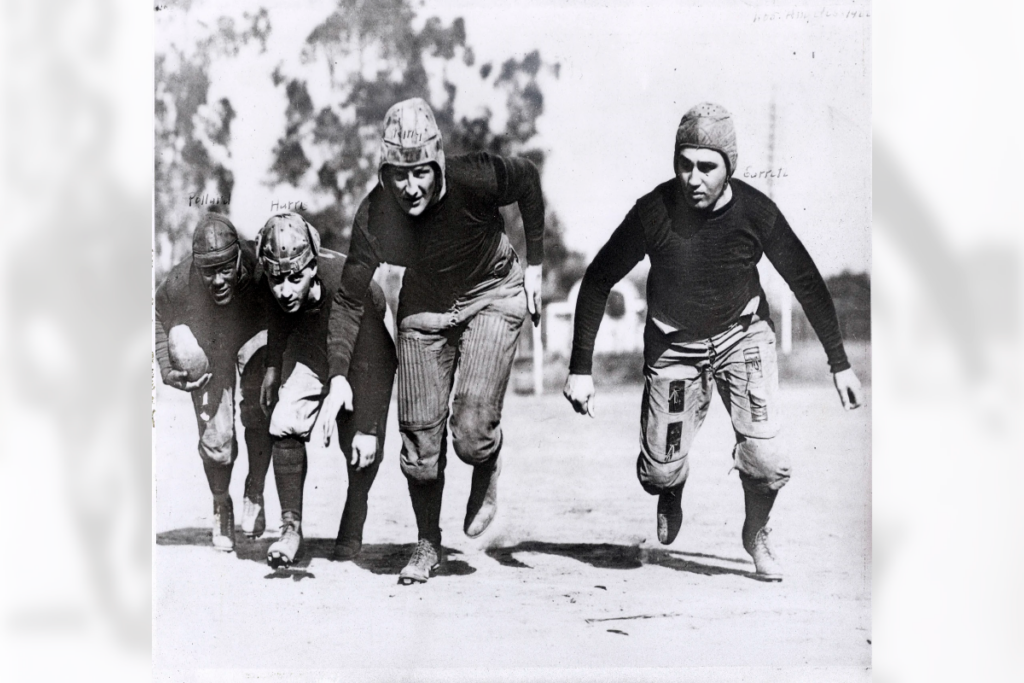
After Pollard left, an unwritten “gentleman’s agreement” among NFL owners effectively barred black players, as noted by the NFLPA. It wasn’t until the late 1940s that the NFL truly began to integrate. Even now, the composition of the offensive line still reflects remnants of that exclusionary past.
With the inquiry into the integration of the offensive coordinator position, one wonders if the NFL is still not fully integrated by design. Perhaps not; it must be noted that some things occur without conscious intent. The problem could be deeply ingrained in a programmed way of thinking that is difficult to overcome.
This is most likely due to a subconscious and long-held perception of African American players based on stereotypical reinforcement. The idea that African American athletes excel at defensive positions is a long-standing one. Unfortunately, this perception did not extend to offensive positions in the past. It seems that this perspective bias has carried over.
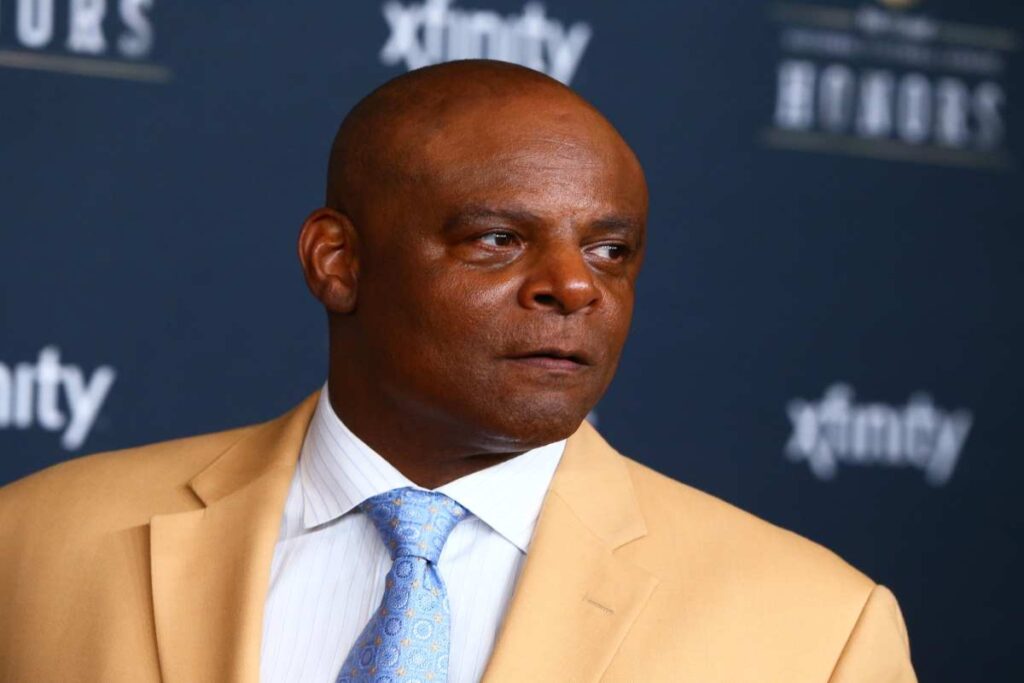
Where is the proof? Warren Moon is cited on Andscape as saying, “Even though many African Americans played in the NFL during the ’50s, ’60s, and ’70s, there was a stereotype that we couldn’t succeed in certain positions. If you played those positions in college and got drafted, you knew you’d probably be moved in the NFL. Supposedly, we weren’t smart enough or didn’t have the leadership qualities or whatever else was deemed necessary.” It would be absurd to believe that things have not changed. One must, however, acknowledge that the change is very gradual.
This gradual shift is a good thing. The speed at which it is shifting fuels the impression that the NFL has not entirely embraced its identity as a diversity-focused organization. This is likely to fuel the ongoing discussion on this subject until the change is made evident throughout the organization.
Hopefully, Goodell and other leaders of this esteemed organization will exert more pressure in areas of inefficiency, demonstrating their commitment to their principles and efforts. If you want someone to believe you, you must first demonstrate you are worthy of that. This concludes my rant about Roger Goodell, the NFL, and the path to true diversity.
