
The running back by committee (RBBC) strategy became the bedrock of modern NFL roster construction for nearly twenty years. Driven by analytical front offices looking to maximize cap efficiency, the league realized that pouring massive resources into a solo workhorse simply wasn’t smart business. Spreading the workload across cheaper, specialized backs stopped the drain on financial value and reshaped how teams compete.
Early data models clearly show that offensive line play drove up to 80% of rushing efficiency. The underlying logic suggested that pairing two mid-round picks or low-cost veterans in a rotational backfield could replicate 90–95% of an elite players output at a fraction of the cost.
Recently tactical shifts across modern defenses have exposed the structural limitations of that approach. As defensive coordinators increasingly deploy split-safety coverage to eliminate downfield passing plays, the efficiency ceiling of budget backfields has been exposed also. There are some smart general managers still in the NFL, they are the ones responding by reinvesting in high-volume running backs who become the foundational muscle for their offenses.
The running back by committee philosophy is a backfield strategy where a team splits rushing and receiving touches among two or more tailbacks rather than relying on a single three-down bell-cow back.
Popularized in the mid-2000s by coaching staffs looking to preserve player health and mitigate injury risk, RBBC quickly gained a lot of traction with the front offices. By managing snap count distribution, teams avoided paying top-market second contracts to running backs, preferring to reallocate that money toward high-value positions like edge rusher, cornerback, and offensive tackle.
In a traditional RBBC framework:
Digging into the numbers and simply doing the math, it shows that the RBBC relied on passing efficiency. Passing on 1st-and-10 generates a higher Expected Points Added (EPA) than rushing. To counter these passing schemes, defensive coordinators shifted toward nickel and dime personnel packages, utilizing two-high safety shells (Cover 2, Cover 4, or Cover 6).
Between 2018 and 2024, defenses willingly presented light boxes. This often featured six or fewer defenders in the fit, inviting offenses to run the ball in exchange for taking away the deep passing routes. Teams that command a high snap share percentage with a single elite back are best positioned to capitalize on these fronts.
“I totally get the narrative of positional value, but when you talk about Jahmyr Gibbs—we didn’t draft a running back in the first round, we drafted an elite weapon to keep our offense explosive.”
— Brad Holmes, Detroit Lions General Manager
This tactical shift changed the value proposition of rotational backfields. Replacement-level depth options gain the four yards granted by a light box, but they rarely generate explosive plays strictly of blocking. They lack the elite contact balance and second-level required to turn a six-man fronti
Lets look at pairing an elite back like Saquon Barkley, Jahmyr Gibbs, Bijan Robinson, or Derrick Henry with a light box changes defensive behavior. Because these players convert light fronts into massive chunk gains at high rates, defensive coordinators are eventually forced to drop an eighth defender into the box, opening up single coverage for perimeter wide receivers.
Beyond limiting splash plays, rough rotational backfields that split touch volume among multiple players can create pre-snap traits that hurt the offensive unpredictability.
When a team substitutes specific backs based on down and distance, such as putting a power back on short yardage or a pass-catching back on 3rd-and-long. So defensive linebackers can adjust their coverage rules before the snap. A true three-down brute will completely eliminate these substitutions, allowing play-callers to easily run play-action, Run-Pass Options (RPOs), or traditional runs from the same old personnel formations.
| Performance Metric | Elite Workhorse Backfield | 50/50 Rotational Committee |
|---|---|---|
| Light Box Success Rate (vs. ≤6 Men) | 54.2% | 41.8% |
| Explosive Rush Rate (15+ Yards) | 11.6% | 5.3% |
| Presnap Defensive Tendency Tell | Low (Personnel stays constant) | High (Substitutions correlate to play type) |
| 4th Quarter Yards After Contact / Carry | 3.85 | 2.41 |
| Forced 8-Man Box Rate | 38.0% | 19.0% |
Data Source: NFL Next Gen Stats & Pro Football Focus (PFF) Rushing Analytics, 2024 Regular Season (Minimum 100 carries per backfield).
Also, physical plays can be tiring through four quarters. Tracking data shows that defensive front sevens wear down over the course of a game when they have to tackle a big back 18–22 times. Constantly rotating fresh, lower-efficiency backups can also give breathing room to the tired interior defenders.
To understand how modern offenses handles backfield management, the table below breaks down all 32 NFL teams by their main backfield foundation: Workhorse (70%+ snap share to one back), 60/40 Split (lead back with a clear secondary compliment), or 50/50 Committee (pure rotation by situation or drive).
| Team | Backfield Classification | Key Back(s) Involved |
|---|---|---|
| Arizona Cardinals | 60/40 Split | James Conner / Trey Benson |
| Atlanta Falcons | Workhorse | Bijan Robinson |
| Baltimore Ravens | Workhorse | Derrick Henry / Keaton Mitchell |
| Buffalo Bills | 60/40 Split | James Cook / Ray Davis |
| Carolina Panthers | 60/40 Split | Chuba Hubbard / Jonathon Brooks |
| Chicago Bears | 50/50 Committee | D’Andre Swift / Roschon Johnson |
| Cincinnati Bengals | 60/40 Split | Chase Brown / Zack Moss |
| Cleveland Browns | 50/50 Committee | Nick Chubb / Jerome Ford |
| Dallas Cowboys | 50/50 Committee | Committee Rotation |
| Denver Broncos | 50/50 Committee | Javonte Williams / Jaleel McLaughlin |
| Detroit Lions | 60/40 Split | Jahmyr Gibbs / David Montgomery |
| Green Bay Packers | Workhorse | Josh Jacobs |
| Houston Texans | Workhorse | Joe Mixon |
| Indianapolis Colts | Workhorse | Jonathan Taylor |
| Jacksonville Jaguars | 60/40 Split | Travis Etienne Jr. / Tank Bigsby |
| Kansas City Chiefs | 60/40 Split | Isiah Pacheco / Kareem Hunt |
| Las Vegas Raiders | 50/50 Committee | Zamir White / Alexander Mattison |
| Los Angeles Chargers | 60/40 Split | J.K. Dobbins / Gus Edwards |
| Los Angeles Rams | Workhorse | Kyren Williams |
| Miami Dolphins | 60/40 Split | De’Von Achane / Raheem Mostert |
| Minnesota Vikings | 60/40 Split | Aaron Jones / Ty Chandler |
| New England Patriots | 60/40 Split | Rhamondre Stevenson / Antonio Gibson |
| New Orleans Saints | 60/40 Split | Alvin Kamara / Kendre Miller |
| New York Giants | 60/40 Split | Tyrone Tracy Jr. / Devin Singletary |
| New York Jets | Workhorse | Breece Hall |
| Philadelphia Eagles | Workhorse | Saquon Barkley |
| Pittsburgh Steelers | 50/50 Committee | Najee Harris / Jaylen Warren |
| San Francisco 49ers | Workhorse | Christian McCaffrey |
| Seattle Seahawks | 60/40 Split | Kenneth Walker III / Zach Charbonnet |
| Tampa Bay Buccaneers | 60/40 Split | Bucky Irving / Rachaad White |
| Tennessee Titans | 50/50 Committee | Tony Pollard / Tyjae Spears |
| Washington Commanders | 60/40 Split | Brian Robinson Jr. / Austin Ekeler |
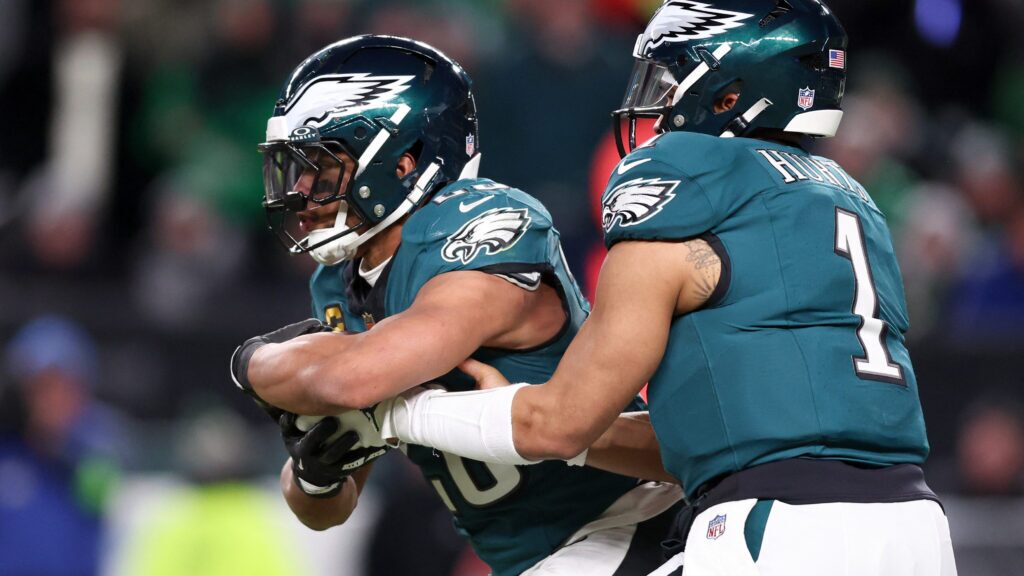
For years, the Philadelphia Eagles favored a low-cost, committee-based approach behind an elite offensive line. In 2024, General Manager Howie Roseman shifted strategy by signing Saquon Barkley to a three-year, $37.75 million contract ($12.6M AAV).
The investment delivered immediate returns. Barkley set Philadelphia’s single-season franchise record with 2,005 rushing yards (5.8 YPC) and accumulated 2,283 total scrimmage yards, accounting for roughly 35% of the Eagles total offensive production. Barkley led the league in rushes of 40-plus yards, forcing opposing defenses to adjust their safety depth and opening up passing lanes for Jalen Hurts and A.J. Brown. This was extremely effective for the Eagles.
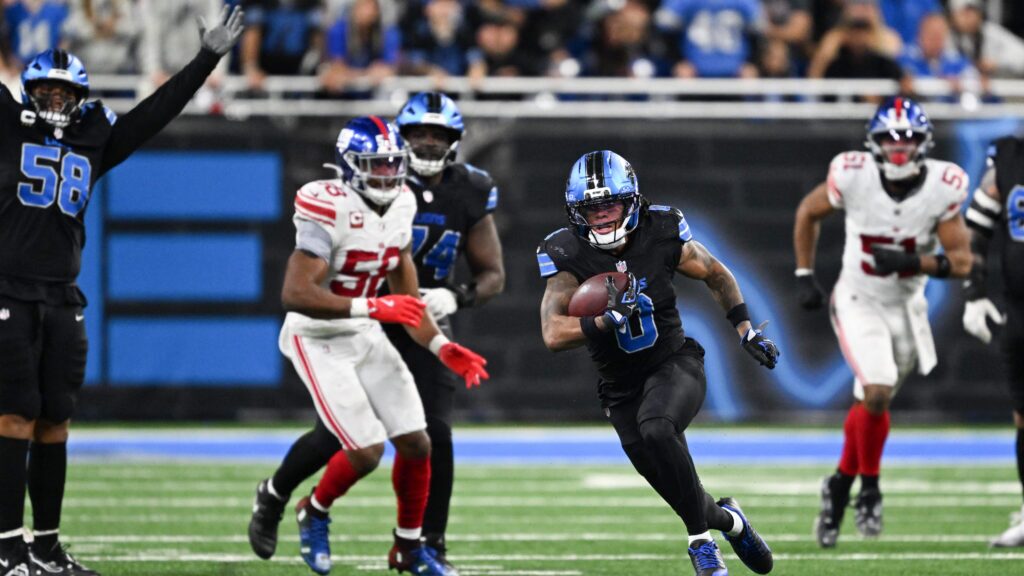
When the Detroit Lions selected Jahmyr Gibbs 12th overall in the 2023 NFL Draft while also signing David Montgomery in free agency, Fans, critics and the main media questioned the availability of the teams resources. But sometimes chances have to be taken in order to form something great.
By 2024, Detroit’s dual investment paid off in the backfield. The talent they invested in broke the defensive algorithms. Rather than relying on replacement-level depth or worrying about a short-yardage goal-line vulture, Detroit used two talented high-capital playmakers. Gibbs registered 1,412 rushing yards (5.6 YPC) and 20 total touchdowns as a versatile threat, while Montgomery provided physical interior finishing with 775 yards and 12 scores, helping power one of the league’s most effective offenses.
While high-end players have regained value, the running back by committee model is far from obsolete. It remains effective when paired with specific offensive schemes or roster constraints:
NFL front offices have changed how they value running backs. Instead of treating every back as easily replaceable, teams now separate generic, plug-and-play runners from elite, dual-threat playmakers.
“It’s hard to find special players at any position. We think Saquon is a special player… Has the pendulum swung so far at this position that running backs are now undervalued?”
— Howie Roseman, Philadelphia Eagles General Manager
| Player | Team | Contract / Draft Value | Scrimmage Yards | Total Touchdowns | Yards Per Carry |
|---|---|---|---|---|---|
| Saquon Barkley | Philadelphia Eagles | 3 Yrs / $37.75M ($12.6M AAV) | 2,283 | 15 | 5.8 |
| Derrick Henry | Baltimore Ravens | 2 Yrs / $16.0M ($8.0M AAV) | 1,921 | 18 | 5.9 |
| Jahmyr Gibbs | Detroit Lions | 12th Overall Pick (1st Round) | 1,929 | 20 | 5.6 |
| Josh Jacobs | Green Bay Packers | 4 Yrs / $48.0M ($12.0M AAV) | 1,582 | 12 | 4.6 |
Source: Over The Cap & Official NFL Player Tracking Data (2024 Regular Season).
Rather than placing the franchise tag on aging veterans or overpaying for pure runners, the front offices are targeting versatile backs in their prime (ages 22–26) who impact both the rushing and passing games. This is becoming extremely popular in today’s modern game.
This structural shift in the NFL has truly shifted high-level fantasy football strategy, sparking a central debate among drafters: Hero-RB (Anchor-RB) versus Zero-RB.
For years, the “Zero-RB” approach dominated high-stakes leagues. The strategy seemed to be set to ignore running backs until Round 6 or later, loading up on top wide receivers and quarterbacks, and building a backfield using waiver-wire pickups, late-round committee members, and injury hand-off players. In an era where 20+ teams ran true 50/50 RBBCs, drafting early running backs felt like taking on unnecessary injury risk for replaceable production.
However, as defenses invited lighter box counts, elite workhorses pulled away from late-round options in break out efficiency. A 50/50 committee back averaging 10 carries against stacked boxes cannot replicate the production of a high-volume stud earning 20+ touches against split-safety looks.
As a result, Hero-RB has become the dominant drafting meta in modern fantasy football:
When you get a guy who plays all three downs, you get elite upside every week. Now you don’t have to worry about a backup stealing touchdown runs at the goal line.
The early analytics did not prove that running backs are irrelevant. No, they proved that mediocre running backs operating behind good blocking are certainly replaceable.
The NFL front offices first overcorrected by treating the entire RB position as an assembly line of replaceable products. Today, we see defensive coordinators use split-safety shells to defend against deep passes, teams with elite, three-down backs have a clear counter-weapon. While committee backfields will always serve a purpose for depth and cap management, the hope that a committee can completely replace an elite tailback is officially being challenged and rewritten.
Teams adopted RBBC to minimize financial investment in second-contract running backs, manage player workload, reduce injury risk, and reallocate salary cap space toward high-priority positions like pass rushers and offensive tackles.
Modern defenses frequently use two-high safety looks and light six-man boxes to stop deep passing plays. While replacement-level committee backs gain standard 3-to-4-yard carries against light boxes, elite workhorses generate high rates of explosive 15+ yard runs, forcing defenses to alter their schemes.
An offensive line establishes the baseline yards available on a given play. However, elite running backs generate additional yardage independently through metrics like Yards After Contact (YCO) and Missed Tackles Forced (MTF).
Modern offensive play-callers align elite backs in the slot, out wide, and in play-action schemes. When a running back functions as both a primary ballcarrier and a dynamic receiving option, front offices evaluate them as versatile offensive weapons rather than traditional runners.
All Data & Research provided by Lee Shipley! This is the End of My Rant!
