
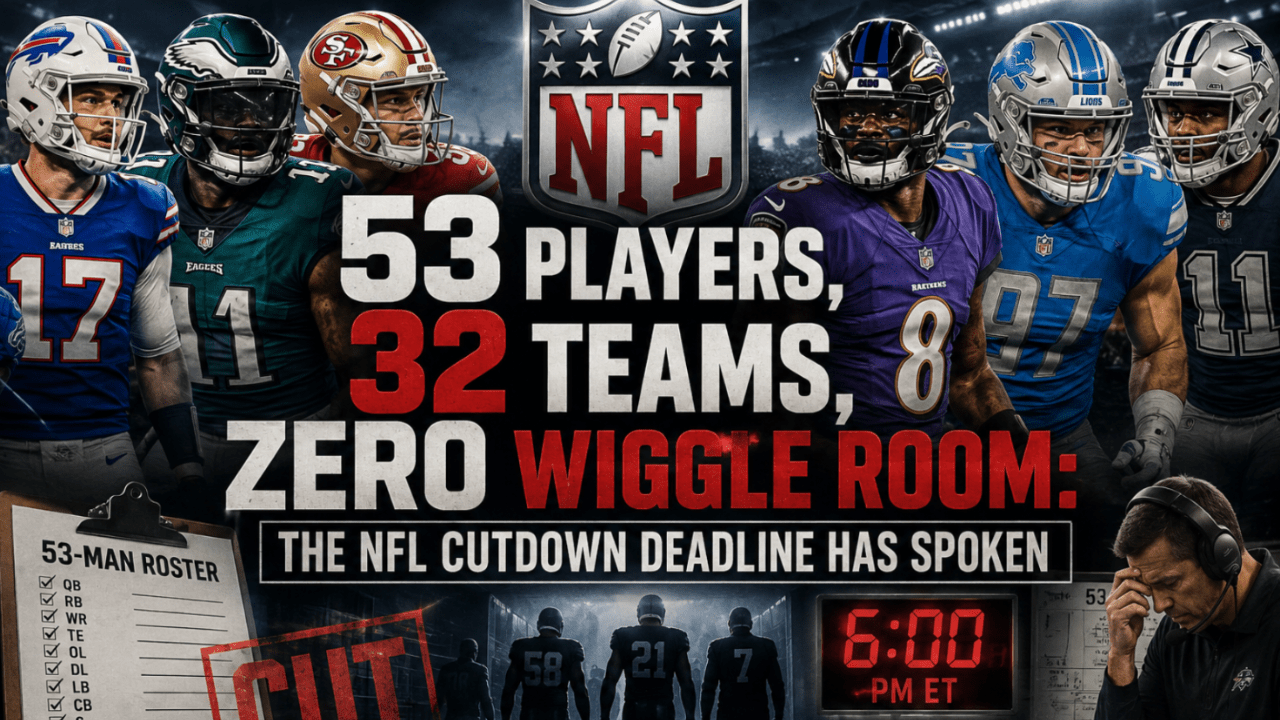
Well, that’s a wrap on one of the most stressful weekends of the football calendar. The 2026 roster cutdown deadline came and went on Sunday, and every team in the league now sits at 53 players. If you spent the whole day refreshing Twitter, tracking sites, and the ever-reliable NerdyTips for the latest breaking moves, you were far from alone. This is the day where dreams get made and hearts get broken, sometimes within the same locker room minutes apart. Fringe guys who balled out all preseason finally hear “you made it.” Veterans with big names and bigger contracts suddenly find themselves job hunting. It’s brutal, it’s fascinating, and it tells you a ton about where all 32 teams actually stand heading into Week 1.
So let’s break down what really happened, how the whole process works, and what you should keep your eyes on now that the dust is settling.
Every offseason, NFL rosters balloon well past what teams are allowed to carry into the regular season. Training camp and preseason let coaches run huge numbers through drills, joint practices, and exhibition games. Then reality hits. Once the games that count get close, everybody has to slim down to a hard cap of 53 active players.
That trim is the cutdown. It’s not a suggestion or a rough target. It’s a firm league-wide requirement, and teams have to hit it by the same clock. This year, the deadline landed at 6 p.m. ET on Sunday. Front offices worked the phones right up until then, some finalizing trades, others sweating over one last position battle they couldn’t quite decide.
Here’s why it matters so much for fans: the 53 you see now is essentially the group your team is riding with into the opener. Sure, tweaks happen. But the core is set. The guys who survived Sunday earned their spot, and the ones who got the dreaded call are now scattered across the waiver wire, hoping another team liked what they saw on film.
There’s something wild about the fact that all 32 organizations face the exact same cutoff. No extensions. No “we need a little more time.” When the clock strikes six, every roster has to be legal.
That shared pressure creates a strange kind of chaos. Teams are cutting players while also watching who other teams cut, because one franchise’s roster casualty might be exactly the depth piece another team needs. Personnel departments basically turn into war rooms, weighing their own guys against everybody else’s leftovers.
A few things tend to happen as that deadline closes in:
If you love the drama of the game beyond the field, cutdown day delivers. It’s roster construction as a live sport.
Getting cut doesn’t always mean the end of the road with a team. Enter the practice squad, which has become one of the most important tools in modern roster building.
Teams can carry up to 16 players on their practice squad. These are the developmental prospects, the emergency depth, and the guys coaches genuinely believe in but couldn’t quite fit onto the 53. During the week, practice squad players run the scout team and keep grinding, ready to get elevated to the active roster if injuries or matchups call for it.
There’s a neat wrinkle worth knowing about. If a team has a player from the International Pathway Program on the roster, they get an extra exempt spot, letting them keep 17 practice squad players instead of 16. It’s a small edge, but in a league where every roster slot is fought over, an extra body can matter down the stretch.
Fans sometimes shrug off practice squad news, and that’s a mistake. Plenty of guys who started on the practice squad ended up starting playoff games later in the same season. Injuries pile up fast in the NFL, and the teams with the deepest, smartest practice squads often survive the long grind better than the ones who ignored it. When your favorite team stashes a promising young lineman or a raw but toolsy receiver, pay attention. That’s the kind of move that quietly shapes a season.
Injuries are just part of football. Nobody likes them, but they force teams into some difficult roster math every single year. The Injured Reserve rules give clubs a way to handle hurt players without simply cutting them loose.
Teams can place up to two players on Injured Reserve on or before the Sunday deadline while giving them a Designated to Return status. Those players have to sit out at least four games, but after that window, they can rejoin the active roster. That’s a big deal for someone dealing with a nagging injury that isn’t season-ending. Instead of losing his spot entirely, he gets time to heal and a clear runway back.
This is actually a friendlier setup than the old way, when teams often had to keep guys on the 53 through cuts or risk losing them. Now a team can protect real talent, open up a roster spot in the short term, and get that player back when he’s healthy. Smart front offices use this to their advantage, especially with proven contributors who just need a few weeks.
Not every player who gets released hits the open market the same way. The waiver system sorts that out, and it hinges on experience.
Players with fewer than four years of accrued service go through waivers. That means when they’re cut, other teams get a chance to claim their existing contracts before those players become free to sign anywhere. Claims get awarded based on waiver order, which follows a set priority tied to team records. The worse a team finished the previous season, the higher it sits in the pecking order, giving struggling franchises first crack at fresh talent.
Veterans with four or more accrued seasons work differently. They don’t go through waivers when cut. Instead, they become free agents right away and can negotiate with any team they choose. That’s why you’ll sometimes see an established name get released and sign somewhere new within a day, while a younger player’s future stays in limbo until the claims process plays out.
Here’s the quick breakdown of how it shakes out:
Understanding this helps you read cutdown news better. When a rookie you liked gets waived, he might already be gone to another team by Monday.
Now for the fun part. The cutdown always spits out storylines that dominate the week, and this year is loaded with them.
Keep an eye on the teams that made surprising decisions at quarterback depth. Every offseason a couple of clubs go lighter than expected at the position, betting they can find help later. That gamble either looks genius or disastrous by midseason, and there’s rarely much in between.
Then there are the position battles that came down to the wire. Receiver rooms and secondary depth charts tend to produce the most heartbreak, because talented players simply run out of spots. A guy who would’ve made most rosters can get squeezed out by sheer numbers on a stacked team. Those are exactly the players contenders love to scoop up on the waiver wire.
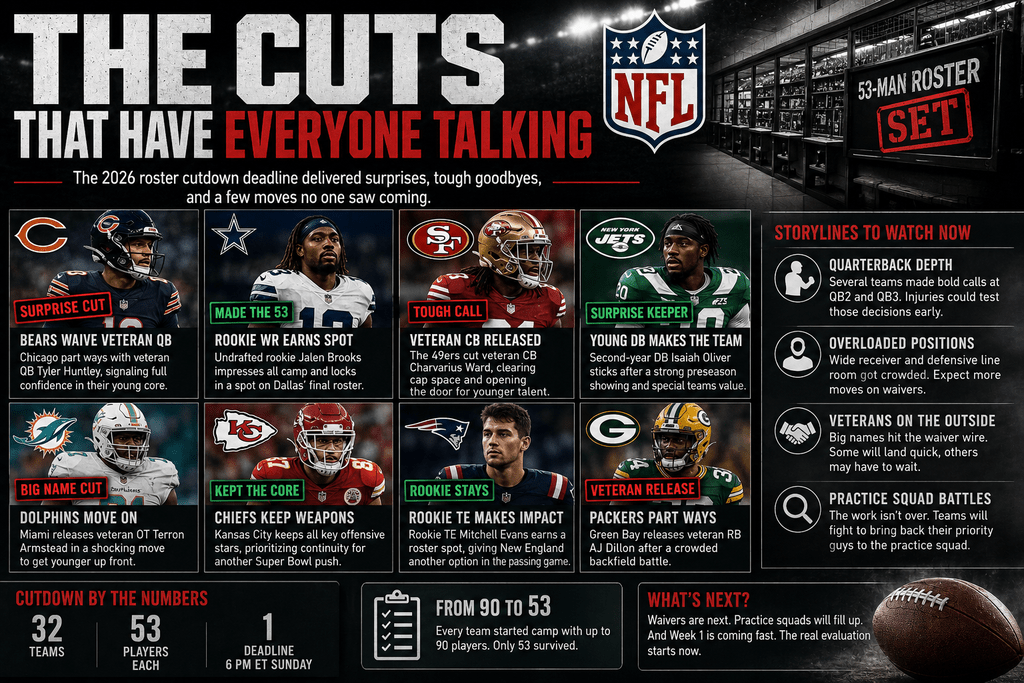
A few themes to track this week:
Fan bases are already arguing about their team’s final 53, and honestly, that’s half the fun. Some of these calls will age beautifully. Others will look shaky by October.
The deadline passing doesn’t mean the movement stops. If anything, Monday might bring even more action.
Waiver claims get processed the morning after the initial 53-man rosters are announced. Teams put in their claims on players they want, and the league awards those players based on waiver priority. So a guy your team cut Sunday could belong to someone else by Monday morning, and a player another team let go could suddenly show up on your depth chart.
Right after claims settle, the practice squad frenzy kicks off. Teams rush to sign the players they hoped would clear waivers, plus guys other clubs released who fit their scheme. It becomes a scramble, with front offices competing over the same pool of available talent. The teams that prepared well and moved fast tend to walk away with the deepest supporting casts.
If you want to stay on top of everything without losing your mind, here’s what to watch:
The roster you see today isn’t frozen in stone. It’s the starting point for a long season of moves, elevations, and midyear adjustments.
Cutdown day is more than a bookkeeping exercise. It’s the clearest snapshot you’ll get of how each front office actually values its talent. The names they kept, the ones they let walk, the players they traded rather than risk losing, all of it tells a story about what these teams believe about themselves.
Some rosters look ready to compete right now. Others clearly have holes their front offices are hoping to patch through waivers, practice squad stashing, or midseason trades. Either way, the picture is a lot clearer today than it was a week ago.
So argue about your team’s final 53. Second-guess the cuts. Celebrate the long shots who made it. That’s what this weekend is for. The regular season is almost here, every roster is set, and the real football is right around the corner. Now we get to find out which of these tough calls were the right ones.
One thing fans tend to forget in all the cutdown chaos is how much the next 48 hours can quietly reshape a roster. The initial 53 you see posted Sunday night is rarely the one that takes the field in Week 1. A veteran claimed off waivers can jump straight into a starting role. A surprise cut from a contender can give a rebuilding team exactly the leadership it was missing. Teams that finished the preseason healthy are already ahead, but a single injury update Monday morning can flip the whole depth chart picture. Watch which teams move fast on the wire, which ones are patient, and which ones quietly bring a released player back on the practice squad, because those decisions often matter more than the splashy cuts that grabbed all the headlines.
Every squad has its final 53 now, but the moves that follow over the next seven days will matter just as much as the cuts that already happened. Some teams grabbed exactly the depth they needed off the wire. Others are quietly hoping a camp standout they released clears waivers and comes back on the practice squad. A few front offices are already on the phone shopping for the piece they know they’re still missing. The dust from Sunday settled fast, but the real work of building a roster that holds up through a 17-game season is only getting started.
If you love sports, download Stadium Rant from the Apple App Store and join one of the fastest-growing social sports communities. Be sure to follow us on socials too — you can find all our profiles on our Linktree.
