
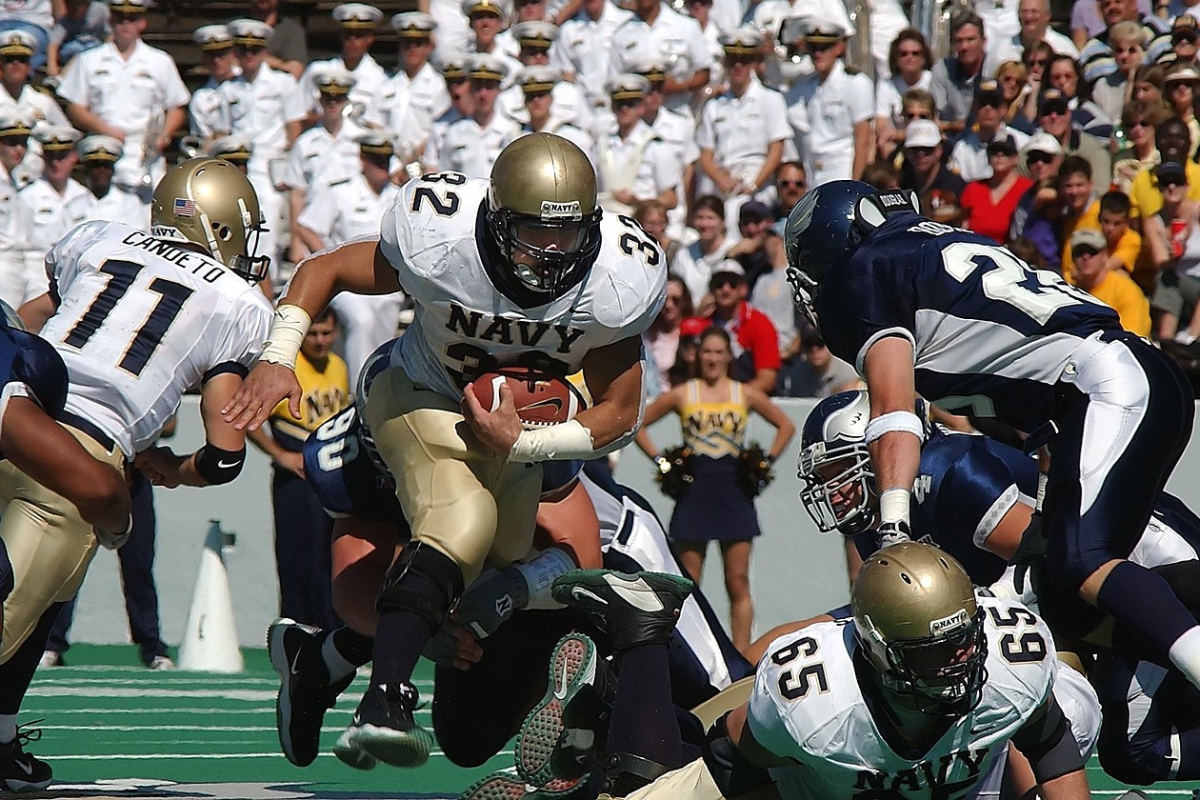
The college football has undergone a post-season transformation. The four-team final is eliminated after years of controversy to be replaced by a 12-team system that is more stressful, offers more access, and with much less room to make mistakes. In the years to come (2025-26), the road to the national championship will be more difficult and lengthy. It is not only being elite but being ready all week, October to January.
The expanded format hasn’t just reshaped the field, it’s changed how people follow the sport. With more teams in play and new playoff scenarios unfolding weekly, fans and sharp observers are tracking matchups, rankings, and line movement earlier than ever. That’s especially true on offshore betting sites accepting US bettors, where future odds and early NFL spreads adjust in real time as playoff positions shift.
The new system doesn’t just expand the bracket. It redefines what matters down the stretch, and who’s built to survive it.
The playoff bracket consists of the top five champs of the conferences and seven more of the most ranked teams in the country, irrespective of the conference. That ensures admission of a majority of Power Five title winners but it opens room to superior independents and runners-up who are likely to have missed the four-team threshold.
The four conference champions are offered a first-round bye which is a great advantage and does not prompt them to do away with a fifth postseason game. The rest of the eight teams start defending in the playoffs in mid-December and unlike in the past years, those are not played in neutral grounds. They are hosted by the big seeds on campus and this introduces college football to an experience of the home field playoff football.
The mere fact of that change is what adds something of the intensity that the postseason has never known. A team that had the regular season to build momentum can now take such an advantage in front of its home crowd and in certain instances, icy weather to drive them further.
The first round of the playoffs will start on December 19 and 20 at college locations. The four winners proceed to quarterfinals there, which are hosted by the classic New Year Six bowl locations.
The four quarterfinals will be played in Cotton Bowl (Arlington), Orange Bowl (Miami Gardens), Rose Bowl (Pasadena) and Sugar Bowl (New Orleans) between December 31 and January 1.
The semifinals come a week later, January 8 and 9 with games at the Fiesta Bowl in Glendale and the Peach Bowl in Atlanta. The championship will be held on January 19, 2026, in Hard Rock stadium in Miami Gardens.
It’s a long, physical road. To even grasp the title, teams can be forced to win four games, with progressively more elite competition, in a row.
The results of the selection will be decided in the form of a 13-member selection committee who will rank and select the teams. It involves an amalgamation of ex coaches, athletic directors, players and voices of media, individuals who are knowledgeable about the sport, but also have strong opinions.
They do not just consider the win-loss records. The strength of schedule, head to head performance, conference championships, as well as performance against traditional opponents, are all a part.
Weekly rankings are released starting in November. Final selections are made after the conference championship games in early December. And although the process is organized, it is still subjective and, in most cases, raises controversy on who had the last positions and who had been left out.
This argument is one of the reasons why the playoff is so captivating. There’s no algorithm. There’s no clean formula. Only twelve teams, chosen and seeded at will.
Everything is different in the new format where a team is placed in the rankings. The first four seeds receive byes, and that is important. The fifth-ranked programs have to win an additional game in order to get to the same stage.
It is not only about playing more. It is all about the location of the first game.In a 5 vs. 12 matchup, the higher seed hosts , often in environments that heavily favor the home team. It might involve a southern team in December making a journey north, or a national powerhouse taking a snow-filled, full-stadium in the middle of winter.
With the new format the season brings out more havoc, more upsets and more exposure to the teams that in past years could not have made the cut. At least one lower seed is likely to be a spoiler, and it is no surprise that a favorite can be knocked off early by an unpromising underdog with the right quarterback and coaches.
The previous year, Ohio State won the title defeating Notre Dame. With the 12-team format, the same game would have taken place a round before. And that is important, since the playoff has now penalized slowness in the first quarter and rewarded momentum. A team that catches fire in December might surf through to Miami.
If you love sports, download Stadium Rant from the Apple App Store and join one of the fastest-growing social sports communities. Be sure to follow us on socials too — you can find all our profiles on our Linktree.
