
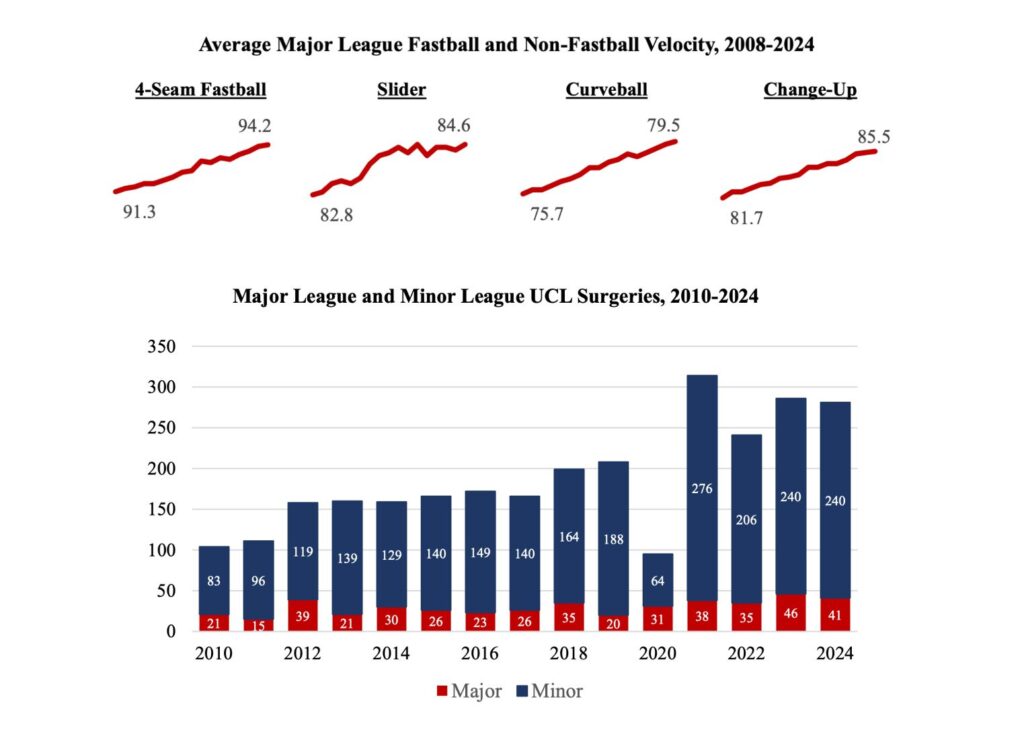
It isn’t a shock, but Major League Baseball’s year-long study on pitcher injuries shows they’re throwing too hard. MLB’s report listed three reasons for the explosion in Tommy John surgeries.
Professional and amateur players are now using wearable health monitors they hope will help stop the injuries. Some MLB teams have invested in the technology.
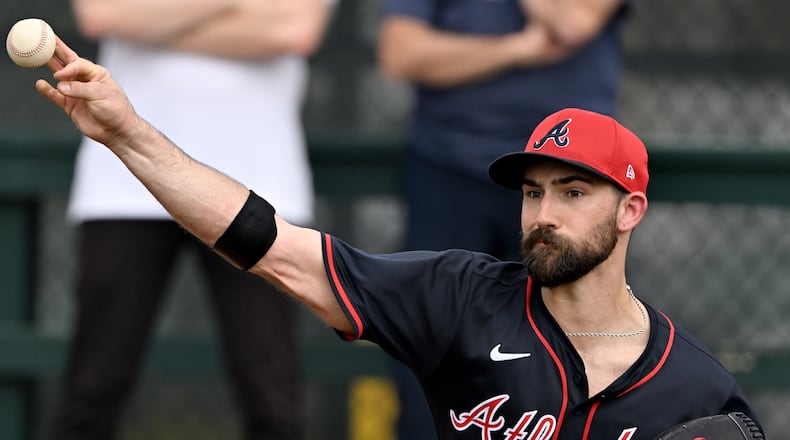
Above, the black armband on Atlanta Braves starter Spencer Strider is called the Driveline Pulse. The Pulse sensor measures how much stress is being put on the arm from pitching for the person wearing it.
It measures several things: Velocity, how hard they grip the ball, how much they throw. The sensor then calculates the stress on the arm, specific to each player.
The Tommy John surgery reconstructs the ulnar collateral ligament (UCL) in the elbow. This ligament is crucial for stabilizing the elbow when throwing a baseball. It’s clear the harder pitchers throw, the higher the chance they have of injuring their elbow.
Spencer Strider is one of the pitchers hoping Pulse keeps him healthy. After his second Tommy John surgery, he missed nearly all of 2024.
Strider is one of 281 pitchers in pro baseball to have the surgery since last season. There have already been five players to have the surgery in 2025. 15 years ago, just 104 pitchers had Tommy John surgery.
“Teams have woken up to this,” Dr. Glenn Fleisig, the director of the American Sports Medicine Institute told the Athletic. “The field of baseball has woken up to this. It’s the next competitive advantage. That’s what’s happening.”
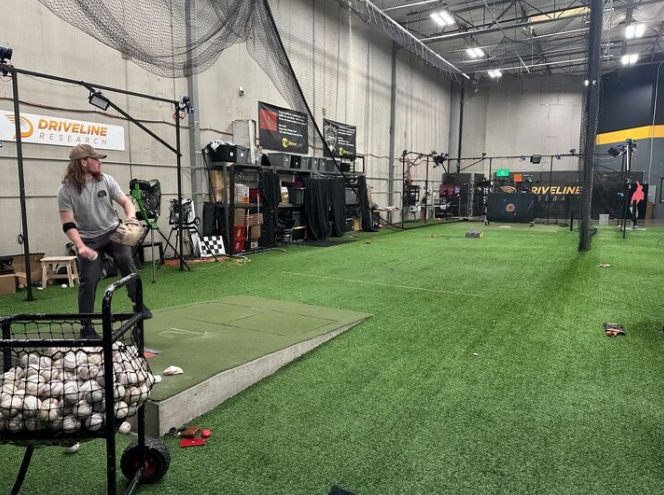
The Pulse is just one biometric tool created by Driveline for pitchers. A couple of other sensors are on the market.
The Pulse measures elbow torque, arm speed, acceleration, throwing volume, and fatigue levels. Driveline says It gives pitching coaches and managers a more accurate look at the stress the arm is under.
Driveline’s Pulse calculates what’s called acute-to-chronic workload ratios (ACWR). It’s critical information that helps prevent injuries. It measures whether a pitcher is building up stress normally or pushing their arm to much.
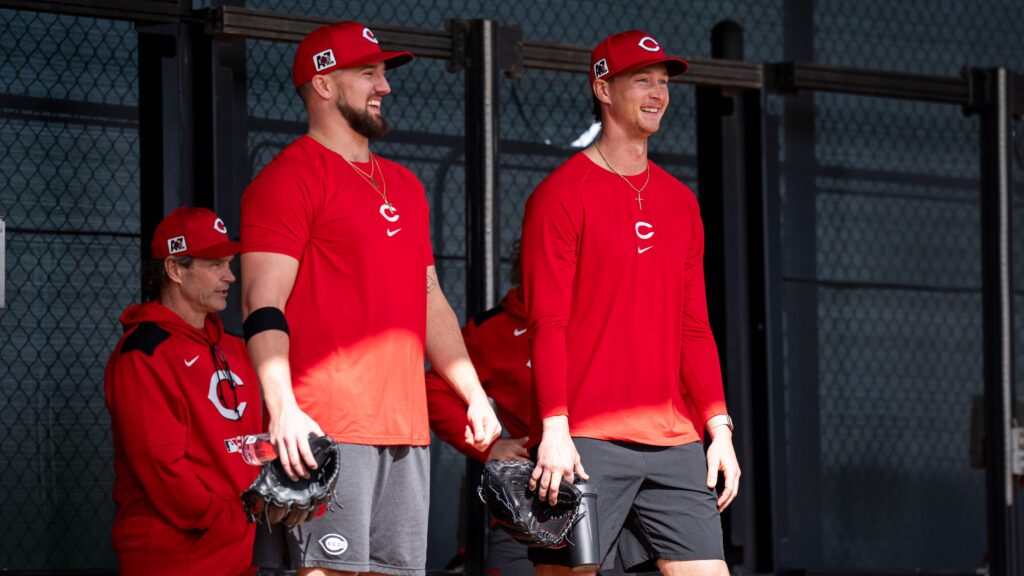
The Los Angeles Dodgers, Boston Red Sox, and Cincinnati Reds are known to use Pulse, but there are others.
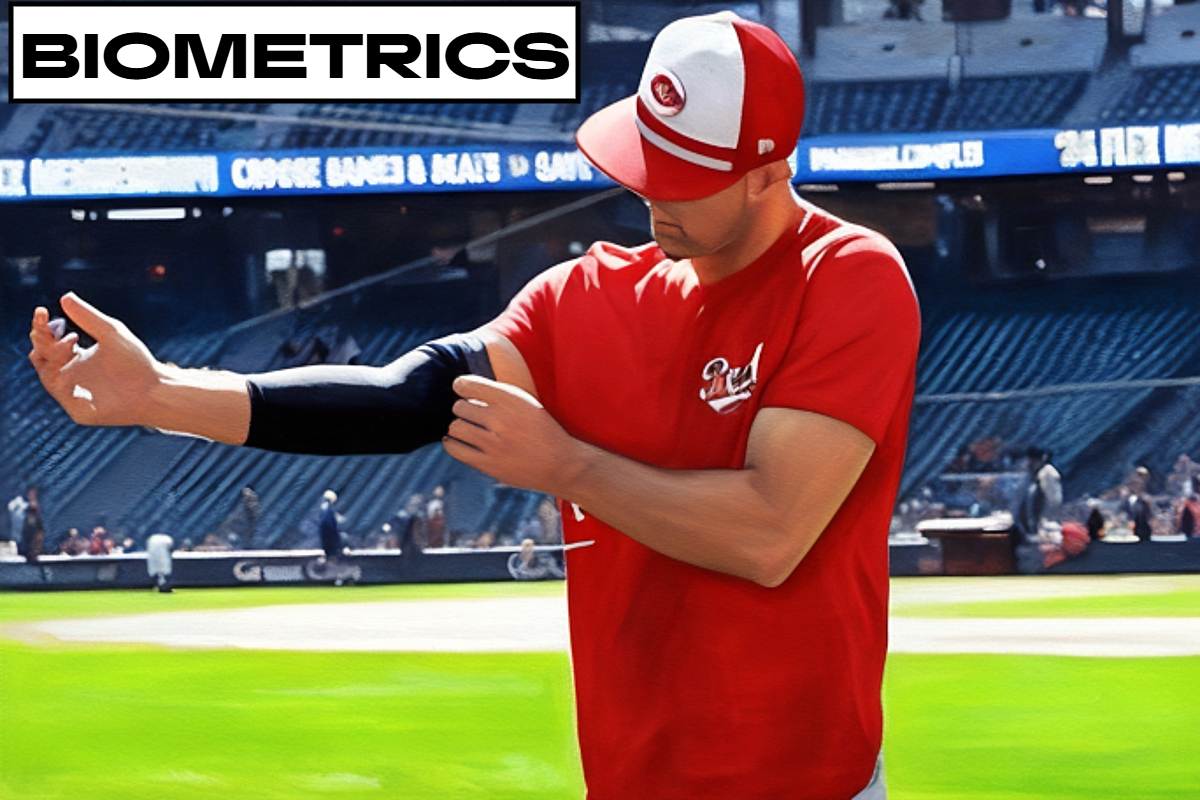
34-year-old Cincinnati Reds pitcher Nick Martinez uses the sensor. “I had just come off an arm injury and I was playing in Japan. I felt like that was the right time to start monitoring my throws. The way that I use it during the season, my role where I’m bouncing from starter to reliever and multiple innings out of the pen, I rely on this thing every day,” Martinez said. “this is like my Bible.”
Right now, pitchers are not able to wear Pulse in regular season games. But, it is still helpful on the five days between starts. It can show trends or stress when throwing different pitches.
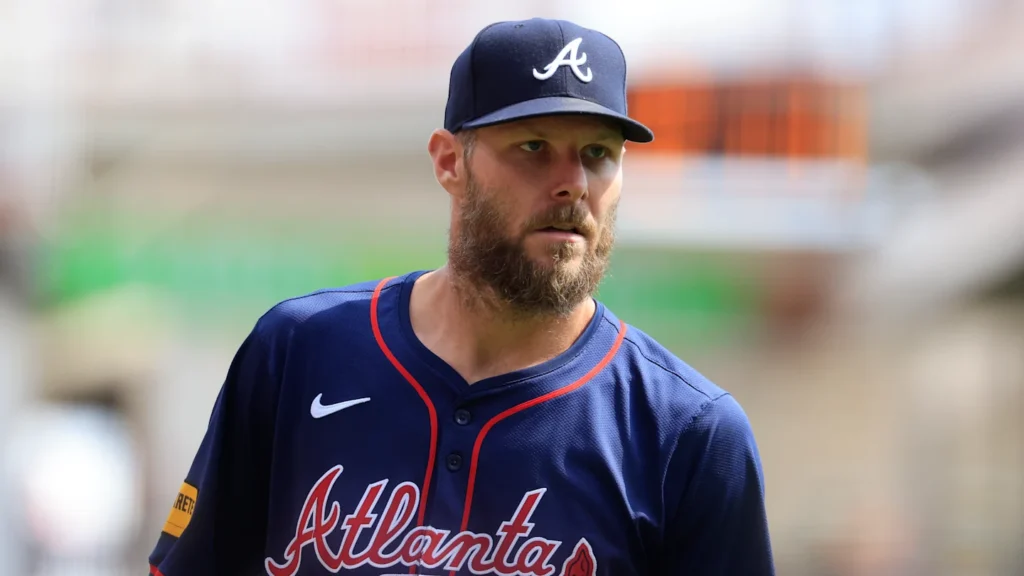
Atlanta Braves starter Chris Sale won the 2024 Cy Young Award. He had Tommy John Surgery in 2020. Sale also uses biometrics to monitor his arm. He missed the final two months of the 2024 season with elbow inflammation.
Sale chose the MotusTHROW sleeve. It’s similar to Pulse with several sensors to keep a close eye on the health and stress on his arm. The difference with this sleeve is that it’s been approved for use during games.
“One of the major goals of our single sensor system is to measure workload on the UCL, the Tommy John ligament, and that’s meant to be worn every day, the moment a player steps on the field till the moment they step off,” said Ben Hansen, Motus’s Chief Technology Officer.
Players call it the mThrow. It was introduced in 2016 and was approved by MLB the same year.
