

MLB’s new Automated Balls and Strikes (ABS) challenge system has already overturned thousands of ball and strike calls during the first half of the 2026 season. Through June 28, teams successfully reversed 53% of challenged decisions, raising a bigger question: Is the system improving baseball—or changing it in ways fans never wanted?
From the beginning of the season, old-school purists have been opining that the sanctity of America’s Pastime is now being poisoned by gimmicky computerization. They feel that baseball is losing the “human-error element” and long for the way it has been for over 150 years.
Others have welcomed the “let’s get it right” mentality that has allowed MLB to keep pace with the other major sports leagues regarding replay.
At the midway point of the season, is ABS working? If so, how has it improved the product on the field, and which team has profited most from its debut?
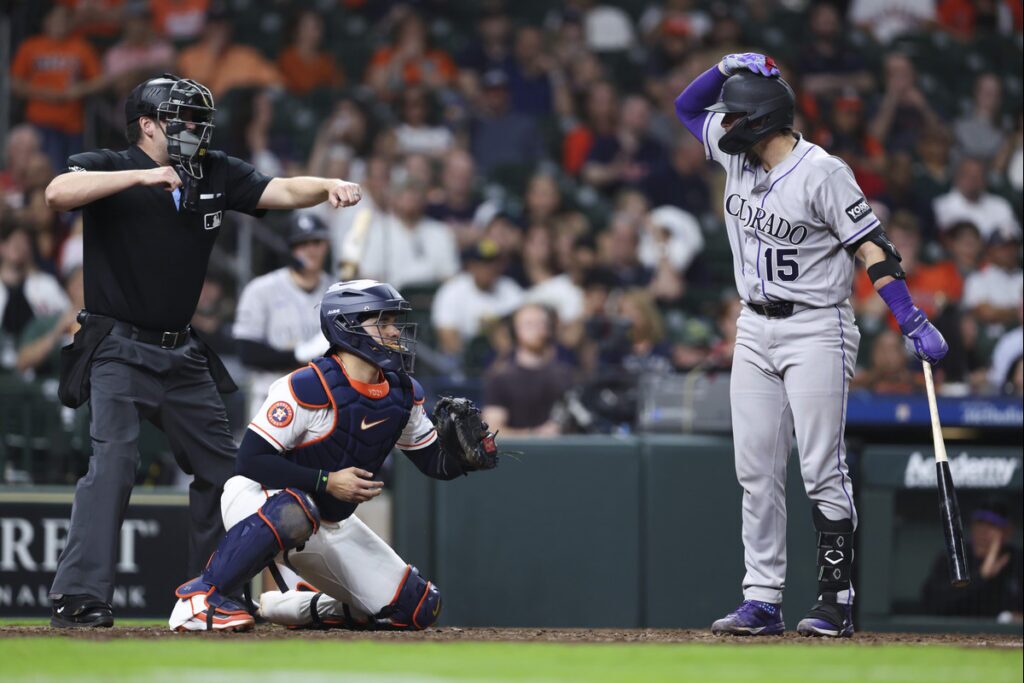
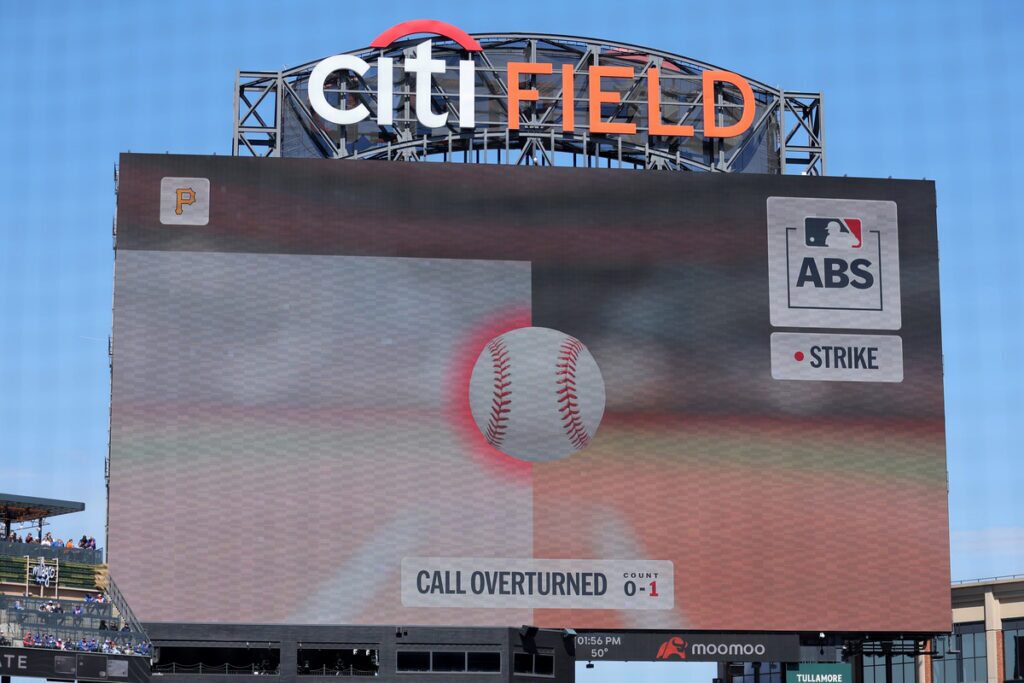
When the ABS system was put in place, the biggest fear was that it would put MLB umpires in jeopardy of constantly being ridiculed and second-guessed. Most businesses would not implement a system that subjects some of its employees to public embarrassment. With its enactment of the new challenge system, Major League Baseball did just that to its umpires.
Before the season, retired MLB umpires, who worked before the ABS technology, cited that baseball thrived when the strike zone was not perfect or precise. In other words, if it isn’t broken, why fix it?
Some fear the way those currently making the calls would change their ideas on what the definition of what a ball or strike actually is.
“The strike zone has never been an exact science,” said longtime former umpire Gary Darling. “They’re flipping pitches that are missing by a tenth of an inch, in a system that’s not exact anyway. … As much as baseball wants to define the strike zone, it’s still not defined.”
The ABS measures balls and strikes from a two-dimensional plane set in the middle of home plate. Before, it was a three-dimensional assessment made from when the ball crossed the start of home plate.
In the past, umpires measured balls and strikes from the shoulders to the knees. Now, the top of the zone is 53.5 percent of a player’s total height, and the bottom of the zone is 27 percent of the player’s total height. On top of that, humans are expected to make decisions on where an object moving at upwards of 100 mph will precisely hit.
“If you can figure out where 53.5 percent of my height is on my chest, good luck,” said ex-MLB ump Brian Gorman. “… I don’t know what your height is, and I don’t know how to do the math.”
How have the current umpires fared thus far this season? Baseball Savant writes that as of June 28, there have been 5,191 challenges made by batters, catchers, or pitchers. 2,754 calls have been overturned, which is 53% of the time. In other words, more than half of the time, incorrect decisions that could alter the outcome of games have been rectified.
As with any new advancement, unintended consequences have seeped into the nature of the game. One effect has been the elimination of arguments regarding balls and strikes. If a player does not like the call, he can challenge it instead of instigating a row with the umpire.
Some may argue that dustups and ejections are part of what made baseball unique from other major sports. Memories of Earl Weaver kicking dirt on an ump’s pants may invoke fond baseball memories for old-schoolers, but times have changed. It’s all about the pace of play now, as evidenced also by the pitch clock, and previous altercations are now seen simply as time-wasters.
Teams have been forced to field smarter players as a result of ABS. With a limit of two incorrect challenges per game, teams must carefully strategize when to challenge. Because catchers have a clear view of the plate, they frequently and successfully initiate challenges, making baseball smarts and player judgment highly valuable assets.
Arguably, the biggest benefit brought about by ABS is that baseball, in keeping up with the times, now has a system in place to prevent poor and inconsistent umpiring. There are men in blue who have been challenged more than others, causing said strategies to be carried out. At the end of the discussion, however, the correct calls were eventually authorized. The eye in the sky never lies.
What’s your take? Post it in our free sports community at stadiumrant.app, or download Stadium Rant on the App Store.
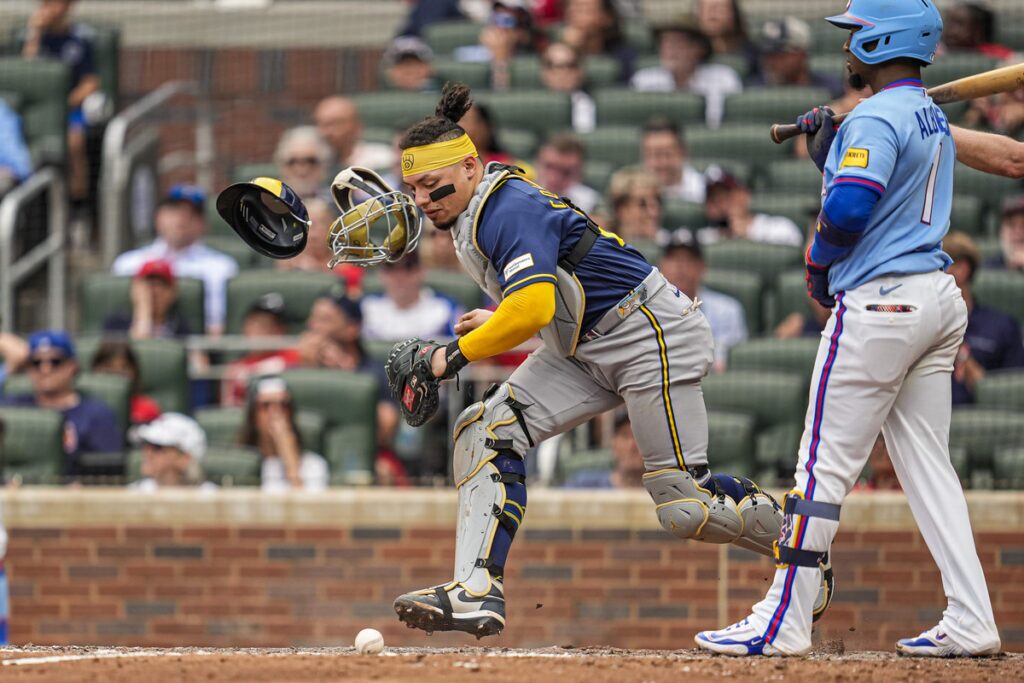
According to Baseball Savant, the Houston Astros currently boast the team with the best eyes at the plate. The Astros’ hitters have won 60% of their challenges, tops in baseball, and those 59 successful protests also set the pace. The Cincinnati Reds and the Arizona Diamondbacks are next on the list, with each team winning at a 56% rate.
Cincinnati’s Sal Stewart leads all individual hitters with 20 successful and 31 total challenges, earning 65% of his disagreements. Troy Johnston of the Colorado Rockies has the most disputes without a win, losing all six of his challenges.
The Reds have also evidenced a keen eye with balls and strikes while in the field, winning 58 of 83 challenges from their catcher or pitcher, for a whopping 70% win rate. The Chicago Cubs (69%) and the Detroit Tigers (68%) follow closely behind.
William Contreras, catcher for the Milwaukee Brewers, has won the most defensive complaints on balls and strikes with 53. Catchers Tyler Stephenson of Cincinnati (47) and Victor Caratini of the Minnesota Twins (43) trail Contreras.
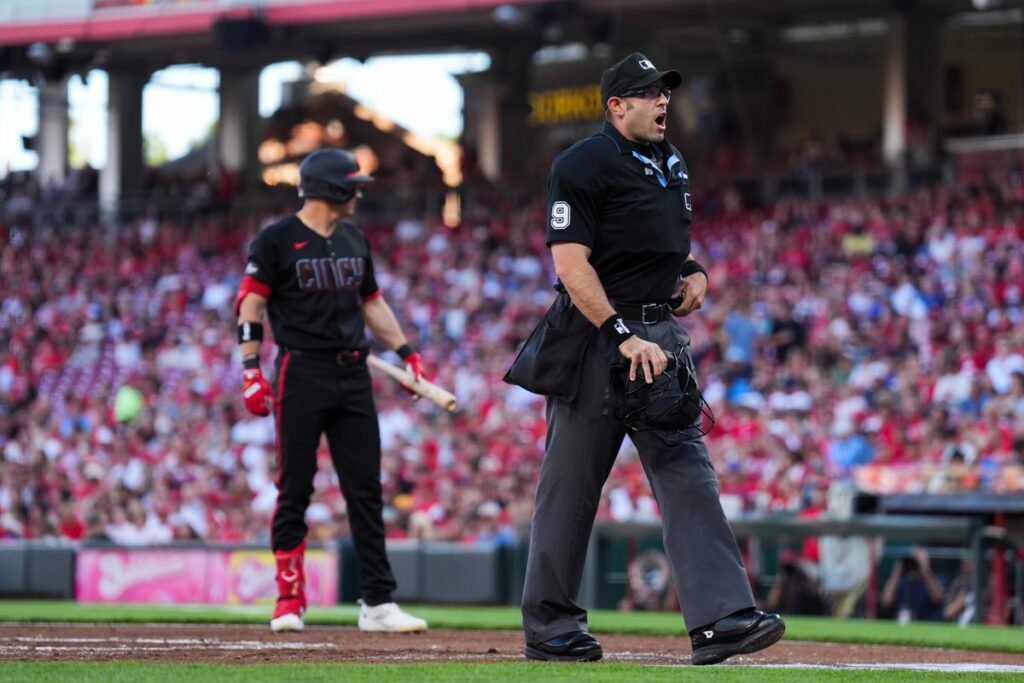
Baseball old-timers would love for things to go back to the way they were in more ways than the ABS system. Those codgers would argue that the pastoral pastime from their early days is being forced into the digital and technological age without their opinions being weighed.
Sorry to break it to you, Grandpa, but baseball has never been better than it is right now. Games that took upwards of three hours just a few years ago are being streamlined to an average of two hours and 38 minutes in length. Fans are still pouring into stadiums across the country, despite the 21st-century alterations baseball undertook recently.
Anytime you can get an umpire’s decision ultimately correct and not have it change the course of history (see Eric Gregg in 1997), the game benefits from its willingness to evolve. Pleasing everyone is not MLB commissioner Rob Manfred’s objective, but he and his staff’s innovative tweaks have made the game as strong and fan-friendly as ever.
