
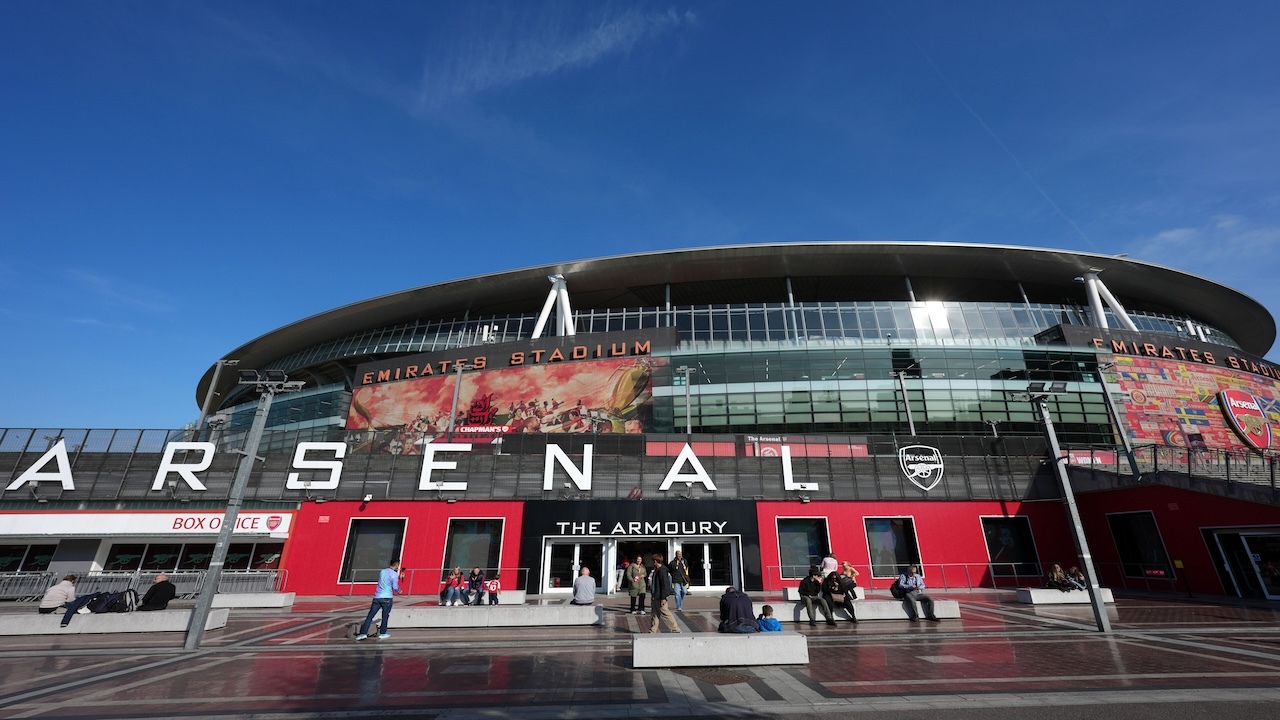
Arsenal’s 3-0 Champions League victory over Lille delivered another positive result for Mikel Arteta, but the performance exposed a concern that the final score could easily disguise.
The Gunners struggled to turn their first-half possession into clear chances at the Emirates Stadium before Jurriën Timber broke the deadlock in the 64th minute. Eberechi Eze and Bukayo Saka then scored to complete a three-goal burst that settled the contest.
Saka was particularly influential after coming off the bench, assisting Eze before scoring Arsenal’s third goal. His introduction, alongside Martin Ødegaard and Kai Havertz, transformed an attack that had struggled to produce consistent quality in the final third.
According to The Guardian’s Arsenal-Lille match report, Arsenal had to work for more than an hour before finding the breakthrough, despite controlling significant periods of the contest.
For Arteta, the result was welcome. However, the contrast between Arsenal’s first-half performance and the impact of their substitutes raises an important question: why did the team need its leading attackers to change a game that appeared within its control?
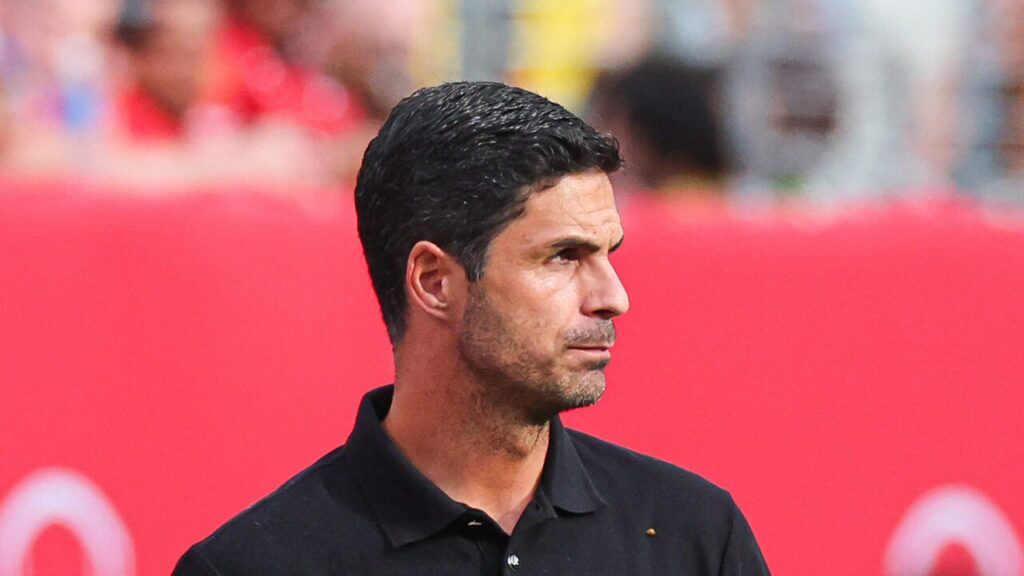
Arsenal began the game with several changes as Arteta managed his squad during a demanding run of fixtures. The rotated attack had opportunities to take control, but its execution repeatedly let the team down.
Bruno Guimarães and Eze missed promising first-half chances, while Viktor Gyökeres struggled to make a decisive impact against Lille’s organised defence.
The issue was not simply a lack of possession. Arsenal could move into dangerous areas, but the final pass, delivery and timing of their attacks were often insufficient to trouble the visitors consistently.
Arteta acknowledged the problem after the match.
Speaking to TNT Sports, the Arsenal manager said: “We had to increase the technical level, teams are really well organised at this level.”
He added that Arsenal had given the ball away through poor touches and mistimed actions, while their deliveries into the penalty area often failed to find the right targets.
The comments provide a clearer explanation of Arsenal’s frustrating opening hour. The team was reaching useful positions without consistently turning those situations into genuine scoring opportunities.
Against a disciplined opponent, that lack of precision can allow the defence to remain comfortable even when the attacking side has territorial control.
Timber’s opening goal changed the atmosphere at the Emirates and gave Arsenal the breakthrough their earlier pressure had failed to produce.
The defender finished after receiving Noni Madueke’s pass, providing a moment of individual quality that finally forced Lille to respond.
His goal also demonstrated that Arsenal did not necessarily need to overhaul their approach completely. Better execution in the final third was enough to turn promising attacking positions into a decisive advantage.
However, the real transformation followed the introductions of Saka, Ødegaard and Havertz.
Arsenal suddenly had more precision in possession, better movement between the lines and a greater ability to exploit spaces around Lille’s defensive structure.
The visitors had spent much of the match keeping the score level. Once Arsenal scored, the challenge became more difficult, and the Gunners quickly took advantage.
Saka’s contribution was the clearest evidence of the difference between Arsenal’s starting attack and the side that finished the match.
The England international made an immediate impact, setting up Eze for Arsenal’s second goal before completing the scoring himself in the 71st minute.
His assist gave Eze the opportunity to finish from close range, with the goal helping Arsenal establish control of the contest. Saka then combined with Ødegaard and Havertz before finishing the move to make it 3-0.
The speed of that turnaround was significant. Arsenal had spent more than an hour struggling to break down Lille, yet the three goals arrived within seven minutes of Timber’s opener.
Saka’s introduction provided greater attacking precision, while Ødegaard’s creativity and Havertz’s movement helped Arsenal connect their forward line more effectively.
The result was not merely a case of fresh legs overwhelming tired defenders. The substitutes offered qualities that had been missing from Arsenal’s earlier attacking play.
Saka was able to create and finish chances, Ødegaard helped connect possession to the final third, and Havertz provided another option around the penalty area.
Arteta praised the players who finished the match, telling TNT Sports that they had been “extraordinary” in increasing the team’s intensity and quality.
He also emphasised that the players who started had contributed to the victory, pointing to the competition for places within his squad.
That is an important distinction. Arsenal’s substitutes deserve credit, but their impact should not automatically be interpreted as proof that the starting players cannot perform at the required level.
Despite the emphatic scoreline, Gyökeres’ contribution is an area Arteta will want to assess.
The striker worked hard but struggled to influence the game decisively before Arsenal’s attacking changes. Arsenal’s wider problems in the first half also limited the service reaching their forwards.
It would be simplistic to blame Gyökeres alone for the lack of goals. The starting attack struggled collectively to sustain dangerous moves, and the manager himself identified technical execution as an area for improvement.
Nevertheless, the contrast with the final half-hour provides useful evidence for Arteta.
Arsenal looked more dangerous when Saka, Ødegaard and Havertz entered the game. Their movement, passing and decision-making helped the team attack with greater purpose.
That raises a selection question rather than an automatic demand for a new starting striker. Arteta must determine whether the problem came from individual performances, the balance of the starting lineup or the absence of the combinations that emerged after the substitutions.
The answer matters because Arsenal cannot rely on late changes to rescue every difficult European match.
The best use of squad depth is not simply having strong players available from the bench. It is finding the right starting combinations while ensuring substitutes can maintain or improve the team’s performance.
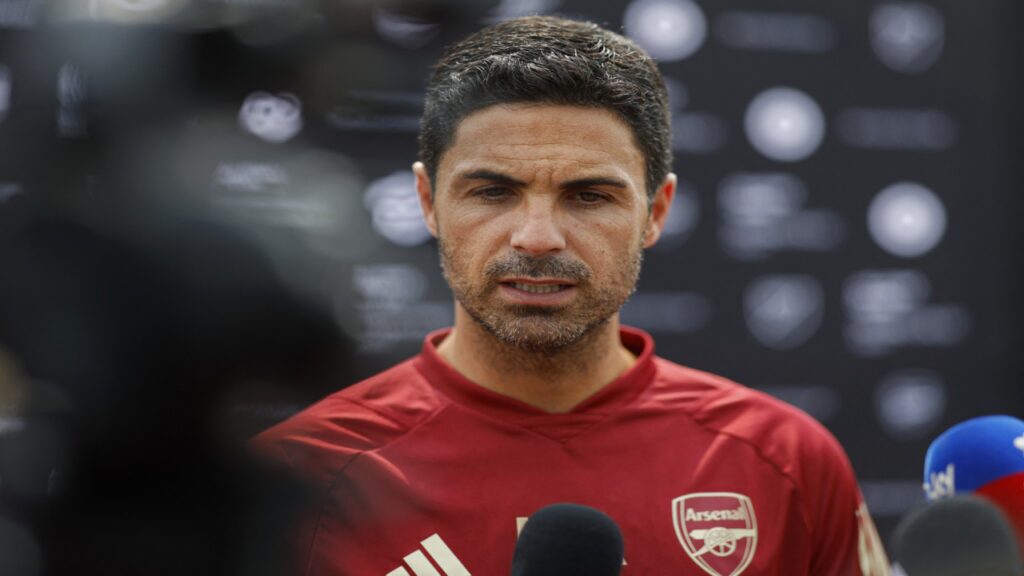
Arsenal’s attacking depth was one of the most encouraging aspects of the Lille victory.
Arteta was able to introduce Saka, Ødegaard and Havertz without sacrificing attacking quality, and the trio helped turn a difficult contest into a comfortable win.
That flexibility will be particularly important during Arsenal’s busy schedule.
However, the club also has injury concerns to manage. Piero Hincapié and Martín Zubimendi were injured during the post-match warm-down following Arsenal’s 2-1 victory over Leeds United.
As reported by The Guardian, both players were absent against Lille following those setbacks.
Their availability for upcoming matches will depend on further medical assessment. No return date should be assumed until Arsenal provides a confirmed update.
The injuries make squad management even more important, particularly with Arsenal balancing domestic and European commitments.
The Lille match showed that Arteta has attacking alternatives capable of changing a game. The challenge is ensuring that those options remain effective without placing excessive demands on the same group of players.
Arsenal’s 3-0 win was another important result in their Champions League campaign, but it offered both encouragement and a warning.
The positives are clear. Timber delivered the breakthrough, Eze continued his contribution in attack, and Saka demonstrated how quickly he can influence a match. The team’s substitutes also showed the value of having several players capable of changing the tempo and quality of an attacking performance.
The concern is that Arsenal required those changes to turn a frustrating contest into a comfortable victory.
Arteta has already acknowledged that the starting side’s technical execution was below the required standard. His next task is to establish whether the problem can be corrected through improved combinations, better decision-making or changes to the starting lineup.
The manager’s comments suggest he is satisfied with the depth available to him, but the performance against Lille shows why selection remains important.
Arsenal cannot always expect one moment of individual quality to open a game, nor can they assume their substitutes will consistently produce such a dramatic turnaround.
The victory keeps the Gunners’ Champions League campaign on track. For Arteta, the more important outcome may be the evidence it provides about the difference between Arsenal’s potential and their execution.
Saka helped turn a difficult evening into a convincing win. The next challenge is making sure Arsenal do not need another rescue act to produce the same level of performance.
