
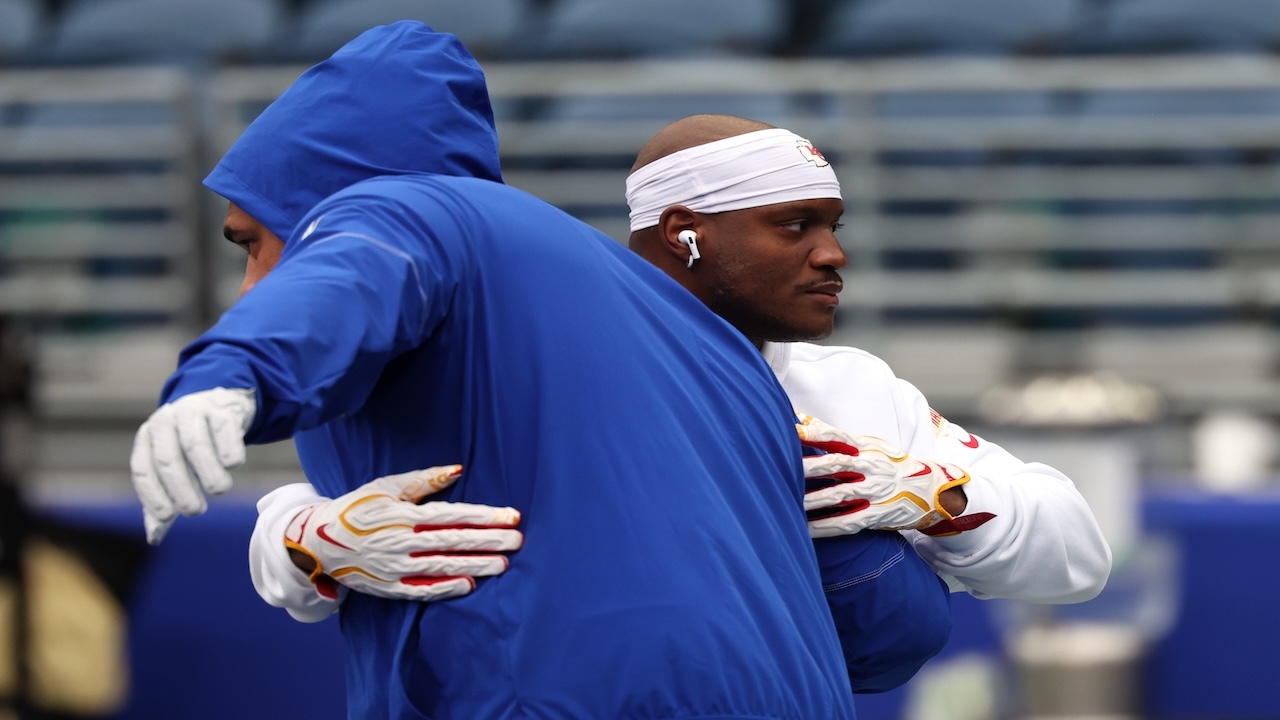
Kenneth Walker’s explosive runs produced 39.4% of his rushing yards through his first five Chiefs games in 2026. At the same time, his remaining carries averaged 4.1 yards, and his rushing success rate improved from 2025. The numbers complicate the boom-or-bust label, even after Seattle held him to 36 yards.
Kansas City needs to distinguish between big runs that build on steady production and big runs it desperately needs because nothing else is working.
A 60-yard touchdown is terrific. “Wait for Walker to do something ridiculous” still leaves a lot of holes in the playbook.
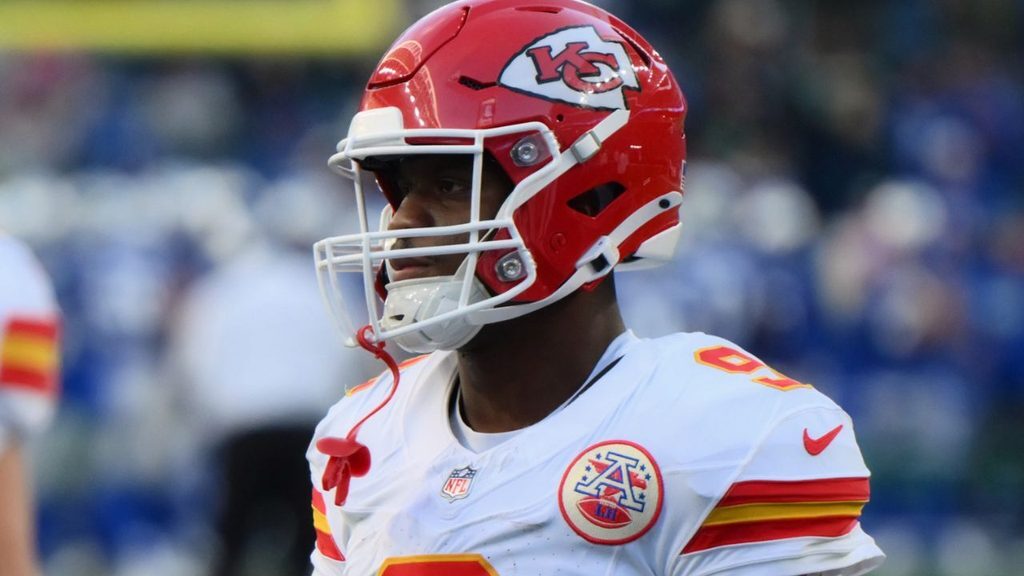
Walker’s Explosive Runs Supplied Nearly 40% Of His Yardage
Through five games, Walker had 106 carries for 665 yards. His six runs of at least 20 yards through four games totaled 229 yards. Adding the 33-yard Chargers touchdown brings that total to seven carries for 262 yards. Subtract those, and the remaining 99 carries gained 403 yards—approximately 4.1 per attempt. In other words, approximately 6.6% of his carries supplied 39.4% of his yards.
That shows how much the big runs lifted Walker’s average, not how consistently he gained yards on the other carries. Those 99 attempts could include steady gains, frequent stops, or both. The average alone doesn’t distinguish them.
It matters when we’re assessing how much the Chiefs can count on one carry to the next. A 6.3-yard average does not mean Kansas City routinely reached second-and-four. A long touchdown can improve the average without doing anything for the possessions that already ended in punts.
For reasons that I refuse to comprehend, the league won’t let us redistribute a 60-yard run into ten convenient six-yard installments.
Success Rate Pushes Back Against The Boom-Or-Bust Label
The yardage concentration alone doesn’t establish inconsistency. A two-yard touchdown and a two-yard gain on first-and-ten contribute equally to a rushing average. They don’t contribute equally to my anxiety levels.
Sumer defines a successful play as one that improves the offense’s expected points, given the game situation. Walker’s rushing success rate sat at 47.17% prior to the matchup with Seattle, compared with 35.75% over the full 2025 season.
That is an improvement of approximately 11.4 percentage points.
Different teams, opponents, and sample lengths prevent us from assigning that improvement entirely to Walker. Nevertheless, it challenges the suggestion that his early Chiefs production consisted of spectacular runs covering for an otherwise ineffective workload.
His yardage was concentrated in a few big gains, but successful carries were also more frequent than in his previous season. Both can be true.
I would prefer we acknowledge that before filing every unsuccessful handoff under “Walker is the problem.”
The Chargers Game Survives Losing Its Biggest Run
The Chargers game shows why Walker’s explosive runs shouldn’t overshadow the rest of his production.
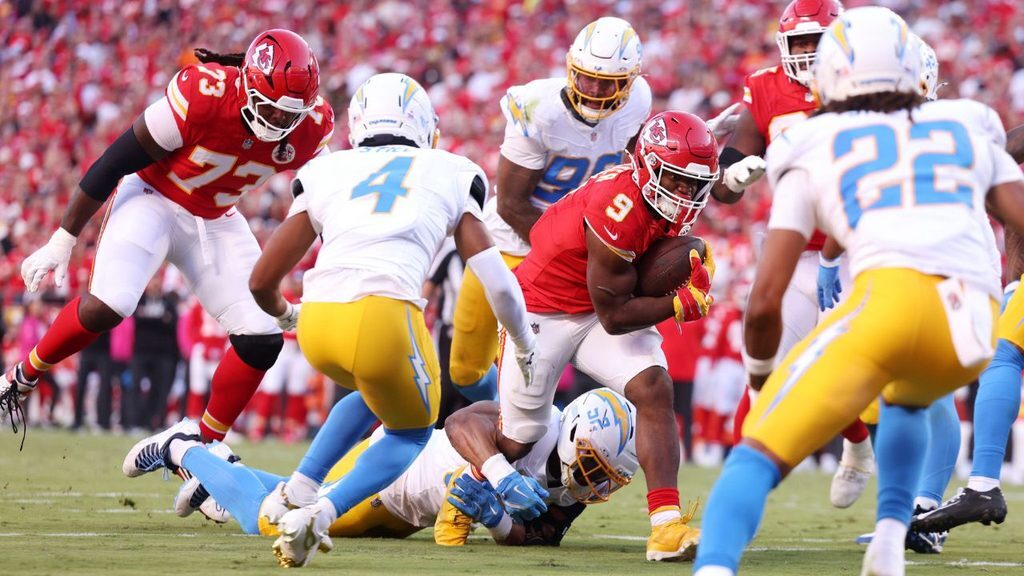
Walker finished with 128 yards on 19 carries. Subtract the 33-yard touchdown, and he still had 95 yards on 18 attempts, approximately 5.3 yards per carry.
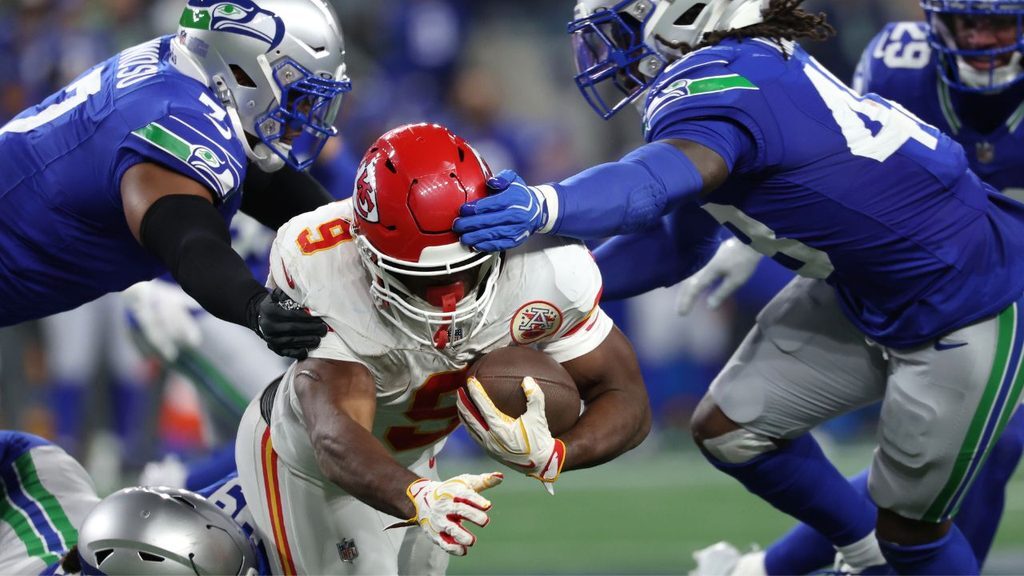
That’s substantial production. The touchdown enhanced a productive rushing afternoon rather than rescuing a collection of negligible gains. Seattle, however, yielded a different result: 36 yards on 14 carries. Seattle held Walker to 2.6 yards per carry, well below even his earlier average with explosive runs removed.
That establishes a sharp drop in production. It does not show how the gains were distributed or whether blocking, defensive execution, or Walker’s decisions caused the decline.
Kansas City therefore lost more than a bonus highlight. The ordinary rushing output deteriorated, too.
“He’ll break one eventually” is a less satisfying response under those circumstances. Eventually is a lovely concept until the punter has already reported for work.
Judge The Carries, Not Just The Average
Kansas City should evaluate Walker’s explosive runs alongside his rushing success rate. The big gains show his ability to change a game quickly. The success rate shows how often his carries improve the offense’s situation.
Neither replaces the need to examine down and distance. A short conversion can accomplish everything the offense needed. A longer gain that leaves fourth down can still end the possession.
The headline average should not become the entire case for another handoff. His improved success rate and Chargers performance support trusting him beyond the highlights. Seattle shows why that trust isn’t a substitute for evaluating the game in front of Kansas City.
Give Walker another carry, sure. If that’s the whole argument, though, a three-week-old highlight is doing an awful lot of work.
End Of My Walker’s Explosive Runs Rant
Walker’s explosive runs supplied a large share of his early yardage, but the success-rate evidence gives Kansas City reason to value more than his highlights.
The Chiefs need to preserve that explosiveness while judging the ordinary carries honestly. Seattle exposed a decline in both, rather than proving the previous production was an illusion.
We want the long touchdowns, obviously, but we need the offense to stay locked in while we wait for one.
