
Updated Aug. 15, 2026
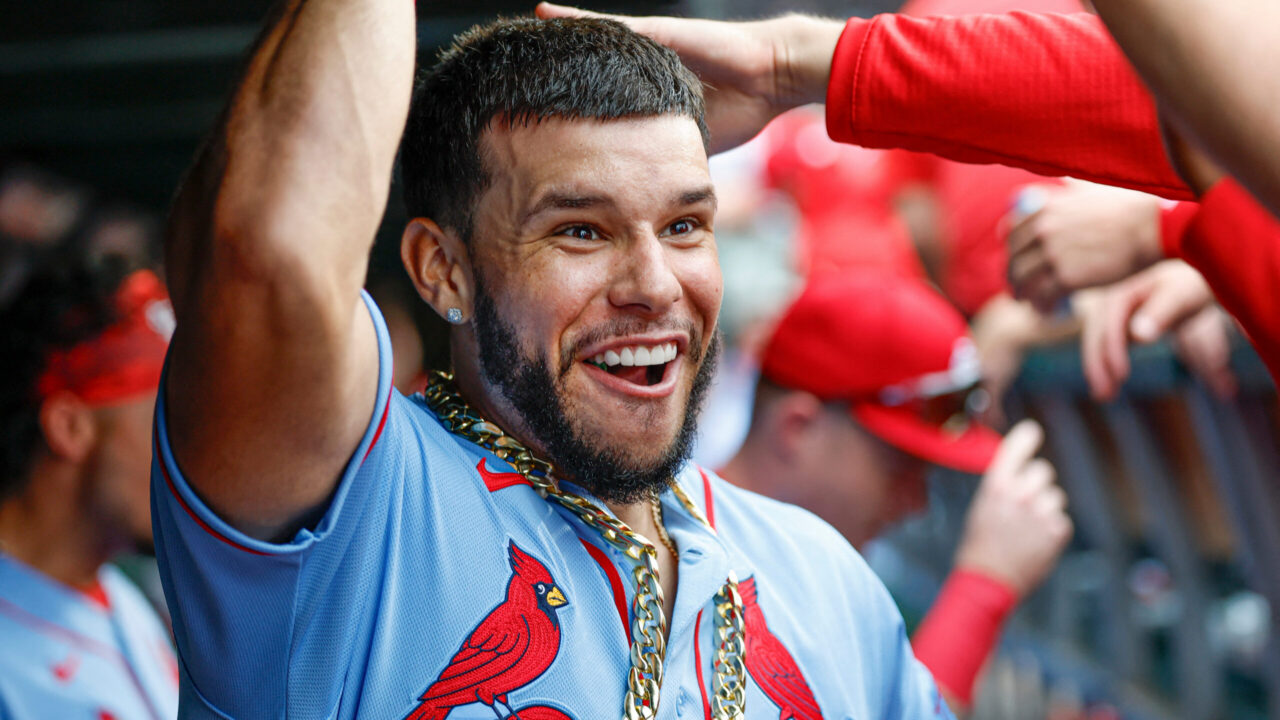
Joshua Báez needed exactly one pitch in his MLB debut to give the Cardinals something serious to think about.
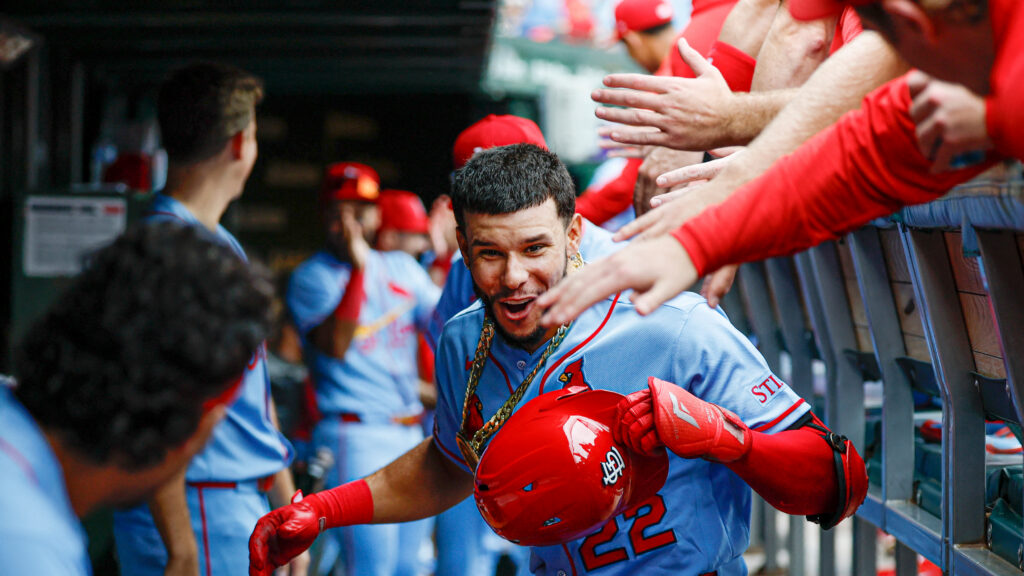
By the end of Saturday afternoon at Wrigley Field, one home run had turned into three home runs, five RBIs and MLB history. The 23-year-old homered in each of his first three career at-bats as St. Louis beat the Chicago Cubs 8-4. Check out the Reuters game report.
It shouldn’t be the entire story.
Because once the insanity of Saturday wears off and the storm calms, St. Louis has a much more interesting question sitting in its clubhouse and front office.
How do you possibly take Báez out of the lineup now?
First major-league plate appearance. First pitch. Home run.
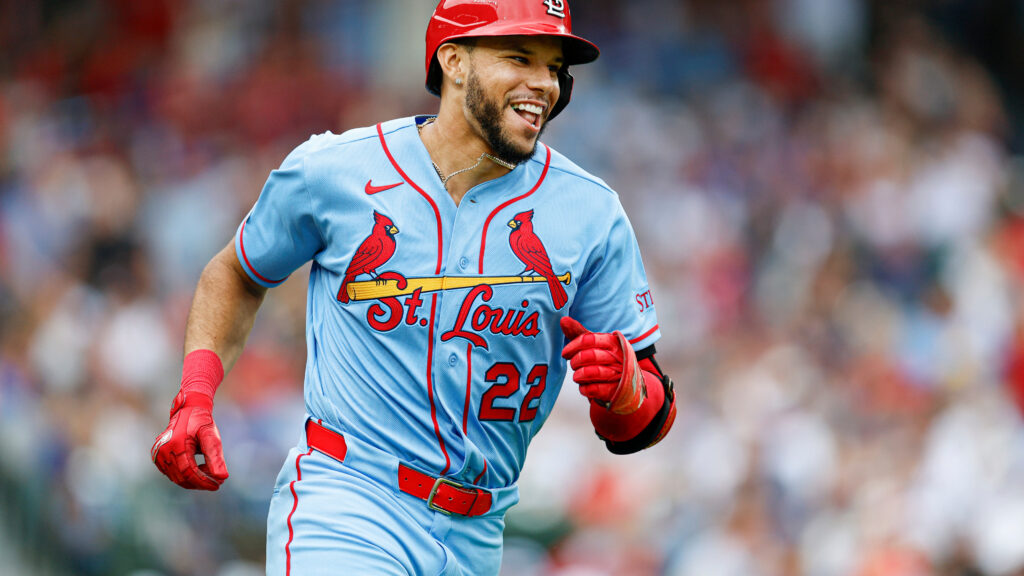
Báez absolutely crushed Matthew Boyd’s opening pitch, an estimated 449 feet. He returned in the fourth and sent another rocket before completing the hat trick with an opposite-field homer in the sixth.
Three career at-bats. Three home runs. History made.
Even the distribution was ridiculous. Báez went deep to right, center and left field while becoming the first player in MLB history to hit three homers in his debut. Reuters’ full account of Báez’s historic debut.
This is where it gets interesting.
Báez didn’t arrive from Triple-A Memphis as some “lottery ticket” the Cardinals decided to scratch.
The power has been screaming for attention.
The The Power Didn’t Suddenly Appear At Wrigley Field.
Three home runs can make everyone lose their minds and give baseball fans some wild expectations for a rookie.
I advise that you don’t get ahead of yourself just yet.
One historic afternoon doesn’t prove Báez is ready to terrorize National League pitching for the next decade. What makes Saturday significant is that it landed on top of a legitimate minor-league breakout.
Before being promoted, Báez had crushed 34 home runs with 90 RBIs and 21 stolen bases in 103 games for Triple-A Memphis, producing a .256/.328/.573 slash line. He entered the majors ranked as the Cardinals’ No. 3 prospect and No. 59 overall by MLB Pipeline. Báez’s Triple-A numbers before his promotion.
But the 2026 power surge makes more sense when you look at how Báez got here.
St. Louis selected Báez in the second round of the 2021 MLB Draft and signed him for a $2.25 million bonus. The bet was always on the enormous raw power in his right-handed bat.
By 2024, though, there was still one major problem keeping that power from playing consistently.
Strikeouts.
Then came 2025.
Báez cut his strikeout rate from 35.5% in 2024 to 20.6% in 2025.
That’s the development worth paying attention to.
Now, in 2026, the improved contact has been followed by 34 Triple-A home runs and the loudest MLB debut imaginable.
| Season | Development |
| 2024 | 35.5% strikeout rate remained the major concern |
| 2025 | Strikeout rate dropped dramatically to 20.6% |
| 2026 Triple-A | 34 HR, 21 SB, 90 RBI, .256/.328/.573 |
| 2026 MLB Debut | 3 HR, 5 RBI in first three career at-bats |
That 35.5% to 20.6% drop might be the most important number in this entire story.
Power has never really been the mystery.
Contact has.
A hitter can possess enough juice to put baseballs into parking lots. It doesn’t matter much if major-league pitchers can consistently exploit holes in his swing.
That’s why Saturday shouldn’t convince St. Louis that Báez is already a star.
It should convince them to find out whether he can become one.
This is where my opinion is pretty simple.
Just play him.
Not because he hit three home runs Saturday. Play him because regular major-league at-bats can now answer far more important questions than any Triple-A at-bats can.
Can he recognize major-league spin?
Will pitchers expand the zone against him and resurrect some of the swing-and-miss problems that followed him earlier in his career?
Can he adjust after opponents build an MLB scouting report around attacking him?
Those answers are definitely not coming from Memphis.
They aren’t coming from one afternoon at Wrigley, either.
Give him the runway and let this rookie unfold his future and true potential in the majors.
Báez isn’t entering a vacuum.
St. Louis has already spent much of 2026 evaluating what its future outfield should look like.
Earlier this season, MLB.com identified Báez as a potential challenger for playing time involving Lars Nootbaar and Jordan Walker, depending on their health and performance. MLB.com’s Cardinals roster analysis.
Walker complicates this in a big way, because he’s having the kind of season St. Louis has waited years to see. His 2026 turnaround has already been one of the more impressive shows in the organization, with Stadium Rant previously breaking down how Jordan Walker reestablished himself as a cornerstone of the Cardinals lineup.
I’m not saying that this is now a battle of “Báez versus Walker.”
I’m saying it’s much bigger.
Báez has experience across the outfield, giving St. Louis some flexibility. But fitting another young bat into the lineup means balancing his development against at-bats for players the organization is already evaluating.
Then there’s another complication.
The Cardinals are still playing meaningful baseball in the National League Wild Card race.
That means Oli Marmol can’t simply treat the final stretch like extended spring training. St. Louis has two incentives pulling at the same time: win games now and figure out which young players should be part of the 2027 roster.
That makes Báez more than a fun late-season call-up.
Marmol and the Cardinals baseball operations staff have to determine how his development fits alongside the rest of the young core while still fielding the lineup that gives St. Louis its best chance to win.
If Báez proves his bat belongs in the majors, St. Louis will have another young outfielder capable of becoming part of its next core.
That changes offseason conversations about playing time, roster construction and where the organization actually needs outside help.
One prospect forcing his way into the lineup can rearrange more of a roster than people realize.
What needs to be monitored is his strikeouts.
That’s the warning label.
Báez’s contact improvement was one of the most encouraging parts of his development, but major-league pitchers are going to test it immediately.
Saturday was essentially the dream scenario for a hitter possessing Báez’s raw power. He got pitches he could drive and absolutely punished them.
Now comes the fascinating part.
What happens when pitchers stop giving him those pitches?
Expect breaking balls outside the zone. Elevated fastballs. Pitchers trying to get him chasing rather than challenging him over the plate.
There will probably be ugly stretches.
Let them happen.
If the Cardinals actually want to learn what Báez can become, they can’t bench him the first time he goes 1-for-15.
This is absolutely crucial for his development.
That’s what makes this different from a normal August call-up.
St. Louis isn’t simply trying to squeeze a few home runs out of Báez.
The organization needs information and it needs time to get it.
Can he be an everyday major-league outfielder?
Can his improved contact survive MLB pitching?
Does his power translate when opponents adjust?
And, ultimately, does St. Louis enter the offseason believing it already has another piece of its future lineup?
Those are enormously valuable answers.
Báez now has the perfect opportunity to provide them.
Baseball has a funny way of humiliating anyone who thinks they’ve figured it out.
Báez could go hitless for the next week.
He could also spend the next six weeks making it impossible for St. Louis to imagine its future lineup without him.
That’s why Saturday mattered beyond the record book.
The three-homer debut wasn’t an isolated explosion.
The contact breakthrough came in 2025. Then came 34 Triple-A home runs in 2026. Now St. Louis gets to find out whether those developments can survive against major-league pitching.
The Cardinals promoted Báez hoping to learn something about one of their best prospects.
Instead, he walked into one of baseball’s most famous ballparks, launched the first major-league pitch he ever saw 449 feet and spent the rest of the afternoon turning an opportunity into a legitimate 2027 roster question.
Three at-bats can’t answer that question.
But they sure as hell earned him the chance to answer it.
End of My Joshua Báez Cardinals Rant
