

Josh Allen scored five touchdowns as the Buffalo Bills defeated the Detroit Lions 41-31 in the first regular-season game at the new Highmark Stadium. Allen threw three touchdown passes and ran for two more, while Buffalo built a 27-10 halftime lead and scored touchdowns on five of its first six possessions.
The victory moved the Bills to 2-0, while Detroit fell to 1-1 despite Jared Goff throwing for 327 yards and four touchdowns. Buffalo’s ability to control the game early, dominate on third down and consistently finish drives in the red zone ultimately proved too much for the Lions to overcome.
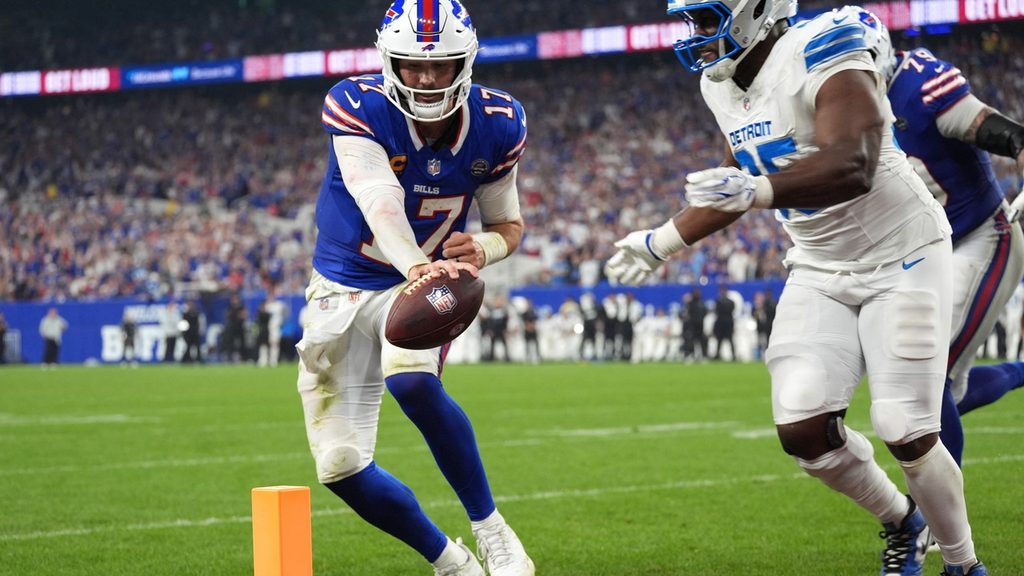
Allen immediately became part of Highmark Stadium history by scoring the venue’s first touchdown on a one-yard quarterback sneak. The Bills quarterback finished 20-of-31 for 248 yards and three passing touchdowns while adding 69 rushing yards and two touchdowns on 14 carries. He did not throw an interception and finished with five total scores.
The performance became even more impressive because Detroit repeatedly sent pressure. According to Next Gen Stats via NFL.com, the Lions blitzed Allen on 55.3% of his dropbacks, yet he completed 12 of 17 passes for 137 yards and two touchdowns against those blitzes. Allen also used his legs to punish Detroit when defenders left running lanes open.
That combination made Buffalo extremely difficult to defend. Detroit could not simply sit back and force Allen to win from the pocket, but aggressive pressure created opportunities for him to escape and attack downfield. Buffalo’s quarterback repeatedly turned those situations into positive plays.
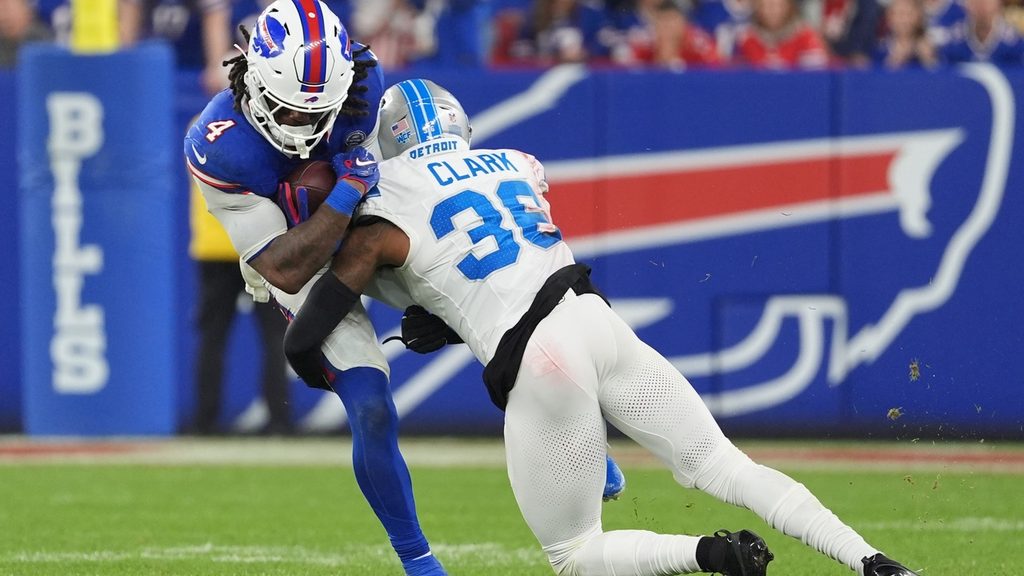
James Cook played a major role in creating the conditions for Allen’s five-touchdown performance. Cook rushed for 135 yards and a touchdown, averaging more than six yards per carry while crossing the 100-yard mark before halftime.
Cook’s success forced Detroit to respect the running game while Allen continued attacking through the air. The Bills finished with 203 rushing yards and 446 total yards, creating a balanced offense that did not depend entirely on Allen improvising.
Buffalo also converted nine of 12 third-down opportunities and produced 34 first downs. Those numbers show how consistently the Bills stayed on schedule and extended drives, which eventually wore down Detroit’s defense.
The biggest difference was not simply the number of yards Buffalo gained. It was what the Bills did with those yards. They repeatedly turned productive drives into touchdowns and prevented Detroit from getting enough opportunities to build momentum early.
The Bills also dominated one of the most important areas of the game, converting all five of their red-zone possessions into touchdowns. That efficiency helped Buffalo turn long drives into maximum points instead of settling for field goals.
Allen’s versatility made those situations particularly difficult for Detroit. Buffalo could threaten the defense with Cook inside, attack the secondary with its tight ends and receivers, or allow Allen to create with his legs.
The opening half demonstrated the difference. Buffalo produced 299 total yards and entered halftime with a 27-10 advantage after scoring touchdowns on its first four possessions. Detroit did not record its first points until the first half was nearly over.
Dalton Kincaid continued his strong start to the season with seven catches for 95 yards and a touchdown. The tight end gave Allen another reliable target and helped Buffalo create mismatches against a Detroit defense that was already struggling to contain the Bills’ running game.
Kincaid’s production matters because Buffalo does not need to rely on one receiver to carry the passing attack. The Bills can create opportunities through their tight ends, running backs and wide receivers while Allen controls the offense.
That variety was visible throughout Thursday night’s game. When Detroit committed extra defenders to the run, Buffalo found passing opportunities. When the Lions increased pressure, Allen used his legs and quick decisions to keep the offense moving.
Detroit eventually found its rhythm, but the comeback started from too large a hole. Jared Goff completed 26 of 38 passes for 327 yards and four touchdowns without an interception, while Amon-Ra St. Brown caught nine passes for 142 yards and two touchdowns.
Those numbers show that Detroit’s offense was capable of attacking Buffalo’s defense. The problem was the first half. The Lions struggled to sustain drives while Buffalo built a three-score advantage, forcing Goff and the offense to chase points for most of the second half.
Buffalo also recorded four sacks, adding pressure to a Detroit offense that was playing from behind. Goff eventually found St. Brown and other receivers for explosive plays, but the Lions could not completely erase the damage from Buffalo’s opening burst.
Jahmyr Gibbs also faced a much tougher test than he did in Week 1. After rushing for 156 yards and two touchdowns against New Orleans, Gibbs managed only 52 rushing yards on 16 carries against Buffalo. He still contributed 113 total yards, but the Bills prevented him from controlling the game on the ground.
Allen now has nine total touchdowns through Buffalo’s first two games: five passing touchdowns and four rushing touchdowns. He opened the season with four total touchdowns in the Bills’ 36-31 victory over Houston before adding five more against Detroit. Buffalo entered Week 2 at No. 3 in Stadium Rant’s NFL Week 2 power rankings.
The important part is that Buffalo has already shown it can win in different ways. Allen threw for 334 yards against Houston in Week 1, then relied more heavily on his rushing ability and the Bills’ ground game against Detroit.
It is too early to draw conclusions about the entire season from two games, but Allen’s opening stretch has demonstrated why Buffalo can create problems for defenses that choose either to pressure him or sit back in coverage.
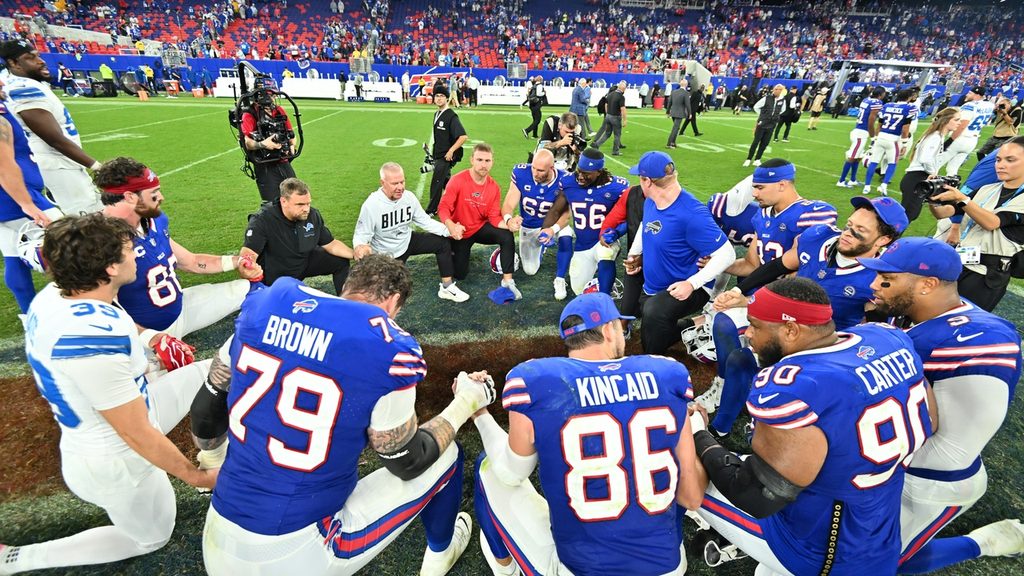
The victory gave Buffalo the perfect beginning to the regular-season era of its new home. Allen scored the first touchdown at Highmark Stadium and finished the night with five total scores as the Bills defeated Detroit 41-31.
The Bills did not simply win the stadium opener. They established control almost immediately, scoring touchdowns on their first four possessions and taking a 27-10 lead into halftime. Buffalo’s offense finished with 446 yards, 34 first downs and only two punts.
Buffalo now sits at 2-0 after victories over Houston and Detroit. The Bills will next face the Los Angeles Chargers on September 27, while Detroit returns home to face the New York Jets on September 27.
Josh Allen did more than put five touchdowns on the scoreboard. He controlled the opening game at Buffalo’s new stadium while the Bills’ rushing attack, third-down efficiency and red-zone execution gave him the structure to attack Detroit from multiple angles.
James Cook’s 135 rushing yards kept the Lions from focusing entirely on Allen, while Kincaid added another reliable target with 95 receiving yards and a touchdown. Buffalo finished with 446 total yards, converted nine of 12 third downs and scored touchdowns on all five red-zone trips.
Detroit’s offense eventually produced 31 points, but the early deficit proved decisive. Buffalo’s 41-31 victory gave Highmark Stadium a memorable debut and provided Allen with another five-touchdown performance to begin the 2026 season.
