
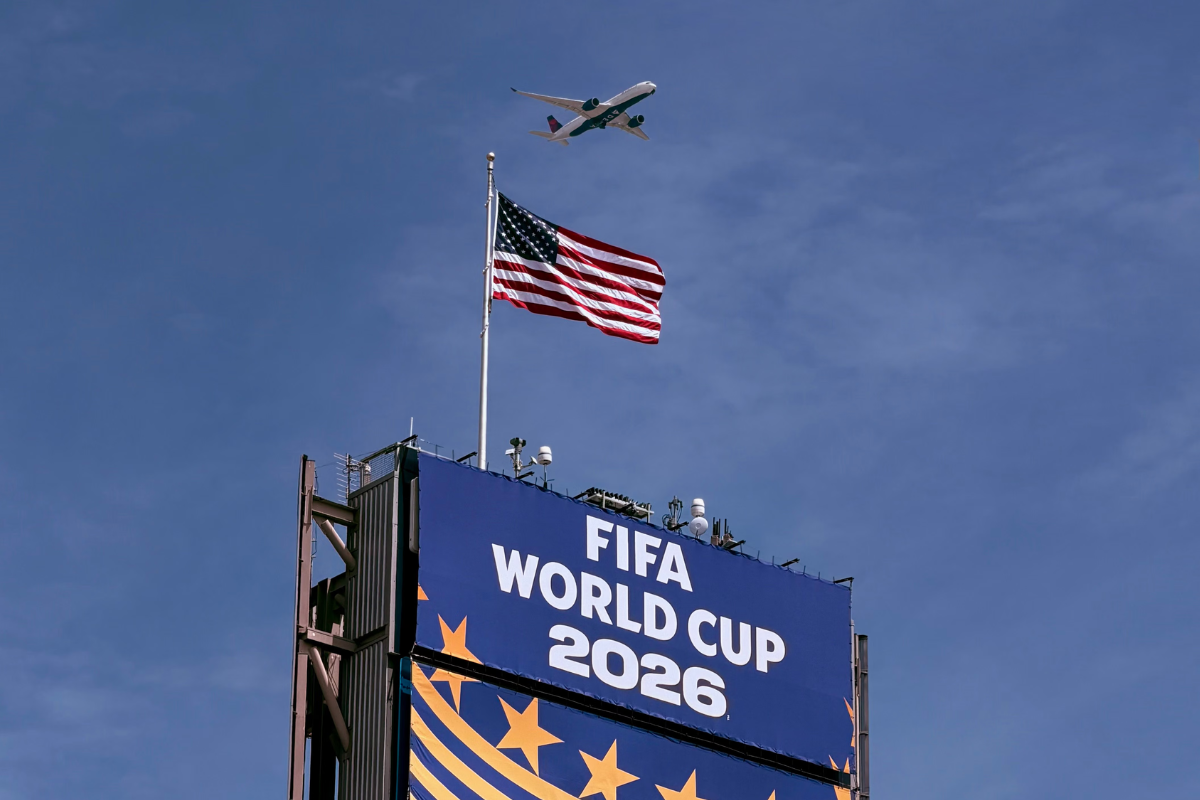
The second round of group matches has highlighted another storyline at the 2026 FIFA World Cup. Beyond tactics and team selection, the tournament’s vast geography is asking players to overcome long flights, changing climates and disrupted routines, giving bettors another layer to consider when assessing the world’s biggest football competition.
As the group stage gathers pace across the United States, Canada and Mexico, familiar conversations about favorites, injuries and form continue to dominate headlines. Yet there is another factor quietly becoming part of the tournament.
This is the first World Cup to stretch across an entire continent. From Vancouver to Miami and Los Angeles to Boston, some nations are spending almost as much time in the air as they are on the training ground.
That does not mean travel suddenly outweighs talent. France will not become a weaker side simply because they board a plane, nor will England stop being contenders because Thomas Tuchel’s squad faces a demanding itinerary. Even so, the logistical challenge facing every nation is unlike anything seen at Qatar 2022, where every stadium sat within driving distance.
FIFA deliberately grouped fixtures into regional clusters to reduce unnecessary travel. Even so, the distances remain substantial.
Bosnia and Herzegovina face one of the toughest group-stage schedules, covering more than 3,100 miles, while South Africa travel roughly 2,400 miles between fixtures. England will cover around 1,700 miles as they move between the Dallas area, Boston and the New York metropolitan region, whereas France stay largely on the East Coast with only around 330 miles to negotiate. Argentina’s route is similarly favorable, keeping Lionel Scaloni’s squad close to Dallas and Kansas City.
Those contrasting schedules are already giving supporters another angle to consider as the tournament unfolds.
If you browse the most recent World Cup 2026 Betting & Odds markets at TonyBet, England remain among the leading contenders at around +550 to lift the trophy at MetLife Stadium on July 19, with only Spain and France priced shorter in many outright markets. Those prices suggest squad quality still carries more weight than air miles, although the unique demands of this tournament could become another variable as the knockout rounds gather pace.
That balance feels about right. Elite teams are expected to adapt, but adapting has become part of tournament football.
Long flights are only part of the challenge.
What happens after players land may prove just as important.
Dr. Daniel Danish-Var of Mass General Brigham believes the issue extends well beyond the number of miles covered. Sleep disruption, hydration, changing time zones and the physical effects of sitting for hours can all influence how quickly players recover between matches.
“In a tournament like this, travel becomes part of the competitive environment,” he said. “It’s not the deciding factor, but it’s certainly going to play a role.”
That view is shared by Luke Jenkinson, head of human performance at San Diego FC, whose research explores how travel affects professional soccer players. He has pointed to disrupted circadian rhythms, poorer sleep quality and nutritional challenges as factors teams must manage while moving between host cities.
None of those issues guarantee a result. A talented squad can still overcome them. Yet World Cups are often decided by the finest margins. One extra sprint, one lapse in concentration or one slower recovery session can become significant once the knockout rounds arrive.
Recovery has always been central to tournament football. In North America, the journey between matches has become another part of that recovery process.
Travel is only one part of the equation.
Teams could move from cooler conditions in Seattle or Vancouver to humid afternoons in Miami or Houston, while others may encounter the altitude of Mexico City later in the competition.
Previous World Cups have presented individual challenges. Russia demanded long journeys. Qatar minimized travel almost entirely. Earlier tournaments in Mexico tested players at altitude, while others have been remembered for oppressive summer heat.
The difference in 2026 is that those demands can arrive together. A team might complete a lengthy flight, adjust to a new time zone, prepare for different weather and recover for another high-intensity match within the space of a few days.
That creates a very different workload for coaches, medical staff and performance teams, who must balance recovery with preparation as the tournament progresses.
Didier Deschamps highlighted some of those practical challenges before the competition had even begun, describing lengthy airport security procedures during France’s spring visit to the United States. Individually, they seem minor. Together, they illustrate how this World Cup asks teams to manage far more than ninety minutes on the field.
Most bettors will still begin with the obvious questions.
Who has the stronger squad? Who is carrying momentum? Which players are injured?
Those remain the foundations of any match assessment.
The 2026 World Cup simply adds another consideration. If two evenly matched nations are separated by a long flight, a change in climate and only three days to recover, that context becomes worth acknowledging rather than ignoring.
It may never be the deciding factor. England could comfortably progress despite one of the tougher travel schedules among the favorites, while France and Argentina will still need to justify their status regardless of lighter itineraries.
That is what makes this tournament so fascinating.
The football will always decide who lifts the trophy at MetLife Stadium. Before the final whistle arrives, though, thousands of miles in the air may quietly influence the journey.
If you love sports, download Stadium Rant from the Apple App Store and join one of the fastest-growing social sports communities. Be sure to follow us on socials too — you can find all our profiles on our Linktree.
