
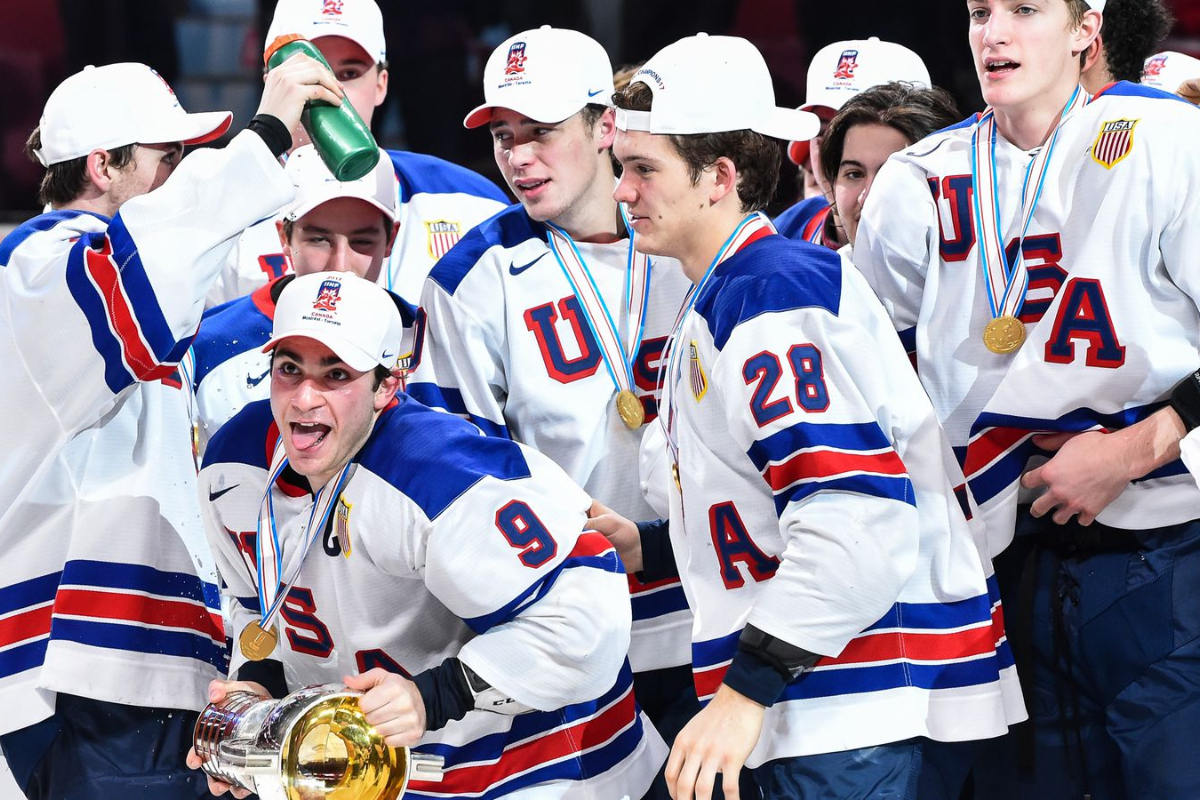
In recent times, men’s hockey has become America’s game. Some significant factors and events have helped solidify this claim. Most recently, these include the United States Junior Hockey Team’s dominant performance in capturing the gold medal at the World Junior Championships. They may have been challenged at times, but the American squad was clearly the most highly skilled and talented at the tournament, which concluded earlier this month in Ottawa, Canada.
The changing of the guard in terms of who can claim to be the greatest hockey nation in the world has been taking shape steadily. Hockey participation and enrolment in Canada continue to decline, while in the US, particularly the Southwest, right into Mexico, and beyond, the game is growing exponentially. The story of how the game got to be in this place is complex, but not without its key historical indicators. Hockey is alive and well in the United States and is not slowing down.
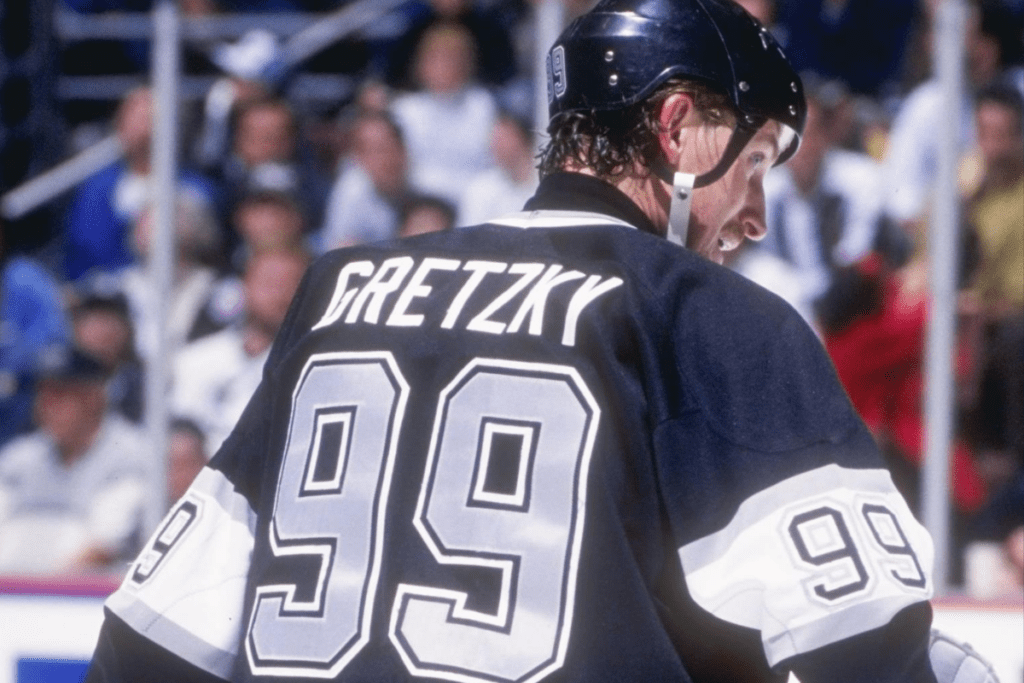
Hockey insiders and sports historians will likely point to Wayne Gretzky’s trade as the catalyst for the sport’s boom in popularity in 1988. Professional hockey had long existed in California before this blockbuster trade, which spelled the beginning of the end of the Edmonton Oilers dynasty in 1980. The Los Angeles Kings were there and survived mainly with a small but committed fanbase. Before the trade, the Kings seemed unable to escape rumors of being moved to a more suitable hockey location in a cooler climate each and every season.
LA sports fans were much more enthralled by the “Showtime” Lakers, “Fernando Mania,” and the LA Dodgers, or the 2 solid NFL franchises that called LA home at the time: the Rams and Raiders. The Kings, despite boasting some highly skilled players like Marcel Dionne, Bernie Nichols, and Luc Robitaille, could never seem to come close to the level of attention and revenue that was generated through the other major sports.
That all changed when The Great One came to LA. Beginning with an immediate branding change, the Kings reinvented their image and logo. They aligned with the Raiders’ look, which was linked everywhere with the gangsta rap craze of the late 1980s and early 1990s. Gretzky and the Kings were the new silver and black beasts of the NHL.
The seed was planted, and with Ice Cube and MC Ren donning Kings hats and jerseys in rap videos, hockey, as an institution and brand was becoming cool in California. From that point on, hockey would steadily take off in the American Southwest over the next 30 years and beyond.
NHL Expansion came to cities like Denver (Rockies), San Jose (Sharks), Anaheim (Ducks), and Phoenix (Coyotes). This led to the increased popularity of the game in areas where (except for Denver), it hadn’t existed on any level previously.
At the same time, the East Coast Hockey League (ECHL) and the American Hockey League (AHL) expanded the minor league hockey system that groomed players for the NHL. Cities like Bakersfield and San Diego, California, began to house teams and build arenas. So did remote, dry-climate areas and cities like Coachella Valley and Tulsa, Oklahoma.
The players helped the game evolve in these communities. They gave back, first through community outreach programs, introducing the game to youth and children of all ages and socioeconomic backgrounds. Then, the players decided to settle in these southwest regions.
They married, had their own children, later retired as players, and began setting up clinics. Not just run-of-the-mill intramural leagues but elite, high-performance coaching centers owned and fully programmed by ex-players with top professional and international experience.
One such influence is Ron Filion. Coach Filion is a Canadian expat who played in the Quebec Major Junior Hockey League (QMJHL) and later coached in the ECHL before finally settling in Scottsdale, Arizona.

It was in Scottsdale where Coach Filion first set up a system of youth hockey that later grew to become the Phoenix Firebirds AAA youth hockey team. Scottsdale is where Filion first spotted and groomed young Maple Leafs superstar sniper Auston Matthews, and St. Louis Blues 2016 first-round pick Tage Thompson.
Both Matthews and Thompson (now a Buffalo Sabre) are in the conversation as being among the very best in the NHL over the past 8 years, and they are just entering the prime of their careers. According to the database Quant Hockey, all tolled, 7 Arizona-born players are currently on NHL rosters
The system set forth by coach Filion has been copied and applied in California, Colorado, and Florida, with Colorado having more of an extensive, longer history in its general area. As it stands, there are 24, 20, and 4 current NHL players who came from those states, respectively.
Most, if not all, of these players are not journeymen; rather, they are impact players who are quickly becoming the face of the NHL. Players like Matthews, originally from San Ramon, California, or Jack Hughes from Orlando, graduated very quickly from their elite youth travel squads.
Such an ascent required a considerable financial commitment from their parents, often in excess of 50k per season. However, return on investment (ROI) has proven to pay endless dividends. The rigorous training and schedule involve traveling to top regional and national tournaments, where these southwest teams not only compete, they win! time and time again.
Such programs are a pipeline for the US National Development Team. From there, the chances of a player being drafted by an NHL team are considerably high. It is remarkable how effective the system of development has become over just the last 10 years in particular.
That is not all that is to be said about the hockey footprint that is growing in almost every geographical area of the US and even into Mexico. These locations now have their own growing, competitive men’s and women’s Ice Hockey Federation. The University of Denver’s 2022 NCAA Championship team roster included players from Missouri, California, and Illinois, as well as from Europe and Canada.
Arizona State is currently ranked 11th nationally. Its newly renovated, 5,000-seat arena is packed to the gills for every home game. The same level of support can be said for Oregon, UNLV, San Diego State, and Cal Berkeley. Each of these programs competes in the lower-tier American (ACHA) Conference, with the hope of becoming nationally ranked and merging with the larger conferences someday.
Hockey is growing at a rate in the US that other countries are proving incapable of keeping up with. Americans have the Great One, Wayne Gretzky, to thank for its exponential growth over the past thirty-plus years. Canada indeed laid the roots and created this game for everyone to enjoy. In terms of who has the claim as the best in the world at the moment and in the foreseeable future? I’m sorry, Canada. It’s the USA.
