

France and Spain arrived at this World Cup as the two favorites to lift the trophy, and now they meet a round early. It’s the first-ever World Cup meeting between these two at the semifinal stage, played Tuesday at Dallas Stadium in Arlington, Texas, with a place in Sunday’s final on the line. Here are the three matchups that will decide it.
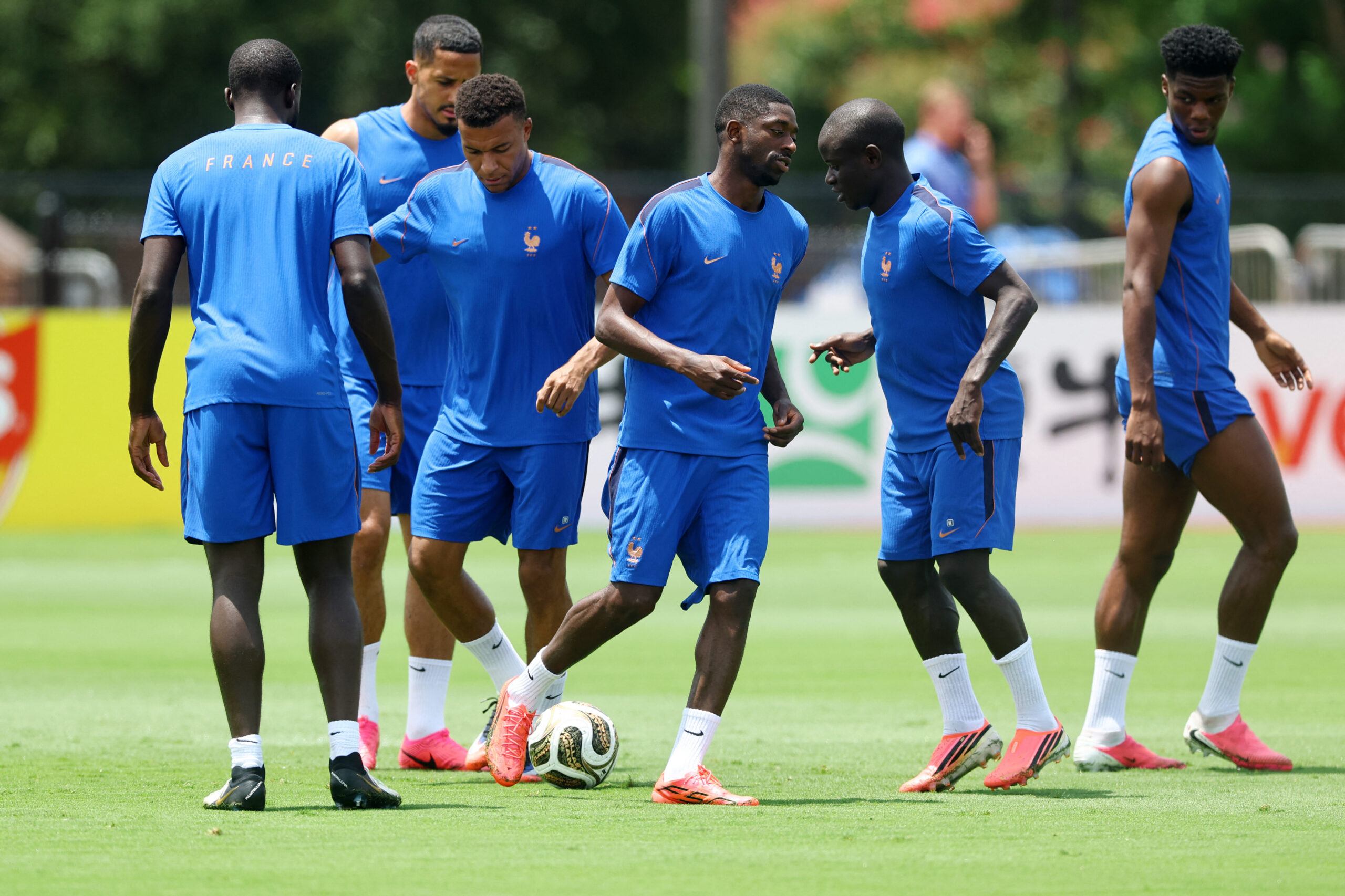
Kylian Mbappé and Lamine Yamal face off at club level every season in El Clásico, and now they do it on the biggest stage in the sport, two years after Yamal’s Spain eliminated Mbappé’s France in the Euro 2024 semifinal.
The two are in very different form heading in. Mbappé has been the standout individual performer of the tournament, tied with Lionel Messi for the Golden Boot lead on eight goals, and sits one goal behind Messi’s all-time World Cup scoring record. He did pick up a minor ankle knock in France’s quarterfinal win over Morocco, but he’s since downplayed it and is expected to start.
Yamal’s tournament has gone the opposite way. Coming in on the back of injury, he scored once in the group stage and hasn’t added a goal or assist since — a sharp contrast to the form that carried Spain to Euro 2024 glory. The good news for Spain is he’s looked progressively sharper each match since his return, and if there’s one stage that tends to bring out his best, it’s a France knockout tie.
Why it matters: if Yamal rediscovers his Euro 2024 form here, Spain’s ceiling goes up considerably. If he doesn’t, the individual battle tilts heavily toward Mbappé, and France’s attack has more proven firepower to fall back on regardless.
One stat that doesn’t get mentioned enough: Mbappé has now scored a record 12 World Cup knockout-stage goals across his career — but has never scored in a World Cup semifinal specifically. That’s a genuine gap in an otherwise complete résumé, and it’s part of why Tuesday carries extra individual weight for him beyond the Golden Boot race.
This might be the single biggest factor in the entire match. Spain’s midfield, built around Rodri’s ball-winning, has been the platform for a defense that had gone six straight matches without conceding before the quarterfinal — the longest such streak in World Cup history. Who partners him is a genuine selection battle: Fabián Ruiz offers more physical presence and ground coverage, while Pedri offers sharper tempo control and creativity between the lines. Either way, when Rodri and his partner dictate the rhythm, Spain rarely need to defend in numbers, because the opponent barely sees the ball in dangerous areas.
France’s answer is less settled. Aurélien Tchouaméni missed the last two matches with an adductor issue and is targeted to return for this one, but even if fit, he may have to fight Manu Koné for a starting spot after Koné and Adrien Rabiot controlled the middle of the park without him in the quarterfinal win over Morocco.
Why it matters: if Tchouaméni is anything less than fully sharp, France’s ability to slow Spain’s tempo drops significantly, and Rodri-Pedri could simply strangle the game the way Spain have strangled almost everyone this tournament. That’s the single biggest reason several previews lean toward Spain winning the underlying battle for control, even with France holding the more explosive attacking talent.
France haven’t just been winning at this World Cup — they’ve been dominant, going a perfect 6-0-0 through six matches. Their attack is arguably the tournament’s deepest: Mbappé leads the scoring, Ousmane Dembélé has five goals of his own, and Michael Olise has quietly racked up a tournament-high six assists, one shy of Pelé’s all-time single-tournament record. Désiré Doué and Bradley Barcola add even more depth off the bench. One underrated stat behind France’s efficiency: the Mbappé-Dembélé partnership alone has created a tournament-high 19 chances for one another this summer — more than most entire attacking units have managed combined.
Spain’s counter to that is a defense that has been, statistically, the best at this World Cup. They’ve conceded just one goal in six matches — that lone concession coming against Belgium in the quarterfinal — and manager Luis de la Fuente has repeatedly leaned on late substitute impact (Mikel Merino has been the hero with a stoppage-time winner against Portugal and another decisive goal against Belgium) rather than needing to outscore teams comfortably.
Why it matters: this is the match’s clearest style clash. France have the most talented and varied attacking unit left in the tournament; Spain have the most disciplined defensive record. Something has to give, and given how many of Spain’s knockout wins have come by a single late goal, there’s a real chance this one goes to extra time rather than being settled in normal time.
Both sides are widely expected to set up in a 4-2-3-1, which matters for how these three battles actually play out on the pitch — it’s a mirrored shape, so the individual duels below are largely happening in the same zones rather than getting distorted by a numerical mismatch somewhere on the field.
Spain (4-2-3-1): Unai Simón; Porro, Cubarsí, Laporte, Cucurella; Rodri, Fabián Ruiz (or Pedri); Yamal, Olmo, Baena; Oyarzabal
France (4-2-3-1): Maignan; Koundé, Saliba, Upamecano, Digne; Tchouaméni, Rabiot; Dembélé, Olise, Doué (or Barcola); Mbappé
The one genuine selection battle on the Spain side is Fabián Ruiz versus Pedri alongside Rodri — a more physical, ball-winning profile against a more creative, tempo-controlling one — and De la Fuente is reportedly also weighing whether to add Gavi for extra pressing intensity. For France, the Tchouaméni-or-Koné call at the base of midfield is effectively the same question as the Rodri-Pedri battle described above: whichever way both managers lean, the collision point is the same 20 yards of central pitch.
France have the more dangerous individuals and the gaudier results, but Spain’s midfield control is the variable that worries me most for Deschamps’ side — if Tchouaméni isn’t back to full fitness, Rodri and whoever partners him could dictate the game the way Spain have for six matches running
Here’s the tension I keep coming back to: France have won this tournament almost entirely through transition — their lowest possession numbers of any team left in the field, paired with elite finishing from Mbappé, Dembélé, and Olise whenever they do get the ball forward. Spain have won through the opposite method, controlling the ball so completely that opponents rarely generate the transition moments France depend on.
That’s not a minor stylistic footnote — it’s the whole match in miniature. If Spain’s midfield does its job, France may simply not get enough clean look at the space in behind to matter, no matter how sharp Mbappé and Dembélé are individually. If Tchouaméni is fit and France disrupt Spain’s rhythm even a handful of times, their attack has more than enough quality to make one moment count.
Given the head-to-head trend — Spain have won three of the last four competitive meetings, all by a single goal — I’d lean toward this being tight, low-scoring, and decided by a moment of individual quality rather than a sustained spell of pressure from either side. A one-goal result, possibly in extra time, feels like the likeliest outcome, and I wouldn’t be shocked if it’s Yamal or Mbappé who ends up being the difference — the two players whose form has diverged the most heading into kickoff.
