
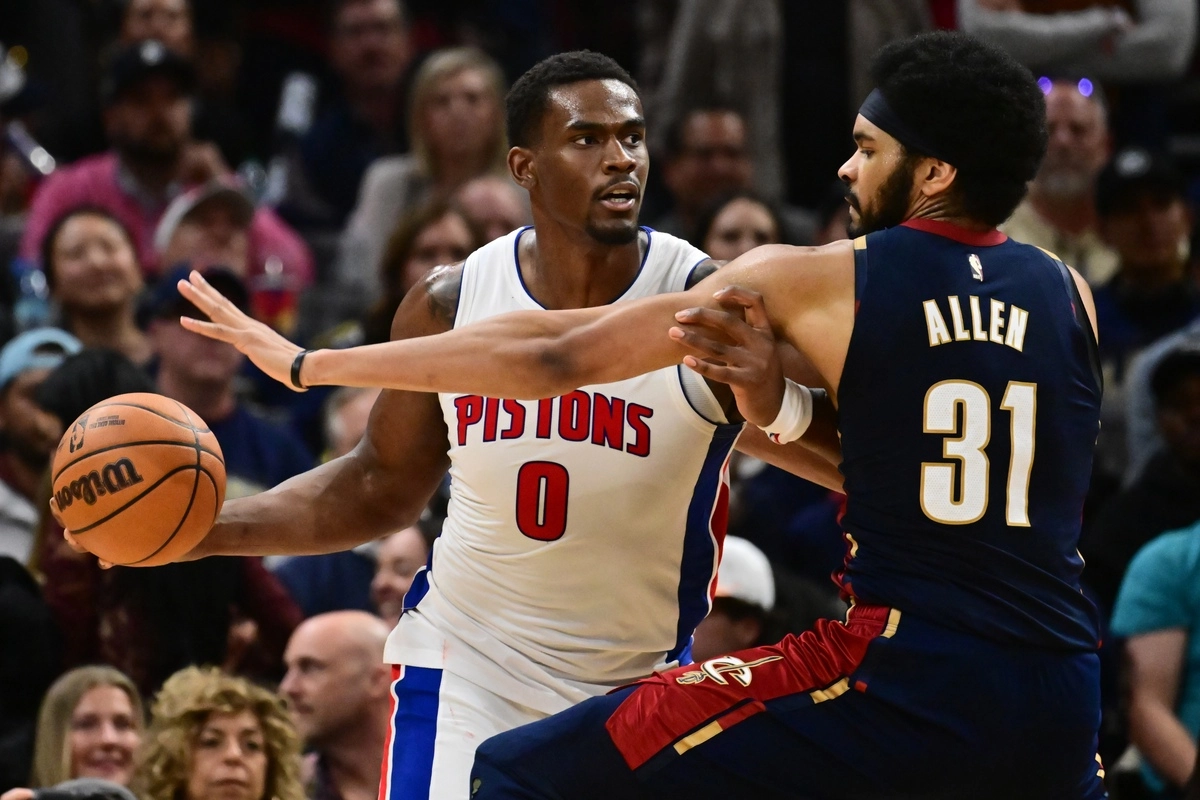
The Detroit Pistons clearly know when to hold ‘em, but do they know when to walk away from a standoff? Someone in this young man’s camp needs to wake up and smell the coffee, because Jalen Duren’s contract demands are approaching pure delusion. We’re sitting here in July, and the 22-year-old center is acting like he holds all the cards after posting a 60-win regular season and All-NBA Third Team honors.
Those are great surface-level accolades, but demanding ~$40 million a year (the 30 percent Rose Rule max) when you completely ghosted your team in the playoffs and became a schematic liability is ridiculous. Detroit Pistons GM Trajan Langdon is right to hold the line, and Duren has massively overplayed his hand.
Look around the league. The money is gone, and the leverage evaporated faster than Duren playing against his ex’s new man. The teams that “wanted” him have already moved on while he was busy demanding supermax money.
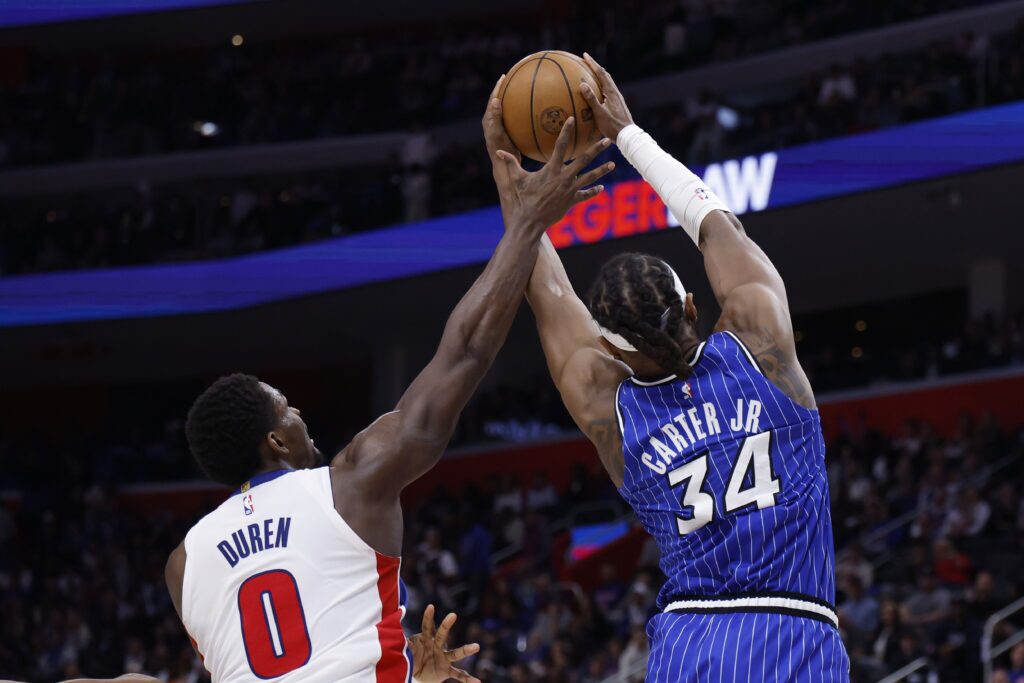
With the NBA’s 2026-27 salary cap officially set at $164.96 million, the math completely invalidates Duren’s 30 percent max demand. The Lakers quickly pivoted to a sign-and-trade for Walker Kessler. Los Angeles locked down their rim protector on a four-year, $130 million deal (an average annual value of $32.5 million), meaning they committed just 19.7 percent of their salary cap to the position while sending the Utah Jazz two unprotected first-round picks (2031 and 2033) alongside two first-round pick swaps (2028 and 2030).
The Celtics didn’t even have to surrender trade assets, simply using their non-taxpayer mid-level exception (a salary cap tool that allows teams over the cap to sign a player to a moderate contract) to sign Mitchell Robinson from the Knicks for three years and $47.4 million. That’s an AAV of $15.8 million, or a mere 9.6 percent of their cap space.
When you compare all that to Detroit’s $35 million annual valuation, which represents 21.2 percent of the 2026 cap and a 70% premium over Mitchell Robinson’s market price, the front office isn’t lowballing him. They’re offering him an absolute premium. Demanding a 30 percent slice of the cap is completely disconnected from market reality. Oh, and when Sacramento came knocking? The Detroit Pistons flatly rejected a Domantas Sabonis package.
Why did all these rival teams pivot? Because front offices watch tape. In the modern NBA, you can’t dedicate 30% of your salary cap to a traditional, non-spacing big man who gets played off the floor in the pick-and-roll. During the regular season, Duren looked dominant, averaging 19.5 points and 10.5 rebounds on 65 percent shooting. But when it mattered against Orlando and Cleveland in the playoffs, his limitations were brought to bear.
Since Duren lacks a reliable jump shot, opposing defenses simply sagged off him, packed the paint, and completely ruined the floor spacing for Cade Cunningham’s drives. Defensively, it was even worse. Duren was relentlessly hunted in the pick-and-roll. Opposing guards dragged him out into space, picked apart his drop coverage, and exposed his lack of lateral quickness on switches.
The explosiveness from the regular season had gone, and his numbers plummeted to a not-so-super-max 10.2 points and 8.5 rebounds as he routinely disappeared in key moments (except to get postered). You simply do not pay $40 million a year to a center who clogs the offensive paint and bleeds points on the perimeter under the bright playoff lights.
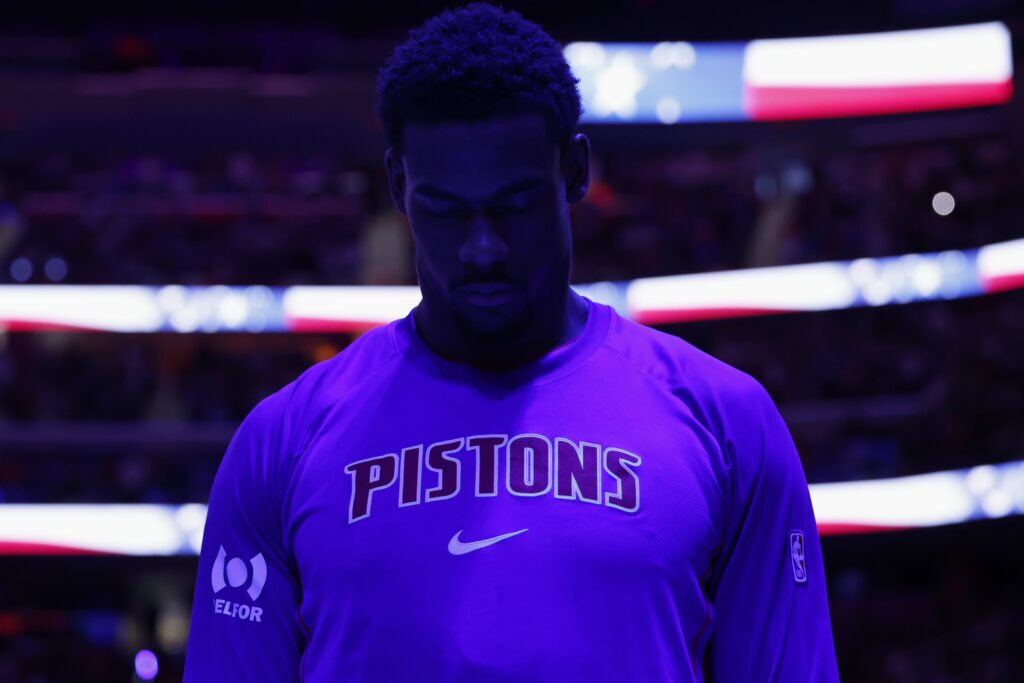
So now, Duren has backed himself into a corner. He can sign the long-term deal Detroit offered based on their valuation of his skill set, or bet on himself. He could take the one-year, $9.6 million qualifying offer and try his luck as an unrestricted free agent next summer. If he does this, he is making a huge mistake.
Turning down a reported long-term deal worth around $177 million for a one-year “prove it” deal is wild for a guy with his playoff baggage. A great regular season next year won’t cut it. To justify $40 million a year on the open market, Duren will literally have to carry the Pistons past the second round of the playoffs while proving he’s developed a counter to playoff pick-and-roll coverages. Throw in the constant, looming risk of injury, and taking $9.6 million out of spite or a bruised ego is a terrible business decision.
For years, Detroit fans have watched front offices panic and overpay to keep homegrown talent. Not this time. General Manager Trajan Langdon knows that tying up 30 percent of the salary cap on a center who can’t stretch the floor severely handicaps our ability to build a championship-caliber roster around Cade Cunningham. By sticking to their guns at a more reasonable $35 million annual valuation, Detroit is protecting its future.
Plus, Langdon is actively building a safety net so the team isn’t held hostage. They’ve moved on from Isaiah Stewart, slotted in Paul Reed as the primary backup, and just signed rookie Ugonna Onyenso to a two-way deal. Sure, Onyenso is a rookie on a non-guaranteed contract. But he is a 7-foot shot blocker who led the ACC with 2.9 blocks per game last year at Virginia. It sends a clear message. The Pistons are stockpiling capable bigs who can protect the rim. They’re not desperate for bodies in the paint, and definitely aren’t blinking first.

At the end of the day, it boils down to this: Duren thought he was the hottest commodity on the market, but swift, decisive moves by the Lakers and Celtics proved otherwise. You can’t demand supermax money when your lack of spacing and pick-and-roll defense makes you a liability in the postseason, and the Pistons & Langdon are absolutely right to call his bluff.
By holding their ground and reinforcing the frontcourt with guys like Reed and Onyenso, Detroit dissolved Duren’s leverage. The market agrees with Detroit’s valuation, not Duren’s. If he wants to gamble his financial future on a $9.6 million qualifying offer, he can go right ahead. But he better be prepared to carry this franchise on his back next spring to prove he is actually worth the price tag.
